
Medicine is one of the most competitive subjects to study at university, but becoming a doctor is not the only way to build a rewarding career in healthcare. If you are considering a different academic route, need a strong fifth UCAS choice, or want to work in healthcare without completing a Medicine degree, there are many excellent alternatives to explore.

The best alternative to Medicine depends on what attracts you to the subject. You may enjoy biology and want to understand disease at a cellular level. Perhaps you are interested in medicines, medical technology, patient care, emergency treatment or rehabilitation. You may even still want to become a doctor eventually and are looking for a related degree that could prepare you for graduate-entry Medicine.
Degrees such as Biomedical Science, Biological Sciences, Neuroscience, Chemistry, Pharmacy and Medical Technology can provide a strong scientific foundation.
Meanwhile, Nursing, Physiotherapy, Radiography, Paramedic Science, Occupational Therapy, Midwifery and other healthcare degrees can lead directly towards patient-focused careers.
Whatever your reason for looking beyond Medicine, choosing a related university course does not necessarily mean moving away from healthcare. It can instead help you discover a specialist area that suits your interests, strengths and long-term ambitions.
Why Choose an Alternative to Medicine at a UK University?
There are several reasons why students consider what to study instead of Medicine. For some, the issue is competition. Medical schools have a limited number of places because places are capped by the government, while Medicine attracts a very large number of applicants.
More than 25,700 students applied for around 11,200 places, for 2026 entry. This demonstrates just how competitive admission can be. Medicine also has demanding academic requirements, with many medical schools typically asking for at least AAA–A*AA at A Level. Meeting the minimum grades does not necessarily guarantee an offer because many other applicants may have similarly strong academic results.
For students who are committed to becoming doctors, an alternative degree can also be useful as a fifth UCAS choice. Applicants can apply to four medical schools, which means the fifth choice can be used for a related subject. A carefully selected course can provide a valuable academic alternative while keeping future healthcare opportunities open.
Other students may decide that Medicine is simply not the right choice. A medical degree requires at least five years of study, and the prospect of several years at university and associated student loans may not suit everyone. You may also prefer a degree with a more specific healthcare focus or discover that you do not meet the entry requirements for Medicine.
The good news is that healthcare is a broad field. Doctors are only one part of a much larger multidisciplinary workforce. Scientific researchers, nurses, pharmacists, physiotherapists, radiographers, paramedics, psychologists, occupational therapists and many other professionals all contribute to patient health and wellbeing.
Thinking about studying a degree related to Medicine in the UK? ScholarshipKart can help you explore UK universities, courses and scholarship opportunities that match your academic goals. Discover your options and take the next step towards your UK education journey.
What to Study Instead of Medicine at University
The best degree similar to Medicine is not necessarily the one with the most similar title. Instead, consider which part of Medicine interests you most. Students fascinated by the human body may prefer Biomedical Science or Biological Sciences. Those interested in medicines could consider Pharmacy or Pharmacology, while students drawn to technology may find Medical Technology and Bioengineering appealing.
The following subjects are particularly relevant for students seeking Medicine-related degrees and strong science-based alternatives.
| Degree | Main area of study | Potential healthcare connection |
| Biological Sciences | Cells, genetics, physiology and disease | Clinical trials, vaccine development and further healthcare training |
| Biomedical Science | Human biology, disease and medical science | Biomedical science and further medical study |
| Chemistry | Chemical processes and medicines | Clinical biochemistry and medicinal science |
| Medical Technology & Bioengineering | Healthcare technology and engineering | Imaging, diagnosis, prosthetics and treatment |
| Neuroscience | Brain and nervous system | Neurological science and possible graduate Medicine routes |
| Pharmacology & Pharmacy | Medicines and drug interactions | Pharmacy, medicines management and further medical training |
Biological Sciences as an Alternative to Medicine
Biological Sciences is a broad science degree that can suit students who are interested in how living organisms function. Depending on the course, you may study cell biology, genetics, microbiology, physiology and pathology.

As an alternative to Medicine, Biological Sciences is generally broader than Biomedical Science. This can be useful if you want to explore different areas of biological science before choosing a particular career direction. The knowledge gained can be relevant to areas such as clinical trials and vaccine development.
With further training, Biological Sciences can also contribute towards healthcare careers such as physician associate or anaesthesia associate. For students who continue to aspire to Medicine, the scientific knowledge gained during the degree may also be valuable when considering graduate-entry medical study.
Biomedical Science as an Alternative to Medicine
Biomedical Science is one of the closest degree alternatives to Medicine for students who want to understand the science behind the human body, disease, diagnosis and treatment.
Course content can include anatomy, physiology, genetics and microbiology, although the exact modules vary between universities. The subject combines elements of biology, health science and medical science, giving students a detailed understanding of processes occurring inside the body.
An appropriately accredited Biomedical Science degree can also provide a route towards working as a biomedical scientist in the NHS. This makes the subject particularly attractive to students who want a career connected with healthcare laboratories and medical science.
For students considering Medicine in the future, Biomedical Science can provide a strong scientific foundation. However, completing the degree does not automatically guarantee admission to graduate-entry Medicine. Future applications remain subject to the relevant university requirements and competition.
Chemistry and Biochemistry for Medical Science
Chemistry and Biochemistry offer another route for students interested in the science of medicines and biological processes. Chemistry can help you understand how substances interact, while Biochemistry explores the chemical processes occurring within living organisms.
Some degrees focus specifically on medicinal chemistry, providing knowledge that can be particularly relevant to drug interactions and the development of medicines.
This pathway may suit students who are interested in how treatments work rather than solely in direct patient care. It can also support progression into clinical biochemistry, where professionals use blood tests and analysis of tissue samples to help manage disease.
Medical Technology and Bioengineering
Medical Technology and Bioengineering combine science and technology to support the diagnosis, monitoring and treatment of disease. This makes the subject a particularly interesting alternative for students who enjoy both scientific study and technological problem-solving.
The field can lead towards areas including medical imaging, radiography, prosthetics and orthotics. Rather than concentrating entirely on the clinical diagnosis of patients, the subject explores how technology and engineering can contribute to modern healthcare.
For students who want to understand how scientific innovation can improve patient care, Medical Technology and Bioengineering can offer a distinctive route into the healthcare sector.
Neuroscience as a Degree Related to Medicine
Neuroscience focuses on the brain and nervous system and can be an excellent choice for students fascinated by how the human brain works.
A Neuroscience degree can combine biology and chemistry with elements of psychology, depending on the course. Students may explore the structure and function of the nervous system as well as brain dysfunctions associated with conditions such as epilepsy, strokes and Alzheimer’s disease.
Some Neuroscience degrees may also provide a pathway towards graduate medical study. As with other Medicine-related degrees, students must achieve the required grades and successfully compete for places.
Pharmacology and Pharmacy
Pharmacy and Pharmacology both focus on medicines, but they approach the subject differently. Pharmacy is concerned with developing, dispensing and monitoring medications, while Pharmacology examines how drugs and toxins interact with the body.
For students considering a fifth UCAS choice, Pharmacy can be a particularly relevant option because it combines scientific knowledge with a healthcare profession. Some pharmacists have subsequently trained as doctors, and their understanding of medicines and treatments can become valuable in a future medical career.
Pharmacists can also contribute directly to patient care. In the NHS, pharmacists can assess and treat minor clinical ailments, giving the profession an important role within healthcare.
Best Fifth UCAS Choices for Medicine
If you are applying for Medicine, your fifth UCAS choice deserves careful consideration. Because you can apply to only four medical schools, the additional choice provides an opportunity to select a subject that interests you while potentially maintaining a connection with future healthcare study.
Some related courses may offer opportunities to transfer onto Medicine or provide guaranteed interviews for graduate medical study. However, these opportunities are not automatic and can be highly competitive. Students normally need to achieve excellent grades and satisfy the specific requirements of the university.
Biomedical Science, Pharmacy, Biological Sciences and Neuroscience can all be relevant choices for students who want to retain a strong scientific connection. Healthcare degrees such as Nursing, Physiotherapy or Paramedic Science may be more appropriate if you are already interested in direct patient care.
Your fifth UCAS choice should therefore not be selected simply because it appears close to Medicine. Think about whether you would genuinely be willing to study the subject if you did not receive a medical school offer. A good alternative should provide its own worthwhile career opportunities.
Healthcare Careers Without a Medical Degree
You do not need to study Medicine to work directly with patients or contribute to healthcare. Numerous undergraduate healthcare courses lead towards specific professional roles, each with its own area of expertise and responsibilities.
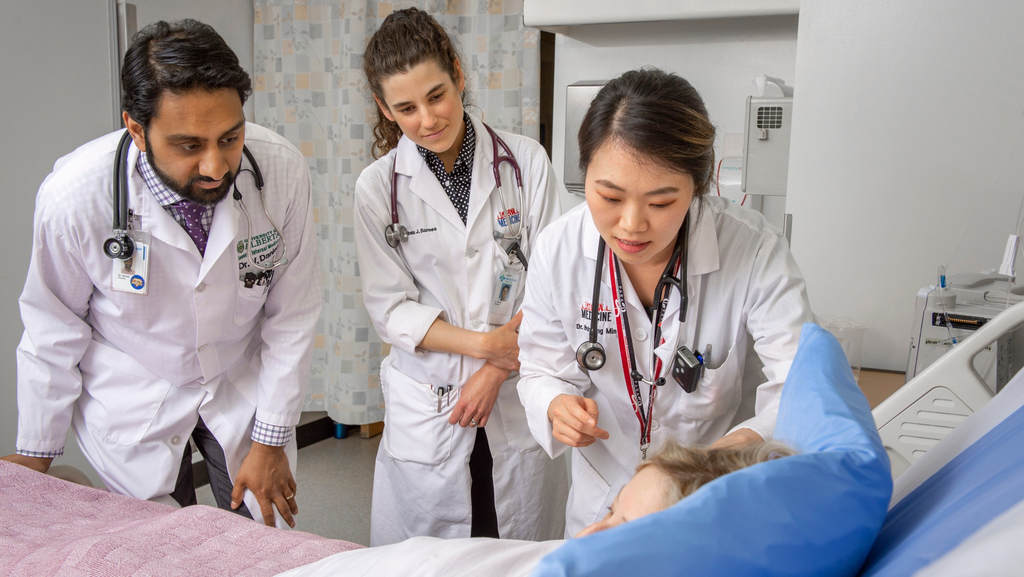
These professions demonstrate that patient care is not limited to diagnosis and prescribing. Healthcare teams depend on professionals who provide treatment, rehabilitation, emergency care, specialist assessments, medical imaging, psychological interventions and practical support.
Some healthcare degrees can also be considered as fifth UCAS choices. Depending on the graduate-entry medical course, your first degree may or may not need to be science-based. Some programmes consider graduates from any discipline, while others require a science degree. Relevant science A Levels may also be necessary.
Depending on the subject and university, NHS funding may be available for certain courses. Some healthcare roles are also available through degree apprenticeships in England, including pathways connected with Healthcare Science.
Dietetics and Nutrition-Based Healthcare
Dietetics is an important healthcare field that connects nutrition with health and disease management. Research continues to investigate relationships between diet and health outcomes, increasing our understanding of how nutrition can influence wellbeing.
In the NHS, dietitians use specialist knowledge to manage patients with dietary conditions. The profession can therefore appeal to students who enjoy biological science but also want to use their knowledge to support individual patients.
Dietetics offers a different perspective on healthcare from Medicine while still providing an opportunity to make a meaningful contribution to patient health.
Midwifery and Maternity Care
Midwifery can be an excellent alternative to Medicine for students interested in pregnancy, childbirth and women’s healthcare. Midwives are the lead healthcare professionals for women experiencing uncomplicated pregnancies and provide care before, during and after childbirth.
The profession can offer a high level of autonomy and responsibility. Rather than developing broad medical expertise across many specialisms, students build specialist knowledge around pregnancy, birth and postnatal care.
Nursing and Patient-Centred Care
Nursing is one of the most flexible alternatives to Medicine because it offers a wide range of professional pathways. Students can specialise in adult, child, learning disability or mental health nursing.
There are also opportunities to develop specialist careers in areas such as accident and emergency, neonatal care and neurology. This variety means nursing can suit students with very different interests.
The operating theatre provides another specialist pathway. A theatre nurse can train as a surgical care practitioner and support surgeons as a first or second assistant. For students attracted to surgery and hospital-based care, nursing can therefore provide a rewarding alternative to studying Medicine.
Occupational Therapy and Rehabilitation
Occupational Therapy focuses on helping people adapt to changes caused by illness, disability or ageing. The profession combines healthcare knowledge with problem-solving and practical support.
Occupational therapists may recommend equipment that makes everyday activities easier or teach new skills that help patients manage changes in their circumstances. The emphasis is on helping people participate in daily activities and maintain independence.
This makes Occupational Therapy a strong option for students who want a practical, patient-centred healthcare career rather than a traditional medical role.
Operating Department Practice and Surgical Care
Operating Department Practice is particularly suitable for students looking for a degree similar to Medicine but with a specialised focus on surgical environments.
Course content is likely to include anatomy, physiology, anaesthetic practice and perioperative or surgical practice. Operating department practitioners work as part of the surgical team and are involved in patient care.
Responsibilities can include assisting the anaesthetic doctor, preparing surgical equipment and supporting patients throughout their care. For students interested in the operating theatre, this offers a direct route into a highly specialised healthcare environment.
Optometry and Orthoptics for Eye Health
Optometry and Orthoptics both focus on eyesight but have different areas of expertise.
Optometrists examine the eyes, identify defects in vision and prescribe corrective lenses. They also assess eye health and can refer patients for specialist medical treatment when required.
Orthoptists specialise in eye movement and the way the eyes work with the brain to create vision. Their work includes non-surgical treatment, and they often work in hospitals alongside ophthalmologist doctors.
Both subjects provide specialist healthcare careers for students who want to focus on vision and eye health rather than general Medicine.
Osteopathy and Musculoskeletal Health
Osteopathy provides another Medicine-related degree option, particularly for students interested in physical health, movement and the musculoskeletal system.
Osteopaths diagnose, treat and help prevent various health problems using techniques including joint manipulation and muscle massage. Osteopathy is recognised by the NHS as an allied health profession.
Practitioners are likely to work in private practice, although NHS patients may sometimes be referred for treatment. It can therefore provide a different model of healthcare practice from traditional hospital-based Medicine.
Paramedic Science and Emergency Healthcare
Paramedic Science can be an excellent alternative for students who are attracted to emergency Medicine and fast-paced clinical environments.
Paramedics are often among the first healthcare professionals to respond to emergencies. They have the autonomy to make important decisions about the immediate treatment of patients.
The profession can also extend beyond emergency response. Paramedics may work with GP practices or community care teams, where they assess patients in community settings.
For students who enjoy decision-making, practical patient care and unpredictable clinical situations, Paramedic Science can offer a distinctive healthcare career.
Physician Associate and Clinical Patient Care
Physician Associate is another university course closely connected with Medicine. Students learn to diagnose and treat patients under the supervision of a doctor and can work in hospitals or GP practices.
A key distinction is that physician associates do not prescribe medication. Nevertheless, the role involves clinical knowledge, patient assessment and treatment within a supervised healthcare setting.
At some universities, Physician Associate is offered as an undergraduate integrated master’s degree, making it another possible fifth UCAS choice for students considering alternatives to Medicine.
Physiotherapy and Rehabilitation
Physiotherapy combines anatomy, physiology and biomechanics with clinical decision-making and patient treatment. It is particularly suitable for students interested in movement, injury recovery and rehabilitation.
Physiotherapists help patients regain mobility following injury, illness or disability. They can work in NHS hospitals, community healthcare settings or sports-related environments.
The subject provides a balance between scientific study and hands-on patient care. For students who enjoy understanding how the body moves and want to help people recover their physical function, Physiotherapy can be a highly relevant alternative to Medicine.
Podiatry and Foot Health
Podiatry focuses on the feet, but the profession has a wider role in health assessment and mobility. Changes affecting the feet can sometimes provide indications of problems elsewhere in the body.
Tingling, for example, may be associated with diabetes or nerve damage, while swollen ankles may indicate high blood pressure. Podiatrists can also help people maintain mobility and independence.
This makes Podiatry an interesting choice for students who want a specialist clinical career with a strong focus on physical health and mobility.
Prosthetics and Orthotics
Prosthetics and Orthotics combine healthcare, movement and scientific principles, making them suitable alternatives for students interested in physics and biomechanics.
Prosthetists design and fit artificial limbs to replace missing limbs. Orthotists design and fit splints or braces that can help address mobility impairment caused by problems involving nerves, muscles or bones.
These professions demonstrate how healthcare can combine technical expertise with direct patient support. The aim is not simply to treat a condition but to help people improve movement and maintain independence.
Psychology and Clinical Mental Healthcare
Psychology provides an alternative route for students who are fascinated by cognitive processes, behaviour and the relationship between mental and physical wellbeing.
Depending on the course, students may study cognitive processes, developmental psychology and neurophysiology. An accredited Psychology degree can provide a route towards an NHS career as a clinical psychologist.
Clinical psychologists do not prescribe medication. Instead, they assess patients and implement interventions designed to improve their lives. Psychology can therefore appeal to students who want a healthcare career centred on psychological assessment, behaviour and therapeutic intervention.
Radiography and Diagnostic Technology
Radiography is an essential healthcare profession that demonstrates how technology can transform patient diagnosis and treatment.
Diagnostic radiographers use X-rays and imaging technologies such as MRI and CT scanning to help doctors identify a range of medical conditions. Therapeutic radiographers have a treatment-focused role and use radiation therapy to help treat cancer and other diseases.
For students who enjoy science, technology and healthcare, studying Radiography in the UK offers an opportunity to become part of the diagnostic and treatment process without completing a medical degree.
Speech and Language Therapy
Speech and Language Therapy is another valuable healthcare alternative for students who want to combine scientific knowledge with direct patient support.
Speech and language therapists help people experiencing difficulties with communication as well as eating, drinking and swallowing. University courses may include biomedical science, linguistics, physiology and child development.
Although many speech therapists work with children, professionals can also support adults with communication or swallowing difficulties. This makes the profession relevant to a broad range of patients and healthcare needs.
What to Do If You Do Not Get Into Medical School
Not receiving a place at medical school can be disappointing, particularly when becoming a doctor has been your main ambition. However, rejection does not necessarily mean that your healthcare ambitions have to end.

If you reached the interview stage but were not offered a place, asking for feedback can help you understand why your application was unsuccessful. The information may highlight areas that you can improve before applying again.
Another option is to begin a related university degree and consider Medicine later. Students have taken routes through subjects such as Biomedical Science and Pharmacy before progressing towards medical training.
A related degree can also give you knowledge that may influence your future medical career. Studying Biomedical Science could deepen your understanding of disease and laboratory science, while Pharmacy could provide extensive knowledge of medicines and treatments. Neuroscience could increase your understanding of the brain and nervous system, while another healthcare degree could give you extensive experience of patient-centred care.
For some students, an alternative degree may ultimately confirm that Medicine is the right destination. For others, it may reveal a healthcare profession that suits them even better.
How to Choose the Best Alternative to Medicine
The right alternative to Medicine should reflect the reason you wanted to study Medicine in the first place. If you are fascinated by disease, anatomy and human biology, Biomedical Science or Biological Sciences could be a strong match. If medicines interest you most, Pharmacy or Pharmacology may be more suitable.
Students who want direct patient interaction have numerous options, including Nursing, Physiotherapy, Occupational Therapy, Midwifery, Paramedic Science and Speech and Language Therapy. Those interested in technology may prefer Radiography or Medical Technology and Bioengineering, while students fascinated by movement may find Physiotherapy, Podiatry, Prosthetics and Orthotics or Osteopathy particularly appealing.
It is also worth considering what your working environment might look like. Some healthcare careers are heavily patient-facing, while others involve laboratory science, imaging, technology or specialist clinical assessment.
If you are selecting a fifth UCAS choice while still hoping to study Medicine, think carefully about whether you would genuinely be happy to complete the alternative degree. A related subject should be more than an emergency option on an application form. It should offer an academic experience and career direction that you can see yourself pursuing.
Most importantly, do not assume that an alternative to Medicine is automatically a lesser choice. Healthcare relies on professionals with different forms of expertise. The best career for you may be one that combines your scientific interests, practical strengths and preferred relationship with patients.
Alternatives to Medicine Can Lead to Rewarding Healthcare Careers
Medicine is a prestigious and highly competitive degree, but it is only one route into healthcare. A wide range of university subjects can lead to careers involving scientific discovery, patient treatment, diagnosis, rehabilitation, medicines, medical technology and specialist care.
Biomedical Science, Biological Sciences, Chemistry, Neuroscience, Pharmacy and Medical Technology can provide strong scientific foundations for students interested in medical science. Nursing, Physiotherapy, Radiography, Paramedic Science, Occupational Therapy, Midwifery and other healthcare degrees can offer direct routes into patient-focused professions.
For students who still want to become doctors, a related degree may also become part of a longer journey towards graduate-entry Medicine, subject to the relevant requirements and competition. For others, studying an alternative subject may reveal a healthcare career that is better suited to their interests and ambitions.
The most important decision is not simply finding the degree that looks most like Medicine. It is finding a course that gives you meaningful opportunities to learn, develop specialist expertise and contribute to healthcare.
Whether Medicine remains your ultimate goal or you discover a different profession along the way, choosing the right alternative can turn an uncertain university decision into the beginning of a successful and fulfilling career.
Medicine isn’t the only route to a rewarding healthcare career. Book a Free consultation with ScholarshipKart and explore UK universities and courses to find a study path that fits your interests, ambitions and future career plans. Connect with our expert counsellors to start exploring your options today.
FAQs
What can I study instead of Medicine at a UK university?
You can study Biomedical Science, Biological Sciences, Pharmacy, Neuroscience, Nursing, Physiotherapy, Radiography, Paramedic Science, Occupational Therapy, Midwifery and several other healthcare-related subjects.
Which degree is most similar to Medicine?
Biomedical Science is one of the closest degrees to Medicine, particularly for students interested in anatomy, physiology, disease and medical science. Neuroscience, Pharmacy and Biological Sciences are also closely related.
What is a good fifth UCAS choice for Medicine?
Biomedical Science, Pharmacy, Biological Sciences and Neuroscience can be suitable fifth choices. Nursing, Physiotherapy and other healthcare degrees may also work well if you prefer patient-focused careers.
Can I become a doctor after studying another degree?
Yes, you may be able to apply for graduate-entry Medicine after another degree. Requirements vary between medical schools, and some require a science-based first degree.
Is Pharmacy a good choice for someone interested in Medicine?
Yes. Pharmacy provides detailed knowledge of medicines, treatments and drug interactions while also offering its own healthcare career pathway.
Which healthcare careers do not require a medical degree?
Options include Nursing, Physiotherapy, Radiography, Paramedic Science, Midwifery, Occupational Therapy, Psychology, Podiatry, Dietetics and Speech and Language Therapy.
What should I do if I do not get into medical school?
Consider requesting application feedback, improving your future application or choosing a related degree. You can also explore graduate-entry Medicine or another healthcare profession.
How do I choose the right degree instead of Medicine?
Think about what interests you most about healthcare. Choose a course that matches your preferred subjects, type of patient care and career goals, rather than simply choosing the degree closest to Medicine.