
When it comes to health sciences, the United Kingdom has long been a pioneer, and this reputation strongly extends into the field of eye care education. Study optometry in UK as Optometry, Ophthalmics, and Orthoptics are specialised branches of medicine dedicated to safeguarding and improving vision.
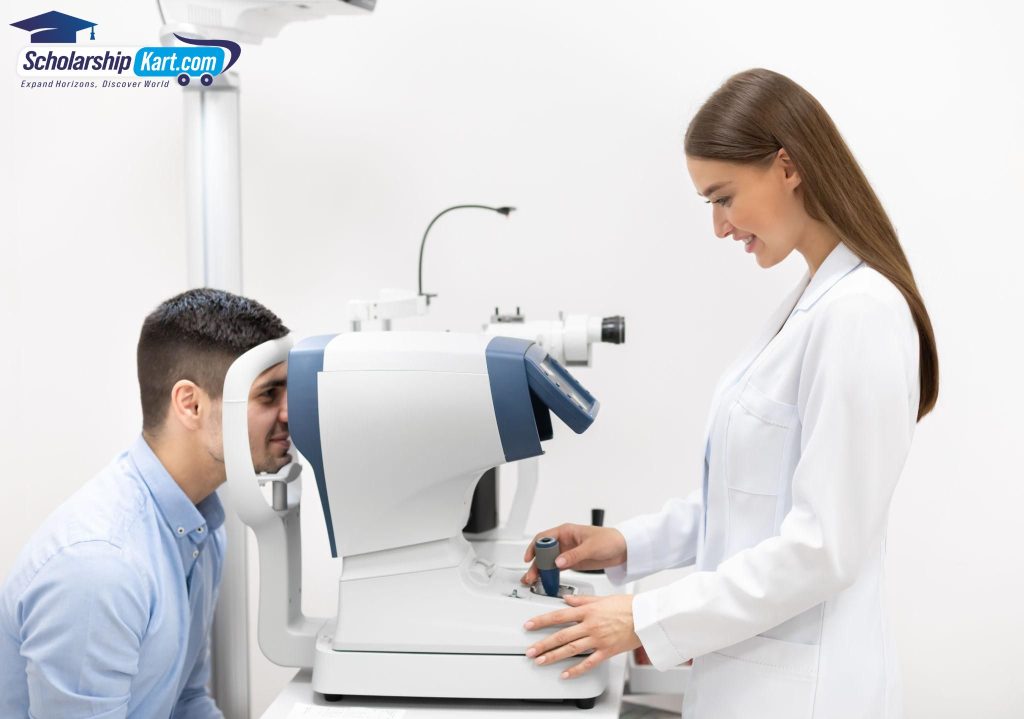
In the UK, universities are globally recognised for their innovative teaching methods, advanced clinical training, and close ties with the National Health Service (NHS), making them one of the best destinations to study these programmes.
Why the UK Leads in Eye Health Education
Several factors contribute to the UK’s popularity in this field:
- Global recognition – UK qualifications in eye health are valued and respected worldwide.
- Integration with NHS – Students gain hands-on experience through practical placements in real healthcare settings.
- High employability – UK graduates are in demand, with strong career prospects both domestically and internationally.
- Cutting-edge research – The UK is at the forefront of ophthalmic research, ensuring students learn from leaders in the field.
- Professional accreditation – Programmes are accredited by respected professional bodies such as the General Optical Council (GOC) and the Health and Care Professions Council (HCPC).
- Diversity of study options – From bachelor’s degrees to integrated master’s, degree apprenticeships, and postgraduate research, the UK offers flexible learning pathways.
In short, the UK provides a blend of academic excellence, professional relevance, and career-oriented training that few countries can match.
Understanding the Discipline: What Exactly Are Optometry, Ophthalmics & Orthoptics?
The trio of Optometry, Ophthalmics, and Orthoptics might sound complex, but together they form the backbone of eye health.
- Optometry focuses on examining vision, diagnosing sight problems, and prescribing corrective measures such as glasses or contact lenses. Optometrists may also detect early signs of eye diseases.
- Ophthalmics deals with eye conditions on a clinical level, including imaging, surgical procedures, and advanced diagnostic tests. Ophthalmic imagers and technicians play a critical role here.
- Orthoptics explores the relationship between the eyes and the brain, particularly how they work together to create vision. Orthoptists are experts in conditions such as squints, double vision, and binocular vision problems.
- These professions are not just about diagnosing eye conditions; they are about transforming lives by restoring vision, preventing blindness, and ensuring overall eye health.
Take the first step toward studying Optometry, Ophthalmics, or Orthoptics in the UK with ScholarshipKart. Get complete support from choosing the ideal course and university to managing applications, visa formalities, and scholarships. Benefit from our IELTS training and SOP assistance to boost your chances of success!
Diverse Pathways: What Courses Can You Pursue?
Students who wish to build a career in eye health and vision sciences have a wide range of academic pathways at the undergraduate level. Each program is designed with a specific focus, preparing graduates for different professional roles within the eye-care sector.

- BSc in Ophthalmic Dispensing – This program trains students in the science and practical skills of prescribing and fitting corrective lenses. It emphasises precision, patient care, and technical expertise, equipping graduates to become dispensing opticians.
- BSc or BMedSci in Orthoptics – Orthoptics programs focus on the diagnosis and management of vision and eye movement disorders, such as squints and lazy eye. Students gain both theoretical knowledge and clinical training to work closely with ophthalmologists and other eye-care professionals.
- BSc/BOptom/MOptom in Optometry – These degrees provide extensive training in eye examinations, vision correction, and clinical care. They prepare students to become optometrists who can assess, diagnose, and manage various vision problems.
- Some universities also offer integrated foundation years for students who need additional academic preparation before starting their degree. Others include an integrated master’s program, allowing students to gain advanced clinical knowledge and research experience within a single pathway.
- In addition, the UK provides opportunities through degree apprenticeships in partnership with employers. These apprenticeships combine paid work with academic study, offering hands-on training and valuable industry experience.
- While they do not grant access to traditional student loans or maintenance grants, apprenticeships provide financial independence and practical career development from the start.
Advancing Knowledge: Postgraduate Opportunities in Optometry, Ophthalmics, and Orthoptics in UK
For students ready to take their academic journey further, the UK offers an impressive range of postgraduate options in eye and vision sciences.
These postgraduate programs are ideal for graduates seeking to specialise in advanced clinical practice, gain higher-level qualifications, or contribute to academic research and innovation in the field.
- Graduate-entry Pre-registration Courses for Orthoptists – These programs provide an intensive pathway for graduates aiming to qualify as orthoptists. Combining academic study with clinical placements, they prepare students to diagnose and manage eye movement and vision disorders in professional settings.
- Orthoptics MSc – Designed for students who wish to advance their skills beyond undergraduate level, this degree focuses on complex vision and eye movement problems, research methodologies, and evidence-based clinical practice. It is particularly beneficial for professionals aiming for senior clinical or academic roles.
- MSc or PGDip in Clinical Ophthalmic Practice – This program offers advanced knowledge in diagnostics, imaging, and patient management, equipping graduates with the expertise needed for specialised ophthalmic practice.
- MSc in Optometry and Ophthalmology – A multidisciplinary program that strengthens both theoretical understanding and practical skills in vision science, this degree is suitable for graduates who want to integrate clinical optometry with ophthalmological care and research.
- MOptom in Optometry – An integrated master’s pathway that combines undergraduate and postgraduate-level study, offering students advanced clinical training, research exposure, and professional development in optometry.
- clinical Optometry MSc – This course is specifically designed for practising optometrists who wish to expand their clinical expertise, including therapeutic prescribing, advanced diagnostics, and specialist patient care.
- MD in Eye and Vision Sciences – A research-oriented medical doctorate that focuses on clinical advancements, innovation, and emerging therapies in ophthalmology and vision care.
- MPhil/PhD in Optical Biology or Optometry – These research-based degrees allow students to undertake independent projects in areas such as ocular biology, vision technology, and patient-centred innovation, contributing new knowledge to global eye-care practices.
- PhD in Clinical Investigation and Vision Sciences – A highly specialised research pathway where students explore advanced topics such as visual neuroscience, ocular disease, and clinical interventions. It is designed for those aiming for academic, research, or senior clinical careers.
- PGCert in Therapeutic Prescribing for Optometrists – A professional qualification that equips optometrists with the authority to prescribe therapeutic treatments, significantly broadening their scope of practice.
These postgraduate opportunities are tailored to suit a wide variety of professional goals, whether advancing clinical practice, gaining prescribing rights, or engaging in pioneering vision science research.
By pursuing these courses in the UK, graduates position themselves at the forefront of global eye and vision healthcare.
Entry Gateways: What Are the Admission Requirements?
Getting into an eye-care degree in the UK is competitive but achievable with the right preparation. Universities seek students who not only have strong academic performance but also demonstrate commitment to healthcare and patient care.
Entry requirements vary by program level—undergraduate, postgraduate, or doctoral—but all emphasise academic ability, English proficiency, and in some cases, relevant work or research experience.
Entry Requirements for Eye-Care Undergraduate Degrees in the UK
Entry requirements typically range from 120 to 136 UCAS points.
Academic qualifications:
A Levels: AAA–ABB, often requiring two or three science subjects (biology, chemistry, maths, or physics).
International Baccalaureate: 32–36 points.
Essential subjects: Biology, chemistry, physics, or mathematics. Human biology, applied science, or psychology are also desirable.
Other requirements
Work experience: Shadowing professionals in optometry clinics, hospitals, or NHS services strengthens your application.
Skills and volunteering: Engaging with children, elderly people, or individuals with special needs demonstrates interpersonal ability.
Interviews and science practical passes are also commonly required.
Entry Requirements for Eye-Care Postgraduate Degrees in the UK
Academic Qualifications
Applicants are usually required to hold a bachelor’s degree in a relevant field such as Optometry, Ophthalmic Dispensing, Orthoptics, Biomedical Sciences, Medicine, or a related life science.
A minimum of 2:1 honours degree (equivalent to 60–65% in Indian grading systems) is often expected, though some universities may accept a strong 2:2 with relevant professional experience.
For clinical programs like MSc Clinical Optometry or MSc Optometry and Ophthalmology, a degree in optometry or ophthalmic sciences is specifically required.
2. Professional Background (for certain programs)
Some specialised courses, such as PGCert in Therapeutic Prescribing for Optometrists, require applicants to be registered optometrists with clinical practice experience.
Applicants to clinical ophthalmology or orthoptics courses may also need proof of relevant work or internships in healthcare.
3. English Language Proficiency
Since teaching is conducted in English, international students must demonstrate proficiency:
IELTS Academic: Overall IELTS score of 6.5–7.0 (with no band less than 6.0).
Equivalent tests such as TOEFL iBT (90–100) or PTE Academic (61–65) are also widely accepted.
Additional Requirements (for research degrees)
MPhil/PhD applicants must demonstrate the ability to carry out independent research, often supported by prior research experience or publications.
Some universities may ask applicants to contact a potential supervisor before applying.
These entry standards ensure that students entering the field have the scientific knowledge, empathy, and professionalism needed to thrive.
Inside the Curriculum: What Will You Study?
Degrees in this field are carefully structured to blend theory with hands-on training. Typical modules include:

- Anatomy and physiology – Understanding the structure and function of the human body, particularly the eye.
- Clinical optometry skills – Practical training in examining vision and prescribing corrective measures.
- Ophthalmic optics – Studying lenses, refraction, and the principles of visual correction.
- Enhanced pathology and therapeutics – Learning about eye diseases and treatments.
- Vision and visual perception – Exploring how the brain processes visual information.
- Refraction and binocular vision – Examining how eyes work together to produce clear, single vision.
- These subjects provide both scientific grounding and professional expertise, equipping students for a career that combines medical precision with patient care.
The Evaluation Process: How Will You Be Assessed?
Assessment methods are diverse to reflect the practical and academic demands of the field. Students can expect:
- Clinical and practical performance assessments.
- Written examinations and class tests.
- Case study evaluations.
- Essays and written reports.
- Group projects and collaborative presentations.
- Oral presentations demonstrating communication skills.
- This variety ensures that students are tested not only on their academic understanding but also on their clinical judgment, teamwork, and problem-solving abilities.
Beyond the Classroom: Why Choose This Field of Study?
- Studying Optometry, Ophthalmics, and Orthoptics in the UK is more than just a degree; it is a path to making a meaningful impact.
- Direct contribution to health: You play a role in preventing blindness and improving quality of life.
- Professional skills: Develop advanced clinical abilities and manual dexterity with specialist equipment.
- Transferable skills: Gain critical thinking, problem-solving, time management, and communication skills.
- Accredited qualifications: Optometry degrees are accredited by the General Optical Council (GOC) and the College of Optometrists, while Orthoptics degrees are approved by the HCPC, ensuring professional recognition.
- Global demand: Eye care professionals are needed worldwide, offering international career mobility.
- Research and innovation opportunities: Students may contribute to ground-breaking work in vision science and ophthalmology.
This field offers a unique combination of personal fulfilment, career security, and professional recognition.
Financial Aid: Are Scholarships and Bursaries Available?
Financing your studies can be a major concern, but the UK provides a variety of financial support options for international students, including those from India. Scholarships, bursaries, and grants can significantly reduce the cost of tuition and living expenses, making a career in eye care more accessible.
By exploring these opportunities early, students can plan effectively and secure the maximum support available.
1. GREAT Scholarships
The UK government, in partnership with British universities, offers GREAT Scholarships to Indian students. These awards are designed to support high-achieving applicants and typically provide funding of around £10,000 towards tuition fees for a one-year postgraduate program.
They are competitive and focus on academic excellence and leadership potential.
2. Chevening Scholarships
Funded by the UK Foreign, Commonwealth and Development Office, Chevening Scholarships are one of the most prestigious awards available to Indian students. They cover full tuition fees, living expenses, travel costs, and other allowances, offering complete financial support for a master’s degree.
Selection is based on leadership qualities, academic achievements, and future career impact, making them ideal for motivated students in fields like optometry, ophthalmology, and public health.
3. Commonwealth Scholarships
For students from Commonwealth countries, including India, the Commonwealth Scholarship scheme provides an excellent opportunity to study in the UK. These scholarships are usually aimed at postgraduate students and can cover tuition fees, living costs, and travel.
They are awarded on the basis of academic merit and the potential to contribute to the development of the applicant’s home country after graduation.
4. University-Specific Scholarships and Bursaries
Many UK universities provide institutional scholarships specifically for international students. These can range from partial tuition fee waivers to more comprehensive packages covering living expenses.
Some universities also offer bursaries targeted at students from lower-income backgrounds, ensuring financial barriers do not prevent talented individuals from pursuing their education.
5. NHS Funding
In certain cases, particularly for orthoptics courses, the UK’s National Health Service (NHS) may provide funding or financial support. This varies depending on the university and regional NHS requirements, so students should confirm availability when applying.
6. Grants and External Awards
Professional associations, charities, and healthcare-focused organizations sometimes provide additional grants and awards. These may support research projects, clinical training, or specialist studies in vision sciences, further easing the financial burden for international students.
By taking advantage of these scholarships and financial aid options, Indian students can significantly lower the cost of studying eye care in the UK. Exploring these opportunities early not only helps in financial planning but also enhances the chances of securing valuable support for academic and professional growth.
Visionary Careers: What Jobs Await Graduates?
Graduates in optometry, ophthalmics, and orthoptics enter a professional world full of opportunities. The UK healthcare system values eye-care specialists, and demand for trained professionals continues to grow.

Whether graduates want to work directly with patients, contribute to research, or even manage eye-care practices, there are multiple career paths available.
Diverse Career Options
- The eye-care field in the UK provides a wealth of opportunities, enabling graduates to work across clinical, academic, and industry roles. Some key options include:
- Optical Industry Roles – Working with leading eyewear and lens manufacturers in product development, marketing, and clinical advisory roles.
- Hospital and NHS Careers – Joining ophthalmology departments, orthoptic units, or optometry clinics within the NHS to serve diverse patient populations.
- Private Practice Ownership – Establishing or managing independent optometry or orthoptic clinics, with the potential to become an entrepreneur in healthcare.
- Academia and Teaching – Contributing as lecturers, clinical tutors, or trainers in universities and optometry schools, shaping the next generation of professionals.
- Specialist Clinical Roles – Focusing on advanced areas such as low vision rehabilitation, glaucoma management, contact lens technology, or refractive surgery co-management.
- Research and Innovation – Engaging in vision science research, clinical trials, or new technology development, including AI-based diagnostic tools and tele-optometry.
- Global Opportunities – Leveraging a UK qualification to practice or pursue further training in other countries, as UK-trained professionals are highly regarded worldwide.
- Corporate and Retail Chains – Working with major optical chains, e.g. Specsavers, Boots Opticians, in clinical roles or leadership positions.
- Specialist Paediatric and Geriatric Eye Care – Providing focused care for children with developmental vision disorders or elderly patients with age-related eye diseases.
- Military and Defence Services – Some professionals join the defence medical services, supporting vision health for armed forces personnel.
- This wide range of career paths allows graduates to tailor their professional journeys according to personal interests, whether clinical excellence, entrepreneurship, research, or global practice.
Careers in Optometry
Optometrists assess eye health, diagnose vision problems, and prescribe corrective lenses. They also play a crucial role in the early detection of systemic health conditions like diabetes and hypertension.
Training: To practice, students must complete a degree in optometry followed by pre-registration training to gain professional registration with the General Optical Council (GOC).
Career Growth: Optometrists can work in multiple retail practices, private clinics, NHS hospital eye services, or even provide domiciliary (home-visit) care.
Salary: The median salary for optometrists is between £40,000 and £54,999, with locum optometrists and highly experienced professionals earning significantly higher.
Careers in Ophthalmics
Ophthalmics is a broader field that includes ophthalmologists, who are medical doctors specialising in the surgical and medical treatment of eye diseases.
Career Path: This pathway requires a medical degree followed by several years of postgraduate training to progress to the consultant level.
Specialisation: Subspecialties include glaucoma management, cataract surgery, corneal diseases, and retinal disorders. Ophthalmologists play a vital role in advanced clinical care and surgery.
Careers in Orthoptics
Orthoptists diagnose and treat conditions affecting eye movement and binocular vision, such as squints (strabismus) and amblyopia, commonly in children but also in adults recovering from neurological events like stroke.
Training: A specialised degree in orthoptics followed by professional registration is required.
Work Environment: Orthoptists often work in multidisciplinary hospital eye-care teams, though opportunities also exist in community health settings.
Prospects and Demand
There is a strong demand for eye-care professionals globally at any given time. Graduates can choose from a variety of work settings, including community optical practices, large optician chains, NHS and private hospitals, research institutions and specialist domiciliary services.
For those who wish to specialise further, opportunities exist in areas like contact lens opticianry, paediatric optometry, sports vision, or therapeutic prescribing. This ensures steady career growth and professional satisfaction.
The increasing prevalence of age-related eye diseases, growing awareness of eye health, and demand for advanced vision care services mean that careers in optometry, ophthalmics, and orthoptics are not only secure but also highly impactful.
Graduates contribute directly to improving the quality of life, preventing vision loss, and advancing healthcare standards in the UK and beyond.
Rewards in Focus: What Do Graduates Earn?

A career in eye care offers both professional fulfilment and strong financial rewards, with salaries that grow steadily as expertise and responsibilities increase.
Optometry – Graduates typically start at around £22,000 during their pre-registration year, but upon qualification (12–18 months later), salaries rise quickly to £30,000+ in retail, community, or clinical settings.
With experience, specialisation, or locum work, optometrists can command earnings of £50,000–£60,000, with senior or highly skilled practitioners exceeding these figures.
Orthoptics – Those employed within the NHS generally begin at Band 5 (£31,000). With career advancement, orthoptists can move into specialist and leadership roles, reaching Band 7/8a (£55,000–£70,000), reflecting their vital expertise in diagnosing and treating complex vision and eye movement disorders.
Dispensing Opticians – Entry-level salaries are competitive, and income potential grows significantly for those who move into practice management or ownership. Running an optical practice can offer both financial independence and entrepreneurial opportunities.
These figures demonstrate more than just financial security. They highlight the structured progression pathways, high demand, and recognition that eye-care professionals enjoy in the UK.
For graduates passionate about vision sciences, this field promises not only a stable career but also rewarding long-term growth.
Top Universities to Study Optometry, Ophthalmics & Orthoptics in the UK
According to the Complete University Guide for 2026 rankings, the top UK Universities to study Optometry, Ophthalmics & Orthoptics are:
- Ulster University
- Cardiff University
- University of Bradford
- Glasgow Caledonian University
- Aston University
- University of Manchester
- UWE, Bristol
- University of Sheffield
- University of Plymouth
Conclusion: A Future with Clear Vision
Studying Optometry, Ophthalmics, and Orthoptics in the UK is more than an academic pursuit.
It is a commitment to changing lives. With globally respected degrees, strong NHS integration, excellent career prospects, and cutting-edge research, the UK stands as one of the most promising destinations for aspiring eye-care professionals.
Whether your goal is to become an optometrist detecting early signs of disease, an orthoptist correcting vision problems, or a researcher pioneering new treatments, the UK equips you with the knowledge, skills, and global recognition to thrive.
If you dream of a career that combines science, healthcare, and human connection while offering stability and international mobility, then a degree in Optometry, Ophthalmics, or Orthoptics in the UK could be your perfect pathway.
Dreaming of a career in Optometry, Ophthalmics, or Orthoptics in the UK? Book a Free Consultation with ScholarshipKart today to get expert guidance on selecting the right universities and courses, navigating applications and visas, securing scholarships, and polishing your SOP. We also provide personalised IELTS coaching to make your study abroad journey seamless!
FAQs ( Frequently Asked Questions )
Optometry focuses on eye exams, vision correction, and detecting eye diseases, while ophthalmics involves clinical and surgical eye care. Both are key parts of eye health education in the UK.
Yes, Indian students can study optometry in UK universities by meeting academic requirements, English language proficiency, and visa criteria.
Top universities include Cardiff University, University of Manchester, Aston University, and Glasgow Caledonian University.
Undergraduate courses typically last 3–4 years, while postgraduate programs take 1–2 years depending on specialization.
Students need strong academic scores in science subjects (Biology, Physics, Chemistry, or Maths), along with IELTS scores of 6.5–7.0.