
Game Design is an exciting and rapidly evolving field that combines creativity, storytelling, and advanced technology to build interactive digital experiences. For Indian students, studying Game Design in the UK offers the opportunity to transform a passion for gaming into a professional career.
The UK is globally recognised for its strong creative industries and innovation-driven education system. UK universities focus on practical learning, ensuring students gain hands-on experience with industry tools and real-world projects.
The country is home to a thriving gaming industry, providing excellent exposure to global trends and professional networks. Indian students benefit from internationally recognised degrees that enhance global employability.
The UK’s multicultural environment encourages collaboration and diverse perspectives, which are essential in game development. Students also gain access to cutting-edge technologies such as artificial intelligence, extended reality, and advanced game engines.
The shorter course duration compared to many other countries makes studying in the UK more time-efficient and cost-effective. Overall, studying in the UK offers a perfect blend of academic excellence, industry exposure, and career opportunities for aspiring game designers.
Do you want to build your future in the Game Design field? Connect with ScholarshipKart. Our expert counsellors help you find the ideal UK university and specialised course that matches your career aspirations. From expert guidance, IELTS preparation to tailored advice on course selection and university application, we ensure your journey begins with clarity and confidence. Connect with us today to take your first step.
Key Benefits of Studying Game Design in the UK
1. Balanced Learning: Creativity and Technical Skills
Game Design programmes in the UK are designed to create well-rounded professionals by combining artistic creativity with technical expertise. Students learn how to develop engaging storylines, characters, and immersive worlds while also gaining skills in programming, user interface design, and sound production.
This balanced approach ensures graduates are capable of handling multiple aspects of game development and are fully prepared for industry roles.
2. Access to Industry-Standard Tools and Facilities
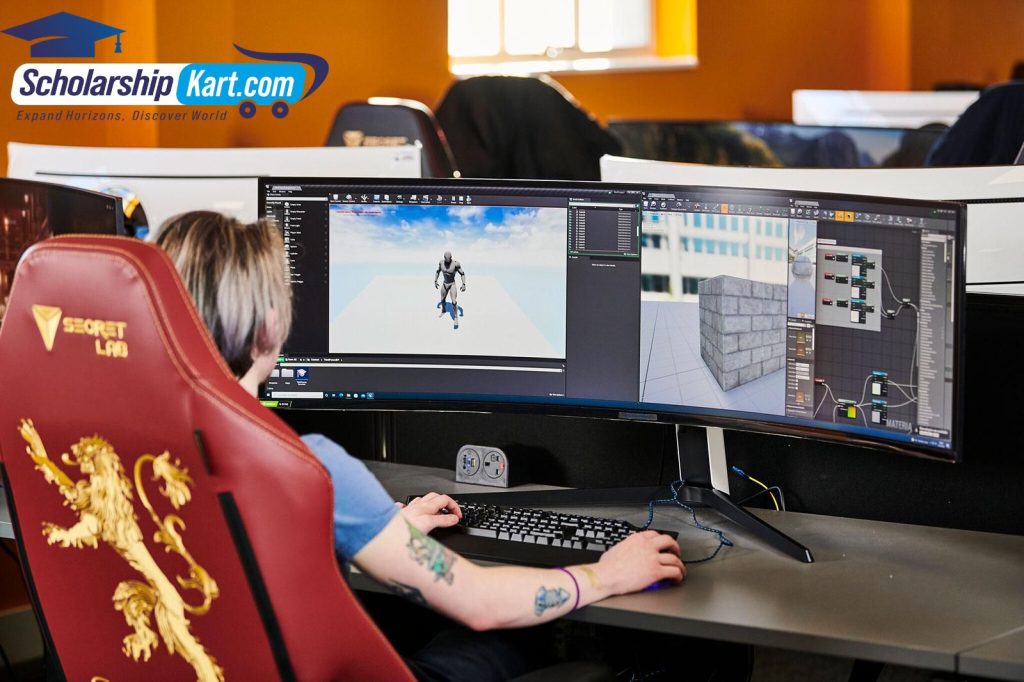
Students benefit from advanced design labs equipped with high-performance computers and professional software used in the gaming industry.
Working with these tools allows them to gain practical experience and familiarity with real-world technologies, giving them a competitive edge when entering the job market.
3. Strong Focus on Practical Learning
UK universities emphasise hands-on experience through workshops, live projects, and interactive assignments. This approach helps students understand the complete game development process, from concept creation to final production, while also encouraging creativity and innovation.
4. Industry Exposure and Networking Opportunities
Regular guest lectures, seminars, and workshops conducted by industry professionals provide valuable insights into current trends and practices. These interactions also create networking opportunities, helping students build connections that can support their future careers.
5. Global Recognition of UK Degrees
A degree from a UK university is highly respected worldwide. This global recognition enhances employability and allows graduates to explore job opportunities not only in the UK but also in international gaming markets.
6. Strong Theoretical Foundation in Game Studies
In addition to practical skills, students study the history and theory of games. This knowledge helps them understand what makes games engaging and successful, enabling them to design meaningful and user-focused gaming experiences.
7. Exposure to Emerging Technologies
Game Design courses in the UK incorporate modern technologies such as artificial intelligence, machine learning, and extended reality. This ensures that students stay updated with industry advancements and are prepared for future developments in the gaming sector.
8. Development of Teamwork and Project Management Skills
Students often work on both individual and group projects, which helps them develop essential skills such as communication, collaboration, and project management. These abilities are crucial for working in professional game development environments.
9. Strong Industry Connections and Career Pathways
The UK has a well-established gaming and creative industry, and universities often collaborate with leading studios. These connections provide students with internship opportunities, real-world projects, and a clear pathway into the gaming industry after graduation.
Types of Game Design Degrees in the UK
Game Design degrees in the UK are primarily offered at undergraduate and postgraduate levels. Undergraduate programmes focus on building foundational knowledge in game design, combining artistic creativity with technical development skills. These courses are ideal for students who are beginning their journey in the field and want to explore various aspects of game creation.

Postgraduate programmes, on the other hand, are designed for students who wish to specialise further or enhance their existing knowledge. These courses focus on advanced concepts, research, and industry-level project development, preparing students for leadership roles or specialised careers within the gaming industry.
What You Will Study in Undergraduate (UG) Game Design Programs
Undergraduate Undergraduate Game Design programmes in the UK focus on building your creative thinking first, then adding technical skills step by step. You will start by learning what makes games fun and engaging, things like storytelling, player behaviour, and core game mechanics.
As you progress, you will design game worlds, create characters, and develop stories that connect with players. At the same time, you will gain practical skills to turn your ideas into real, playable games, so it’s a mix of creativity and hands-on development.
You will also work with industry tools like Adobe Creative Suite in professional labs, creating visuals, assets, and interactive elements used in real game production.
A big highlight is practical learning. Through workshops, guest lectures, and industry collaborations, you’ll understand how games are actually made. By the end of the course, you will have a strong portfolio of projects, crucial for landing a job in the gaming industry.
What You Will Study in Postgraduate (PG) Game Design Programs
- Postgraduate game design courses (like MA Games Design) take your skills to an advanced level, blending creativity with research. You will learn how to design innovative games while understanding the theory behind them.
- The course builds expertise in areas like advanced development, UI/UX design, and game engines such as Unity and Unreal Engine. You will create games for diverse, global audiences while improving both technical and creative skills.
- You will also explore new technologies like AI and extended reality, helping you stay future-ready in a fast-changing industry. Research plays a key role too, strengthening your critical thinking and ability to innovate.
- Most learning is project-based, including a final major project where you develop a professional-quality game. By the end, you are prepared for specialised roles and leadership positions in the gaming industry.
Game Design Course Duration in the UK
Undergraduate Game Design courses in the UK typically last three years. During this period, students gradually build their knowledge from foundational concepts to advanced design and development skills. The course structure includes theoretical learning, practical projects, and portfolio development.

Master’s degrees in Game Design usually have a duration of one year for full-time study. These intensive programmes focus on advanced skills, research, and specialised areas of game development. The shorter duration makes postgraduate study in the UK both time-efficient and academically rigorous.
Tuition Fees for Game Design Courses in the UK
Tuition fees for Game Design courses in the UK vary depending on the university and level of study. For undergraduate programmes, international students can expect to pay approximately £14,000 to £20,000 per year. Postgraduate courses generally range from £15,000 to £28,000 for the entire programme.
While the costs may seem high, students benefit from world-class education, access to advanced facilities, and strong career prospects. Many universities also offer scholarships and financial aid options to help international students manage their expenses.
Sample Tuition Fees for Game Design Courses at UK Universities (2026)
| University | Suggested Program | Tuition Fees |
| University of Hertfordshire | BA (Hons) 3D Games Art & Design | £17450 per year |
| Abertay University | BA (Hons) Game Design and Production | £17950 per year |
| Bournemouth University | BSc (Hons) Games Design | £19700 per year |
| Brunel University | Games Design BA (Hons) | £19700 per year |
| Keele University | Games Design BA (Hons) | £17700 per year |
| University of Hertfordshire | MA Games Art and Design | £17950 |
| University for the Creative Arts | MA Games Design | £18540 |
| University of Liverpool | MA Games Design | £28000 |
| Falmouth University | MA Games Design | £19950 |
| University of Plymouth | MA Games Design | £18700 |
Career Opportunities After Studying Game Design in the UK
- A degree in Game Design opens up a wide range of career opportunities in the gaming and creative industries. Graduates can work in game development studios, media companies, or tech firms.
- The skills acquired during the course are highly transferable, allowing students to explore roles in design, programming, and digital media. The growing global demand for interactive entertainment ensures strong career prospects.
- Graduates can also work on independent projects or start their own game development ventures. Overall, the field offers both creative satisfaction and professional growth.
Popular Career Paths
Graduates of Game Design can pursue roles such as game designer, game programmer, game artist, game writer, and game sound designer. Other career options include game tester or analyst, game producer, user interface or user experience designer, and game marketing manager.
These roles allow individuals to specialise based on their interests and strengths within the gaming industry.
Average Salary for Game Design Graduates

Entry-level salaries for Game Design graduates in the UK typically range from £18,000 to £25,000 per year. With a few years of experience, professionals can earn £36,000 to £45,000 depending on their role, location, and employer. Senior game designers with extensive experience can earn salaries from £65,000 to £80,000 or more, reflecting the high demand for skilled professionals in the industry.
Expected Salary in Game Design in the UK (2026)
As per prospects.ac.uk, expected salaries for different roles in the game design field in the UK are:
| Job Role | Entry-level Salary | Mid-level Salary | Senior-level Salary |
| Application Developer | around £25000 | £35000 to £40000 | £45000 to £70000+ |
| Concept Artist | £17000 to £20000 | £25000 to £40000 | £55000 to £75000+ |
| Game Artist | £22000 to £30000 | £35000 to £50000 | £50000 to £70000+ |
| Game Designer | £20000 to £35000 | up to £45000 | £65000 or more |
| Game Developer | around £24000 | £36000 to over £50000 | £55000 to £80000 |
| Multimedia programmer | £22000 to £25000 | £30000 to £40000 | £64000 to £78000 |
| Multimedia specialist | £21000 to £24000 | £30000 to £35000 | £40000 to £50000+ |
| Software engineer | £30000 to £31000 | £42000 to £69000 | £84000 to £100000+ |
| VFX artist | £20000 to £25000 | £30000 and £40000 | £50000+ |
| Animator | £18000 to £22000 | £25000 to £35000 | £40000 or more |
| Graphic designer | £20000 to £25000 | £29000 to £35000 | £35000 to £50000 |
Graduate Employability for Game Design Graduates in the UK
Graduate employability in Game Design is strong due to the vocational nature of the degree and its alignment with industry needs.
UK universities focus on portfolio development, practical experience, and industry engagement, which significantly enhances job readiness. Students graduate with hands-on experience in game production, making them attractive to employers.
The UK’s established gaming industry also provides numerous internship and job opportunities. Additionally, the global recognition of UK degrees further improves employability in international markets.
Top UK Universities to Study Game Design in 2026
According to the Guardian University Guide 2026, the best universities to study game design in the UK in 2026 are:

- University of Hertfordshire
- University of Dundee
- Sheffield Hallam University
- Teesside University
- University of Plymouth
- University of Portsmouth
- Manchester Met University
- London South Bank University
- University of Wales Trinity Saint David
- University of the Arts London
- Birmingham City University
- University of Sunderland
- University of South Wales
- Abertay University
- Kingston University
- UWE Bristol
- University of Lincoln
- Bucks New University
- Canterbury Christ Church
- Coventry University
Conclusion
Studying Game Design in the UK offers a unique combination of creativity, technical expertise, and industry exposure. The country’s advanced education system, strong links with the gaming industry, and focus on practical learning make it an ideal destination for aspiring game designers.
Students gain access to cutting-edge tools, innovative technologies, and valuable networking opportunities that prepare them for a successful career. The shorter course duration and globally recognised qualifications add further value for international students.
With excellent career prospects and the opportunity to work in a dynamic and growing industry, the UK stands out as one of the best destinations to study Game Design.
If you desire to pursue a Game Design degree in the UK, Book a Free consultation with ScholarshipKart. You’ll receive end-to-end support, from application assistance, scholarship guidance, and a focused visa application, designed to make your transition to the UK seamless. Turn your ambition of studying FinTech into a reality. Let’s make it happen together.
FAQs
Game Design is the study of creating interactive digital games by combining creativity, storytelling, and technology. The course typically covers areas such as game mechanics, narrative development, visual design, programming basics, sound design, and user experience. Students also learn about the theory and history of games to understand what makes them engaging and successful.
A strong programming background is not always required, especially for undergraduate courses. Many universities start with the basics and gradually build technical skills. However, having an interest in technology and a willingness to learn coding can be beneficial, particularly for more technical or development-focused roles.
For undergraduate programmes, students typically need to have completed their higher secondary education with satisfactory grades. Some universities may require a portfolio showcasing creative work. For postgraduate courses, a 2:2 bachelor’s degree in a relevant field is usually required, along with a portfolio in some cases to demonstrate design or creative skills.
Also, international students need to fulfil English language requirements, such as IELTS overall 6.5 with a minimum 5.5 in all areas.
Undergraduate Game Design degrees generally take three years to complete. Postgraduate programmes, such as a master’s degree, usually take one year if studied full-time. This shorter duration makes the UK an attractive option for international students.
Graduates can pursue various roles such as game designer, game developer, game artist, UI/UX designer, game tester, or producer. Opportunities also exist in related industries like animation, digital media, and virtual reality, as the skills gained are highly transferable.