
Choosing the right university for a career in healthcare is about much more than earning a degree. Students need strong academic foundations, professional training, meaningful clinical experience, expert teaching and opportunities to understand how healthcare is changing.
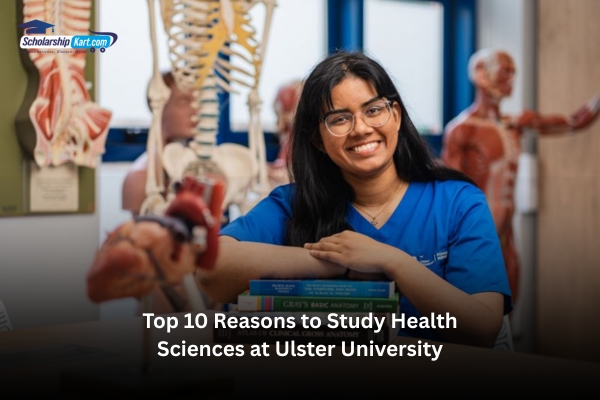
Ulster University brings these elements together through its School of Health Sciences, creating an environment where students can develop the knowledge, practical abilities and professional confidence required to make a difference in people’s lives.
Whether your interests lie in Diagnostic Radiography and Imaging, Cardiac Physiology, Occupational Therapy, Physiotherapy, Podiatry, Radiotherapy and Oncology, Respiratory and Sleep Physiology or Speech and Language Therapy, Ulster University offers opportunities across a diverse range of healthcare disciplines.
Its School of Health Sciences has been delivering Allied Health Professions education since 1974 and has developed a distinguished reputation for professional education, clinical training, research and collaboration with healthcare and regulatory organisations.
The School is based at the Derry~Londonderry campus and is one of the few Health Science Schools in the UK to bring together six Allied Health Professions subjects alongside Healthcare Science programmes.
With more than 900 students, 65 academic staff, four technical staff and four administrative staff, it represents one of the largest schools of its kind in the UK and Ireland. Here are ten compelling reasons to consider studying Health Sciences at Ulster University.
Ready to turn your Health Sciences aspirations into a career in the UK? Connect with ScholarshipKart to explore Ulster University programmes, understand your study options, scholarships and visa guidance. Receive personalised support to make your journey to studying in the UK easier.
Why Choose Ulster University for Health Sciences?
Wondering why Ulster University is a great choice for Health Sciences? Let’s explore the key reasons below.
1. Study Health Sciences at a University with a Long-Standing Healthcare Heritage
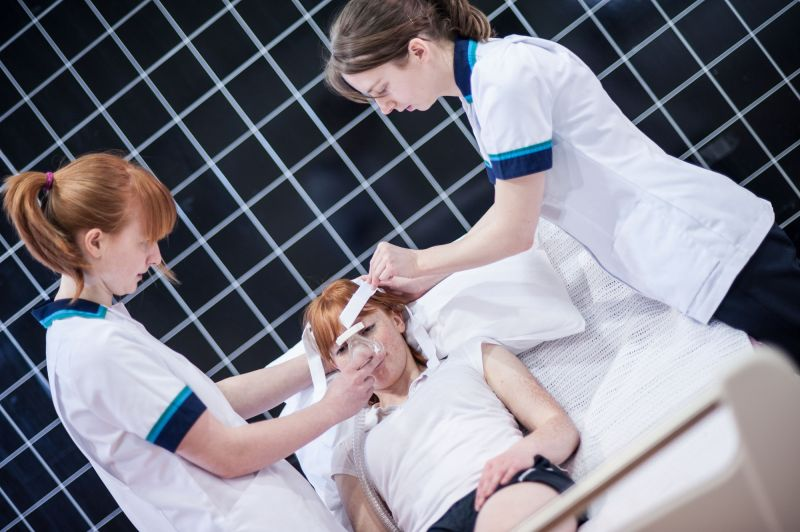
One of the strongest reasons to study Health Sciences at Ulster University is its established history in professional healthcare education. The School of Health Sciences was established in 1974 and has been delivering Allied Health Professions education since then. This long-standing experience has helped create programmes designed around the professional expectations of modern healthcare.
The School is also described as one of the oldest Allied Health Professional academic schools in the United Kingdom. Over the years, its graduates have progressed into leadership roles across research, health services and education. This history gives students the opportunity to learn within an academic environment that has developed alongside the healthcare professions themselves.
For prospective students, this means studying within a school where professional education is not an emerging area but an established part of the university’s academic identity.
2. Choose from a Wide Range of Health Science and Allied Health Courses
Healthcare is a broad field, and different students are motivated by different aspects of patient care, clinical science and rehabilitation. Ulster University responds to this diversity with a wide selection of undergraduate healthcare programmes.
Students can explore areas such as Cardiac Physiology, Diagnostic Radiography and Imaging, Occupational Therapy, Physiotherapy, Podiatry, Radiotherapy and Oncology, Respiratory and Sleep Physiology, and Speech and Language Therapy. Each discipline develops different professional skills while sharing a common focus on improving health, wellbeing and quality of life.
For example, the Physiotherapy programme develops students’ abilities to identify problems, find and critically evaluate relevant information, develop recommendations and communicate solutions effectively.
Occupational Therapy combines academic learning with clinical placements, while Speech and Language Therapy focuses on communication as well as eating, drinking and swallowing difficulties and their impact on individuals and families.
This breadth makes Ulster University particularly attractive to students who want to build a healthcare career while choosing a specialist area that matches their interests and strengths.
3. Learn from Professionally Qualified and Experienced Faculty
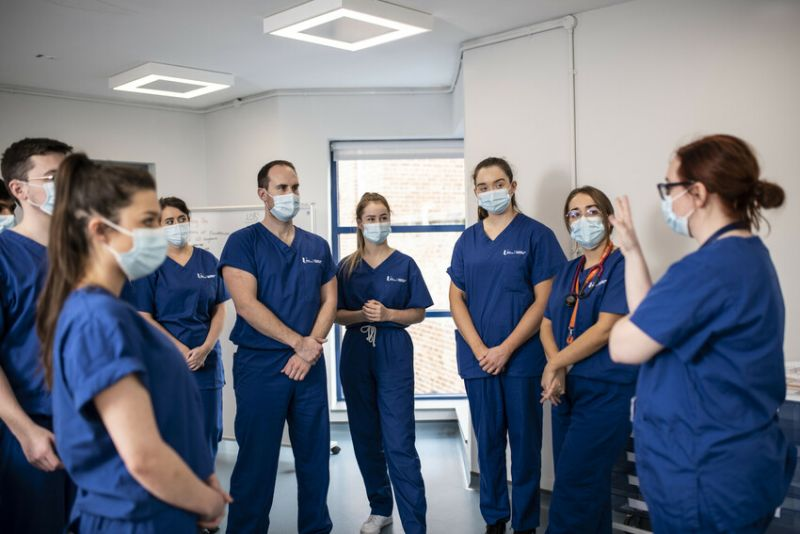
The quality of teaching is central to any healthcare degree, and Ulster University’s School of Health Sciences brings together professionally qualified academic staff alongside internationally recognised visiting clinicians and professors.
The faculty’s expertise covers a broad spectrum of health science disciplines. Staff research and professional interests include anatomy and physiology, exercise physiology, public health, epidemiology, medical imaging, radiation protection, rehabilitation, biomechanics, sports injuries, pain management, musculoskeletal disorders, podiatric surgery and neurological rehabilitation.
This professional expertise can help students connect academic concepts with the realities of healthcare practice. For example, research and teaching interests within the School include neurorehabilitation, stroke rehabilitation, spinal cord injury, traumatic brain injury, movement analysis and postural balance.
Other academic expertise includes radiology, artificial intelligence for prioritised imaging and lung cancer diagnosis, rehabilitation following critical illness, respiratory conditions and physical activity.
Learning within such a multidisciplinary academic community allows students to encounter healthcare from multiple professional perspectives rather than viewing their chosen discipline in isolation.
4. Gain Valuable Clinical Placement Experience
Healthcare education requires more than classroom learning. Students need opportunities to apply knowledge, develop professional judgement and understand how patient care works in real clinical environments. Ulster University places significant emphasis on practice education and clinical placements.
As part of undergraduate training, students must complete a minimum of 1,000 hours of practice education. Clinical placements are incorporated across each year of study, giving students opportunities to progressively develop their professional capabilities.
Students can attend weekly clinics on campus during semester and undertake placements within one of the five Health Trusts in Northern Ireland during semester periods.
Supervised clinical placements also provide an opportunity to learn with placement educators who have been trained in students’ learning needs and the goals of the placement.
This practical component can help bridge the gap between university study and professional healthcare practice. Students can develop experience, strengthen transferable skills and gain a clearer understanding of potential career pathways before completing their degree.
5. Develop Inter-Professional Healthcare Skills
Modern healthcare depends heavily on collaboration. Patients and service users often receive support from professionals working across different disciplines, making communication and teamwork essential skills for healthcare graduates.
Ulster University provides opportunities for effective inter-professional learning across its healthcare courses alongside profession-specific education. This approach encourages students to understand how different healthcare professionals contribute to patient and client care.
Developing teamwork skills within an academic environment can help students appreciate the responsibilities of other professions while strengthening their own professional identity. It also reflects the collaborative nature of healthcare practice, where high-quality patient care frequently depends on professionals sharing knowledge and working towards common outcomes.
For students preparing for careers in Allied Health Professions and Healthcare Science, this multidisciplinary environment can therefore provide valuable preparation for professional life.
6. Benefit from Research-Informed Health Science Education
Another important reason to study Health Sciences at Ulster University is the connection between teaching and research. The School conducts internationally excellent and world-leading research across five research centres, reflecting the diversity of health science disciplines.
The Centre for Health and Rehabilitation Technologies, for instance, focuses on health technologies and health practices involving areas including clinical sciences, diagnostic radiography and occupational therapy. Research within the School also addresses people with complex healthcare needs, including individuals affected by cancer and other challenging health conditions.
Research-informed teaching can help students understand how evidence is generated and applied to real healthcare problems. Rather than treating healthcare knowledge as fixed, this approach encourages students to see how research can contribute to better clinical practice, healthcare policy and patient outcomes.
The School also transfers research knowledge to key stakeholders, helping connect academic work with healthcare policy and practice. This emphasis on knowledge exchange gives students insight into how university research can create an impact beyond the classroom.
7. Study in a School with Strong Professional and Regulatory Connections
Professional recognition is particularly important when choosing an Allied Health Professions degree. Ulster University’s School of Health Sciences has close working relationships with professional and statutory regulatory bodies, and the professional nature of its programmes is identified as one of the School’s particular strengths.
Several programmes provide clear routes towards professional registration or recognition. Successful graduates of Diagnostic Radiography and Imaging can apply for registration under the protected title of Radiographer or Diagnostic Radiographer with the Health and Care Professions Council. The programme is also recognised and endorsed by the Society and College of Radiographers.
The Podiatry degree provides graduates with the opportunity to apply for registration with the Health and Care Professions Council and membership of the Royal College of Podiatry. Respiratory and Sleep Physiology graduates can apply for registration with the Academy of Healthcare Science following successful completion.
Occupational Therapy also has international recognition, with the programme approved by the World Federation of Occupational Therapists. These professional links demonstrate how the courses are connected to the standards and expectations of healthcare practice.
8. Benefit from Strong Rankings and Student Satisfaction
Independent rankings and student feedback provide additional evidence of the School’s academic standing. Ulster University is ranked third in the Complete University Guide 2027 for Health Studies, while the 2026 edition placed the university sixth in the UK for Health Studies, 12th for Speech and Language Therapy and 18th for Physiotherapy.
The Times/Sunday Times University Guide 2026 ranked Ulster 7th in the UK for Physiotherapy, while the Guardian University Guide 2026 placed the university 52nd overall in the UK. Ulster also holds a five-star QS Stars rating for excellence across multiple categories.
Student satisfaction figures provide another encouraging indicator. According to the supplied National Student Survey 2026 data, BSc (Hons) Podiatry and BSc (Hons) Radiotherapy and Oncology achieved 100% overall student satisfaction, while BSc (Hons) Diagnostic Radiography and Imaging recorded 93% overall student satisfaction.
Together, these indicators provide prospective students with evidence of strong performance across university rankings, subject areas and student experience.
9. Access Career Development and Placement Support
A healthcare degree can open professional opportunities, but students may also need support when searching for placements and preparing for employment. Ulster University provides dedicated Graduate Development Coaches who can support students throughout their placement journey.
This support includes assistance with placement searches and applications, CV and interview preparation, understanding placement offers and conditions, and related placement guidance. Students can also access placement opportunities through UU Futures.
Work placements can provide more than clinical experience. They can help students explore possible career directions, strengthen their CVs, develop transferable skills and build professional networks. Exposure to real-world healthcare environments can also help students understand the expectations associated with their future profession.
For students who want their university experience to lead naturally towards professional practice, this combination of academic education, clinical placements and career development can be particularly valuable.
10. Study in an Environment Focused on Innovation, Research and Future Healthcare
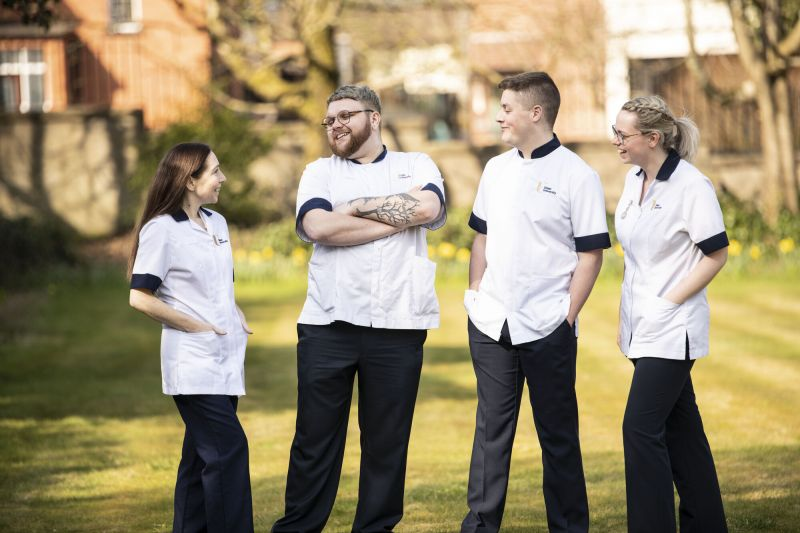
Healthcare is constantly evolving, and students need an education that prepares them to respond to emerging challenges. Ulster University combines healthcare education with research, technology transfer, academic enterprise and continuing professional development.
The School’s research strengths cover areas ranging from rehabilitation and respiratory conditions to medical imaging, radiation protection, biomarkers, public health interventions and clinical operations. Faculty expertise also includes developing technologies and approaches that can address real healthcare challenges.
The university’s commitment to research impact is reinforced by its REF 2021 position among the top 10% of UK universities for research impact. Ulster University was also awarded University of the Year 2024 by Times Higher Education, the most prestigious title in its awards.
The Derry~Londonderry campus further contributes to the student experience. Located in Northern Ireland’s second city, the campus provides an intimate learning environment supported by continued investment in teaching, research and student facilities. Recently developed Learning and Teaching space and refurbished sports facilities add to the wider campus experience.
Conclusion
Studying Health Sciences at Ulster University offers more than an academic qualification. It provides an opportunity to develop professional knowledge within one of the UK and Ireland’s largest Health Science schools, learn from experienced academics and clinicians, gain substantial clinical experience and engage with research addressing genuine healthcare challenges.
From Diagnostic Radiography and Imaging to Physiotherapy, Occupational Therapy, Podiatry, Radiotherapy and Oncology, Respiratory and Sleep Physiology and Speech and Language Therapy, students can choose a pathway that reflects their interests while developing skills that contribute to patient and client care.
The School’s long history since 1974, strong professional relationships, inter-professional education, extensive placement opportunities, research activity and encouraging rankings make Ulster University a compelling destination for students seeking a career in healthcare.
Most importantly, the focus remains firmly connected to people: improving care, developing professional expertise and using knowledge to create meaningful change.
For students who want to combine academic learning with practical healthcare experience and become part of a supportive, research-informed professional community, Ulster University provides an environment in which ambition can develop into a rewarding healthcare career.
Start Your Ulster University Journey with ScholarshipKart
Interested in studying Health Sciences at Ulster University? Book a Free Consultation with ScholarshipKart for personalised guidance on course selection, admissions and your next steps towards studying in the UK.
Ulster University offers a long-established Health Sciences education, experienced faculty, clinical placement opportunities, research-informed teaching, and professional connections across a range of healthcare disciplines.
Students can explore courses including Diagnostic Radiography and Imaging, Cardiac Physiology, Occupational Therapy, Physiotherapy, Podiatry, Radiotherapy and Oncology, Respiratory and Sleep Physiology, and Speech and Language Therapy.
Undergraduate students are required to complete a minimum of 1,000 hours of practice education, with clinical placements incorporated throughout the years of study.
Students can attend weekly clinics on campus during semester and undertake placements within one of the five Health Trusts in Northern Ireland during semester periods.
The School of Health Sciences was established in 1974 and has been delivering Allied Health Professions education since then.
Yes. The university provides opportunities for inter-professional learning alongside profession-specific education, helping students understand how different healthcare professionals collaborate in patient and client care.