
Studying music in the UK can be an excellent choice for students who want to develop their performance, composition, production, technology, or music-business skills in an internationally recognised academic environment.
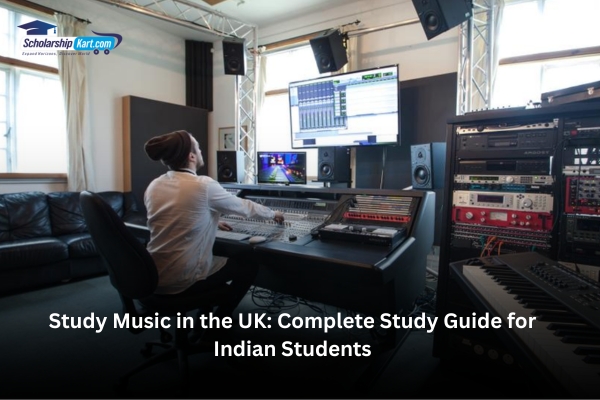
The UK has a long musical tradition, ranging from classical and opera to jazz, contemporary, electronic, popular, and experimental music. British universities and conservatoires combine academic study with practical training, giving students opportunities to perform, compose, record, collaborate, and work with modern music technology.
Music programmes in the UK are available at undergraduate, postgraduate, and doctoral levels, with specialisations ranging from performance and composition to music production, technology, and musicology.
Students also benefit from the UK’s vibrant music and creative industries, gaining opportunities for practical learning, collaboration, and professional exposure.
With shorter degree durations and a wide range of academic pathways, the UK offers Indian students an opportunity to develop their musical skills while preparing for careers in the global music industry.
For Indian students, studying in the UK can provide exposure to international musical traditions and professional practices that complement India’s diverse classical, folk, film, and contemporary music industries.
Why Study Music in the UK?
The UK is home to internationally recognised universities, conservatoires, music schools, and creative institutions offering diverse music programmes.
Students can learn from academics, performers, composers, producers, and industry professionals while developing both theoretical knowledge and practical abilities.
UK music education also places considerable emphasis on independent creativity, collaboration, critical thinking, and experimentation.
The country’s established music and wider creative industries provide opportunities to understand how music is created, performed, recorded, marketed, and distributed.
For Indian students, this combination of specialised education and international exposure can provide a valuable foundation for careers in both the UK and global music industries.
Key Benefits of Studying Music in the UK

1. Access to Diverse Music Programmes
UK institutions offer much more than traditional music degrees. Depending on the university, students can study classical performance, composition, popular music, jazz, music production, music technology, sound engineering, music business, music education, musicology, and other specialised fields. This variety makes it easier to select a programme according to individual interests and career goals.
2. Strong Practical and Performance Training
Many music programmes combine lectures and academic research with practical activities. Students may participate in ensembles, concerts, recording projects, songwriting sessions, studio work, composition workshops, or live productions. This practical approach helps students turn theoretical knowledge into skills that can be used in professional environments.
3. Exposure to International Musical Cultures
The UK has a multicultural music environment in which classical, folk, jazz, electronic, hip-hop, rock, pop, world music, film music, and experimental forms coexist. Indian students can therefore experience musical approaches beyond their previous training while also bringing their own cultural and musical perspectives into collaborative projects.
4. Development of Music Technology Skills
Modern music careers increasingly involve digital audio workstations, recording technology, virtual instruments, mixing, mastering, sound design, and digital distribution. UK courses can provide access to specialist studios, recording facilities, software, rehearsal spaces, and production equipment. UCAS identifies music technology, production, recording, mixing, and mastering among the technical skills students can develop through music study.
5. Opportunities for Networking and Collaboration
Music is a collaborative industry, and studying alongside performers, composers, producers, sound specialists, managers, and other creative students can help develop professional relationships. Performances, festivals, university productions, guest lectures, workshops, internships, and student societies can also provide opportunities to meet people working in the creative sector.
6. Shorter Degree Structures
A major attraction of UK higher education is the comparatively short duration of many programmes. A standard full-time bachelor’s degree normally takes three years, while many taught master’s programmes can be completed in one year. Scotland commonly follows a four-year undergraduate structure. This can allow international students to complete their education more quickly than in countries where equivalent programmes commonly take longer.
7. Transferable Skills Beyond Music
Music education develops skills that can be useful outside performance and composition. Students learn communication, teamwork, time management, discipline, presentation, creative problem-solving, project management, listening, and adaptability. These capabilities can support careers in education, media, events, arts administration, technology, communications, and other creative sectors.
8. International Career Exposure
Studying in the UK can give students an understanding of international professional standards and creative-industry practices. International students can also build portfolios and professional networks while studying.
Types of Music Degrees in the UK: UG, PG and PhD

Music education in the UK is available at different academic levels. The appropriate level depends mainly on the student’s previous qualification, musical experience, and career objectives.
Undergraduate Music Degrees
Undergraduate programmes are designed for students beginning university-level music education after completing secondary or equivalent qualifications. Common awards include BA (Hons) Music, BMus (Hons), BA Popular Music, BA Music Production, and BSc Music Technology.
An undergraduate music degree generally combines core study with opportunities to specialise. Depending on the programme, students may study music theory, history, performance, composition, production, technology, analysis, songwriting, or music business. Some degrees also include independent projects, performances, placements, or industry-focused modules.
Most full-time bachelor’s degrees in the UK take three years, although four-year structures are common in Scotland and some programmes may include a foundation year or placement year.
Postgraduate Music Degrees
Postgraduate study is suitable for students who already hold a bachelor’s degree or an equivalent qualification and want to develop advanced knowledge or specialise in a particular field.
Common postgraduate awards include MA Music, MMus, MA Music Production, MA Music Technology, MA Music Management, MA Music Education, MA Musicology, and postgraduate performance degrees.
Many taught master’s degrees can be completed in one year of full-time study. Programmes usually involve advanced modules, practical projects, research, and a dissertation or major creative project, depending on the course.
PhD in Music
A PhD is the highest academic level and is appropriate for students interested in original research, advanced composition or creative practice, academic careers, or specialist research positions.
A music PhD may involve research into musicology, ethnomusicology, composition, performance, music technology, music education, cultural studies, or other specialised subjects. Some programmes follow a practice-based or practice-led model in which a substantial creative output is accompanied by critical research.
Doctoral study is considerably more research-intensive than a bachelor’s or taught master’s degree. Students normally need a clearly defined research topic, suitable academic preparation, research methods, and a supervisor whose expertise matches the proposed area.
Popular and Specialised Music Degrees in the UK

Popular Undergraduate Music Degrees
BA/BMus Music: A broad programme covering areas such as theory, analysis, history, performance, composition, and musicianship.
- BA Popular Music: Focuses on contemporary music, songwriting, performance, production, popular-music cultures, and industry practices. UCAS lists popular music programmes at several UK institutions.
- BA/BMus Performance: Suitable for students intending to develop advanced instrumental or vocal performance skills.
- BA/BMus Composition: Designed for students interested in writing music for concerts, ensembles, media, performance, or other contexts.
- BA Music Production: Focuses on recording, production, songwriting, studio practice, mixing, and digital music creation.
- BSc/BA Music Technology: Combines musical knowledge with technology, audio production, recording, programming, and sound-related applications.
Popular Postgraduate Music Degrees
- MA Music/MMus: Provides advanced study of music through performance, composition, research, analysis, or specialist study.
- MA Music Production: Concentrates on advanced studio practice, recording, production, mixing, artist development, and contemporary production techniques.
- MA Music Technology: Combines advanced musical practice with audio technology and digital production.
- MA Music Management: Focuses on the business and organisational side of the music industry, including management, marketing, events, publishing, and industry strategy.
- MA Music Education: Designed for students interested in teaching, educational research, curriculum development, community music, or leadership in music education.
- MA Musicology/Ethnomusicology: Suitable for students interested in researching music, culture, history, society, musical traditions, and critical analysis.
PhD Specialisations in Music
At doctoral level, students can explore highly specific topics such as:
- Musicology
- Ethnomusicology
- Composition
- Performance research
- Music education
- Music technology
- Sound studies
- Popular music studies
- Music and cultural studies
- Music psychology
- Digital and electronic music
- Practice-based creative research
The exact title and structure of a doctoral programme vary considerably between universities.
Music Course Duration in the UK
The duration of a music course depends on the qualification and institution.
| Study Level | Typical Full-Time Duration |
| Foundation Year | 1 additional year |
| Bachelor’s Degree | Usually 3 years |
| Scottish Bachelor’s Degree | Usually 4 years |
| Integrated Master’s | Usually 4 years |
| Taught Master’s | Usually 1 year |
| Part-time Master’s | Commonly 2 years or longer |
| PhD | Commonly around 3–4 years full-time |
A three-year bachelor’s degree is the standard model across much of the UK, while undergraduate courses in Scotland generally take four years.
Many UK taught master’s degrees are one year in duration, which is one reason they can be attractive to international students seeking a specialised qualification without spending several years abroad.
Doctoral programmes require substantially more time because students must conduct original research and produce a thesis or equivalent doctoral output. Exact PhD duration depends on the university, research area, funding arrangement, and registration status.
Tuition Fees for Music Courses in the UK
Tuition fees for music courses in the UK vary depending on the level of study, university, course specialisation, and whether you are a home or international student:
- Undergraduate Courses: Tuition fees for international students generally range from £11,400 to £38,000 per year for undergraduate courses.
- Postgraduate Courses: Fees for Master’s programmes are usually between £10,000 and £35,000 per year for postgraduate courses.
These are general UK ranges rather than music-specific fees, so applicants should always check the fee published for their particular course.
- Additional Costs: Music students may also need to budget for musical instruments, specialist software, recording equipment, sheet music, performance expenses, and other course-related materials.
| University | Course | Fees |
| University of Cambridge | Music, BA (Hons) | £38,010 per year |
| University of Bristol | BA Music | £31,300 per year |
| University of Sheffield | Music BMus | £28,160 per year |
| University of Manchester | Music MusB | £29,900 per year |
| University of Surrey | BMus (Hons) | £23,700 per year |
Scholarships for Music Students in the UK
Scholarships can significantly reduce the cost of studying music in the UK. Funding may be offered by universities, government-backed schemes, charitable organisations, music institutions, or external foundations.
- GREAT Scholarships
- University-specific international scholarships
- Merit-based scholarships
- Performance scholarships
- Conservatoire bursaries
- Music-specific awards
- Postgraduate research studentships
- GREAT Scholarships
- Country-specific scholarships
- External arts and cultural funding
Scholarship eligibility can depend on academic performance, musical achievement, portfolio quality, nationality, financial circumstances, course level, and the institution. International funding can range from partial fee support to awards that cover tuition and other major study expenses.
Students should apply early because some music scholarships require separate auditions, portfolios, recordings, interviews, or scholarship applications in addition to the standard course application.
Career Opportunities After Studying Music in the UK

A music degree does not restrict graduates to becoming performing musicians. The skills developed through music education can support careers across performance, production, education, technology, media, arts management, and the wider creative economy.
Graduates may build a portfolio career combining several roles rather than relying on a single job. Music graduates can also use their communication, project management, teamwork, technical, and creative abilities in related industries. Sound and music technology graduates, for example, can move into recording, live sound, film, television, theatre, events, or other audio environments.
Those interested in teaching can work as private, visiting, peripatetic, or community music teachers, although teaching routes and professional requirements vary by role.
Overall, career success in music is strongly influenced by practical experience, networking, portfolio quality, specialisation, and entrepreneurial ability alongside the degree itself.
Popular Career Paths for Music Graduates
- Music producer
- Music therapist
- Musician
- Private music teacher
- Secondary school teacher
- Sound designer
- Sound engineer
- Sound technician, broadcasting/film/video
- Acoustic consultant
- Arts administrator
- Broadcast engineer
- Community arts worker
- Editorial assistant
- Event manager
- Marketing executive
- Private tutor
- Radio broadcast assistant
- Radio producer
- Talent agent
- Theatre stage manager
- Writer
Average Salary for Music Graduates in the UK
According to Glassdoor, the average salary for a Music Graduate in the United Kingdom is approximately £32,476 per year.
However, salaries can vary significantly depending on the job role, experience, location, specialisation, and whether a graduate works in a salaried position or as a freelancer.
For example, sound engineers, music producers, and private music teachers may have different earning structures. The following figures provide an indication of potential earnings across selected music-related careers.
| Music Career | Average / Typical Earnings |
| Music Graduate | £32,476 per year |
| Sound Engineer – Mid-Level | £25,000–£40,000 per year |
| Sound Engineer – Experienced | Up to around £50,000 per year |
| Music Producer | £25–£55 per hour |
| Private Music Teacher | £38 per hour (median) |
Salary figures can vary depending on experience, employer, location, workload, and freelance opportunities. Music producer and private music teacher figures are hourly rates rather than annual salaries.
The key point is that music earnings are often portfolio-based. A graduate might combine performing, teaching, production, composing, session work, and freelance projects, meaning annual income can differ substantially from a conventional salaried career.
Entry Requirements for Music Courses in the UK

Entry requirements vary significantly between universities and even between individual music programmes. UK universities set their own requirements based on qualifications, subjects, grades, suitability, interviews, portfolios, and other factors. Music courses can have additional expectations related to performance, theory, auditions, or creative work.
Entry Requirements for Undergraduate Music Courses
Indian students applying for a bachelor’s degree generally need a recognised Class 12 or equivalent qualification that satisfies the university’s international admissions requirements. The exact academic percentage or grade requirement depends on the institution and programme.
Typical requirements may include:
- Academic qualification: Completion of Class 12, CBSE, ISC, state board, or another accepted equivalent. Universities may set their own minimum grades.
- A-Levels: Typically ABB–AAB, although requirements vary by university and course.
- International Baccalaureate: Usually around 30–34 points, depending on the institution.
- English-language proficiency: International applicants may need an approved English-language test such as IELTS, an overall score of around 6.0–6.5, depending on the university and their previous education. The required score varies by course.
- Music background: Some programmes expect formal music education, while others accept evidence of practical experience. Requirements may involve Music A Level or equivalent qualifications, music theory, or practical performance grades.
- Audition: Performance-focused degrees may require an audition. Applicants may need to demonstrate their ability on their principal instrument or as a vocalist.
- Portfolio: Composition, songwriting, production, or popular-music programmes may request recordings, compositions, production work, or other examples of creative practice.
- Interview: Some institutions may interview applicants to understand their musical interests, experience, goals, and suitability for the programme.
Some popular music programmes may place greater emphasis on practical ability and creative experience. Therefore, Indian students should never assume that one percentage or one music certificate applies to every UK university.
Entry Requirements for Postgraduate Music Courses
For a master’s degree, applicants normally need
A relevant undergraduate degree in Music or a related subject, usually with a minimum of a 2:1 or equivalent, depending on the university.
A portfolio, audition, or examples of creative work may be required for performance, composition, production, or technology programmes.
IELTS: International students typically need an overall score of around 6.5, although requirements vary by institution.
Additional requirements can include:
- Academic transcripts
- Personal statement
- References
- CV
- English-language test results
- Audition for performance programmes
- Portfolio for production, composition, or creative programmes
- Research proposal for some research-oriented programmes
- Interview where applicable
Applicants to music production or technology programmes may need to demonstrate practical experience through recordings, productions, compositions, or other creative work.
Graduate Employability for Music Graduates in the UK
The UK’s strong focus on practical learning, performance opportunities, and industry partnerships ensures that Music graduates develop valuable skills for a wide range of careers. Leading organisations such as Sony Music, Warner Music Group, Universal Music Group, and the BBC regularly offer opportunities to talented music graduates through employment, internships, placements, and industry collaborations.
According to the Times and Sunday Times Good University Guide 2026, a high proportion of graduates from UK universities progress into employment or further study within six months of graduation, highlighting the strong career prospects available to Music graduates.
| University | Graduate Prospects |
| Royal College of Music | 93.9 |
| Royal Academy of Music | 92 |
| Royal Holloway, University of London | 90.6 |
| University of Manchester | 88.7 |
| University of Oxford | 88.7 |
Top Universities for Studying Music in the UK

The UK is home to some of the best architecture schools globally. Here are the top-ranking universities for music according to the Times and Sunday Times Good University Guide 2026:
- University of Cambridge
- Durham University
- University of Bristol
- University of Glasgow
- University of Sheffield
- University of Manchester
- Royal Holloway, University of London
- City St George’s, University of London
- University of Edinburgh
- University of Surrey
Conclusion
Studying music in the UK can offer Indian students a combination of academic education, practical musical training, creative experimentation, and international exposure. From bachelor’s degrees in music and performance to specialised master’s programmes in production and music technology and research-intensive PhDs, the UK provides pathways for different academic and career ambitions.
The country’s diverse music ecosystem can also help students understand professional practices across performance, recording, education, media, technology, and music business. Shorter degree structures, particularly three-year bachelor’s degrees and many one-year taught master’s degrees, can further make the UK attractive to international students.
However, prospective students should look beyond university rankings and compare curriculum, facilities, performance opportunities, industry links, location, fees, scholarships, and career support before making a decision.
Music is a competitive field, so building practical experience, a strong portfolio, professional relationships, and multiple skills during the degree can be just as important as obtaining the qualification. With the right course selection and a clear career strategy, a UK music education can become a valuable foundation for an international career in the creative industries.