
Artificial intelligence is transforming how people work, make decisions, solve problems and understand the world. From personalised recommendations and digital assistants to medical diagnostics, intelligent robots and scientific discoveries, AI is becoming an integral part of modern life. Behind these applications are sophisticated technologies that combine data science, machine learning, algorithms and intelligent decision-making to address challenges across industries.
For students aspiring to contribute to this evolving field, studying Artificial Intelligence at King’s College London (KCL) offers an opportunity to explore both the technical foundations and wider implications of intelligent systems.
King’s College London ranks 6th in the UK for Artificial Intelligence & Data Science in the QS World University Rankings by Subject 2026. The university’s AI programmes cover essential areas such as machine learning, reasoning, autonomous agents, robotics and data science, alongside the ethical, legal and social questions surrounding AI development.
With undergraduate and postgraduate pathways, research-led teaching and project-based learning, King’s enables students to develop the knowledge and practical skills required to understand, evaluate and build intelligent technologies.
Whether you want to establish a foundation in artificial intelligence, advance your computer science expertise or apply AI to scientific research, King’s offers different routes to explore your ambitions.
Artificial Intelligence Courses at King’s College London
King’s College London offers programmes that address different academic backgrounds and career interests. Students can choose an undergraduate degree focused on the foundations of AI, a postgraduate programme covering advanced AI theory and practice, or a specialist master’s degree exploring AI applications in scientific research.
1. BSc Artificial Intelligence
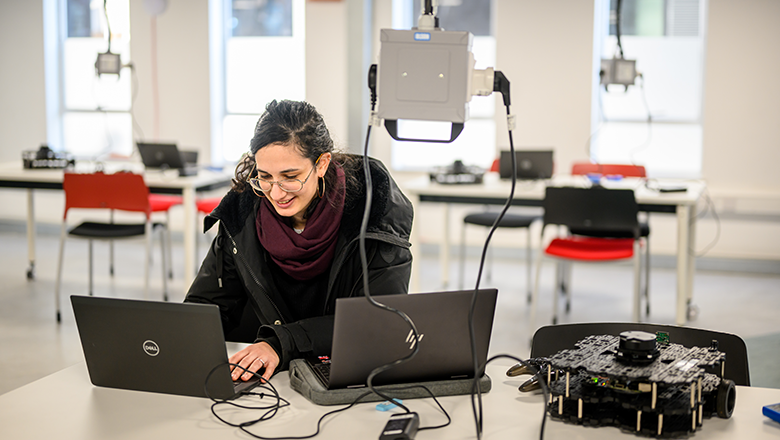
The BSc in Artificial Intelligence provides a comprehensive understanding of the theories, technologies and practical applications that underpin modern AI. The programme examines how intelligent systems learn from data, reason through problems, interact with their environments and support human decision-making.
The curriculum covers several core dimensions of artificial intelligence, including:
AI foundations: Understand the fundamental concepts and approaches used to develop intelligent systems.
Data science and machine learning: Explore how data can be analysed and used to develop models that identify patterns and support predictions.
Reasoning and autonomous agents: Study how intelligent systems make decisions, interact with their surroundings and plan actions, including applications in robotics.
Ethics and philosophy of AI: Examine the wider implications of artificial intelligence and its changing role in society.
Social, legal and professional perspectives: Consider the responsibilities involved in developing and deploying AI technologies.
Practical learning is an important part of the degree. Students apply their knowledge to complex projects inspired by industry problems, developing technical capabilities alongside teamwork, critical thinking and problem-solving skills.
In the third year, students may have the opportunity to collaborate with an external company to develop a technology solution addressing an industry challenge. This experience can help connect academic learning with practical applications.
Integrated MSci in Artificial Intelligence
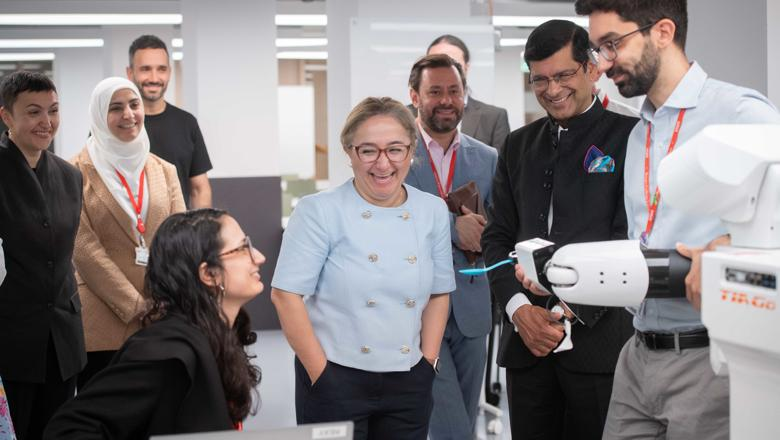
Students who want to extend their undergraduate studies can choose the integrated MSci pathway, which adds a fourth year to the degree. During this year, students undertake a substantial project and explore advanced areas of computer science.
Options include studying a broad selection of advanced topics or joining a distinctive programme with Amazon Web Services (AWS). Through the AWS programme, students work in teams to deliver innovative digital solutions using AWS technology for public-sector clients.
This additional year provides an opportunity to deepen technical knowledge, undertake substantial project work and explore how advanced computing technologies can address real-world needs.
2. Artificial Intelligence MSc
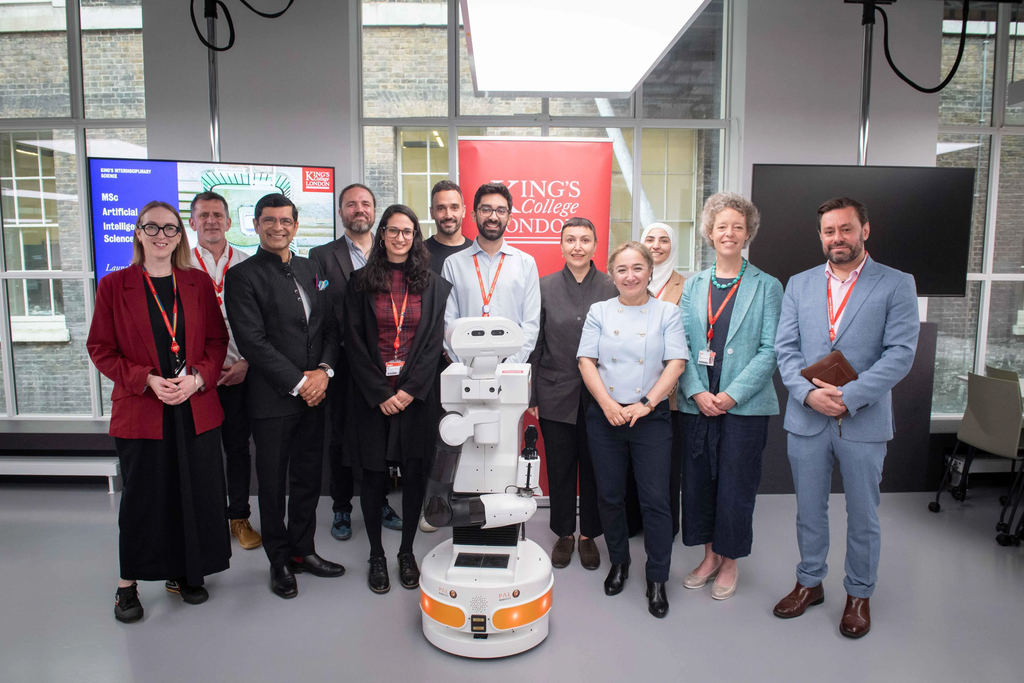
The Artificial Intelligence MSc at King’s College London is designed for students seeking a rigorous understanding of AI theory and practice. With an emphasis on safe and trusted AI, the programme addresses the challenges of developing intelligent systems that can be evaluated, designed and implemented responsibly.
Students develop practical expertise across several areas of artificial intelligence and computer science, including:
- Machine learning and data science
- Algorithms and AI engineering
- Intelligent system design and evaluation
- Human-AI interaction
- Robotics and planning
- The philosophy and ethics of artificial intelligence
Optional modules allow students to tailor their studies to their interests and professional goals. This flexibility makes the programme relevant to students who want to specialise in particular AI techniques or explore the relationship between technology and society.
A major project forms a significant part of the learning experience. Students create an original artefact, such as software, code or a prototype, in response to a research question or industry challenge. The process involves researching the problem, designing a solution, building and testing it, and refining the final outcome.
Where opportunities are available, students may collaborate with an external company. Projects can involve partners in sectors such as computing, law, aviation and government. Working with students from different backgrounds can further strengthen collaboration, project management and communication skills.
3. Artificial Intelligence for Science MSc
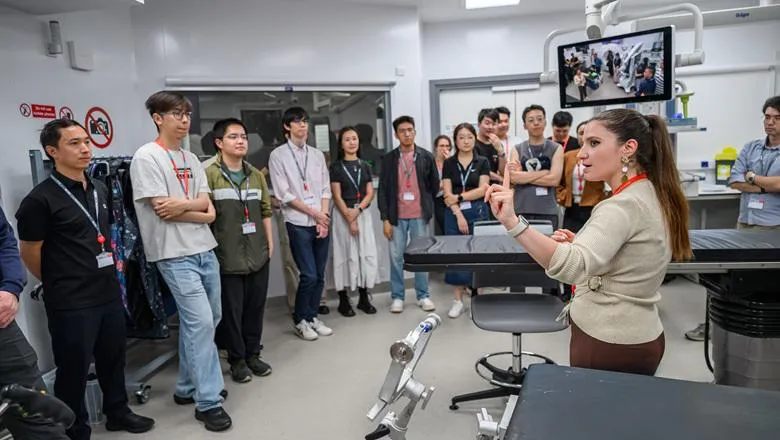
The Artificial Intelligence for Science MSc is a specialist programme designed for science and mathematics graduates who want to apply AI to scientific research and innovation. A first-of-its-kind programme in the UK, it focuses on preparing scientists to use artificial intelligence to address complex questions in their respective disciplines.
AI is creating new possibilities across scientific fields, including drug discovery, genomics, medical diagnosis, materials development and green energy. It can also support the generation of research ideas and the investigation of problems that require sophisticated computational approaches.
The programme builds on students’ existing scientific knowledge while introducing the AI skills needed to develop practical solutions.
Key areas of study include:
- Machine learning: Understand techniques for identifying patterns in data and applying them to scientific problems.
- Python programming: Develop coding skills, whether you are new to programming or already have experience.
- AI security: Explore security considerations involved in developing and applying AI technologies.
- Ethics of AI: Consider the responsibilities and broader implications of using artificial intelligence in science.
- Communicating scientific developments: Learn to communicate emerging ideas and developments effectively.
Collaborative projects inspired by industry challenges, set by academics and industry partners, allow students to apply their learning to practical problems. These experiences help develop technical expertise, adaptability, teamwork and problem-solving abilities.
This pathway is particularly relevant to graduates who want to combine their scientific or mathematical background with AI-driven research and innovation.
Ready to build your future in Artificial Intelligence? Explore AI degree programmes at King’s College London that can help you take the next step towards your academic and career goals. Let ScholarshipKart help you get started. From choosing the right university and course to personalised counselling, university admissions, scholarships and visa guidance, our experts can support you at every step of your study-abroad journey.
Why Study Artificial Intelligence at King’s College London? 10 Key Benefits

Choosing a university for studying AI involves more than comparing course titles. The learning environment, research expertise, practical opportunities and professional connections can all influence the value of a degree.
Here are ten reasons to consider King’s College London for artificial intelligence studies.
1. Strong Rankings in Artificial Intelligence and Graduate Employability
King’s College London ranks 6th in the UK for Artificial Intelligence & Data Science (QS 2026) and 6th for graduate employability in the Times Higher Education rankings for 2025/2026. These rankings provide useful indicators for students comparing universities for AI education and career preparation.
The programmes combine theoretical foundations with practical learning, helping students develop knowledge relevant to further study, research and technology-related careers.
2. Research-Led Teaching from AI Experts
The Department of Informatics has a reputation for research-led teaching and project supervision from academics working across computer science and artificial intelligence.
Students can engage with subjects including safe and trusted AI, autonomous systems, distributed AI, reasoning and planning. Other areas of expertise include algorithms, data analysis, cybersecurity, human-centred computing and software systems.
Learning in a research-informed environment helps students understand not only established AI techniques but also the questions researchers are investigating as the field develops.
3. Practical Experience Through Industry-Inspired Projects
AI knowledge becomes more meaningful when students can apply it to real problems. At King’s, project-based learning enables students to develop solutions, test ideas and evaluate the effectiveness of their work.
Depending on the programme and available opportunities, students may work with external organisations or industry partners. Projects can address challenges in computing, law, aviation, government and other sectors.
These experiences can strengthen technical skills while helping students understand how software and AI solutions are developed to meet practical requirements.
4. Professional Recognition Through BCS Accreditation
The accredited degree carries recognition from BCS, the Chartered Institute for IT. Accreditation provides assurance that a degree meets the organisation’s standards.
An accredited degree can support eligibility for professional membership of BCS, an important element of the criteria for achieving Chartered IT Professional (CITP) status through the institute.
Some employers recruit preferentially from accredited programmes, and the qualification may also be recognised in countries that are signatories to relevant international accords. Students interested in professional development can therefore consider accreditation as part of their university decision.
5. A Central London Location with Industry Connections
King’s College London’s Strand and Waterloo campuses place students in the heart of London. The Department of Informatics is based in Bush House on the Strand Campus.
The university’s central location offers proximity to global technology companies, including Google and Amazon, as well as professional and scientific organisations such as BCS and the Institution of Engineering and Technology (IET).
This setting provides opportunities to engage with London’s academic, professional and cultural environment. For students interested in AI, computing and technology careers, access to a major city can also be valuable when exploring industry events and professional networks.
6. Access to AI Tools and Emerging Technologies
Students can access Mistral AI’s Le Chat, a platform that allows users to customise and deploy AI models for activities such as coding, writing and problem-solving.
Working with AI tools can help students explore how intelligent technologies are used in practical settings. Combined with academic study, this exposure can support a better understanding of AI-assisted workflows and the opportunities and limitations of modern AI systems.
The focus remains on developing the knowledge needed to evaluate and apply technology thoughtfully rather than simply using AI applications.
7. Opportunities to Explore Multidisciplinary AI Research
Artificial intelligence increasingly intersects with fields beyond computer science. At King’s, research connects AI and data science with areas such as healthcare, sustainability, science and the humanities.
The King’s Institute for Artificial Intelligence brings together expertise from across the university and beyond to advance safe, secure and ethical AI. Its work addresses major national and global challenges, including climate-related problems, economic growth and the transformation of public services.
The Institute also supports collaborative initiatives, research partnerships and impact training. Students interested in the wider consequences of AI can benefit from studying in an environment where technological development is considered alongside social and practical concerns.
8. A Supportive and International Student Community
Studying at King’s means joining a diverse community of students and staff from around the world. This environment brings together different academic interests, perspectives and experiences.
Collaboration is especially valuable in AI, where developing a useful solution often requires more than programming expertise. Students must understand problems, communicate ideas, consider alternative approaches and work effectively with others.
A supportive learning environment can help students build confidence while developing the academic and interpersonal skills needed for collaborative research and professional work.
9. Student Societies, Hackathons and AI Events
Learning extends beyond lectures and assessed projects. King’s offers student societies covering technology, game development, women in computer science, robotics and other interests.
Students can participate in hackathons, technical workshops, careers panels, talks, networking events and social activities. These opportunities allow them to explore interests, exchange ideas and build connections with peers.
AI-related events also provide opportunities to engage with current research and public debate. Initiatives include AI Frontiers, AI Leaders, AI Conversations and AI Connect, which support expert discussions, public conversations and collaboration between researchers and external partners.
10. International Exposure and Flexible Academic Development
Students may have the opportunity to broaden their academic experience through the Study Abroad pathway, spending their third year at an international partner university before returning to King’s for their final year.
This pathway offers exposure to another academic and cultural environment, helping students develop a broader perspective and strengthen their academic and professional skills. Participation depends on academic performance and acceptance by a partner institution.
For students who prefer to deepen their technical expertise at King’s, the integrated MSci pathway offers an alternative route through an additional year of advanced study and substantial project work.
Together, these options allow eligible students to consider different ways of developing their knowledge and experience.
Entry Requirements for Artificial Intelligence at King’s College London
Undergraduate Entry Requirements
For the BSc Artificial Intelligence programme, the academic requirements include:
- A-levels: AAA, including grade A in Mathematics or Further Mathematics.
- International Baccalaureate: 39 points overall or an aggregate score of 20 from three Higher Levels, including grade 6 in Higher Level Mathematics: Analysis and Approaches.
- English language proficiency: IELTS Academic 6.5 overall, with a minimum of 6.0 in each skill.
Postgraduate Entry Requirements
For the Artificial Intelligence MSc and relevant postgraduate study, the academic criteria include a bachelor’s degree with a high 2:1 honours classification, or an international equivalent, with a final mark of at least 65% under the UK marking scheme.
The degree should be in Computer Science or another relevant quantitative discipline, such as:
- Mathematics or Statistics
- Physics or Natural Science
- Electronic Engineering or General Engineering
- Operations Research
- A joint degree combining two relevant subjects
- Applicants should also have a sound background in basic mathematics.
- The English language requirement is IELTS Academic 7.0 overall, with a minimum of 6.5 in each skill.
Because entry criteria can differ between programmes, applicants should check the applicable requirements for their chosen course.
Career Opportunities After Studying Artificial Intelligence at King’s
Artificial intelligence combines computational techniques with the ability to analyse data, develop models and design systems that support or automate decisions. The knowledge gained through an AI degree can therefore be relevant to several technology-focused career paths.
Depending on their degree, technical strengths and practical experience, graduates may explore opportunities in:
Artificial intelligence: Contribute to the development, evaluation or implementation of intelligent systems.
Software development: Design and build software applications, tools and digital solutions.
Data science: Analyse datasets, identify patterns and develop data-driven approaches to complex problems.
AI research and further study: Build on their academic foundations through advanced study or research.
Applied AI and scientific innovation: Use machine learning and computational methods to investigate challenges in science and other specialist fields.
Project-based learning can help students demonstrate their ability to tackle practical problems, collaborate with others and develop technical solutions. However, career outcomes depend on individual skills, experience, academic performance and the opportunities available in the employment market.
Conclusion
Artificial intelligence is evolving across technology, scientific research, business and public services, creating a need for people who understand both its technical foundations and its wider implications. Choosing the right university means finding a programme that supports academic development, practical problem-solving and responsible innovation.
King’s College London offers several routes into this field. Each pathway serves different academic goals while exploring how intelligent technologies can be developed and applied.
Its UK rankings, research-led teaching, industry-inspired projects, professional accreditation and central London location make King’s a compelling option for students considering AI education. Opportunities to engage with research, collaborate on projects and participate in a diverse student community further enrich the academic experience.
For aspiring AI professionals, researchers and science graduates, studying Artificial Intelligence at King’s College London can provide a foundation for exploring intelligent systems and contributing to the challenges that will shape their future development.
Take the next step towards your AI ambitions with King’s College London. Book a Free Consultation with ScholarshipKart for expert counselling, admission assistance, scholarship guidance and visa support. Explore the course options, review the entry requirements and find the programme that aligns with your interests in artificial intelligence, machine learning or AI-driven scientific innovation.
FAQs
1. What AI courses can international students study at King’s College London?
International students can explore the BSc Artificial Intelligence, integrated MSci pathway, Artificial Intelligence MSc and Artificial Intelligence for Science MSc at King’s College London. The right option depends on their academic qualifications, previous subject background and career interests.
2. What are the entry requirements for Artificial Intelligence at King’s College London?
For undergraduate entry, the A-level requirement is AAA, including grade A in Mathematics or Further Mathematics, while the International Baccalaureate requirement is 39 points overall with the specified Higher Level Mathematics grade. For postgraduate study, applicants generally need a bachelor’s degree with a high 2:1 classification or international equivalent in Computer Science or a relevant quantitative discipline.
3. What IELTS score is required for AI courses at King’s College London?
The IELTS Academic requirement for undergraduate study is 6.5 overall, with at least 6.0 in each skill. For the relevant master’s programmes, the requirement is 7.0 overall, with a minimum of 6.5 in each skill.
4. Can international students apply for the Artificial Intelligence MSc without a Computer Science degree?
Yes, applicants with a relevant quantitative degree may be considered, including backgrounds in Mathematics, Statistics, Physics, Natural Science, Engineering or Operations Research. They should also have a sound foundation in basic mathematics and meet the programme’s academic requirements.
5. Does King’s College London offer practical AI project experience?
Yes, project-based learning is an important part of its AI programmes, allowing students to apply their knowledge to research questions and industry-inspired challenges. Depending on the course and available opportunities, students may collaborate with external companies or industry partners to develop software, prototypes or other technical solutions.
6. What career opportunities are available after an AI degree at King’s College London?
Graduates can explore career paths in artificial intelligence, software development, data science, scientific innovation and further research. Career opportunities depend on individual skills, academic background, practical experience and employer requirements.
7. What makes King’s College London a good choice for studying Artificial Intelligence?
King’s ranks 6th in the UK for Artificial Intelligence & Data Science in the QS World University Rankings by Subject 2026 and offers research-led teaching, practical projects and opportunities to explore responsible AI. Its central London location and multidisciplinary research environment also provide valuable opportunities to engage with the wider technology and research community.
8. Can international students gain international exposure while studying AI at King’s College London?
Eligible students may have the opportunity to spend their third year at an international partner university through the Study Abroad pathway before returning to King’s for their final year. Participation is subject to academic performance and acceptance by the partner institution.