
Computer Science is the engine powering the future. From artificial intelligence and cybersecurity to data science and software engineering, computing skills are shaping how the world works, lives, and innovates.
As we move into an era defined by rapid technological transformation and innovation, choosing the right university to study Computer Science has become more important than ever. The right institution does not just teach coding; it builds problem-solvers, innovators, and tech leaders ready for a rapidly evolving digital economy.

With global demand for computer science graduates at an all-time high, top universities are investing heavily in cutting-edge research, industry partnerships, and advanced facilities. These institutions offer far more than classrooms; they provide access to world-class faculty, real-world projects, powerful computing infrastructure, and strong career pipelines into global tech companies and startups alike.
Let’s explore the top universities to study Computer Science in the UK in 2026, selected for their academic excellence, research impact, teaching quality, and graduate outcomes.
Whether you aim to work in Big Tech, pursue research, or build your own startup, these universities stand out as destinations where talent meets opportunity. If you are planning your next academic move, this list is your essential guide to making an informed, future-focused decision.
Take the next step toward Computer Science education in the UK with confidence. Reach out to ScholarshipKart for complete assistance, from university and course selection and admission counselling to visa preparation, scholarship guidance, and premium IELTS training. Let our experts help you craft an impressive SOP and achieve your study-abroad goals seamlessly.
Top 10 UK Computer Science Universities Shaping the Future in 2026
Imperial College London
Indian students aspiring to excel in computer science should strongly consider Imperial College London for its academic depth, research strength, and career outcomes.

Imperial’s Department of Computing is globally respected for shaping the foundations of modern computing while preparing students for rapid technological change.
Its BEng and MEng programmes in Computing, as well as joint degrees with Mathematics, combine strong theoretical grounding with hands-on system building, programming, and validation, skills highly valued by employers worldwide.
Students learn directly from world-leading researchers who drive innovation in areas such as artificial intelligence, cyber security, data science, and algorithms. Imperial’s access to advanced facilities, including three high-performance supercomputers, allows students to work on real-world, computation-intensive problems.
The department is rated “Excellent” for teaching by HEFCE and ranks among the UK’s top institutions for staff-student ratio, ensuring close academic support.
With paid industrial placements, global industry partnerships, and graduates in high demand across leading companies and startups, studying at Imperial offers Indian students a powerful launchpad for global careers.
University of Oxford
University of Oxford stands as one of the world’s most respected destinations for studying Computer Science, offering a powerful blend of academic depth, research excellence, and real-world impact.

The Department of Computer Science is among the longest-established in the UK and has been ranked the world’s leading university for computer science for eight consecutive years by Times Higher Education.
Its academic strength is reinforced by research quality: 81% of its work is rated world-leading and the remainder internationally excellent (REF 2021).
Students can choose from rigorous undergraduate programmes such as Computer Science, Computer Science and Philosophy, and Mathematics and Computer Science, alongside specialised master’s degrees including Advanced Computer Science.
Teaching emphasises strong theoretical and mathematical foundations, ensuring graduates can adapt to rapidly evolving technologies. Small-group tutorials, modern labs, and project-based learning help translate theory into practice.
Close collaboration with institutes like the Alan Turing Institute and industry partners such as Google DeepMind, AWS, and Intel provides exposure to cutting-edge innovation. For Indian students, an Oxford Computer Science degree offers global credibility, exceptional career prospects, and a lifelong academic network.
University of Cambridge
The University of Cambridge offers an exceptional environment for studying Computer Science, combining academic rigour, world-class research, and outstanding facilities.

Its Department of Computer Science and Technology is internationally respected for advancing both theoretical foundations and practical innovation across the discipline. In the most recent REF 2021, 100% of its research environment was rated world-leading, reflecting the department’s global influence.
Students benefit from a strong choice of programmes, including the renowned Computer Science Tripos at the undergraduate level and the one-year MPhil in Advanced Computer Science, designed to prepare graduates for doctoral research.
Teaching is closely integrated with active research in areas such as artificial intelligence, machine learning, robotics, cybersecurity, and systems engineering. Modern labs, collaborative workspaces, and access to cutting-edge research projects ensure learning goes far beyond textbooks.
With a culture that values impact and collaboration, the department works closely with academic, industrial, and non-academic partners. For Indian students, studying Computer Science at Cambridge means gaining a globally recognised qualification, deep technical expertise, and exposure to innovations shaping the future of technology worldwide.
University of Birmingham
The University of Birmingham offers a strong and future-focused environment for studying Computer Science, combining academic excellence with real-world relevance.

Its School of Computer Science is recognised for breaking new ground in both theoretical and applied computing, with research ranked 3rd in the UK for GPA and world-leading quality in REF 2021. This research strength directly informs teaching, ensuring students learn skills aligned with modern industry needs.
The university provides a wide range of undergraduate degrees, including Computer Science, Software Engineering, and Artificial Intelligence, available as three-year BSc or four-year integrated MSci/MEng programmes.
Many courses offer a year in industry or study abroad, giving valuable professional exposure. At the postgraduate level, specialised MSc programmes cover areas such as Advanced Computer Science, AI and Machine Learning, Cyber Security, Data Science, and Human–Computer Interaction, alongside conversion courses for non-computing graduates.
Students benefit from modern computing labs, practical project work, and strong industry links. For Indian students, a Computer Science degree from Birmingham delivers globally recognised credentials, applied expertise, and excellent career prospects in a fast-growing digital economy.
University of St Andrews
The University of St Andrews offers a high-quality and research-driven environment for studying Computer Science, known for its strong academic reputation and personalised learning experience.
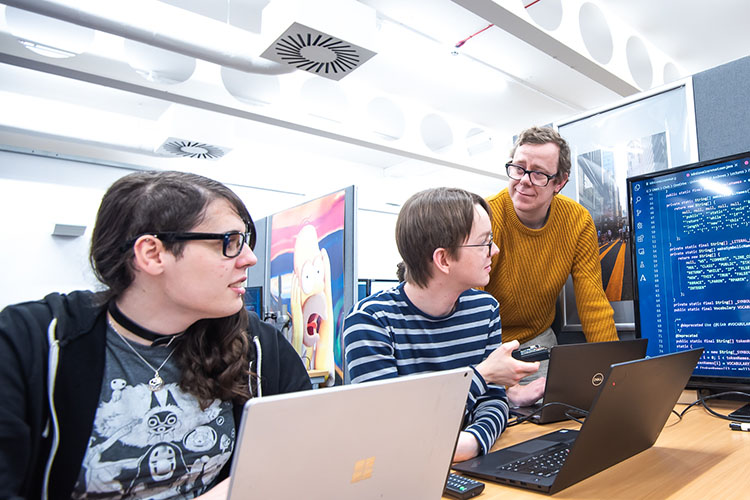
Its School of Computer Science is a recognised centre of excellence and a member of the Scottish Informatics and Computer Science Alliance (SICSA), connecting students to a powerful national research network. According to REF 2021, over 90% of the School’s research is rated world-leading or internationally excellent, highlighting its global academic standing.
Students can choose from a wide range of programmes, including BSc and MSci degrees at the undergraduate level and specialised MSc courses in areas such as Artificial Intelligence, Software Engineering, Data-Intensive Analysis, and Human–Computer Interaction.
Teaching closely reflects active research in fields like AI, networks, software systems, and fundamental computer science, ensuring a strong balance of theory and practice.
Modern facilities, small class sizes, and initiatives such as the Distinguished Lecture Series expose students to leading global experts.
For Indian students, studying Computer Science at St Andrews provides rigorous training, strong practical skills, and an internationally respected qualification that supports diverse career pathways worldwide.
University College London
University College London (UCL) stands out in Computer Science through its combination of academic excellence, innovative research, and strong industry connections.

In the Research Excellence Framework (REF) 2021, UCL Computer Science was ranked 1st in England and 2nd in the UK for research power, underlining its global influence. It also holds the Athena Swan Gold Award, the first UK CS department to achieve this, demonstrating a strong commitment to equality and inclusive education.
Undergraduate programmes include the Computer Science BSc, Computer Science MEng, Robotics and Artificial Intelligence MEng, and Computer Science and Mathematics MEng.
Admission to these highly competitive courses involves the TARA admissions test, ensuring students build strong analytical foundations. UCL’s courses blend theory with practical learning, including team-based projects and access to cutting-edge computing labs.
At the postgraduate level, UCL offers a wide spectrum of MSc programmes such as Artificial Intelligence and Data Engineering, Cybersecurity, Data Science and Machine Learning, Computational Finance, and Human–Computer Interaction. These one-year master’s degrees equip students with specialist skills aligned with global tech trends.
Situated in London’s vibrant tech ecosystem, UCL’s strong industry partnerships, advanced research facilities, and emphasis on real-world problem-solving create exceptional opportunities for future careers and innovation.
University of Warwick
The University of Warwick is a globally respected centre for Computer Science, recognised for its research excellence, academic rigour, and industry relevance.

The Department of Computer Science is ranked 3rd in the UK for scientific output and joint 4th overall in the Research Excellence Framework (REF) 2021, highlighting the quality and impact of its research.
Warwick’s work spans artificial intelligence, data science, cybersecurity, and systems engineering, with strong interdisciplinary collaboration and close links to the Alan Turing Institute.
Undergraduate programmes include BSc, BEng, MEng, and MSci degrees in Computer Science, Computer Systems Engineering, and Data Science, with flexible transfer options between three- and four-year pathways. Many degrees offer an intercalated year for industry placements or study abroad, enhancing employability.
At the postgraduate level, Warwick offers a one-year MSc in Computer Science with specialist tracks in Artificial Intelligence and Machine Learning, Cyber Security, and Data Analytics, alongside funded PhD opportunities through its Centre for Doctoral Training.
Students benefit from modern computing facilities, research-led teaching, and BCS and EQANIE accreditation, ensuring global professional recognition. For Indian students, Warwick delivers strong technical foundations, real-world experience, and excellent international career prospects.
University of Bristol
The University of Bristol is a leading institution for Computer Science, recognised for its research excellence, industry engagement, and cutting-edge facilities.

The School of Computer Science is consistently ranked in the UK top 10 for Computer Science (Times Higher Education Subject Rankings 2025) and has been named AI University of the Year (NAIA 2024), delivering the UK’s National Artificial Intelligence Research Resource, Isambard-AI, one of the most powerful and sustainable AI supercomputers globally.
Research at Bristol spans algorithms, cryptography, high-performance computing, artificial intelligence, human–computer interaction, and trustworthy systems.
Undergraduate programmes include BSc Computer Science, BSc Computer Science with Artificial Intelligence, MEng Computer Science, MEng Computer Science with AI, and joint honours options with Mathematics, with opportunities for industry placements and study abroad.
Postgraduate courses cover AI, Data Science, Cybersecurity, Internet of Things, and advanced research-focused MSc degrees. Teaching integrates theory with applied projects, enabling students to contribute to research publications or work with industrial partners.
Students benefit from state-of-the-art Windows, Linux, and GPU labs, and the Makerspace for hands-on projects in electronics, fabrication, and digital design. Bristol’s research-led teaching, industry collaboration, and world-class facilities equip graduates with the technical expertise and practical experience to excel globally.
University of Glasgow
The University of Glasgow is a globally recognised centre for Computer Science, combining world-leading research, innovative teaching, and industry engagement.

The School of Computing Science is ranked 6th in the UK and 2nd in Scotland (Times and Sunday Times Good University Guide 2026), and in the REF 2021, 100% of its research impact was rated world-leading, with 97% of research outputs deemed internationally excellent or world-leading.
Glasgow is a founding member of the Scottish Informatics and Computer Science Alliance (SICSA), fostering strong interdisciplinary collaboration.
Undergraduate programmes include BSc and MSci Computing Science, BSc/MSci Artificial Intelligence, BSc/BEng/MEng Electronic & Software Engineering, BEng/MEng Robotics and AI, and BSc/MSci Software Engineering, offering flexible pathways and opportunities to specialise in cutting-edge areas.
Postgraduate taught degrees cover Computing Science, Cybersecurity, Data Science, Human–Computer Interaction, Digital Humanities, Software Development, and IT, providing advanced technical skills for research or industry.
Students benefit from modern computing labs, AI and robotics facilities, and hands-on project work, often in collaboration with industry partners. Glasgow’s research-led teaching equips graduates with strong theoretical foundations, practical expertise, and international career readiness, making it a top choice for aspiring computer scientists.
Durham University
Durham University is a top-ranking centre for Computer Science, renowned for research excellence, innovative teaching, and strong industry connections.

The Department of Computer Science is ranked 20th in the UK in REF 2021, reflecting significant progress in research quality, with strengths in artificial intelligence, computer vision, high-performance computing, digital humanities, and networks.
The department fosters a collaborative and inclusive environment, housed in a new purpose-built building alongside Mathematical Sciences, with world-class labs and facilities supporting both theoretical and applied work.
Undergraduate students can choose from BSc Computer Science, MEng Computer Science, and joint honours programmes with Mathematics, Physics, or Business, with options for a placement year or study abroad.
Courses combine foundational programming and mathematical skills with hands-on experience, including industry projects and a year-long research project supervised one-to-one by faculty.
Postgraduate study includes MSc degrees in Advanced Computer Science, AI, Scientific Computing, Data Science, and Business Analytics, offering practical and research-led expertise. Strong links with global employers, including Google, Microsoft, and IBM, and a thriving alumni network ensure excellent career prospects.
Durham equips students with a balance of technical knowledge, research experience, and industry exposure, preparing graduates for leadership in computing worldwide.
Conclusion
The UK offers some of the world’s leading universities for Computer Science, each combining cutting-edge research, expert teaching, and strong industry connections.
From the historic prestige of Oxford and Cambridge to the innovation-driven environments of UCL, Warwick, and Bristol, students gain access to world-class facilities, diverse courses, and real-world project opportunities.
Graduates from these top institutions are highly sought after globally, equipped with the technical skills, practical experience, and research expertise to excel in the fast-evolving tech landscape.
Choosing any of these universities ensures a transformative education and excellent career prospects in computer science and related fields.
Ready to begin your academic journey in Computer Science in the UK? Book a Free Consultation with ScholarshipKart today and get expert guidance on choosing the right university and course, preparing strong applications, securing scholarships, and navigating the UK student visa process. From IELTS coaching to personalised SOP support, we help you build a winning profile for your dream university.
The article covers Imperial College London, University of Oxford, University of Cambridge, University of Birmingham, University of St Andrews, UCL, University of Warwick, University of Bristol, University of Glasgow, and Durham University.
The UK offers universities with strong Computer Science research, industry connections, practical projects, advanced facilities, and a wide range of undergraduate and postgraduate programmes.
Universities featured in the article offer specialisations and programmes in areas such as Artificial Intelligence, Machine Learning, Cybersecurity, Data Science, Robotics, Software Engineering, and Human–Computer Interaction.
Yes. Imperial College London offers BEng and MEng Computing programmes, along with joint degrees with Mathematics. The programmes combine theoretical foundations with programming, system building, and validation.
Oxford offers undergraduate programmes including Computer Science, Computer Science and Philosophy, and Mathematics and Computer Science. It also offers postgraduate options such as Advanced Computer Science.
Yes. Several universities in the article offer programmes or specialisations related to Artificial Intelligence, including Birmingham, St Andrews, UCL, Warwick, Bristol, Glasgow, and Durham.