
Law is more than a collection of rules, statutes, and court judgments. It shapes economies, influences public policy, protects individual rights, and governs relationships between governments, institutions, and individuals.
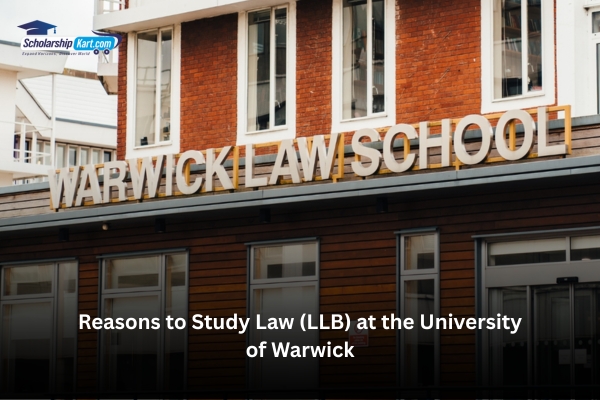
For students who want to understand not only how the law works but also why it matters, studying Law (LLB) at the University of Warwick offers an opportunity to explore the subject from a broader social, political, economic, and international perspective.
Warwick Law School has pioneered the Law in Context approach, which examines legal principles in relation to the societies and institutions in which they operate. Rather than concentrating exclusively on legal doctrine, the school encourages students to investigate how laws develop, how they affect people, and how changing economic, cultural, and political conditions influence legal systems.
With research-led teaching, a diverse academic community, a flexible curriculum, and opportunities to gain practical experience, the University of Warwick provides an engaging environment for aspiring legal professionals and students interested in the wider role of law in society.
Ready to turn your passion for justice into a promising future? Explore the LLB programme at the University of Warwick and discover how its innovative, real-world approach to law can help you build a strong foundation for your legal career. Let ScholarshipKart help you get started. From choosing the right university and course to personalised counselling, university admissions, scholarships and visa guidance, our experts can support you at every step of your study-abroad journey.
Why Study LLB at the University of Warwick?
Here are seven compelling reasons to study Law (LLB) at the University of Warwick.
1. Study at a Leading UK Law School with a Strong Research Culture

Choosing the right law school can influence how students understand legal principles, develop analytical skills, and prepare for future opportunities. Warwick Law School stands out for its longstanding commitment to high-quality teaching, innovative research, and interdisciplinary legal education.
Established in 1968, the school has developed a reputation for examining law beyond conventional legal boundaries. Its academic approach connects legal rules with the economic, political, cultural, historical, and philosophical factors that influence their development and application.
Learn from a Research-Driven Legal Education Environment
Warwick Law School draws on its research expertise to inform its teaching and the range of modules available to students. This creates opportunities to explore established legal principles alongside emerging debates and contemporary challenges.
The school’s research strengths are reflected in several achievements:
Research Excellence Framework (REF) 2021: Warwick Law School was ranked equal eighth in the UK for its research performance.
Research quality: 89% of its research outputs were classified as world-leading or internationally excellent.
Teaching excellence: The University of Warwick achieved the highest possible rating across all three assessment categories in the Teaching Excellence Framework (TEF), covering student experience, student outcomes, and the overall assessment.
Academic community: The school has more than 1,000 students and approximately 70 full-time staff, supporting a substantial academic environment for legal study and research.
These strengths matter because legal education requires more than memorising legislation. Students need to evaluate competing interpretations, examine evidence, question established assumptions, and understand the implications of legal decisions.
At Warwick, research-led teaching encourages this critical approach, helping students build a deeper understanding of legal systems and their influence on contemporary society.
2. Explore the Law in Context Approach and Understand Law Beyond the Courtroom

One of the most distinctive reasons to study Law in the UK at the University of Warwick is its pioneering Law in Context approach. This philosophy recognises that legal rules do not operate in isolation. Their meaning and effects are shaped by the societies, institutions, economies, and political systems in which they function.
For example, understanding a legal judgment may require students to consider the social circumstances behind a dispute, the economic interests involved, or the political decisions that influenced the relevant legislation.
Connect Legal Principles with Social, Political and Economic Change
The LLB degree combines the technical and doctrinal study of law with an examination of its wider role in society. Students study legal judgments, statutes, and treaties while exploring how legal systems respond to changing circumstances.
This approach helps students investigate questions such as:
- How do economic developments influence the creation and interpretation of laws?
- How do cultural values affect legal institutions and public policy?
- What role does law play in protecting individual rights and addressing social inequalities?
- How do governments and international institutions use legal frameworks to manage relationships and resolve disputes?
- How can legal systems respond to emerging challenges involving technology, business, healthcare, and climate change?
- Warwick also emphasises international and comparative perspectives, encouraging students to consider how legal principles operate across different jurisdictions and political environments.
This broader outlook can be valuable for students interested in legal practice, public policy, international relations, research, business, or social justice. It encourages graduates to assess both the strengths and limitations of legal systems and consider how law can contribute to social improvement.
3. Build a Strong Legal Foundation Through a Flexible LLB Curriculum
A well-designed LLB programme should provide a thorough understanding of core legal principles while allowing students to investigate subjects that match their interests. Warwick Law School combines foundational legal education with opportunities to select optional modules as students progress through their degree.
The curriculum develops knowledge of substantive law alongside the skills required to interpret legal materials, construct arguments, evaluate evidence, and undertake independent research.
Year One: Establish the Fundamentals of Legal Study
The first year introduces students to essential legal concepts and the relationship between law, individuals, and society.
Core modules include:
Criminal Law: Examines the legal principles associated with criminal responsibility and offences.
Tort Law: Introduces legal principles concerning civil wrongs and the responsibilities individuals and organisations may owe to others.
Understanding Law in Context: Explores law in relation to its wider social, political, and economic environment.
Law, State and the Individual: Examines relationships between legal authority, government, and individual rights.
Together, these modules help students develop a foundation for understanding how legal rules operate and how they affect people and institutions.
Year Two: Develop Knowledge of Core Legal Principles
In the second year, students continue to deepen their legal understanding through core modules, including:
Contract Law: Explores the legal principles governing agreements and contractual obligations.
Property Law: Examines legal rights and interests relating to property.
These subjects introduce important concepts relevant to private relationships, commercial activity, ownership, and legal responsibilities.
Students can also use optional modules to explore additional areas of law that align with their academic interests.
Year Three: Apply Research Skills Through Independent Study
The final year includes a supervised project, which may take the form of a researched dissertation or another approved output. This work replaces a half or full module.
The project emphasises:
- Independent and self-directed learning.
- Research, analysis, and critical reflection.
- Engagement with academic feedback.
- The ability to develop and communicate a sustained argument.
Rather than following a fixed syllabus, students receive support through general skills-based workshops. This structure allows them to investigate a legal question in greater depth and demonstrate their ability to conduct independent academic work.
Choose Optional Law Modules That Match Your Interests
Warwick’s optional modules allow students to explore different legal specialisms and interdisciplinary topics. Examples include:
- Social Theory of Law
- Human Rights in Practice
- Gender and the Law
- Climate Change and Law
- Corporate Tax Law
- Family Law
- Introduction to Criminology
- International Economic Law
- Medicine and the Law
- Law of Business Organisations
- Data Law and Governance
- Legal Aspects of the Digital World
- Art and Cultural Heritage Law
These options provide opportunities to investigate subjects ranging from human rights and environmental regulation to corporate governance, technology, and cultural heritage.
4. Experience an Inclusive Law School with an International Outlook

Studying law involves examining different perspectives, interpreting competing arguments, and understanding how legal systems affect people from different backgrounds. A diverse academic community can enrich these discussions by bringing together students with varied experiences, interests, and viewpoints.
Warwick Law School welcomes students and staff from different countries, backgrounds, religions, races, and sexualities. Its commitment to inclusion is reflected in the composition of its student community and its wider approach to equality.
Learn Alongside Students from Different Backgrounds
The school’s student profile highlights the international and diverse nature of its community:
More than 1,000 students study across its undergraduate, postgraduate, and PhD programmes.
International students account for 38% of the undergraduate student body and come from 55 countries.
Approximately 64% of undergraduate students identify as Black, Asian, or another minority ethnic background.
Around 70% of students identify as female.
Twenty per cent of first-year undergraduates enter through contextual offers.
The school has also received an Athena Swan Silver Award in 2024, recognising work associated with gender equality and inclusive academic cultures.
For LLB students, this environment creates opportunities to engage with different viewpoints and consider how legal rules and institutions affect communities in different circumstances.
Its emphasis on international and comparative legal perspectives further supports this outlook. Students can explore how legal questions vary across jurisdictions and why understanding different social and institutional contexts is important when evaluating legal systems.
5. Develop Career-Ready Skills Through Practical Learning and Community Engagement
An LLB degree can provide a foundation for several career paths, but academic knowledge is only one part of professional development. Employers and legal organisations also value research, communication, analytical reasoning, teamwork, problem-solving, and the ability to present well-supported arguments.
Warwick Law School incorporates lectures, seminars, workshops, online learning materials, and practical exercises into its teaching approach. These methods help students engage with legal concepts in different ways and strengthen their ability to apply what they learn.
Learn Through Lectures, Seminars and Workshops
The teaching environment combines larger academic sessions with smaller opportunities for discussion and practical engagement.
The school’s teaching formats include:
- Lectures with approximately 300 students in core modules.
- Seminars with around 16 students.
- Workshops involving approximately 20 to 30 students.
Lectures introduce key topics, while seminars and practical exercises provide opportunities to examine concepts in greater depth. Reflective journals, experiential learning, dramatised dissertations, research training, and personal development activities also contribute to the learning experience.
This combination encourages students to move beyond passive learning and develop the ability to question legal arguments, communicate ideas, and reflect on their own progress.
Gain Practical Experience Through Warwick Law in the Community
Warwick Law in the Community (LinC) provides another important opportunity for students to connect legal study with real-world issues.
The initiative brings together the Law School and the Central England Law Centre to support innovative clinical education, research, and community engagement. Its projects use public law to address systemic disadvantage and the abuse of power.
Students can explore opportunities involving legal advice, practical legal work, and alternative approaches to understanding and applying law. Other departmental initiatives include the Justice Systems Workshops, Death Penalty Project, and Lacuna Magazine.
Such activities can help students understand how legal principles operate outside academic settings and how legal knowledge can contribute to addressing social problems.
Explore Legal Careers and Build Professional Connections
Warwick supports career development through a range of activities, including:
- Careers fairs and a dedicated law fair.
- Employer presentations and sector-specific events.
- Workshops and networking opportunities.
- Events hosted by law firms and student societies.
- Volunteering, work experience, and undergraduate research opportunities.
These activities allow students to investigate graduate opportunities, learn about different professional environments, and develop a clearer understanding of potential career pathways.
The school also recognises that career planning is individual. Its approach encourages students to explore their interests, identify meaningful goals, and develop plans that reflect their ambitions.
6. Choose from Diverse Law Degrees and Interdisciplinary Programmes
Not every student approaches legal education with the same professional goals. Some may want to concentrate on traditional legal subjects, while others may wish to combine law with languages, humanities, sociology, politics, or philosophy.
Warwick offers a range of degree pathways that reflect these different interests.
Explore LLB and Interdisciplinary Law Courses
Programme options include:
- Law (LLB): A three-year undergraduate law degree.
- Law (Four-Year LLB): An extended undergraduate law pathway.
- Law with Study Abroad in English (LLB): Combines legal education with an international study experience.
- Law with French (LLB): Integrates law with French language and related study.
- Law with German (LLB): Combines legal study with German language and related learning.
- Law with Humanities (BA): Connects law with the broader humanities.
- Law and Sociology (BA): Explores the relationship between legal systems and society.
- Politics, Philosophy and Law (BA): Brings together three disciplines that examine authority, justice, institutions, and legal principles.
These options can help students shape their academic experience around their interests and preferred areas of study.
University of Warwick LLB: Entry Requirements for Prospective Students
Students considering the Law (LLB) degree should also review the academic and English language requirements before applying.
The typical entry requirements stated for the programme are:
- A levels: A*AA.
- International Baccalaureate (IB): 38 points.
- English language requirement: IELTS 7.0 overall, with a minimum of 6.5 in each component, under Band C.
Preparing early can help prospective students understand the academic expectations, organise the required documentation, and make informed decisions about their university applications.
Conclusion
Studying Law (LLB) at the University of Warwick offers an opportunity to explore legal principles while developing a deeper understanding of their social, political, economic, and international significance. Its pioneering Law in Context approach distinguishes the programme by encouraging students to question assumptions, examine competing perspectives, and consider how legal systems influence everyday life.
The combination of research-led teaching, a flexible curriculum, interdisciplinary degree options, practical community engagement, and career development opportunities provides a broad foundation for academic and professional growth. Students can establish their knowledge of core legal subjects, investigate specialist interests through optional modules, and strengthen their research and analytical skills through independent study.
Warwick’s inclusive academic community and commitment to examining law in its wider context also make it an appealing option for students who want to understand more than the technical application of legal rules.
Whether your ambitions involve legal practice, international affairs, business, public policy, human rights, research, or social justice, an LLB at the University of Warwick can help you develop the knowledge and critical thinking needed to explore those possibilities. By approaching law as a force that both shapes society and responds to social change, you can build a strong foundation for a future in which legal understanding makes a meaningful difference.

Take the next step towards your future in law! Explore the University of Warwick’s LLB course, review the entry requirements, and discover the programme that aligns with your ambitions. Book a Free Consultation with ScholarshipKart for expert counselling, admission assistance, scholarship guidance and visa support. Begin preparing your application today and move closer to achieving your academic and career goals.
FAQs
1. What are the entry requirements for international students applying for the LLB at the University of Warwick?
The typical entry requirements are A*AA at A level or 38 points in the International Baccalaureate (IB). International applicants should also meet the English language requirement of IELTS 7.0 overall, with at least 6.5 in each component, and confirm the requirements applicable to their qualifications.
2. Can Indian students apply for the LLB programme at the University of Warwick?
Yes, Indian students can explore applying for the LLB programme, provided they meet the university’s academic and English language requirements. Applicants should check Warwick’s current guidance on accepted Indian qualifications and any country-specific application requirements before applying.
3. How long does it take to complete the Law (LLB) degree at Warwick?
The standard Law (LLB) programme takes three years to complete. Warwick also offers a four-year LLB pathway and options that incorporate study abroad or additional subjects, depending on the programme selected.
4. What subjects do students study in Warwick’s LLB programme?
Students study core subjects such as Criminal Law, Tort Law, Contract Law, and Property Law, alongside modules exploring law’s relationship with society and government. Optional subjects include Human Rights in Practice, International Economic Law, Climate Change and Law, and Data Law and Governance.
5. Is the University of Warwick a good choice for international law students?
Warwick Law School is known for its research-led teaching and pioneering Law in Context approach, which examines the social, political, and economic effects of legal rules. Its international student community and emphasis on comparative legal perspectives offer opportunities to explore law beyond a single jurisdiction.
6. What career opportunities are available after completing an LLB at Warwick?
Graduates can explore potential careers in legal practice, business, public policy, international affairs, research, and other fields that value legal knowledge and analytical skills. Students can also access career fairs, employer presentations, volunteering opportunities, and community-based legal projects to support their professional development.
7. Are scholarships available for international students at Warwick Law School?
Warwick Law School lists funding opportunities for eligible postgraduate students, including LLM and PhD scholarships and the Commonwealth Shared Scholarship. These awards have specific eligibility criteria, and international applicants should check current funding options for undergraduate LLB students separately.
8. Can international students gain practical legal experience while studying at Warwick?
Yes, students can explore practical learning and community engagement opportunities through initiatives such as Warwick Law in the Community (LinC), which collaborates with the Central England Law Centre. Other opportunities include legal volunteering, research projects, workshops, and student societies that support legal learning and career development.