
Imagine being the person who discovers a security weakness before a cybercriminal can exploit it. Sounds exciting, right? That is the idea behind ethical hacking. Instead of using technical skills to break the rules, ethical hackers use them to protect computer systems, secure networks, and help organisations defend sensitive data.
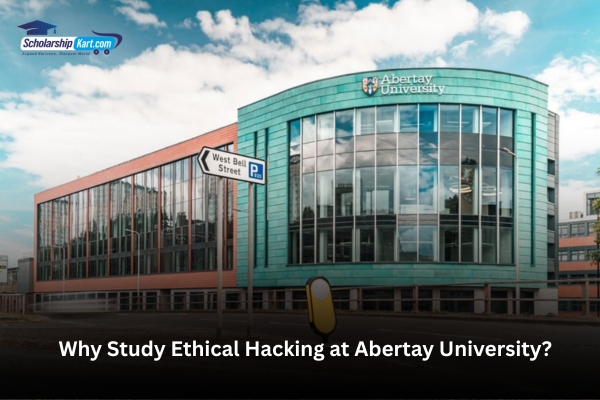
If you enjoy solving problems, understanding how technology works and thinking one step ahead of cybercriminals, a degree in ethical hacking could be worth exploring. Abertay University in Dundee, Scotland, offers a specialist BSc (Hons) Ethical Hacking degree that combines technical learning with practical cybersecurity experience.
Abertay was named Cyber University of the Year at the National Cyber Awards 2024.
So, what makes this degree worth considering? From penetration testing and digital forensics to industry projects and specialist certifications, let’s explore about studying ethical hacking at Abertay University and why it may be a strong choice for students interested in cybersecurity.
Abertay University Ethical Hacking Course Overview
The BSc (Hons) Ethical Hacking is a full-time undergraduate degree based at Abertay University’s campus in Dundee, Scotland. The standard duration is four years, with a September start.
| Course detail | Information |
| University | Abertay University |
| Degree | BSc (Hons) Ethical Hacking |
| Duration | 4 years, full-time |
| Location | Dundee, Scotland |
| Professional recognition | NCSC certification and BCS accreditation |
| International Tuition Fees | £17,950 |
What Modules Can You Study in Ethical Hacking at Abertay?
The curriculum combines core computing knowledge with specialist cybersecurity subjects. Modules include:
- Computing fundamentals: Computer Hardware Architecture and Operating Systems, Programming with C++, Software Design, and Data Structures and Algorithms.
- Network and application security: Computer Networking, Penetration Testing, Web Application Penetration Testing, and Secure Web Development.
- Advanced cybersecurity: Advanced Ethical Hacking, Digital Forensics, Advanced Digital Forensics, and Audit and Compliance Consulting.
- Emerging technologies: IoT and Cloud Secure Development, and Engineering Resilient Systems.
- Independent academic work: Project planning, prototyping and the final project dissertation.
Students considering this degree should be interested in computing, logical problem-solving and understanding how digital systems work. Programming, networking and operating systems form important parts of the learning experience, so a willingness to develop technical skills is useful.
Curious about how ethical hackers stop cyberattacks before they cause damage? Let ScholarshipKart help you get started. Explore the BSc (Hons) Ethical Hacking at Abertay University and discover how you can turn your interest in cybersecurity into practical, career-ready skills.
10 Reasons to Study Ethical Hacking at Abertay University

1. Earn an NCSC-Certified Ethical Hacking Degree
One of the biggest reasons to consider Abertay University is the national recognition attached to its Ethical Hacking degree. The programme is certified by the National Cyber Security Centre, part of GCHQ, which supports the development of cybersecurity capability in the UK.
This certification means the curriculum has been reviewed by cybersecurity experts from academia, industry and the UK government against national standards for undergraduate cybersecurity education. Graduates receive a personal NCSC certificate alongside their degree, providing additional evidence of their cybersecurity education when applying for relevant roles.
For students comparing cybersecurity degrees in the UK, this independent recognition is an important point to consider.
2. Develop Practical Ethical Hacking and Penetration Testing Skills
Ethical hacking is not just about learning cybersecurity concepts from textbooks. It involves understanding how attackers exploit vulnerabilities and how organisations can prevent unauthorised access.
At Abertay, students learn to deliberately test systems, examine security weaknesses and understand the techniques behind hacking attacks. Modules such as Penetration Testing, Web Application Penetration Testing and Advanced Ethical Hacking help students explore these areas in greater depth.
This practical approach develops the ability to assess computer networks and systems, identify potential vulnerabilities and recommend suitable countermeasures. These are valuable foundations for students interested in penetration testing, security assessment and offensive security.
3. Study a Specialist Four-Year Cybersecurity Programme
Abertay’s BSc (Hons) Ethical Hacking follows a specialist four-year curriculum. This structure gives students time to develop their technical foundations before progressing to more advanced cybersecurity topics.
Early learning includes computer hardware architecture, operating systems, programming, software design, computer networking, and data structures and algorithms. These subjects help students understand how computer systems operate and how weaknesses can emerge.
As the programme progresses, students can explore specialist areas such as advanced digital forensics, secure development, audit and compliance consulting, and resilient systems engineering. The progression from fundamental computing knowledge to advanced security concepts helps build a broader understanding of cybersecurity.
4. Learn Through Real-World Cybersecurity Scenarios
How would you investigate a data breach? What could allow an attacker to compromise a web application? How should an organisation respond to a security weakness?
Abertay’s teaching approach helps students explore questions like these through lectures, tutorials, practical exercises, reading and online learning resources. Real-world case studies involving major cyberattacks and data breaches provide opportunities to analyse incidents, evaluate decisions and understand how security failures occur.
Practical exercises also require students to review their own work and assess whether their solutions are functional and fit for purpose. This encourages analytical thinking, technical problem-solving and attention to detail.
Assessment includes projects, reports, portfolios and practical tasks, while approximately 20% of the programme is assessed through examinations. This creates a varied assessment approach rather than relying entirely on written exams.
5. Benefit from Industry Projects and Internship Opportunities
Classroom learning becomes more meaningful when students can apply it to realistic professional challenges. Abertay incorporates industry engagement into its Ethical Hacking degree to help students connect academic concepts with practical cybersecurity work.
In the third year, students work in teams on a client brief developed by external industry partners, with guidance from academic staff. This gives them an opportunity to consider practical requirements, collaborate with others and apply their technical knowledge to a defined problem.
Students may also have opportunities to secure internships during the second-to-third-year and third-to-fourth-year periods, subject to selection. These opportunities can help students gain workplace experience, understand industry expectations and strengthen their professional profiles before graduation.
6. Gain Professional Recognition Through BCS Accreditation
Abertay’s Ethical Hacking degree is accredited by BCS, The Chartered Institute for IT. This provides another form of professional recognition alongside the programme’s NCSC certification.
BCS accreditation connects an academic qualification with recognised professional standards in computing and information technology. Graduates of accredited degrees are entitled to professional membership of BCS, subject to the applicable membership requirements.
The accreditation can also be an important step towards Chartered IT Professional (CITP) status, although achieving that status requires meeting the relevant professional criteria. For students planning a long-term career in cybersecurity or IT, this professional pathway is worth considering when comparing degree programmes.
7. Study at a University Recognised for Cybersecurity Education
Abertay’s cybersecurity reputation is supported by recognition beyond its degree certification. The university received the Cyber University of the Year award at the National Cyber Awards 2024 and holds the NCSC and Department for Science, Innovation and Technology (DSIT) Academic Centre of Excellence in Cyber Security Education Gold Award.
The Gold Award is the highest level of this recognition. It reflects institutional strengths in cybersecurity education, industry engagement and outreach within the university and wider community.
Abertay is also a CREST academic partner. CREST works to raise professional standards and support quality assurance across the global cybersecurity industry.
Together, these distinctions make Abertay an option worth examining for students who want to study ethical hacking in a university with an established focus on cybersecurity education.
8. Explore Digital Forensics and Emerging Security Technologies
Cybersecurity covers much more than preventing hackers from accessing networks. Organisations also need professionals who can investigate incidents, understand how attacks occurred and develop systems that are more resistant to future threats.
Abertay’s module selection reflects this wider scope. Digital Forensics and Advanced Digital Forensics introduce students to the investigation side of cybersecurity, while Secure Web Development and IoT and Cloud Secure Development address security in software, connected devices and cloud-based environments.
Engineering Resilient Systems adds another dimension by focusing on the importance of building systems that can withstand and respond to disruption.
These subjects help students explore different areas of cybersecurity before deciding which technical specialisms most closely match their interests and career ambitions.
9. Build Skills Employers Need in Cybersecurity
Technical knowledge is essential in ethical hacking, but effective cybersecurity work also requires communication, evaluation and sound judgement. Professionals must explain vulnerabilities clearly and help others understand why particular security measures matter.
Abertay’s degree aims to develop students’ ability to understand hacking processes, design appropriate countermeasures, conduct security audit testing and communicate effectively at different organisational levels.
Team-based industry projects can further develop collaboration and problem-solving skills. Reports, portfolios and practical assessments also give students opportunities to explain their methods and demonstrate their work.
These capabilities provide a foundation for exploring roles such as ethical hacker, penetration tester, cybersecurity analyst, security consultant or digital forensics specialist. Specific job opportunities will depend on individual skills, experience, employer requirements and the wider job market.
10. Choose a Degree That Connects Security Knowledge with Prevention
Understanding how attacks work is only one part of ethical hacking. The ultimate objective is to help identify and address weaknesses before they lead to serious security incidents.
Abertay’s degree brings offensive security techniques together with defensive thinking. Students examine how systems can be compromised, assess vulnerabilities and consider measures that organisations can use to improve their security.
The curriculum’s combination of programming, networking, penetration testing, secure development, digital forensics and compliance-related study supports this broader perspective.
For students who want to understand both the methods used by attackers and the steps required to defend against them, this combination is a central reason to consider the programme.
What Makes Abertay University Different?
Two additional features strengthen the student experience. First, Securi-Tay, organised by Abertay’s Ethical Hacking Society, is the world’s largest student-run information security conference. It brings together industry experts through talks, panels and workshops, offering opportunities to learn and build professional connections.
Second, Abertay became Scotland’s first Adobe Creative Campus in 2024, giving students access to Adobe Express and opportunities to develop digital skills. Although this is not an ethical hacking qualification, it adds to the wider digital learning environment.
Career Opportunities After an Ethical Hacking Degree

Graduates may explore careers in penetration testing, security testing, network management, IT security administration, software development and cybersecurity consultancy. Abertay’s alumni have worked for organisations including GCHQ, Cisco, NatWest, Skyscanner and NCC Group.
The combination of practical assessments, industry project work, professional recognition and specialist cybersecurity modules helps students prepare for relevant career opportunities.
Choosing the right university for your cybersecurity journey can feel overwhelming, but with the right guidance, finding a course that matches your academic background and career goals becomes much easier.
How ScholarshipKart Supports Your Study Abroad Journey
Planning to study abroad involves several important decisions, from choosing the right university and course to exploring scholarships, arranging finances and finding suitable accommodation. With the right guidance, students can navigate these steps with greater clarity and confidence as they prepare for an international education experience.
ScholarshipKart assists students aspiring to study in the UK by providing guidance at various stages of their study abroad journey. Its services cover key aspects of the process, including:
University and Course Selection: Identify academic programmes and universities that align with your interests, academic background and long-term career goals.
Admission Guidance: Get assistance with university applications, understanding admission requirements and keeping track of application deadlines.
Scholarship Assistance: Discover relevant scholarship opportunities and learn about eligibility requirements, application procedures and deadlines.
Student Visa Guidance: Understand student visa requirements and receive guidance on preparing the necessary supporting documents.
IELTS and PTE Preparation: Access preparation guidance to help meet English language proficiency requirements, where applicable.
Accommodation and Pre-Departure Support: Prepare for your move abroad with guidance on accommodation options, travel arrangements and other essential pre-departure considerations.
Educational Loan Guidance: Explore potential education financing options and plan your study-related expenses more effectively.
By offering support across these essential areas, ScholarshipKart helps students make informed decisions, stay organised throughout the application process and prepare for the transition to studying and living in the UK.
Conclusion
Choosing the right university is about more than earning a degree; it is about finding a place where your curiosity can turn into practical skills. If you enjoy figuring out how systems work, solving technical challenges and staying one step ahead of cyber threats, Abertay University could be a great place to start your cybersecurity journey.
Its four-year BSc (Hons) Ethical Hacking degree combines hands-on learning, industry projects, internship opportunities and recognised credentials, including NCSC certification and BCS accreditation.
What makes it particularly appealing is the focus on understanding how attacks happen and, more importantly, how to prevent them. So, if you are ready to turn your interest in hacking into a meaningful career protecting people, businesses and digital systems, could Abertay be the first step towards your future in cybersecurity?
Ready to take the next step towards a career in cybersecurity? Book a Free Consultation with ScholarshipKart to explore the modules, entry requirements and opportunities available to you.
FAQs
Why should international students choose Abertay University to study Ethical Hacking?
Abertay University in Dundee, Scotland, offers a specialist BSc (Hons) Ethical Hacking degree that combines computing fundamentals with practical cybersecurity learning. The programme covers penetration testing, digital forensics, secure development and advanced ethical hacking. Its NCSC certification, BCS accreditation and industry-focused learning make it an option worth considering for students who want to build a career in cybersecurity.
How long does the Ethical Hacking degree at Abertay University take to complete?
The BSc (Hons) Ethical Hacking is a full-time, four-year undergraduate degree based at Abertay University’s campus in Dundee, Scotland. The course typically starts in September and progresses from core computing subjects to specialist cybersecurity topics, practical projects and a final-year dissertation.
What are the tuition fees for international students studying Ethical Hacking at Abertay University?
The international tuition fees for the 2026-2027 intake is £17,950. However, tuition fees can change by academic year, so international applicants should confirm the latest fee for their intended intake directly with Abertay University before applying. Students should also budget for accommodation, living expenses, travel and other study-related costs.
Is Abertay University’s Ethical Hacking degree recognised by the cybersecurity industry?
Yes. The degree is described as certified by the National Cyber Security Centre (NCSC) and accredited by BCS, The Chartered Institute for IT. These recognitions provide additional evidence of the programme’s alignment with cybersecurity and computing standards. Students should check the university’s current course information for the exact scope and validity of these recognitions.
What subjects will I study in the Ethical Hacking programme?
Students study a range of subjects, including programming with C++, computer networking, operating systems, penetration testing, web application penetration testing, advanced ethical hacking and digital forensics. Other topics include secure web development, cloud and IoT security, audit and compliance consulting, and resilient systems engineering. This combination helps students develop technical knowledge and understand how to identify and address security vulnerabilities.
Do I need programming experience to study Ethical Hacking at Abertay University?
Previous programming experience may be helpful, but applicants should check the university’s entry requirements to understand what prior knowledge is expected. The curriculum includes programming, computer architecture, operating systems and networking, so an interest in technology, logical thinking and problem-solving is valuable. A willingness to learn technical concepts and practise regularly can also help students prepare for the course.
Can international students gain practical experience during the degree?
Yes. The programme includes practical exercises, security testing activities and an industry-linked team project in the third year. Students may also have opportunities to apply for internships, subject to availability and selection. These experiences can help students develop technical, teamwork and communication skills while gaining a better understanding of cybersecurity work in professional environments.
What career opportunities are available after completing an Ethical Hacking degree at Abertay?
Graduates may pursue roles such as ethical hacker, penetration tester, cybersecurity analyst, security consultant, digital forensics specialist or IT security administrator. Other potential pathways include security testing and secure software development. Career outcomes depend on individual technical skills, relevant experience, employer requirements and the cybersecurity job market.
What makes Abertay University different from other UK universities offering cybersecurity degrees?
Abertay combines a specialist ethical hacking curriculum with NCSC certification, BCS accreditation, industry engagement and practical cybersecurity learning. The university also received the Cyber University of the Year award at the National Cyber Awards 2024 and hosts Securi-Tay, a student-run information security conference. These features offer students opportunities to explore cybersecurity beyond the classroom.