
Located in the centre of Belfast, Queen’s University Belfast (QUB) is an exciting place to study medicine. The university’s medical education has a long tradition dating back to 1835, providing students with the opportunity to study medicine within an established medical school.
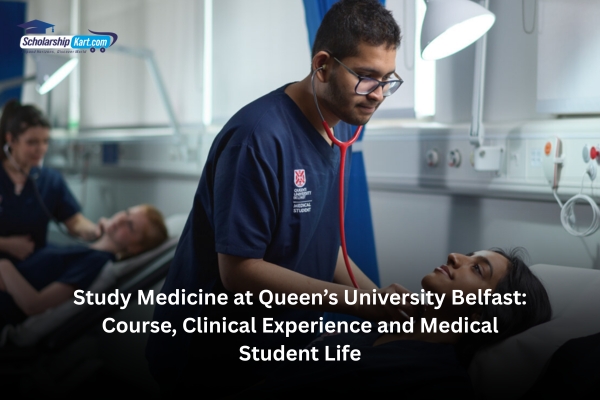
The five-year medical course is designed to develop the knowledge, skills and attitudes required to become an F1 doctor. Students also have the opportunity to gain clinical experience from an early stage of their studies, with exposure to a range of hospitals, general practices and healthcare settings throughout Northern Ireland from the first year onwards.
Let’s explore the key aspects of studying medicine at Queen’s University Belfast, including the course structure, entry requirements, life as a medical student and the support available for students seeking to gain admission to Queen’s University Medical School.
Why Study Medicine at Queen’s University Belfast?
The medical school has 1,310 medical students, while 262 students are admitted each year to the five-year medicine programme. Of the annual intake, 236 students have Home and EU settled status, while 36 are international students. This reflects the presence of international students within the medical programme alongside students with Home and EU settled status.
The five-year course, listed under UCAS code A100, focuses on developing the knowledge, skills and attitudes needed to progress towards becoming an F1 doctor. An important feature of the programme is its emphasis on clinical experience, which begins from the first year.
Students can gain experience across a variety of hospitals, general practices and healthcare settings throughout Northern Ireland. This early clinical exposure forms an important part of the course structure, allowing students to encounter different healthcare environments during their medical education.
One year of foundation training in the UK means you are registered with the General Medical Council, with recognition by many medical councils to practise as a doctor.
Queen’s University Belfast Medicine Curriculum Strategy 2027 Entry
The Queen’s University Belfast Medicine curriculum for 2027 entry follows a hybrid approach that combines an integrated systems-based structure with early clinical exposure and case-based learning.
The curriculum is designed to bring different areas of medical learning together, helping students develop their understanding through an integrated approach rather than studying subjects in isolation.
A key feature of the curriculum is the integrated systems-based approach. Alongside this, clinical experience is introduced in Year 1 through a family attachment, giving students an opportunity to begin engaging with a clinical setting from an early stage of their medical education.
The curriculum also incorporates integral case-based learning. This approach forms an important part of the learning strategy, allowing medical education to be connected through cases as students develop their understanding of medicine.
Key Areas of the Queen’s University Belfast Medicine Curriculum
The Queen’s University Belfast Medicine curriculum covers four key areas that contribute to students’ medical education and development. These areas bring together knowledge of health, clinical practice, professional standards and safe patient care.

Global and Population Health forms one part of the curriculum, focusing on health from a broader population perspective. Alongside this, Clinical Science and Practice represents the clinical and scientific aspects of medical education, connecting the understanding of clinical science with medical practice.
Another core area is Achieving Good Medical Practice, which focuses on developing an understanding of what constitutes good practice in medicine. The curriculum also includes Teamwork and Safe Care, highlighting the importance of working effectively as part of a team while maintaining a focus on safe care.
Together, these four areas provide the framework for the curriculum: Global and Population Health, Clinical Science and Practice, Achieving Good Medical Practice, and Teamwork and Safe Care.
Planning to apply for Medicine at Queen’s University Belfast? ScholarshipKart can help you understand QUB Medicine entry requirements, English Language Requirements, UCAT, MMI interviews, application timelines and international student requirements. Get personalised guidance to plan your application with greater clarity and confidence.
Foundations of Practice in the Queen’s University Belfast Medicine Course
The Foundations of Practice component introduces students to essential medical concepts and gradually connects them with clinical learning. The early stages of the Queen’s University Belfast Medicine course move from core scientific foundations in Year 1 Semester 1 towards systems-based learning, clinical exposure and case-based learning from Year 1 Semester 2 to the end of Year 2.
Year 1 Semester 1: Building the Foundations of Medical Knowledge
The first semester focuses on establishing a strong understanding of the scientific concepts that underpin medicine. Students study anatomy, physiology, biochemistry and immunology, providing the foundational knowledge needed for further medical learning.
Alongside these scientific subjects, the curriculum introduces students to what it is to be a doctor. This provides an early connection between the scientific foundations of medicine and the role of a doctor.
Students also begin developing practical experience through a family attachment, while clinical skills are introduced as another important component of the foundation stage.
Year 1 Semester 2 to the End of Year 2: Systems-Based and Clinical Learning
From Year 1 Semester 2 through to the end of Year 2, the curriculum progresses into systems-based learning. Students study a range of systems and areas, including:
- Cardiovascular and respiratory
- Musculoskeletal
- Reproduction
- Growth, nutrition and excretion
- Neurosciences and behaviour
This stage also incorporates case-based learning, bringing clinical cases into the learning process and connecting different areas of medical knowledge.
Early Clinical Experience and Skills Development
Clinical learning continues alongside the academic curriculum. The programme includes experience in general practice and hospital settings, giving students exposure to different clinical environments.
The family attachment and clinical experience in general practice and hospital settings complement the development of clinical skills, helping students connect their foundational medical knowledge with clinical learning.
Overall, the Foundations of Practice stage brings together basic medical sciences, understanding of the doctor’s role, case-based learning, clinical settings and clinical skills, creating a structured progression from foundational knowledge towards broader medical and clinical learning.
Third Year Medicine at Queen’s University Belfast: Immersion in Practice
The third year of the Queen’s University Belfast Medicine course is described as an “Immersion in Practice”, with a stronger focus on clinical experience and the development of practical medical skills. During this stage, students complete two 14-week attachments, with one taking place in a central hospital and the other in a peripheral setting.
Case-Based Learning Across Medical Specialties
The third-year learning is underpinned by case-based learning, covering a broad range of areas within general medicine. Students encounter topics including cardiology, respiratory medicine, endocrinology, haematology, nephrology, neurosciences, gastroenterology, musculoskeletal diseases, ophthalmology and otorhinolaryngology.
This approach brings different medical specialties into the learning experience through cases, allowing students to develop their understanding across a wide range of clinical areas.
Developing Examination, History-Taking and Management Skills
A key focus of third year is the development of practical clinical skills. Students work on examination and history-taking skills and progress towards treatment and management.
The programme also includes exposure to areas of general surgery, including vascular, bowel, breast, urology, ophthalmology, ENT, neurosurgery and cardiothoracic practice. This provides students with experience across a diverse range of surgical areas as they continue developing their clinical knowledge and skills.
Overall, the third year represents a significant move towards immersion in clinical practice, combining extended attachments, case-based learning and the development of examination, history-taking, treatment and management skills.
Fourth Year Medicine at Queen’s University Belfast: Immersion in Practice
The fourth year of the Queen’s University Belfast Medicine course continues the focus on Immersion in Practice. At this stage, the curriculum is organised around four key life areas, while general practice and case-based learning continue throughout the year.
Four Key Life Areas
The fourth-year curriculum covers four important areas of healthcare:
- Healthcare of the child
- Women’s health and birth
- Mental health and wellbeing
- Care of the elderly
These four areas provide the focus for learning during this stage of the medical course, giving students exposure to different aspects of patient care across the life course.
General Practice and Case-Based Learning
General practice continues throughout the fourth year, alongside case-based learning. The combination keeps students engaged with clinical learning while they explore the four key life areas included in the curriculum.
Medical Licensing Examination
The fourth year also includes the Medical Licensing Exam, with the written paper forming part of the finals examination. This represents an important examination component within the later stages of the medical programme.
Overseas Elective at Queen’s University Belfast
The Overseas Elective provides students with six weeks to explore medicine wherever they wish. This part of the course offers an opportunity to experience medicine in an international setting and explore different areas of medical practice beyond the usual clinical learning environment.
The examples include public health in Harvard, medicine at altitude in Chile, accident and emergency medicine in South Africa, research in Melbourne, general practice in India, diving the Great Barrier Reef and general medicine in New Zealand. These examples demonstrate the range of medical experiences that students can explore during the overseas elective.
With six weeks dedicated to the overseas elective, students have the opportunity to choose an area and location that allows them to explore medicine from a different perspective. The elective therefore adds an international dimension to the medical education experience at Queen’s University Belfast.
Fifth Year Medicine at Queen’s University Belfast: Preparation for Practice
The fifth year of the Queen’s University Belfast Medicine course focuses on preparation for practice, bringing together clinical learning and preparation for the transition into professional practice. The year includes several key components, including the Medical Licensing Exam, Finals OSCEs, clinical attachments and practical preparation for working in healthcare.
Medical Licensing Exam and Finals OSCEs
The Medical Licensing Exam takes place in June of the fourth year, while the Finals OSCEs are held midway through the fifth year. These examinations form important parts of the assessment journey as students progress towards the completion of their medical education.
Overseas Elective
The fifth year includes an overseas elective, providing students with an opportunity to undertake an elective as part of their final stage of medical education.
Preparation for Practice
Students undertake preparation for practice through seminars and workshops. This part of the course is focused on helping students prepare for the practical demands associated with moving towards professional medical practice.
Clinical Attachments and Patient Safety
The fifth year includes clinical attachments covering medicine, surgery and specialties. Alongside these clinical experiences, patient safety is included as a key component of the preparation for practice.
The programme also includes an assistantship, adding another element to the final-year preparation for students as they progress towards practice.
Medical Learning Facilities and Resources at Queen’s University Belfast
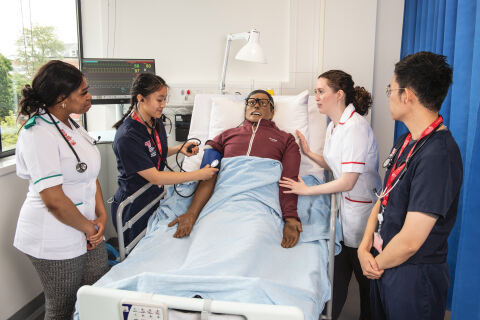
Queen’s University Belfast provides a range of medical learning facilities and educational resources, including dedicated anatomy teaching, simulated clinical environments, e-learning resources and simulation-based medical learning through INTERSIM.
Anatomy Centre at Queen’s University Belfast
The Anatomy Centre is one of the facilities associated with the Queen’s University Belfast medical learning environment. The centre provides a dedicated space for anatomy-related learning, supporting students as they develop their understanding of the structures and foundations relevant to medical education.
The facility includes a spacious teaching area equipped with multiple digital display screens and dedicated workstations. This creates a structured environment for students to engage with anatomy teaching as part of their medical studies.
Simulated Patients and Clinical Skills Education Centre
The Simulated Patients and Clinical Skills Education Centre provides a dedicated environment for clinical skills education at Queen’s University Belfast. The facility supports the practical side of medical learning through simulated patient-based activities.
The centre provides a setting where students can engage with simulated clinical situations as part of their medical education. This complements the wider clinical skills training within the medicine course and provides students with an environment focused on developing their practical clinical learning.
Case-Based Learning at Queen’s University Belfast
Case-based learning is an important part of the Queen’s University Belfast Medicine curriculum and flows through all years of the course. It provides students with an opportunity to bring together knowledge gained through lectures and practical skills and apply this learning when working through a case.
Teamwork and Interaction
Case-based learning encourages teamwork and interaction, giving students the opportunity to learn collaboratively as they work through cases. This makes interaction an important part of the learning process.
Integrating Knowledge Around the Case
Students develop core knowledge through lectures and practical skills and then integrate this knowledge around the case. This allows learning from different parts of the curriculum to be brought together in a connected way.
Whole-Year Overview
The case-based learning approach includes whole-year meetings for overview, providing an opportunity to bring together learning across the year. Importantly, case-based learning flows through all years of the medical course, making it a continuing element of the curriculum.
MedPortal E-Learning at Queen’s University Belfast
MedPortal e-learning provides a digital learning environment covering a range of medical subjects within the Queen’s University Belfast Medicine course. The platform brings together different areas of medical learning, allowing students to access subject-focused educational content across a broad range of disciplines.
MedPortal e-learning includes Cardiology, Critical Thinking, Dermatology, Endocrinology, Haematology, Individual in Society, Medicine, Musculoskeletal, Nephrology, Neurosciences, Ophthalmology and Otorhinolaryngology.
By bringing these subjects together within MedPortal, the e-learning resource supports learning across different areas of medicine and provides students with access to a varied range of subject-based content.
INTERSIM: Simulation-Based Medical Learning at QUB
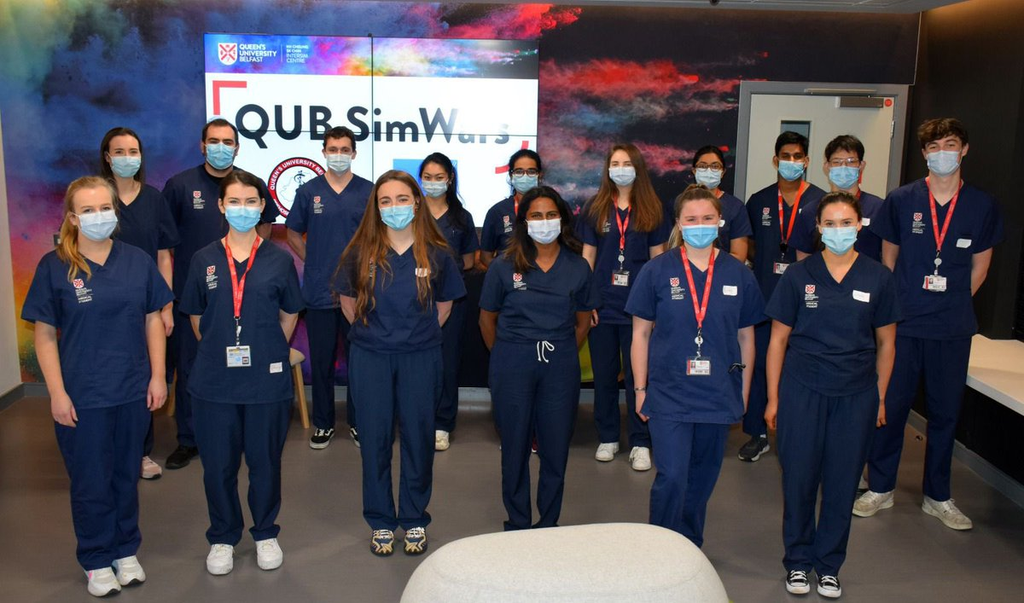
INTERSIM is presented as part of the clinical learning environment at Queen’s University Belfast. The images show students and healthcare professionals participating in simulated clinical activities within a healthcare setting.
The simulation environment includes a range of clinical scenarios and activities involving students, healthcare professionals and simulated patients. The images also show students working together in clinical settings, supporting practical learning and interaction as part of their medical education.
Through this type of simulation-based learning, students can engage with clinical situations in a structured environment. The visual material highlights the practical and collaborative nature of INTERSIM, with activities involving teamwork, clinical interaction and simulated patient care.
Hospitals Across Northern Ireland Linked to Queen’s University Belfast
Queen’s University Belfast is linked with hospitals across Northern Ireland, providing students with exposure to a range of healthcare environments as part of their medical education. The hospitals include Royal, Ulster, Altnagelvin, Craigavon, City, Daisy Hill, Antrim, Mater, Causeway and South West Acute Hospital in Enniskillen.
This network of hospitals gives the medical course a broad clinical setting across Northern Ireland. Students can therefore encounter different hospital environments during their clinical education, complementing the wider clinical experience included within the Queen’s University Belfast Medicine programme.
The range of hospitals also reflects the geographical spread of clinical learning associated with QUB, extending beyond Belfast to healthcare settings in different parts of Northern Ireland.
Additional Opportunities for Medicine Students at QUB
Choosing to study Medicine at Queen’s University Belfast (QUB) gives students opportunities to do more than follow the core medical curriculum. Throughout the QUB Medicine course, students can explore areas of personal and professional interest, gain research and clinical experience, develop additional skills and broaden their experience through a range of optional opportunities.
These opportunities can help students shape their medical education around their interests and explore potential careers in clinical medicine, medical research, public health, academic medicine and other healthcare fields.
Intercalated Degrees
An intercalated degree gives eligible medical students the opportunity to take an additional year of study and gain a BSc or Master’s degree alongside their medical degree. This can be an excellent option for students who want to explore a particular subject in greater depth or develop research and academic skills.
Areas available may include Public Health, Global Health, Molecular Science, Translational Medicine, Psychology, Anatomy and Bioinformatics.
An intercalated degree can be particularly valuable for students interested in medical research, academic medicine, public health or developing specialist knowledge alongside their clinical training.
Year Out at Another Establishment
Students may have the opportunity to undertake a year out at another establishment, gaining experience outside their usual university environment. This can provide exposure to different academic, research or professional settings and allow students to broaden their experience before returning to their medical studies.
For students looking to develop a particular academic or professional interest, a year out can be an opportunity to gain valuable additional experience as part of their wider medical education.
Summer Studentships and Medical Research Opportunities
Students interested in medical research at QUB can gain practical experience through summer studentships and research projects.
These opportunities allow students to work on research projects during the summer, helping them develop an understanding of how research contributes to advances in medicine and healthcare. Students can gain experience in areas such as research methods, critical analysis, data interpretation and working as part of a research team.
For prospective doctors considering academic medicine, clinical research or a research-focused career, summer research experience can be a valuable addition to their medical degree.
Six-Week Elective Period
The elective period allows students to explore clinical medicine in a setting, speciality or healthcare environment that interests them. Students have a six-week elective period, providing dedicated time to broaden their clinical experience beyond their usual learning environment.
An elective can help students gain insight into different approaches to healthcare, experience another clinical setting and explore areas of medicine that may influence their future career choices.
Student-Selected Components
Student-Selected Components (SSCs) give students greater choice over aspects of their learning throughout the medical course. Students can select areas that reflect their individual interests, allowing them to explore particular subjects, specialities or areas of healthcare in greater depth.
These components provide an opportunity to complement the core QUB Medicine curriculum with learning that is relevant to a student’s developing interests and career aspirations.
Assistantship and Clinical Experience
The assistantship provides students with further practical clinical experience as they progress through their medical training. This includes two weeks in a speciality, allowing students to gain greater insight into the responsibilities and working environment associated with a particular area of medicine.
This additional clinical exposure can help students build confidence, understand the role of different healthcare professionals and prepare for the transition from medical student to doctor.
Degree Plus at Queen’s University Belfast
Degree Plus recognises the skills and experience students develop outside their formal degree programme. Students can work towards the award through eligible activities, including volunteering and other extracurricular experiences.
For medical students, these activities can provide opportunities to develop valuable transferable skills such as communication, teamwork, leadership, organisation and commitment. Degree Plus can therefore complement the academic and clinical experience gained through studying Medicine at QUB.
Queen’s University Belfast: Rankings, Research and Career Prospects
Queen’s University Belfast combines world-class research, strong teaching, an international student community and excellent graduate career prospects. As a Russell Group university, Queen’s offers medical students the opportunity to study in a research-intensive environment at one of the UK and Ireland’s leading universities.
A Globally Ranked University: Queen’s is ranked among the top 175 universities in the world in the QS World University Rankings 2027. The university is also ranked 2nd in the UK in the StudentCrowd University Awards 2026, reflecting its strong overall student experience.
A Global and Welcoming University: With more than 4,000 international students from over 90 countries, Queen’s has a diverse and international campus community. The university is ranked 5th in the world for international outlook in the Times Higher Education World University Rankings 2026. For international students studying Medicine at QUB, this means joining a university community with students and perspectives from around the world.
Research Excellence at a Russell Group University: Queen’s is a member of the Russell Group, representing 24 of the UK’s leading research-intensive universities. The university is ranked 13th in the UK for research intensity in the Complete University Guide 2027.
In REF 2021, 99% of Queen’s research environment was assessed as world-leading or internationally excellent, highlighting the strength of its research environment. For medical students, studying in a research-intensive university provides opportunities to learn in an environment shaped by advances in medicine, healthcare and biomedical research.
Excellent Graduate Career Prospects: Queen’s offers strong outcomes for graduates, ranking 9th in the UK for graduate prospects in the Times and Sunday Times Good University Guide 2026 and 11th in the UK for Graduate Prospects – Outcomes in the Complete University Guide 2027. For students considering Medicine at Queen’s University Belfast, the university is ranked 1st in the UK for career prospects for Medicine, making graduate outcomes a key strength of the course.
Highly Rated for Teaching and Student Satisfaction: Queen’s has also achieved strong national rankings for teaching and student experience. It was ranked 1st in the UK for teaching in the Times Good University Guide 2024 and 2nd in the UK for student satisfaction in the Guardian University Guide 2024. These strengths contribute to an academic environment where students can develop their knowledge, clinical skills and confidence throughout their university experience.
A Commitment to Equality and Inclusion: Queen’s is committed to creating an inclusive university environment. It was the first university in Ireland and the second university in the UK to receive an Athena Swan Gold Award, recognising its commitment to gender equality. For students choosing where to study Medicine, this reflects Queen’s wider commitment to creating a supportive and inclusive community.
From global rankings and research excellence to student satisfaction and career prospects, Queen’s University Belfast offers a strong environment in which to study Medicine. Its Russell Group membership, international outlook and research-intensive culture give students opportunities to develop academically while preparing for their future careers in medicine and healthcare.
QUB Medicine Entry Requirements and Admissions Process
Understanding the Queen’s University Belfast Medicine entry requirements is an important first step when applying to study Medicine at QUB. Applicants are assessed across their academic qualifications, UCAT score, personal statement, reference and interview performance.
For international applicants, additional requirements may apply, including English language qualifications. Always check the latest requirements for your intended year of entry, as admissions criteria can change.
QUB Medicine Application: What Is Assessed?
| Admissions component | What QUB looks for |
| Examination results | Required academic qualifications and grades |
| UCAT | Cognitive ability and situational judgement |
| Personal statement | Commitment, motivation and understanding of medicine |
| Reference | Character, suitability, communication and initiative |
| MMI interview | Non-cognitive skills such as empathy, communication and problem-solving |
| English language | Required evidence for applicants whose previous education does not meet QUB’s English-language requirements |
The QUB Medicine application therefore involves more than achieving the required grades. Applicants should demonstrate academic ability, motivation for medicine, relevant experience and the personal qualities needed for a healthcare career.
Academic Entry Requirements for Medicine at QUB
Applicants must meet both the general Queen’s University Belfast entry requirements and the specific requirements for the Medicine course.
Depending on the qualification system, applicants may need subjects including:
- Biology
- Chemistry
- Mathematics
- Physics, or an appropriate Double Award Science qualification
- English language
The exact grades and accepted qualifications depend on the applicant’s educational system and year of entry.
Important: Meeting the minimum academic requirements does not automatically guarantee an interview or offer for Medicine at QUB.
Personal Statement for QUB Medicine
Your personal statement should make it clear that Medicine is the career you want to pursue. Avoid vague statements suggesting that you are equally interested in unrelated healthcare courses, such as writing that you want to study “medicine and dentistry”.
A strong Medicine application should demonstrate:
- Commitment and Motivation
- Explain why you want to become a doctor and what has motivated your interest in medicine.
- Understanding of Medicine as a Career
- Show how you have explored what being a doctor involves. This could include:
- Observing healthcare professionals in clinical settings
- Voluntary work in care or community settings
- Attending school or university medical careers conferences
- Participating in healthcare-related events or activities
- Reading and independent research into medicine and healthcare
The important point is not simply listing activities. Explain what you learned from them and how they developed your understanding of a medical career.
Transferable Skills: QUB Medicine applicants should also demonstrate qualities that are important for doctors, such as:
- Leadership
- Empathy
- Teamwork
- Communication
- Initiative
- Responsibility
- Resilience
- Ability to work with others
These skills can come from activities inside or outside school. You do not need every experience to be directly related to healthcare.
Reference for QUB Medicine
Your reference should provide satisfactory support for your application and help demonstrate your character and suitability for studying Medicine.
A strong reference can provide evidence of:
- Academic and personal suitability
- Character and professionalism
- Communication skills
- Initiative and independence
- Commitment and reliability
- Ability to work with others
If there has been an issue or circumstance that could affect the interpretation of your academic record or application, it should be explained clearly in the appropriate part of the application or supporting information.
The reference should give the admissions team a balanced picture of your suitability for the Medicine course.
UCAT for Medicine at QUB
The University Clinical Aptitude Test (UCAT), previously known as the UKCAT, is an important part of the QUB Medicine admissions process.
The UCAT assesses cognitive abilities and situational judgement rather than medical knowledge.
UCAT Cognitive Skills
The cognitive sections include:
| UCAT section | What it assesses |
| Verbal Reasoning | Understanding and evaluating written information |
| Quantitative Reasoning | Working with numerical information and solving problems |
| Decision Making | Applying logic and evaluating information |
| The Situational Judgement Test (SJT) | It assesses how applicants respond to situations involving professional behaviour and decision-making. Performance is reported using Bands 1–4, with Band 1 representing the highest level. |
QUB UCAT Scoring Scheme
For the 2026-entry QUB scoring scheme onwards, the UCAT cognitive score is converted into points according to the applicant’s overall percentile.
| UCAT percentile | QUB points |
| ≤10th percentile | 0 |
| ≥10th and ≤20th | 1 |
| ≥20th and ≤30th | 2 |
| ≥30th and ≤40th | 3 |
| ≥40th and ≤50th | 4 |
| ≥50th and ≤60th | 5 |
| ≥60th and ≤70th | 6 |
| ≥70th and ≤80th | 7 |
| ≥80th and ≤90th | 8 |
| ≥90th and ≤100th | 9 |
Note: UCAT scoring and QUB’s admissions methodology can change between entry cycles. Applicants should check the official requirements for their specific year of entry.
QUB Medicine MMI Interview
Queen’s University Belfast has used Multiple Mini Interviews (MMIs) for Medicine since 2009. The MMI format uses multiple stations and interviewers rather than relying on a single interview.
This allows applicants to be assessed across different situations and helps provide a more consistent and reliable assessment.
What Does the QUB Medicine MMI Assess?
The MMI is designed to assess non-cognitive skills that are important for a future doctor. Key areas include:
Moral Reasoning: You may need to identify an ethical or moral issue, consider different perspectives and explain your reasoning.
Communication: This includes communicating clearly, listening carefully and demonstrating appropriate verbal and non-verbal communication.
Empathy: Applicants should demonstrate the ability to understand and respond appropriately to another person’s feelings, experiences or circumstances.
Problem-Solving: You may be asked to identify a problem, analyse the available information and explain a logical approach to finding a solution.
The MMI is not simply about giving the “right” answer. How you think, communicate and respond to the situation is important.
QUB Medicine Interview Format
For the 2027-entry cycle, international-fee applicants are expected to complete a seven-station MMI, with a combination of interviewer-led stations and role-player activities.
The format is:
- 7 MMI stations
- Live and interactive
- Interviewer-led stations
- Role-player stations
- Different scenarios and assessment contexts
- Consistent marking criteria
This gives applicants multiple opportunities to demonstrate their skills across different situations.
QUB Medicine Admissions Process: From UCAT to Offer
The QUB Medicine admissions process can be understood as a two-stage process.
Stage 1: Selection for Interview
Applicants are initially assessed using their academic results and UCAT performance. A group of the highest-ranked applicants is then invited to interview.
For the current admissions process, this is expected to be around 180+ applicants, although the number can vary.
Importantly, the initial selection and ranking are carried out by the admissions process separately from the MMI interviewers.
Stage 2: MMI Ranking
Applicants who are invited to interview then complete the Multiple Mini Interview.
Their performance across the MMI stations is used to rank the interview candidates.
How Are Offers Made?
The final offers are based on the MMI ranking, subject to meeting the relevant conditions of the offer.
In simple terms:
Academic results + UCAT → Interview selection → MMI → Ranking → Offers
This makes preparation for both the UCAT and QUB Medicine MMI an important part of the application strategy.
QUB Medicine Offer: A-Level and International Entry Requirements
The QUB Medicine offer depends on your qualification system. For A-level applicants, Queen’s University Belfast typically requires AAA at A-level, including Chemistry, or an alternative AAB at A-level plus an A at AS-level, subject to the required subject combinations.
International applicants are assessed against equivalent academic qualifications. The requirements below provide an overview of the qualifications accepted for Medicine at Queen’s University Belfast.
QUB Medicine A-Level Offer
The standard A-level offer is:
AAA at A-level
or
AAB at A-level + A at AS-level
Chemistry is compulsory, alongside another science or mathematics subject.
| Requirement | QUB Medicine |
| A-level offer | AAA |
| Alternative offer | AAB + A at AS-level |
| Compulsory subject | Chemistry at A |
| Second subject | Biology/Human Biology, Physics or Mathematics |
| Third A-level | Another accepted A-level subject |
| Biology/Human Biology | A as a fourth AS or B as a fifth AS if not taken at A-level |
| Mathematics | Only one Mathematics A-level is counted; a second Mathematics qualification may be taken at AS level |
| General Studies | Not accepted |
| VCE/Applied subjects | Only one VCE/Applied subject can be counted at A or AS level, not both |
GCSE Requirements for QUB Medicine
Where these subjects have not been studied at AS or A-level, applicants should also have the required GCSE background.
This includes:
- Mathematics
- English
Physics, or an appropriate Double Award Science qualification
Applicants should check the precise GCSE grade requirements for their qualification system and year of entry.
QUB Medicine Requirements for International Qualifications
Queen’s University Belfast considers a range of international qualifications for entry to Medicine. The required grades and subject combinations vary by country.
| Qualification | QUB Medicine requirement |
| International Baccalaureate (IB) | 36 points, including 6, 6, 6 at Higher Level, with Chemistry and Biology |
| Malaysia – Sijil Tinggi Persekolahan Malaysia (STPM) | AA in Chemistry and Biology, plus A in another subject |
| Singapore/Cambridge A Levels | AAA, including Chemistry and Biology at H2; alternative combinations may apply |
| Indian Grade XII | More than 90% overall, with at least 90% in Chemistry and Biology |
International applicants should always confirm the requirements for their specific qualification and year of entry with Queen’s University Belfast.
QUB Medicine Requirements for Indian Students
For Indian applicants, Grade XII results are particularly important when applying to Medicine at QUB.
Applicants presenting the All India Senior School Certificate Examination (CBSE) or Indian School Certificate (CISCE) should have:
- 90% or above overall in Grade XII
- At least 90% in Chemistry
- At least 90% in Biology
- Physics and Mathematics normally required at Grade XII
A strong background in Physics and Mathematics at Class X may also be considered where these subjects have not been continued to Grade XII.
Acceptable CBSE Subject Profile
A CBSE student taking Physics, Chemistry and Biology in Grade XII can meet the expected subject profile for consideration, provided the required overall and subject marks are achieved.
For Indian students researching MBBS or Medicine in the UK, it is important to check both the academic requirements and the additional admissions criteria for QUB Medicine, including the UCAT and interview process.
English Language Requirements for International Students
International applicants must meet the required English language qualifications where applicable.
Examples of accepted qualifications may include:
| Qualification | Example requirement |
| IELTS | Overall 7.5, with minimum scores of 7.0 in Speaking and Listening and 6.5 in Reading and Writing |
| TOEFL iBT | Score above 105 |
| Cambridge GCE O Level English Language 1119 | Grade A2 |
Requirements can vary according to the applicant’s qualification background and year of entry, so international applicants should confirm the current requirements directly with Queen’s.
Minimum Age Requirement for QUB Medicine
Applicants should also be aware of the age requirements associated with registration as a doctor in the UK.
Under the Medical Act, the minimum age for inclusion on the GMC Medical Register on graduation is 21. As a result, Queen’s University Belfast cannot admit students to the five-year Medicine programme who would be under 16 at entry.
Applicants who are unsure whether their age, qualification or educational pathway meets the requirements should contact the QUB Medicine Admissions Office before applying.
Meeting the QUB Medicine Offer Is Only the First Step
Achieving the required academic grades does not by itself guarantee admission to Medicine at QUB. Applicants must also meet the other elements of the admissions process, which can include:
Academic qualifications → UCAT → Interview selection → MMI → Final ranking → Offer
For this reason, prospective applicants should plan their application around the complete QUB Medicine admissions process, rather than focusing only on examination results.
Life in Belfast for QUB Medicine Students
Living in Belfast offers QUB Medicine students a student-friendly and affordable city where much of daily life can be managed on foot. For medical students, this can be a significant advantage. The Medicine course is academically and clinically demanding, so spending less time commuting can leave more time for study, clinical preparation, exercise, friends and activities outside medicine.
Why Belfast Works Well for QUB Medicine Students
A well-connected student city: Queen’s main campus, student accommodation, cafés, restaurants, shops and many city attractions are within easy reach. A shorter daily commute can make it easier to manage the demands of medical school alongside a healthy social life.
Close to Queen’s medical facilities: The School of Medicine, Dentistry and Biomedical Sciences is based at the Whitla Medical Building on Lisburn Road, close to the main Queen’s campus. This makes the surrounding area particularly convenient for students balancing teaching, study and university life.
A city that fits around a demanding medical degree: Medicine requires significant time for lectures, practical learning, revision and clinical commitments. Belfast offers plenty of opportunities to take a break without having to travel far. Coffee shops, restaurants, cultural venues and green spaces provide easy options for downtime between academic commitments.
Pleasant weather with plenty of advantages: Belfast is known for its frequent rainfall, so a good waterproof jacket and suitable footwear are essentials. The wetter climate also contributes to the city’s green surroundings and gives students plenty of opportunities to enjoy outdoor spaces when the weather is favourable.
Medical societies and professional interests: QUB Medicine students can get involved in medical societies covering different specialties and healthcare interests. These provide opportunities to meet fellow medical students, explore areas of medicine beyond the curriculum and take part in academic, social and professional activities.
Sport, fitness and exercise: Maintaining physical activity is important during a demanding medical degree. Queen’s offers extensive sports and fitness opportunities, including more than 50 sports clubs, with options for recreational and competitive participation. Having these facilities close to university makes exercise easier to fit around a busy timetable.
A student life beyond Medicine: University life does not have to revolve entirely around Medicine. QUB offers a wide range of clubs and societies, covering sport, culture, international interests, hobbies and other activities. These can help students develop friendships and interests outside their medical cohort.
Balance is key: Medical students have demanding schedules, so there is no need to join everything. Choosing a few activities that genuinely interest you can provide a valuable break from studying while helping you maintain balance throughout the course.
Belfast: A Practical Choice for Medical Students
For students considering Medicine at Queen’s University Belfast, Belfast offers a strong combination of academic convenience, student life, affordability, exercise, societies and opportunities to unwind. A compact city and an active university community mean students can make the most of their time at QUB, both inside and outside the medical school.
Accommodation at Queen’s University Belfast for Medicine Students
Choosing the right student accommodation at Queen’s University Belfast can make a significant difference to the first year of medical school. QUB offers different accommodation options, with locations that provide convenient access to the university, city centre, sports facilities and student life.
Three Accommodation Options to Consider
Elms Village: Elms Village is one of Queen’s established student accommodation communities and offers a dedicated student environment. Its residential setting can make it easier for new students to meet people and build friendships during their first year.
Treehouse: The Treehouse provides another hub within the student accommodation experience, with facilities designed around student life. It can also be a convenient place to access food and other everyday services.
Modern Student Accommodation: Queen’s also offers modern high-rise accommodation options, giving students a choice of contemporary living environments close to university facilities and the wider city.
When comparing accommodation, consider more than the room itself. Look at distance from teaching locations, transport, study spaces, food options, sports facilities and how easy it will be to maintain a routine during a demanding medical degree.
Accommodation for Students Under 18
Students who are under 18 should check the specific accommodation arrangements and support available before applying. Queen’s provides additional facilities and arrangements for younger students, including appropriate residential support and group-living environments.
For students entering Medicine at a younger age, understanding these arrangements in advance can provide additional reassurance when choosing university accommodation.
QUB Medicine Application Timeline: When Will You Hear?
Applicants often want to know when QUB Medicine will make decisions about applications and interviews.
The first stage of the selection process takes place around November and December, with applicants progressing to interview normally receiving invitations for interviews held between January and March.
Applicants who are not shortlisted for interview will normally be informed first, which can happen between December and January. Interview invitations are normally issued at least three to four weeks before the interview date.
QUB Medicine Admissions Timeline
| Stage | Typical timeframe |
| Initial application assessment | November–December |
| Non-shortlisted applicants notified | December–January |
| Interview invitations | Normally 3–4 weeks before interview |
| QUB Medicine interviews | January–March |
Important: These are indicative timeframes. Applicants should always check the latest information from Queen’s University Belfast for their specific entry year.
Further Guidance for Medicine Applicants: For independent guidance on applying to medical school, applicants can also consult the Medical Schools Council, which provides information for students considering a career in medicine.
Is Medicine at Queen’s University Belfast Right for You?
Medicine at Queen’s University Belfast could be the right choice if you are looking for a demanding, patient-focused medical degree with opportunities to explore your interests beyond the core curriculum.
It suits students who are academically strong, motivated to become doctors and ready to take responsibility for their learning and development. Early patient contact, clinical experience, research opportunities, electives, student-selected components and medical societies allow you to build experience around your individual interests.
At the same time, studying in Belfast offers opportunities to enjoy university life through sport, societies, friendships and activities outside Medicine.
Before applying, consider the QUB Medicine entry requirements, UCAT, MMI process, academic workload and financial commitments carefully. If these align with your goals and expectations, Queen’s University Belfast can provide a strong foundation for your future career in Medicine.
Start Your QUB Medicine Application with Confidence
From choosing the right qualifications to preparing for the UCAT and QUB MMI, the Medicine application process can be competitive and complex. ScholarshipKart Services can guide you through the key stages and help you make informed decisions about your application, accommodation, Visa and student journey. Book a Free Consultation with ScholarshipKart Services to begin your QUB Medicine journey.
FAQs
1. Why should international students choose Queen’s University Belfast?
Queen’s University Belfast offers international students a combination of strong academics, research opportunities and a diverse student community. As a Russell Group university, it provides a research-led learning environment with a wide range of academic and extracurricular opportunities.
2. What is student life like at Queen’s University Belfast?
Student life at Queen’s extends well beyond the classroom, with societies, sports clubs, cultural activities and events available throughout the year. Belfast also offers restaurants, cafés, arts, entertainment and attractions, giving students plenty of ways to relax and socialise.
3. What support is available for international students at Queen’s?
International students can access academic guidance, wellbeing services, counselling, disability support and student guidance throughout their studies. Queen’s also provides services designed to help students settle into university life and manage academic or personal challenges.
4. What accommodation options are available at Queen’s University Belfast?
Queen’s offers a range of student accommodation options, including residences designed to support community living and student wellbeing. When choosing accommodation, students should consider location, facilities, study spaces, transport links and proximity to their teaching locations.
5. Are scholarships available for international students at Queen’s?
Queen’s University Belfast offers a range of funding and scholarship opportunities for eligible international students, although availability and criteria vary by programme and nationality. Students should check the latest scholarship information and deadlines before applying.
6. What are the most popular courses at Queen’s University Belfast?
Queen’s offers a broad range of undergraduate and postgraduate programmes across areas including Medicine, Dentistry, Engineering, Business, Law, Computer Science, Nursing and Biomedical Sciences. The most suitable course will depend on your academic background, career goals and interests.
7. Is Queen’s University Belfast a good choice for Medicine?
Queen’s offers Medicine students early patient contact, clinical learning, research opportunities, electives and opportunities to explore areas of individual interest. Applicants should also consider the specific QUB Medicine entry requirements, UCAT and MMI interview process before applying.
8. What is Belfast like for international students?
Belfast is a welcoming student city with a strong university community and a wide range of cultural, social and recreational activities. International students can enjoy the city’s food, arts, history and student life while benefiting from the convenience of having many university and city facilities within easy reach.