
What drives inflation, influences international trade, shapes government decisions and determines how businesses respond to changing markets? Economics offers the tools to explore these questions, understand complex global challenges and discover how decisions made by individuals, organisations and governments affect society.
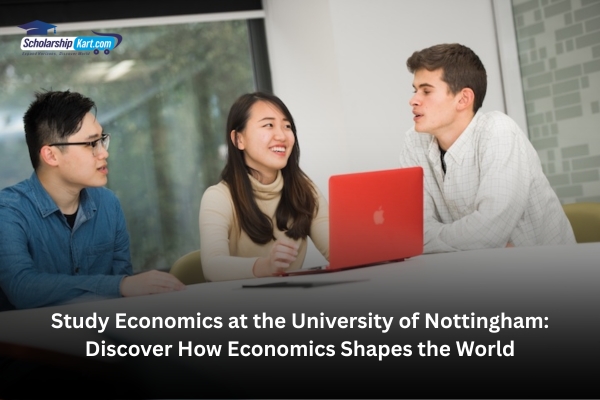
Choosing to study Economics at the University of Nottingham means exploring these real-world questions through a combination of economic theory, quantitative analysis, evidence-based research and practical problem-solving.
The university’s School of Economics combines innovative teaching with an international reputation for high-quality research, creating an academic environment where students can develop the skills needed to understand an increasingly interconnected global economy.
The School of Economics offers a broad range of undergraduate courses and postgraduate programmes, from Economics BSc and Economics and Econometrics BSc to specialised master’s degrees in Behavioural Economics, Financial Economics and Economics and Data Science. Its courses combine essential analytical and quantitative techniques with opportunities to explore specialist areas of the discipline.
Whether you want to understand financial markets, investigate economic inequality, analyse public policy or explore the relationship between human behaviour and economic decisions, Nottingham offers several pathways to develop your interests.
Ready to turn your interest in economics into a rewarding academic journey? Let ScholarshipKart help you get started. From choosing the right university and course to personalised counselling, university admissions, scholarships and visa guidance, our experts can support you at every step of your study-abroad journey. Explore the economics courses that aligns with your interests and career aspirations. Start exploring your options today!
Why Study Economics at the University of Nottingham? 10 Reasons to Consider
1. Learn at a Globally Recognised School of Economics

Academic reputation can be an important consideration when choosing a university. Nottingham’s School of Economics has established an international profile through its teaching, research and contribution to economic debates. The university is:
- Top 40 worldwide and 6th in the UK for economics departments, according to the IDEAS RePEc Ranking of Economics Departments 2025.
- Top 100 globally for economics in the QS World University Rankings by Subject 2026.
- 10th in the UK for economics in The Times and Sunday Times Good University Guide 2027.
- Top 10 in the UK for economics and econometrics in the Times Higher Education World University Rankings 2025
- Top 90 worldwide for business and economics in the Times Higher Education World University Rankings by Subject 2026.
- 2nd in the world for cognitive and behavioural economics in the IDEAS RePEc rankings 2025.
- 5th in the UK for economics and econometrics in the Research Excellence Framework 2021, with 99% of research output rated world-leading or internationally excellent (Research Excellence Framework results).
These rankings provide useful context when comparing economics programmes. More importantly, they reflect the school’s established position in a discipline that requires rigorous analysis, strong research foundations and an understanding of contemporary economic issues.
For prospective students, this academic environment offers an opportunity to engage with economics as a serious analytical discipline while developing an informed perspective on the forces shaping economies and societies.
2. Choose an Economics Degree That Matches Your Interests
Economics is a broad discipline, and students may wish to focus on different aspects of it. Some prefer mathematical modelling and statistical analysis, while others are interested in international trade, financial markets, human behaviour or the relationship between politics and economic decision-making.
The University of Nottingham offers a diverse selection of undergraduate and postgraduate economics courses, allowing students to build a strong understanding of economic principles or specialise in areas that match their academic interests. The programmes combine theoretical knowledge with analytical, mathematical and quantitative methods, preparing students to examine economic challenges and interpret real-world data.
Undergraduate Economics Degrees at the University of Nottingham
1. Economics BSc
The Economics BSc provides a foundation in the main principles of economics, including microeconomics and macroeconomics. Students also study mathematics and statistics, developing the quantitative and analytical skills required to understand economic relationships, evaluate evidence and investigate economic problems.
2. Economics and Econometrics BSc
The Economics and Econometrics BSc focuses on applying mathematical and statistical techniques to economic questions. Students learn how to use models to examine and test economic theories, working with real-world data to understand economic patterns and assess relationships between different variables.
3. Economics and International Economics BSc
This degree combines the fundamental principles of economics with an international perspective. The curriculum covers microeconomics, macroeconomics, mathematics and international trade, helping students explore how economic activity operates across countries and how international markets influence economic relationships.
4. Philosophy, Politics and Economics BA
The Philosophy, Politics and Economics BA brings together three interconnected disciplines. Students explore microeconomics and macroeconomics alongside political theory and global politics. The programme also examines philosophical concepts such as logic, reasoning and ethics, encouraging students to consider economic and political decisions from different perspectives.
Postgraduate Economics Courses at the University of Nottingham
1. Economics MSc
The Economics MSc develops an advanced understanding of current economic thinking. Students gain the technical knowledge needed to understand and formulate microeconomic and macroeconomic models, strengthening their ability to analyse economic issues through established theoretical frameworks.
2. Behavioural Economics MSc
The Behavioural Economics MSc examines how human behaviour and social influences affect economic decisions. The programme explores the factors shaping the choices of consumers, borrowers and investors, offering insight into the relationship between individual decision-making and economic outcomes.
3. Economics and Data Science MSc
The Economics and Data Science MSc combines economic analysis with contemporary data science methods. Students learn about techniques such as Lasso, random forests and supervised learning, developing knowledge of approaches widely used to investigate economic data and identify meaningful patterns.
4. Financial Economics MSc
The Financial Economics MSc focuses on the economic principles and analytical techniques required to understand financial markets. It is an option for students who want to develop specialised knowledge of the economic forces influencing financial systems and market activity.
5. Economic Development and Policy Analysis MSc
This master’s programme explores economic development and public policy, with particular attention to developing countries. Students examine contemporary theories, policy challenges and supporting evidence to understand how economic policies can be analysed in different development contexts.
This range allows prospective students to consider how their academic interests align with the subjects they want to investigate in greater depth.
3. Develop Essential Analytical and Quantitative Skills
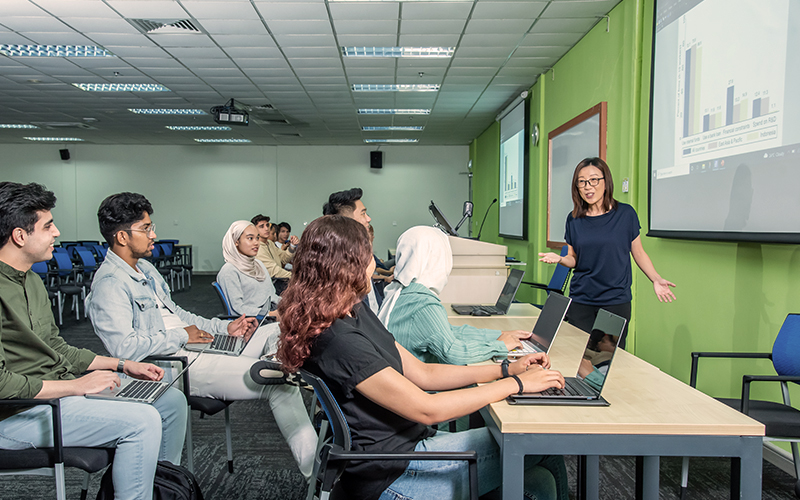
Economics involves much more than understanding prices, markets and financial systems. It requires the ability to interpret evidence, evaluate competing explanations and use mathematical and statistical techniques to investigate economic problems.
Nottingham’s economics programmes combine core economic principles with analytical and quantitative training. Depending on the degree, students explore areas such as microeconomics, macroeconomics, mathematics, statistics and econometrics.
These subjects help students understand how individuals and firms make decisions, how national economies function and how economic relationships can be examined using data.
The skills developed through this approach include:
Quantitative analysis: interpreting numerical evidence and economic data.
Critical thinking: assessing assumptions and comparing economic explanations.
Problem-solving: applying economic principles to complex questions.
Evidence-based reasoning: using data and research to support conclusions.
Together, these capabilities provide a strong foundation for further study and careers that require structured thinking and analytical judgement.
4. Learn from Research-Active Economics Academics
One of the advantages of studying in a research-focused department is the opportunity to learn from academics who investigate current economic questions.
Nottingham’s School of Economics has an international reputation for research across areas including globalisation, international trade, behavioural economics and public policy. Its teaching reflects the research interests and expertise of its academics, helping students encounter contemporary economic thinking alongside established theories.
The school is home to seven research centres covering economic theory and applied economics and econometrics. It also organises seminars and workshops featuring general economic themes and specialised research topics.
For students, this research-led environment can deepen their understanding of how economic knowledge develops. It also provides valuable context for postgraduate dissertations, independent research and the evaluation of economic policies.
5. Explore Real-World Economic Challenges Through Research
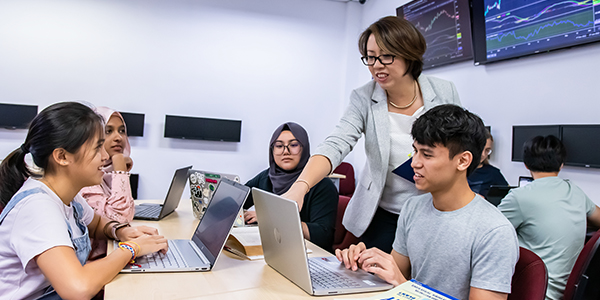
Economic decisions influence households, businesses, governments and international institutions. Understanding these decisions requires more than theoretical knowledge; it also involves examining evidence and recognising the social consequences of economic change.
Research at Nottingham addresses questions connected with globalisation, economic policy, financial technology and inclusive trade. The school is also the established home of the Decision Maker Panel and the Centre for Globalisation and Economic Policy.
Its research initiatives include the Inclusive Financial Technology Hub, which received a £1 million-plus award from Research England, and the ESRC-funded Centre for Inclusive Trade Policy, led by the University of Sussex.
These initiatives illustrate the breadth of issues that contemporary economics can address. They also demonstrate how economic research can connect academic investigation with policy discussions and practical challenges.
For students, exposure to these themes can help make abstract concepts more meaningful by connecting them with questions affecting the wider world.
6. Benefit from an International Academic Environment
Economic activity rarely stops at national borders. International trade, investment, development and financial markets connect countries and influence decisions across the global economy.
Nottingham’s School of Economics reflects this international outlook through its research connections and university campuses in the UK, China and Malaysia. Its teaching and research environment is also culturally diverse, bringing an international perspective to academic life.
The school offers a dual-degree option with the University of Tübingen in Germany. Eligible MSc students who successfully complete the taught component of their Nottingham degree can spend a second year at Tübingen, following a matched programme taught in English and earning two master’s degrees.
This pathway can provide additional international academic exposure and an opportunity to study within another university’s economics environment.
For students interested in international economics, global policy or academic research, these opportunities offer a way to broaden their understanding beyond a single national context.
7. Connect with Economics Societies and Student Research
University life extends beyond lectures, seminars and assessments. Subject-focused societies can help students explore their interests, meet like-minded peers and engage with economics outside the classroom.
The Nottingham Economics and Finance Society has more than 1,200 members and is one of the largest societies on campus. Economics students receive membership funded by the school, with access to careers support, presentations, workshops, networking events and social activities.
Students can also explore other communities:
- Nottingham Economic Review: a free student-published magazine showcasing undergraduate research and developments in economics.
- Philosophy, Politics and Economics Society: offers social events, mentoring and speaker sessions for students interested in these connected disciplines.
- Behavioural Insights Society: explores behavioural science and its applications to psychology, economics and public policy.
- Green Economy Society: focuses on sustainable economics, finance and innovation through activities such as guest talks and workshops.
The wider Students’ Union includes more than 200 societies and over 70 sports clubs. These opportunities can help students develop connections, explore interests and participate in university life.
8. Prepare for Diverse Careers After Graduation
An economics degree can support several career directions because it develops skills in quantitative reasoning, research, problem-solving and the interpretation of evidence.
Nottingham economics graduates have progressed to roles across banking, business, consultancy, government, academia and other sectors. The university also identifies finance, technology and the public sector among the areas in which its graduates are sought after.
Possible career directions include:
- Financial services: analysing markets, financial trends and economic conditions.
- Consulting and business: evaluating data, investigating problems and supporting strategic decisions.
- Government and public policy: examining economic evidence and assessing policy choices.
- Technology and data analysis: applying quantitative skills to data-driven questions.
- Research and academia: pursuing postgraduate study or contributing to economic research.
100% of Nottingham’s postgraduates secured graduate-level employment or further study within 15 months of graduation, with an average annual salary of £36,000.
9. Access Career Guidance and Student Support

Academic development and career planning often go hand in hand. Students may need support with choosing career directions, identifying relevant experience or preparing for postgraduate study.
The University of Nottingham’s Careers and Employability Service provides postgraduate students with careers guidance, information and resources. Graduates can also access lifelong support through the service.
Although the economics courses do not include an integrated placement option, students can apply for internships and placements through the Faculty of Social Sciences placements scheme. These opportunities can help students investigate professional environments and build relevant experience.
The school also offers a supportive and inclusive academic community, alongside access to university student support services.
For students who need to strengthen their English before beginning their degree, pre-sessional English language courses are available to help meet the relevant language requirements. Further courses, consultations and drop-in support are available during study.
Together, these services can help students navigate academic responsibilities and prepare for their next steps.
10. Build a Foundation for Further Study and Specialisation
For students who want to explore economics beyond an undergraduate degree, Nottingham offers postgraduate programmes designed around different research interests and applications.
The MSc portfolio combines specialist teaching with opportunities to develop technical knowledge, investigate current economic questions and undertake dissertation research. Students benefit from a choice of modules, individual dissertation supervision and weekly seminars by visiting speakers in their chosen fields.
The programmes are connected to the research of one or more of the school’s research centres. This creates opportunities to engage with specialist economic debates while developing the knowledge required for advanced professional or academic work.
The dual-degree option with the University of Tübingen adds another possible route for eligible MSc students who want to expand their international academic experience.
For graduates considering a PhD, specialist employment or further research, postgraduate study can provide a structured way to deepen their expertise in a chosen area of economics.
Conclusion
The University of Nottingham stands out as a strong choice for students seeking a well-rounded education in economics, combining academic excellence, research-led teaching and opportunities for professional development. Its international research reputation, diverse range of undergraduate and postgraduate courses, and emphasis on analytical and quantitative skills create a solid foundation for understanding complex economic challenges.
From exploring global trade and financial markets to examining human behaviour, economic development and public policy, students can pursue areas that align with their academic interests and career ambitions. The university’s research centres, subject-focused societies, international academic connections and careers support further enrich the learning experience.
Ultimately, choosing to study Economics at the University of Nottingham offers an opportunity to develop economic knowledge, sharpen critical thinking and prepare for a range of future pathways in business, finance, consultancy, government or further research.
For aspiring economists, the next step is to identify the programme that best matches their goals and explore its course structure and entry requirements to make an informed decision about their academic future.
Take the next step towards your future in economics! Book a Free Consultation with ScholarshipKart for expert counselling, admission assistance, scholarship guidance and visa support. Explore the University of Nottingham’s undergraduate and postgraduate programmes, and begin preparing your application for an exciting academic journey.
FAQs
1. Why should international students study Economics at the University of Nottingham?
The University of Nottingham offers research-led teaching, a diverse range of economics degrees and opportunities to develop analytical and quantitative skills. Its School of Economics ranked top 10 in the Times and Sunday Times Good University Guide 2027 and among the top 40 economics departments worldwide and sixth in the UK in the IDEAS RePEc ranking of economics departments 2025.
2. What undergraduate economics courses are available at the University of Nottingham?
International students can explore Economics BSc, Economics and Econometrics BSc, Economics and International Economics BSc, and Philosophy, Politics and Economics BA. Each programme offers a different academic focus, from quantitative economic analysis to international trade and interdisciplinary study.
3. Which master’s degrees in economics can international students choose?
The university offers Economics MSc, Behavioural Economics MSc, Economics and Data Science MSc, Financial Economics MSc, and Economic Development and Policy Analysis MSc. These programmes allow students to specialise in areas such as economic modelling, financial markets, data science, human behaviour and development policy.
4. What are the English language requirements for international economics students?
Applicants must check the English language requirements for their chosen programme to determine the level of proficiency required. The university also offers pre-sessional English language courses to help eligible students improve their language skills and meet the relevant entry requirements.
5. Are scholarships available for international students studying economics at Nottingham?
The University of Nottingham offers scholarship opportunities for postgraduate students, including dedicated alumni scholarships for eligible graduates from its UK, China and Malaysia campuses. International applicants should review the university’s official funding pages to check current eligibility criteria, award conditions and application deadlines.
6. What career opportunities are available after an economics degree from Nottingham?
Economics graduates can pursue career opportunities in banking, finance, consultancy, business, government, technology and the public sector. The degree can also provide a foundation for postgraduate study and academic research, although individual career outcomes depend on qualifications, experience and employment opportunities.
7. Can international students gain work experience while studying economics at Nottingham?
Although the economics courses do not include an integrated placement option, students can apply for internships and placements through the Faculty of Social Sciences placements scheme. They can also use the university’s Careers and Employability Service for career guidance and professional development resources.
8. Can international students earn two master’s degrees through Nottingham’s dual-degree option?
Eligible MSc students who successfully complete the taught component of their Nottingham degree can apply to spend a second year at the University of Tübingen in Germany through the school’s dual-degree option. The programme offers an opportunity to earn two master’s degrees and gain additional international academic experience, subject to the applicable programme requirements.