
What if you could use chemistry, mathematics and engineering to develop life-saving medicines, improve energy systems and create more sustainable industrial processes? Chemical engineering brings these possibilities together, transforming scientific principles into practical solutions that influence everyday life.
At Heriot-Watt University in Edinburgh, Scotland, students can explore this dynamic discipline through an education that combines engineering fundamentals, practical learning, research-informed teaching and industry-focused projects.
With more than 50 years of experience in chemical engineering education, Heriot-Watt University has established a strong foundation in chemical and process engineering. Its accredited degree programmes are designed to develop the technical knowledge, analytical thinking and problem-solving abilities required to tackle real engineering challenges.
Students can choose between a four-year Bachelor of Engineering (BEng) and a five-year Master of Engineering (MEng), with the flexibility to select their preferred route after the fourth year.
Whether your interests lie in pharmaceuticals, biotechnology, renewable energy, manufacturing or process design, studying Chemical Engineering at Heriot-Watt University can provide a valuable starting point for a career that combines scientific understanding with meaningful innovation.
Chemical Engineering Courses at Heriot-Watt University
Heriot-Watt University offers two undergraduate routes in chemical engineering: the BEng (Hons) Chemical Engineering and the MEng Chemical Engineering. Both programmes share their first four years, allowing students to make a more informed decision about their qualification and career ambitions as they progress.
BEng (Hons) Chemical Engineering: Build Your Engineering Foundations
The four-year BEng programme develops an understanding of the scientific, mathematical and engineering principles that underpin chemical and process engineering. Students learn how industrial processes operate and develop the practical and analytical skills needed to address engineering problems.
Key features include:
- Strong technical foundations: Study the core principles of chemical engineering, process engineering, science and mathematics.
- Practical engineering experience: Develop problem-solving skills through laboratory practicals, tutorials and applied learning.
- Research-informed teaching: Learn from academics and research-active engineers whose expertise helps keep the curriculum relevant to contemporary engineering challenges.
- Final-year group project: Bring together knowledge gained throughout the degree to investigate and address an engineering problem.
- Flexible progression: Choose whether to complete the BEng or move to the more advanced MEng route at the end of the fourth year, subject to the applicable progression requirements.
The BEng is particularly suited to students seeking a comprehensive undergraduate education in chemical engineering, with the option to progress into professional engineering roles or pursue further study.
MEng Chemical Engineering: Advance Your Technical and Research Skills

The five-year MEng programme shares its first four years with the BEng, before offering advanced study in chemical and process engineering during the final year. This additional stage provides opportunities to deepen technical expertise, undertake substantial research and explore specialist engineering subjects.
The final year includes:
- Advanced engineering courses: Broaden and deepen your understanding through specialist optional modules.
- MEng Design Project: Apply engineering knowledge to a substantial design challenge.
- MEng Research Project: Investigate an engineering problem and develop a reasoned, evidence-based approach to addressing it.
- Commercial tender-based exercise: Work in the role of an engineering design house, preparing a proposal to pitch for business to the university’s industrial advisory board.
These activities bring technical design, research, commercial considerations and professional communication together. Students also explore how sustainability, economics and safety influence engineering decisions.
Chemical Engineering Specialisms and Optional Modules
Students can tailor their studies to areas of interest through a combination of compulsory courses and optional modules. The degree structure offers opportunities to explore specialist pathways in pharmaceutical chemistry, computational chemistry, biology, or materials and nanoscience.
Depending on the programme and available module choices, subject areas include:
- Fluid Mechanics
- Industrial Chemical Processes
- Heat Transfer
- Chemical Reaction Engineering
- Sustainable Development
- Engineering Management
- Process Control
- Multiphase Thermodynamics
- Bioprocessing
This flexibility helps students develop a broader understanding of chemical engineering while exploring subjects relevant to their intended career direction.
Ready to turn your passion for science into a rewarding engineering career? Explore Chemical Engineering at Heriot-Watt University and discover the degree pathways that match your ambitions. Let ScholarshipKart help you get started. From choosing the right university and course to personalised counselling, university admissions, scholarships and visa guidance, our experts can support you at every step of your study-abroad journey.
10 Reasons to Study Chemical Engineering at Heriot-Watt University
1. Learn at a University with More Than 50 Years of Chemical Engineering Experience

Heriot-Watt University has been a leader in chemical engineering education for over five decades. Its established experience provides a foundation for studying the principles, technologies and industrial processes that shape modern engineering.
The university also traces its wider educational roots to 1821, reflecting a longstanding commitment to technical education and career preparation.
2. Gain an IChemE-Accredited Engineering Education
Both degree routes are accredited by the Institution of Chemical Engineers (IChemE), providing an academically grounded route into the chemical and process engineering profession.
Students also receive IChemE student membership as part of their programme. This creates an opportunity to engage with the professional community while developing an understanding of the discipline’s expectations and career pathways.
3. Develop Practical Skills in Specialist Laboratories
Chemical engineering requires more than theoretical knowledge. Students need to understand how processes work, interpret results and consider the practical challenges involved in designing and operating engineering systems.
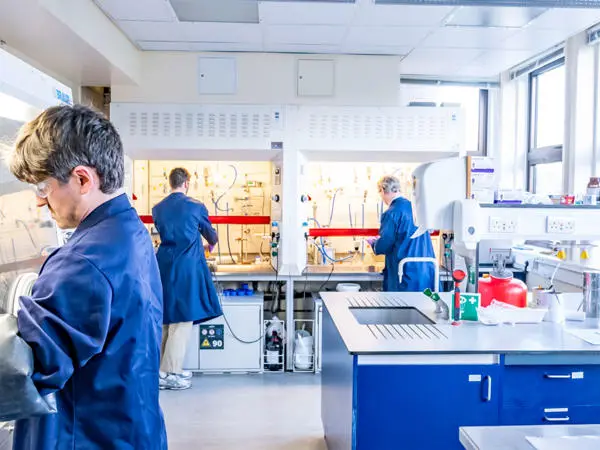
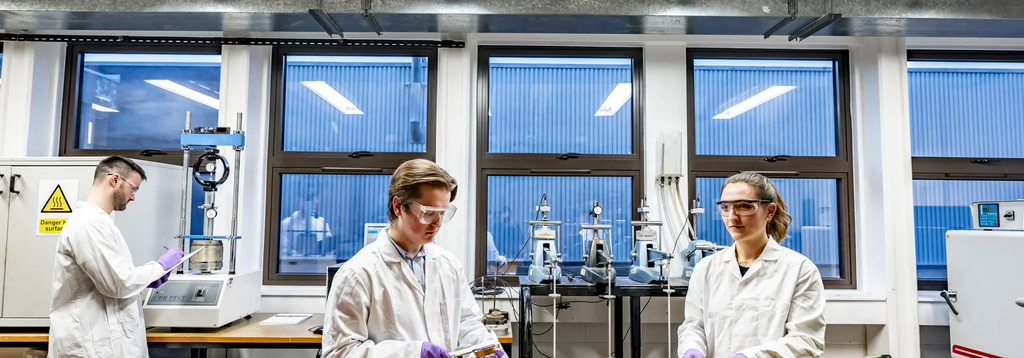
At Heriot-Watt, students have access to specialist equipment, software and laboratories used by professional chemical engineers. The facilities include modern cooling, steam and compressed-air systems, supporting practical engagement with engineering processes.
The curriculum also introduces electronics and programming, including experience with Arduino and LabVIEW graphical programming platforms.
4. Learn from Research-Active Academics
Teaching is informed by research conducted within Heriot-Watt’s engineering and scientific communities. The BEng programme draws on expertise associated with the Institute of Mechanical, Process and Energy Engineering and the Research Institute for Biological Chemistry, Biophysics and Bioengineering.
This connection helps students relate fundamental engineering concepts to developing research questions and contemporary technical challenges.
The university’s engineering research performance provides further context: in the Research Excellence Framework (REF) 2021, 96% of its engineering research was classed as world-leading. Through a joint submission with the University of Edinburgh, Heriot-Watt ranked first in Scotland and third in the UK for engineering research.
5. Connect Classroom Learning with Real Engineering Problems
Students apply their knowledge through practical work and substantial projects, including process engineering design and research projects in the later years of study.
These projects involve open-ended problems rather than simply reproducing established answers. Students must consider technical feasibility alongside sustainability, economic factors and safety.
This experience encourages independent thinking and helps learners understand the interconnected decisions involved in professional chemical engineering.
6. Choose a Degree Route That Matches Your Ambitions
The shared first four years of the BEng and MEng offer flexibility. Students can assess their interests, progress and long-term objectives before choosing whether to complete the four-year bachelor’s degree or continue into the fifth year of the integrated master’s programme.
The MEng offers additional advanced courses, a substantial research project and a commercial design exercise. This structure allows students to make a considered choice about the depth of study they want to pursue.
7. Explore Diverse Chemical Engineering Career Opportunities
Chemical engineering knowledge is relevant to a wide range of industries because many sectors depend on transforming materials, controlling processes and improving production systems.
Heriot-Watt graduates work across areas including:
- Pharmaceuticals and biotechnology
- Bioprocessing and life sciences
- Food and drink production
- Energy and power generation
- Water supply
- Manufacturing and industrial process development
Potential career directions include engineering professional roles and business or public service associate professional positions. The breadth of these sectors allows graduates to explore different applications of their technical knowledge.
8. Build Professional Connections Through the ChemEng Society
University life also provides opportunities to connect with fellow chemical engineering students and learn about the profession beyond the curriculum.
The ChemEng Society combines social activities with careers-focused events. Its programme has included the Frank Morton Sports Day, Christmas Dinner, graduation ball and ceilidh, alongside industry panels, professional interviews and seminars on alternative chemical engineering careers.
Events have explored topics such as sustainability, net zero, leadership and career journeys across different companies. These activities offer opportunities to exchange ideas, develop contacts and gain perspectives on professional life.
9. Explore Sustainability Through Engineering Societies
Sustainability is an important consideration in modern chemical and process engineering, from designing industrial systems to improving resource efficiency.
Engineers Without Borders at Heriot-Watt University Edinburgh offers opportunities to engage with sustainability-focused engineering approaches, hands-on projects and inter-university activities. Participation is not limited to engineering students, making the society accessible to people interested in developing relevant skills and experiences.
Watt Women in STEM also supports women, non-binary students and allies studying science, technology, engineering and mathematics. Together, such societies contribute to a wider community of collaboration, inclusion and professional development.
10. Broaden Your Horizons in Edinburgh and Beyond
Heriot-Watt offers opportunities to experience different cultures through its Go Global student mobility programme. Students may be able to arrange an inter-campus transfer to Dubai or undertake an academic-year exchange at Edith Cowan University in Australia, subject to programme arrangements and eligibility.
The Edinburgh setting adds another dimension to the student experience. The city combines historic architecture, cultural attractions, natural landscapes and a contemporary technology and business environment.
Student support also extends beyond academic teaching. Services cover accommodation, computing, healthcare, sport, welfare and careers. The university’s Edinburgh library offers 24-hour access during semester and examination periods, with more than 700 individual and group study places. Investment in the Library and Learning Commons further supports technology-enabled study.
Together, international mobility, student services and the Edinburgh environment create opportunities to develop academically while building a broader perspective on life and work.
How Is Chemical Engineering Taught at Heriot-Watt University?

The programmes combine lectures, tutorials and laboratory practicals to support different aspects of learning. Students engage with academic staff and peers while developing an understanding of engineering theory and its applications.
Assessment methods include coursework, examinations and a dissertation or relevant final-year research work, depending on the programme structure. Students receive support and feedback throughout their studies.
This combination of teaching, assessment and project work encourages students to develop technical knowledge alongside analytical reasoning, teamwork and the ability to communicate engineering ideas.
Chemical Engineering Entry Requirements at Heriot-Watt University
Academic requirements
A Levels: BBB, including Chemistry and Mathematics, with both subjects at grade B
International Baccalaureate: 30 points, including Chemistry and Mathematics at Higher Level grade 5 in both subjects
English language requirements: IELTS 6.0 overall, with no individual score below 5.5, or an equivalent qualification
Students who do not meet the direct entry requirements may wish to consider foundation entry through Heriot-Watt Global College. The university identifies an Engineering with an Accelerator Programme pathway that can provide progression to the second year of the relevant programme, subject to the pathway’s requirements.
What Career Opportunities Can You Explore After Chemical Engineering?
Chemical engineering graduates can apply their knowledge to the design, analysis and improvement of industrial processes. Their work may involve developing products, managing production systems, improving process efficiency or contributing to safer and more sustainable technologies.
Potential sectors include pharmaceuticals, biotechnology, food manufacturing, energy, power generation and water supply. Further opportunities may arise in engineering consultancy, manufacturing and related technical or commercial roles.
The university lists an average graduate salary of £32,000 for students 15 months after graduation.
Conclusion
Studying Chemical Engineering at Heriot-Watt University offers a route into a discipline that connects scientific principles with practical challenges across industry and society. Its IChemE-accredited BEng and MEng programmes combine engineering fundamentals, specialist laboratory facilities, research-informed teaching and substantial project work.
For students interested in understanding how materials are transformed, how industrial systems operate and how engineering can contribute to a more sustainable future, Heriot-Watt University provides a strong foundation to consider. With a commitment to practical learning, professional development and research-led education, it offers an opportunity to turn curiosity about science into the skills needed to address real-world engineering problems.
Your future in chemical engineering starts with the right choice. Explore Heriot-Watt University’s Chemical Engineering programmes and take the next step towards your academic and career goals. Book a Free Consultation with ScholarshipKart for expert counselling, admission assistance, scholarship guidance and visa support.
FAQs
1. What are the entry requirements for international students studying Chemical Engineering at Heriot-Watt University?
International applicants need A-level grades of BBB, including Chemistry and Mathematics at grade B, or an International Baccalaureate score of 30 points, with both subjects at Higher Level grade 5. Applicants should check the university’s current country-specific entry requirements before applying.
2. What English language requirements apply to international students?
The English language requirement is IELTS 6.0 overall, with no individual score below 5.5, or an equivalent qualification. Students should confirm the accepted English language tests and any applicable conditions with the university.
3. How long does it take to complete a Chemical Engineering degree at Heriot-Watt University?
The BEng (Hons) Chemical Engineering programme takes four years, while the MEng Chemical Engineering programme takes five years. Both routes share the first four years, allowing students to choose their preferred degree pathway at the end of the fourth year, subject to progression requirements.
4. Are Chemical Engineering degrees at Heriot-Watt University accredited?
Yes, Heriot-Watt University’s Chemical Engineering degree programmes are accredited by the Institution of Chemical Engineers (IChemE). Students also receive IChemE student membership, providing an opportunity to engage with the professional chemical engineering community.
5. What career opportunities are available after studying Chemical Engineering at Heriot-Watt University?
Graduates can explore opportunities in pharmaceuticals, biotechnology, bioprocessing, food and drink production, energy, power generation and water supply. The degree develops technical and analytical skills relevant to engineering, manufacturing and industrial process development.
6. Can international students specialise in a particular area of Chemical Engineering?
Yes, students can explore specialist pathways such as pharmaceutical chemistry, computational chemistry, biology, or materials and nanoscience. Optional modules in subjects including bioprocessing, chemical reaction engineering and sustainable development provide further opportunities to align studies with career interests.
7. Can international students study abroad during their Chemical Engineering degree?
Heriot-Watt University’s Go Global programme offers opportunities for international study, including a potential inter-campus transfer to Dubai or an academic-year exchange at Edith Cowan University in Australia. Availability and eligibility depend on the applicable programme arrangements.
8. What support and facilities are available to international students at Heriot-Watt University?
Students can access specialist engineering laboratories, technical software, academic support and university services covering accommodation, healthcare, welfare and careers. The Edinburgh campus also has a library that operates 24 hours a day during semester and examination periods, providing flexible study facilities.