
Materials Technology is an interdisciplinary field that combines science, engineering and technology to understand how materials are developed, processed, tested and used in real-world applications.
The subject covers materials such as metals, polymers, ceramics, composites, semiconductors, biomaterials and advanced materials.
Students learn how the structure and properties of a material affect its strength, durability, conductivity, flexibility, weight and performance.
The field plays an important role in industries such as aerospace, automotive engineering, renewable energy, electronics, healthcare, construction and advanced manufacturing.
For Indian students, studying Materials Technology in the UK can provide access to internationally recognised universities, modern laboratories and research-led teaching.
UK universities also offer programmes that combine theoretical learning with laboratory experiments, computational modelling, design projects and industrial applications.
Another advantage is the opportunity to specialise in rapidly developing areas such as sustainable materials, nanotechnology, composites, biomaterials, energy materials and materials informatics.
The UK has a strong research and industrial ecosystem, giving students opportunities to interact with academics, researchers and employers working on real engineering challenges.
English-language education and the UK’s internationally recognised qualifications can also make the degree useful for students seeking careers in India, the UK or other international markets.
For students who enjoy physics, chemistry, mathematics, engineering and problem-solving, Materials Technology can therefore be a strong route into both technical and research-oriented careers.
Why Study Materials Technology in the UK?
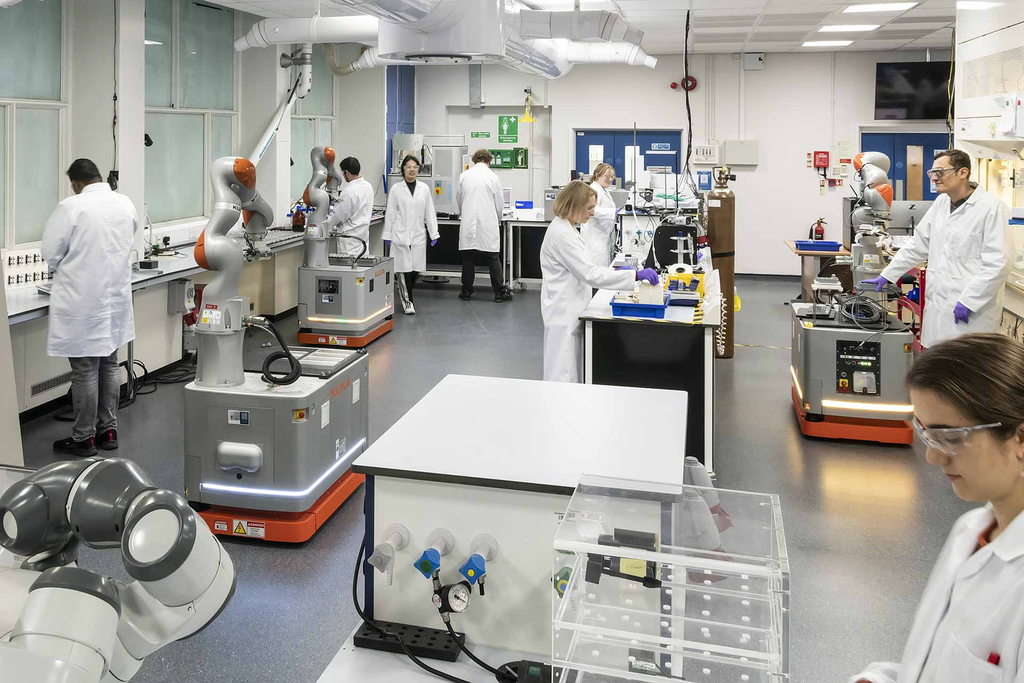
The UK is an attractive destination for Materials Technology because its universities have a long history of teaching materials science, metallurgy and engineering.
Students can study the behaviour of materials at microscopic and atomic levels while also learning how those materials are selected and manufactured for practical applications.
UK programmes often connect academic study with industrial problems, helping students understand how materials knowledge is applied beyond the laboratory.
The country also offers specialist postgraduate and research programmes covering advanced materials, composites, biomaterials, metallurgy, energy materials and computational materials science.
For Indian students, a UK qualification can provide international academic exposure while developing technical, analytical, research and communication skills valued by employers.
Key Benefits of Studying Materials Technology in the UK

1. Access to Research-Led Education
Many UK universities combine classroom teaching with active research. This means students can learn concepts that are closely connected with current developments in materials engineering rather than studying only established textbook theories. At postgraduate and doctoral levels, students may work on research involving advanced manufacturing, sustainable materials, energy storage, nanomaterials or computational modelling.
2. Strong Laboratory and Practical Training
Materials Technology is a practical discipline, so laboratory experience is particularly important. Students may learn techniques for examining material structures, measuring mechanical properties, analysing failure and investigating thermal, electrical or chemical behaviour. Practical training helps students understand how theoretical concepts translate into measurable material performance.
3. Opportunities to Specialise
The field is broad, allowing students to develop expertise in a particular area. Depending on the university, specialisms may include metallurgy, polymers, ceramics, composites, nanotechnology, biomaterials, semiconductor materials, sustainable materials, energy materials or materials modelling. This flexibility can help students align their studies with a specific industry or research ambition.
4. Industry-Relevant Skills
Materials graduates develop more than scientific knowledge. They also build analytical thinking, numerical ability, problem-solving, project management, technical communication and data-analysis skills. Employers across manufacturing, engineering, research and technology can use these capabilities in different professional roles.
5. Professional Accreditation
Some UK materials programmes are accredited by professional organisations such as the Institute of Materials, Minerals and Mining (IOM3). Accreditation can indicate that a course meets recognised academic and professional standards and may support students who later seek professional engineering registration. Students should always check the accreditation status of the specific programme they intend to study.
6. Exposure to Emerging Technologies
Materials are fundamental to technological development. Students can encounter subjects such as additive manufacturing, artificial intelligence for materials discovery, battery materials, lightweight composites, biomedical materials and sustainable manufacturing. These areas are increasingly relevant as industries look for materials that are stronger, lighter, more efficient and environmentally responsible.
7. International Career Exposure
The UK attracts students and researchers from many countries, creating an international learning environment. Group projects, laboratory work and research collaborations can expose students to different approaches to engineering and scientific problem-solving. This experience can be useful for graduates intending to work for multinational companies or continue their careers internationally.
8. Diverse Industrial Applications
A Materials Technology degree does not restrict graduates to one industry. Materials specialists can contribute to aerospace, automotive, healthcare, electronics, energy, telecommunications, construction, manufacturing, sports equipment and scientific research.
According to Prospects, materials science and engineering graduates work across sectors including aerospace, automotive, healthcare, manufacturing, nuclear, pharmaceuticals, telecommunications, transport and sustainable development.
Types of Materials Technology Degrees in the UK

Materials Technology may not always appear under the exact title “Materials Technology.” UK universities commonly use related titles such as Materials Science, Materials Engineering, Materials Science and Engineering, Advanced Materials or Materials Technology. Therefore, students should search across these related course names when comparing universities.
Undergraduate Degrees in Materials Technology in the UK
Undergraduate study normally introduces students to the scientific and engineering foundations of materials. Common qualifications include:
- BSc Materials Science
- BSc Materials Technology
- BEng Materials Engineering
- BEng Materials Science and Engineering
- MEng Materials Science and Engineering
- BEng Materials Science and Engineering with a specialism such as metallurgy
Students normally study subjects such as chemistry, physics, mathematics, crystallography, materials processing, mechanical properties, thermodynamics, materials characterisation and engineering design. For example, the University of Manchester offers an MEng in Materials Science and Engineering with Metallurgy, while UCAS lists three-year BEng Materials Science and Engineering programmes at UK universities.
Postgraduate Degrees in Materials Technology in the UK
Postgraduate study allows students with an appropriate science or engineering background to specialise further. Common options include:
- MSc Materials Science and Engineering
- MSc Advanced Materials
- MSc Materials Engineering
- MSc Metallurgy
- MSc Polymer Science
- MSc Biomaterials
- MSc Materials for Energy and Sustainability
- MSc Computational Materials Science
A typical taught master’s degree combines advanced modules with laboratory work, technical assignments and an independent research project.
PhD Degrees in Materials Technology in the UK
A PhD is the most research-intensive level of study. Instead of following a broad set of taught modules, doctoral candidates normally investigate a specific research question under academic supervision.
A Materials Technology PhD could involve areas such as advanced alloys, composite materials, nanomaterials, semiconductor materials, biomaterials, hydrogen technologies, batteries, sustainable materials or computational materials discovery.
Popular and Specialised Degrees in Materials Technology
Popular Undergraduate Degrees
Some of the most relevant undergraduate options include:
- BEng Materials Engineering: Focuses on engineering materials, manufacturing processes, material selection and performance.
- BEng Materials Science and Engineering: Combines scientific understanding of materials with engineering applications.
- MEng Materials Science and Engineering: An integrated undergraduate master’s route that provides additional advanced study and can be useful for students targeting professional engineering careers.
- BSc Materials Science: Places greater emphasis on the scientific investigation of material structures, properties and behaviour.
- Materials Science with Metallurgy: Concentrates on metals, alloys, processing, structure and industrial applications.
Popular Postgraduate Degrees
At master’s level, students can choose programmes such as:
- MSc Materials Science and Engineering
- MSc Advanced Materials Science and Engineering
- MSc Materials Engineering
- MSc Polymer Science and Engineering
- MSc Biomaterials
- MSc Materials for Energy and Sustainability
- MSc Computational Materials Science
Popular PhD Specialisations
PhD research is usually more specialised than undergraduate or master’s study. Potential areas include:
- Advanced composites
- Nanomaterials
- Sustainable and recyclable materials
- Battery and energy-storage materials
- Hydrogen-related materials
- Biomedical materials
- Semiconductor materials
- Metallic alloys
- Additive manufacturing
- Materials modelling and simulation
- Materials characterisation
- Materials informatics and machine learning
The exact research options depend on the university’s academic staff, laboratories and funded research projects.
Materials Technology Course Duration in the UK
Course duration depends on the qualification and whether the programme includes industrial experience.
Undergraduate Materials Technology Course Duration in the UK
A standard BEng or BSc in Materials Science or Materials Engineering commonly takes three years full-time in England, Wales and Northern Ireland. Some programmes offer an additional industrial placement year, making the total duration four years. Integrated MEng programmes generally take four years, although the structure can vary between universities.
Postgraduate Materials Technology Course Duration in the UK
A full-time taught MSc in Materials Science or Materials Engineering is commonly completed in one year in the UK. Part-time master’s programmes can take longer, often two years or more, depending on the university and study pattern.
PhD Materials Technology Course Duration in the UK
A full-time PhD commonly takes around three to four years, although the exact duration varies according to the university, research project, funding arrangement and progress requirements. Part-time doctoral study generally takes longer.
Students should check the official university course page because duration can change when a programme includes an industrial placement, foundation year or additional research training.
Tuition Fees for Materials Technology Courses in the UK
Tuition fees for Indian students are normally charged at the international or overseas rate. The amount depends heavily on the university, programme, study level and location.
For undergraduate degrees, international engineering and materials-related tuition fees can commonly fall in the broad range of approximately £25,000 to £46,000 per year, although individual programmes can be below or above this range.
For master’s programmes, international fees can commonly range from approximately £25,000 to £45,000 or more.
PhD fees vary substantially because research students may receive studentships or project funding. A funded PhD can cover some or all tuition costs and may also provide a living-cost stipend, whereas self-funded doctoral study requires the student to budget for tuition and living expenses.
Indian students should also budget separately for accommodation, food, transport, visa-related expenses, health-related immigration costs where applicable, study materials and personal expenses. Tuition fees are therefore only one part of the total cost of studying Materials Technology in the UK.
Sample Tuition Fees for Materials Technology Courses in the UK
| University | Course Name | Tuition Fees |
| Imperial College London | Materials Science and Engineering BEng | £45,500 per year |
| University of Birmingham | Materials Science and Engineering BEng | £30,600 per year |
| Loughborough University | Materials Science and Engineering BEng (Hons) | £31,500 per year |
| University of Leeds | Materials Science and Engineering BEng | £32,750 per year |
| University of Sheffield | Materials Science and Engineering BEng | £32,100 per year |
Scholarships for Materials Technology Students in the UK
Scholarships can substantially reduce the financial pressure of studying abroad. Students should investigate both government-funded awards and university-specific scholarships.
Chevening Scholarships
Chevening is one of the UK’s major international scholarship programmes and supports eligible students pursuing a one-year master’s degree at a UK university. For Indian applicants, eligibility requirements include relevant work experience, so it is particularly suitable for eligible postgraduate applicants rather than students entering directly after school.
Chevening provides financial support for a one-year master’s, and Indian applicants need at least two years of eligible work experience.
Commonwealth Scholarships
Indian students may also investigate Commonwealth Scholarship opportunities where the particular award and eligibility criteria apply. These scholarships support postgraduate study and research in participating UK institutions. Eligibility and subject priorities vary by scholarship scheme, so students should check the current requirements before applying.
University Scholarships
UK universities frequently offer scholarships for international students based on academic achievement, financial need, leadership, nationality or subject area. Some Materials Technology departments may also have funding linked to research projects or industry partnerships.
Research Studentships
PhD applicants should pay particular attention to funded research positions. Universities, research councils, companies and academic projects may advertise doctoral studentships that provide tuition support and a stipend. These opportunities are usually competitive and may require a strong academic record and a well-matched research background.
Scholarships for Indian Students
Students from India should search specifically for scholarships labelled for Indian applicants, international STEM students, engineering students or students from particular regions of India. Scholarship availability changes every academic year, so students should verify deadlines, eligibility and funding coverage directly with the awarding organisation.
Career Opportunities After Studying Materials Technology in the UK

Materials Technology graduates can enter careers involving material selection, product development, testing, manufacturing, research and engineering design.
Materials engineers work on improving the strength, durability, efficiency, cost and sustainability of materials used in products and industrial processes.
The subject is relevant to advanced sectors including aerospace, automotive, healthcare, energy, electronics, telecommunications and manufacturing.
Graduates with strong computational or data skills can also move towards materials modelling, simulation and materials informatics.
Those who continue to master’s or PhD level can develop deeper expertise and compete for specialist research and development positions.
With experience, professionals can progress towards technical leadership, management, consultancy, professional engineering registration or specialist research roles.
- CAD Technician
- Design Engineer
- Materials Engineer
- Metallurgist
- Product/Process Development Scientist
- Research Scientist (Physical Sciences)
- Technical Sales Engineer
- Textile Technologist
- Analytical Chemist
- Biomedical Engineer
- Geotechnical Engineer
- Higher Education Lecturer
- Management Consultant
- Manufacturing Systems Engineer
- Patent Examiner
- Project Manager
- Quality Manager
- Sustainability Consultant
Popular Career Paths
- Materials Engineer: Materials engineers investigate, select, develop and improve materials for industrial applications. Their work may involve metals, polymers, ceramics, composites, glass, advanced alloys or nanomaterials. They may also advise manufacturers about material performance, processing, inspection and maintenance.
- Materials Scientist: Materials scientists focus more heavily on understanding material structures, properties and behaviour. Their work can involve laboratory experiments, characterisation techniques, research and development and the creation of new materials.
- Metallurgist: Metallurgists specialise in metals and alloys. They can work on extraction, processing, heat treatment, failure analysis, corrosion, quality control and the development of high-performance metallic materials.
- Materials Testing Engineer: These professionals test materials to determine whether they meet required mechanical, thermal, chemical or electrical specifications. They may work in laboratories, manufacturing companies, testing organisations or research institutions.
- Process Development Engineer: Process development engineers examine how materials can be manufactured or processed efficiently and consistently. Their responsibilities may include improving production methods, reducing waste and increasing product quality.
- Research and Development Scientist: R&D professionals investigate new materials, processes and technologies. This career is particularly relevant to graduates with advanced degrees or strong laboratory and research experience.
- Sustainability or Materials Consultant: Materials specialists can help organisations choose lower-impact materials, reduce manufacturing waste, improve product life and support circular-economy strategies.
- Materials Modelling or Computational Specialist: Graduates with programming, simulation and data-analysis skills can work on computer-based materials modelling and prediction. This area is becoming increasingly relevant as artificial intelligence and computational techniques are used to accelerate materials discovery.
Average Salary for Materials Technology Graduates
There is no single salary that applies to every Materials Technology graduate because earnings depend on the job title, location, employer, experience, professional qualifications and specialist knowledge.
As a useful benchmark, Prospects reports starting salaries of approximately £28,000–£32,000 for materials engineers. With experience, the reported range rises to approximately £35,000–£55,000, while senior engineers with chartered status can earn £65,000 or more. Salaries can be higher in specialist areas such as aerospace, renewable energy, telecommunications and biomedical engineering.
| Career Level | Typical Experience | Salary Range per Year | Typical Roles |
| Entry Level | 0–2 years | £28,000–£32,000 | Graduate Materials Engineer, Junior Materials Engineer, Materials Technician |
| Mid Level | 3–7 years | £35,000–£55,000 | Materials Engineer, Materials Scientist, Specialist Materials Engineer |
| Senior Level | 8+ years | £55,000–£65,000+ | Senior Materials Engineer, Senior Materials Scientist, Technical Specialist |
| Most Senior / Chartered | Extensive experience | £65,000+ | Chartered Materials Engineer, Lead Engineer, Principal Engineer, Engineering Consultant |
These figures should be treated as indicative rather than guaranteed graduate salaries. A graduate working in R&D, manufacturing, consulting or a highly specialised technology field may have a different salary from someone entering a general engineering role.
Graduate Employability for Materials Technology Graduates in the UK
Materials Technology has strong cross-sector employability because materials are fundamental to the design and manufacture of almost every physical product. Graduates can apply their scientific and engineering skills to industries ranging from aerospace and automotive engineering to healthcare, energy, electronics and manufacturing.
Graduate outcomes also show the variety of destinations available to materials science and engineering graduates. Prospects reports HESA Graduate Outcomes data in which 62.5% were employed, 20.4% entered further study and 10% were both working and studying, while 3.7% were unemployed and 3.4% were classified in other destinations. The same source reports engineering as the largest type of work entered, at 46.9%.
Employability can be strengthened through internships, industrial placements, laboratory experience, research projects, programming, data analysis and professional networking. Students should also consider whether their chosen programme has professional accreditation and whether it supports the academic requirements relevant to future engineering registration.
| University | Employability Prospects |
| Imperial College London | 100% |
| University of Oxford | 96.4% |
| University of Cambridge | 94.3% |
| Loughborough University | 93.4% |
| University of Sheffield | 91.1% |
| University of Birmingham | 87.3% |
| Swansea University | 84.6% |
| University of Manchester | 82.1% |
Entry Requirements for Materials Technology Courses in the UK
Entry requirements vary between universities, so students should treat the following as general guidance rather than universal requirements.
Undergraduate Entry Requirements for Materials Technology Courses in the UK
For a BEng, BSc or MEng in Materials Technology or Materials Science and Engineering, Indian applicants generally need a recognised secondary or higher-secondary qualification with strong results in relevant subjects.
Universities commonly look for preparation in:
- Mathematics
- Physics
- Chemistry
- Other relevant science subjects
The required academic grades differ considerably between institutions. More selective universities may expect particularly high marks in mathematics and science subjects.
Students may also need to demonstrate English-language proficiency if they do not meet the university’s accepted English-language criteria through previous education or another approved route. IELTS, TOEFL and other recognised tests may be accepted, but the required score depends on the university.
A typical undergraduate application may therefore include academic transcripts, predicted or final examination results, proof of English proficiency where required, a personal statement and references or other application information.
Students who do not meet the direct entry requirements may sometimes be eligible for a foundation year or an alternative pathway, depending on the university.
Postgraduate Entry Requirements for Materials Technology Courses in the UK
For an MSc in Materials Technology, Materials Science or Materials Engineering, applicants normally need at least a 2:2 equivalent relevant bachelor’s degree in engineering, physical science or mathematics.
Universities may accept degrees in:
- Materials Science
- Materials Engineering
- Mechanical Engineering
- Chemical Engineering
- Metallurgy
- Physics
- Chemistry
- Polymer Science
- Other closely related engineering or physical science subjects
- UK Universities also specify an IELTS score of 6.5 overall with no less than 6.0 in each component.
Indian students should not assume that every university uses exactly the same percentage requirement. Universities assess Indian qualifications according to their own country-specific admissions policies.
For competitive master’s programmes, a stronger academic record can improve an applicant’s chances, particularly when the course has limited places. Relevant laboratory experience, engineering projects, internships, research experience or professional employment can also strengthen an application.
Applicants may need to provide:
- Academic transcripts
- Bachelor’s degree certificate
- English-language test results, if required
- Personal statement or statement of purpose
- Academic or professional references
- CV, where requested
- Passport and other application documentation
Some specialised programmes may have additional requirements related to mathematics, programming, engineering or previous laboratory experience.
PhD Entry Requirements for Materials Technology Courses in the UK

PhD admission is different from undergraduate and taught master’s admission because universities assess both academic preparation and research potential.
Applicants normally need a relevant bachelor’s degree and, in many cases, a master’s degree or substantial research experience. The exact requirement depends on the university and the doctoral project.
A strong PhD application should normally demonstrate:
- Relevant academic qualifications
- Knowledge of the proposed research area
- Evidence of research ability
- A clear research interest
- Relevant technical or laboratory skills
- Strong academic references
- Appropriate English-language proficiency
- A suitable research proposal where required
Some doctoral positions are advertised as specific funded projects. In such cases, the university may provide a detailed project description and ask applicants to explain how their previous education and research experience match the project.
For example, a prospective PhD student interested in battery materials should ideally demonstrate relevant knowledge of electrochemistry, materials science, chemical engineering or a related field, along with research experience that supports the proposed topic.
International doctoral applicants should also check whether their proposed research falls under any additional UK requirements, such as the Academic Technology Approval Scheme (ATAS), where applicable. Certain science and engineering programmes can require an ATAS certificate for eligible international students.
Requirements for Materials Technology Courses in the UK
| Requirement | Bachelor’s / BEng / BSc | Master’s / MSc |
| Academic qualification | Completion of Class 12 or an equivalent recognised qualification. Universities generally expect strong academic performance in relevant science subjects. | A recognised bachelor’s degree, normally in Materials Science, Materials Engineering, Engineering, Physics, Chemistry, Mathematics or another closely related subject. |
| Relevant subjects | Mathematics is usually important, along with Physics and/or Chemistry. For example, Leeds requires Mathematics and either Physics or Chemistry for its Materials Science and Engineering BEng. | Applicants are generally expected to have studied a relevant engineering, physical science or mathematical discipline. Leeds, for example, accepts degrees in materials engineering, materials science, physics, chemistry, mechanical engineering and several related fields. |
| Typical academic level | Requirements differ considerably. For example, Leeds asks for AAB including Mathematics and either Physics or Chemistry, while Sheffield asks for AAB including two of Mathematics, Physics or Chemistry. | A 2:2 or equivalent bachelor’s degree is accepted by some universities. Leeds requires a 2:2 honours degree in engineering, physical science or mathematics for its MSc Materials Science and Engineering. |
| English language – IELTS | Usually around IELTS 6.0–6.5 overall, depending on the university. Leeds requires 6.0 overall with at least 5.5 in each component, while Manchester’s current BSc requirement is IELTS 6.5 overall with 6.0 in each sub-score. | Typically IELTS 6.5 overall, often with a minimum of 6.0 in each component. Leeds, Birmingham and Sheffield all specify 6.5 overall with 6.0 in each component for relevant Materials programmes. |
| Mathematics requirement | Usually an important component of the academic entry profile, particularly for BEng programmes. | Some MSc programmes specifically expect previous mathematics study. Sheffield’s MSc Materials Science and Engineering, for example, requires applicants to have studied at least one relevant Mathematics module. |
| Additional requirements | Some universities may require specific GCSE-equivalent qualifications in Mathematics, Physics or Chemistry. Sheffield, for example, specifies GCSE Mathematics grade 6/B and particular science requirements where those subjects were not studied at A level. | Depending on the university, relevant professional experience or qualifications may also be considered. Leeds states that relevant professional qualifications and experience may be considered. |
How to Choose the Right Materials Technology Course in the UK
Choosing a university should involve more than comparing rankings. Indian students should examine the course modules to determine whether they match their intended career or research area.
Important factors include:
- Course content: Check whether the curriculum covers the materials and technologies you want to study.
- Specialisations: Look for optional modules in areas such as composites, metallurgy, biomaterials, energy materials or computational modelling.
- Laboratory facilities: Practical facilities are especially important for materials-related programmes.
- Research strengths: PhD and research-oriented MSc applicants should investigate the research groups and academic supervisors.
- Industry links: Industrial placements, projects and employer collaborations can provide valuable practical experience.
- Professional accreditation: Check whether the course is accredited by a relevant professional body.
- Graduate outcomes: Look at employment and further-study outcomes rather than relying only on university rankings.
- Total cost: Compare tuition fees with accommodation, living expenses, transport and other costs.
- Location: London and other major cities can have significantly different living costs from smaller university locations.
- Scholarships: Check university and external funding opportunities before accepting an offer.
Top Universities for Materials Technology in the UK
The UK is home to several globally renowned universities that are renowned for studying Materials Technology. According to the Times University Guide by Subject 2026, these are the top-ranking institutions for Materials Technology:
- University of Cambridge
- Imperial College London
- University of Oxford
- University of Sheffield
- Kingston University
- University of Leeds
- Loughborough University
- University of Birmingham
- University of Manchester
- Queen Mary University of London
Conclusion: Why Study Materials Technology in the UK?
Studying Materials Technology in the UK can be an excellent choice for students who want to combine science, engineering and innovation. The discipline offers a broad academic foundation while allowing students to specialise in areas such as advanced composites, metallurgy, sustainable materials, biomaterials, energy technologies and nanotechnology.
For Indian students, UK universities provide access to internationally recognised qualifications, research-led education and diverse academic communities. The field also offers considerable career flexibility because materials expertise is required across aerospace, automotive, energy, healthcare, electronics, manufacturing and other technology-driven industries.
Materials graduates can enter engineering, scientific, manufacturing, consultancy and research roles, while further study can open the door to more specialised careers.
However, students should make their decision carefully by comparing course content, accreditation, fees, scholarships, research facilities, entry requirements and graduate outcomes. Tuition and living costs can be substantial, so financial planning should begin well before the application stage. Scholarships and studentships can provide important support, particularly at postgraduate and doctoral level.
Ultimately, Materials Technology is a strong option for students who want to understand how materials shape modern technology and who are interested in solving practical engineering problems.
With the right course, relevant practical experience and a clear career plan, a UK Materials Technology qualification can provide a strong foundation for a career in engineering, research, advanced manufacturing and emerging technologies.
Materials Technology is a field that combines science, engineering and technology to study the properties, development, processing and applications of materials such as metals, polymers, ceramics, composites and nanomaterials.
The UK offers internationally recognised qualifications, advanced research facilities, practical laboratory training and opportunities to specialise in emerging fields such as nanotechnology, biomaterials, sustainable materials and advanced manufacturing.
Some leading UK universities offering materials-related programmes include the University of Cambridge, Imperial College London, University of Oxford, University of Sheffield, University of Leeds, Loughborough University, University of Birmingham and the University of Manchester.
Popular courses include BEng Materials Engineering, BSc Materials Science, MEng Materials Science and Engineering, MSc Advanced Materials, MSc Materials Engineering, MSc Biomaterials and MSc Materials Science and Engineering.
A BEng or BSc generally takes three years, while an integrated MEng takes around four years. A full-time MSc usually takes one year, and a PhD typically requires three to four years.
Undergraduate applicants generally need Class 12 qualifications with Mathematics, Physics and/or Chemistry. For master’s programmes, students usually need a relevant bachelor’s degree in engineering, materials science, physics, chemistry or a related discipline.