
What if the university you are dreaming of attending has already shaped the minds of some of the most influential people in modern history?
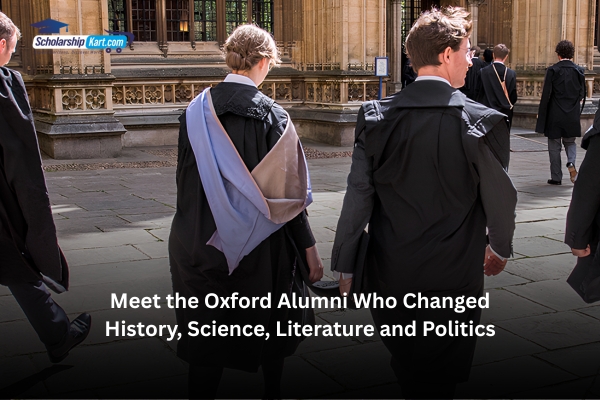
Imagine walking through the same historic corridors where world leaders once debated their ideas, sitting in the college courtyards that inspired celebrated writers, or exploring the academic spaces where brilliant minds developed ideas that eventually changed the world. That is part of the magic of the University of Oxford.
Oxford is not simply a university with beautiful architecture and centuries-old traditions. It is an academic institution associated with extraordinary intellectual achievements, groundbreaking discoveries, influential political careers and some of the most recognisable names in global culture.
From Stephen Hawking’s revolutionary contributions to theoretical physics to Malala Yousafzai’s fight for girls’ education, the list of famous Oxonians reflects the remarkable diversity of talent that Oxford has nurtured.
And here is something particularly interesting: these personalities did not all pursue the same subjects or follow similar career paths. Some studied science, others explored philosophy, literature, economics or politics. Yet, their journeys demonstrate how an intellectually stimulating environment can encourage you to think independently, question conventional ideas and discover your potential.
For Indian students considering an international education, these stories offer more than historical inspiration. They provide a glimpse into the possibilities that an Oxford education can open up.
Do you aspire to study at this prestigious university or simply want to experience its academic atmosphere through the G5 Study Tour 2027? Connect with ScholarshipKart today for personalised counselling, university admissions, scholarships and visa guidance; our experts can support you at every step of your study-abroad journey.
Why Is the University of Oxford Famous Across the World?
Before exploring the famous Oxford University alumni, let’s understand what makes this institution so special.
Teaching at Oxford dates back to at least 1096, making it the oldest university in the English-speaking world. Over the centuries, it has developed an international reputation for academic excellence, influential research and a distinctive collegiate education system.
Unlike universities organised around a single central campus, Oxford consists of individual colleges and permanent private halls, each contributing to the university’s wider academic community.
Students benefit from an educational environment that encourages independent thinking, detailed academic discussions and close interaction with tutors. Its famous tutorial system gives students opportunities to examine complex subjects, defend their arguments and develop confidence in expressing their ideas.
Oxford’s historical influence is equally impressive. According to the university’s official Famous Oxonians list, its community includes 28 British prime ministers, at least 30 international leaders, 55 Nobel Prize winners and 120 Olympic medal winners. But perhaps the most fascinating part of Oxford’s legacy is the people who have passed through its colleges. Let’s meet some of them.
Most Famous Oxonians and Their Inspiring Journeys
Stephen Hawking – The Oxford-Educated Physicist Who Explored the Universe
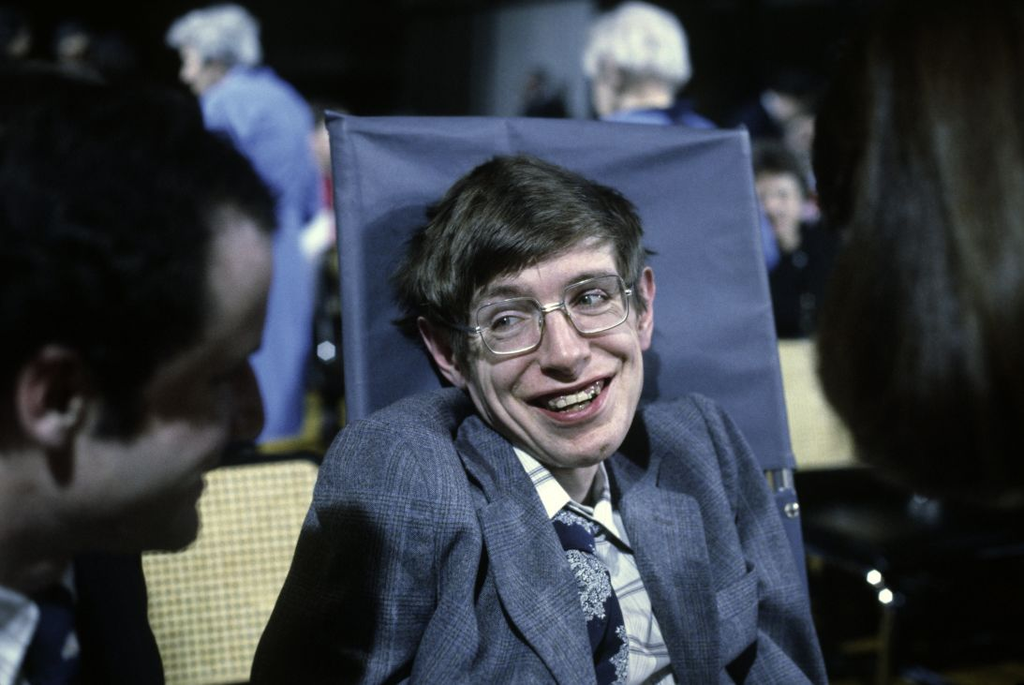
Few scientists have transformed our understanding of the universe quite like Stephen Hawking. His remarkable journey began at University College, Oxford, where he enrolled in 1959 to study Natural Sciences, specialising in physics. He graduated with first-class honours before moving to Cambridge for his doctoral research.
Hawking became internationally recognised for his research into black holes, relativity and the origins of the universe. His book A Brief History of Time introduced complex scientific ideas to millions of readers, making cosmology accessible beyond academic circles.
His life also became a powerful example of determination. Diagnosed with motor neurone disease at the age of 21, Hawking continued his scientific work for decades despite the physical challenges of his condition.
What can you learn from his journey? Your circumstances do not have to determine the limits of your ambitions. Oxford’s academic environment can challenge you to explore questions that initially seem impossible to answer.
Malala Yousafzai – The Nobel Peace Prize Winner Who Made Education Her Mission
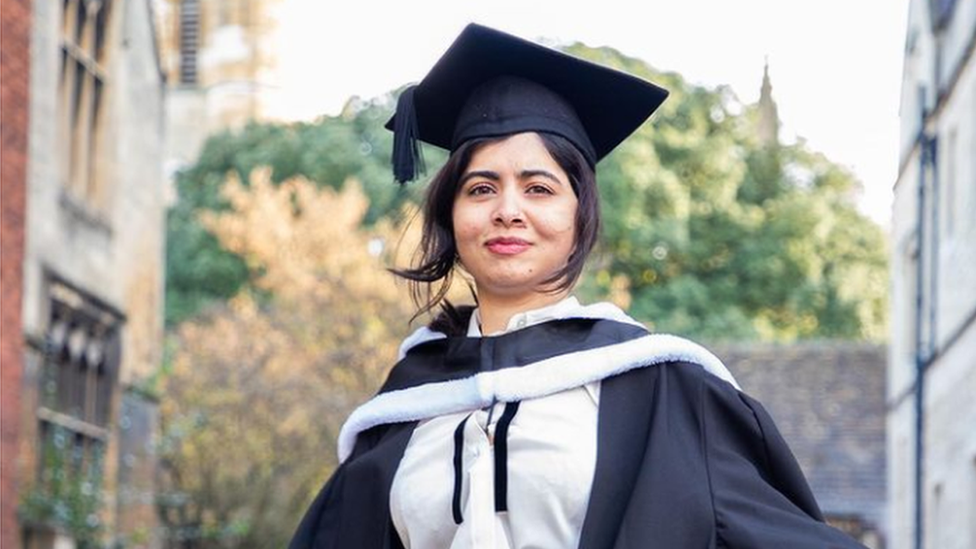
Malala Yousafzai’s Oxford journey is particularly inspiring for students who believe education can create meaningful social change.
Growing up in Pakistan, Malala became an international advocate for girls’ right to education after speaking out against restrictions on female schooling. In 2014, at just 17, she became the youngest-ever Nobel Peace Prize laureate.
Her academic journey continued at Lady Margaret Hall, where she studied Philosophy, Politics and Economics (PPE), graduating in 2020. PPE is among Oxford’s well-known interdisciplinary courses, bringing together three subjects that help students understand society, governance, economic systems and human behaviour.
Malala’s story demonstrates that education is not simply about earning a qualification. It can equip you with the knowledge, confidence and perspective to address challenges that affect entire communities.
For aspiring Indian students, her journey offers a particularly meaningful reminder: your educational background does not have to define how far your ambitions can take you.
Sir Tim Berners-Lee – The Oxford Graduate Who Invented the World Wide Web

Imagine a world without websites, online research, digital classrooms or the ability to communicate instantly across continents. Difficult to picture, isn’t it?
Sir Tim Berners-Lee is the computer scientist whose invention helped make the modern internet experience possible.
He studied physics at Oxford and graduated in 1976. In 1989, while working at CERN, he proposed a system for sharing information between computers using hypertext. That idea developed into the World Wide Web.
His contributions include foundational web technologies such as HTML, HTTP and the first web browser. He was also knighted for his pioneering work.
What makes Berners-Lee’s story so interesting is that his achievement began with a desire to solve a practical problem: making information easier to access and share.
For aspiring technology students: Oxford’s legacy is a reminder that innovation often begins with curiosity, independent thinking and the willingness to explore unfamiliar ideas.
Adam Smith – The Father of Modern Economics

If economics interests you, Adam Smith is a name worth knowing.
Often described as the father of modern economics, Smith studied at Balliol College, Oxford, between 1740 and 1746. His academic interests extended beyond money and markets into morality, human behaviour and the functioning of society.
His influential publications include The Theory of Moral Sentiments and An Inquiry into the Nature and Causes of the Wealth of Nations.
The latter, published in 1776, became a foundational work in economic thought. Smith explored specialisation, productivity, markets and the principles behind economic growth.
His ideas helped shape discussions about capitalism, free trade and the division of labour.
Why does his Oxford connection matter? His academic journey illustrates how studying a subject in depth can lead you to question established systems and develop ideas that influence generations.
Oscar Wilde – The Literary Genius Who Turned Words into an Art Form
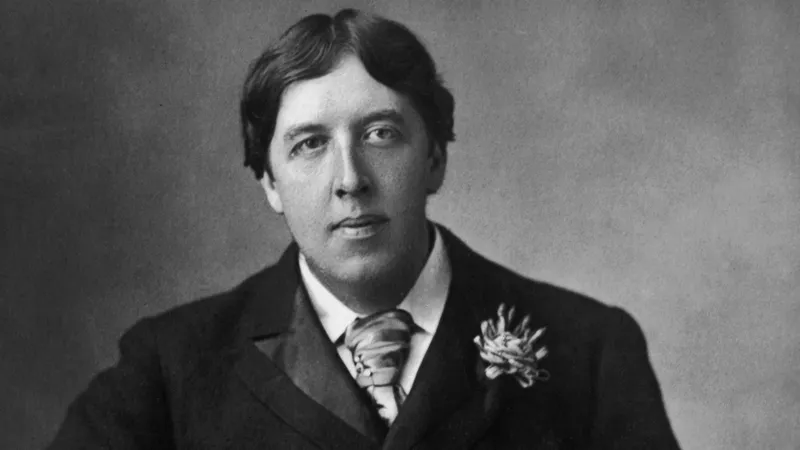
Oxford has produced some extraordinary literary minds, and Oscar Wilde is undoubtedly among its most celebrated.
Wilde studied Classics at Magdalen College, where he developed the literary confidence and intellectual style that later became central to his identity as a writer.
He received the Newdigate Prize for poetry in 1878 and distinguished himself academically. His works eventually established him as one of the most influential literary figures of the Victorian period.
His famous publications include The Picture of Dorian Gray, The Importance of Being Earnest and The Ballad of Reading Gaol.
Wilde was admired for his sharp humour, imaginative storytelling and willingness to challenge the social conventions of his time.
His Oxford experience is a fascinating example of how an intellectually stimulating environment can encourage creativity and originality.
If you love literature, debating ideas or creative writing, exploring the academic heritage of Magdalen College might be one of the highlights of an Oxford visit.
J.R.R. Tolkien – The Oxford Scholar Who Created Middle-earth
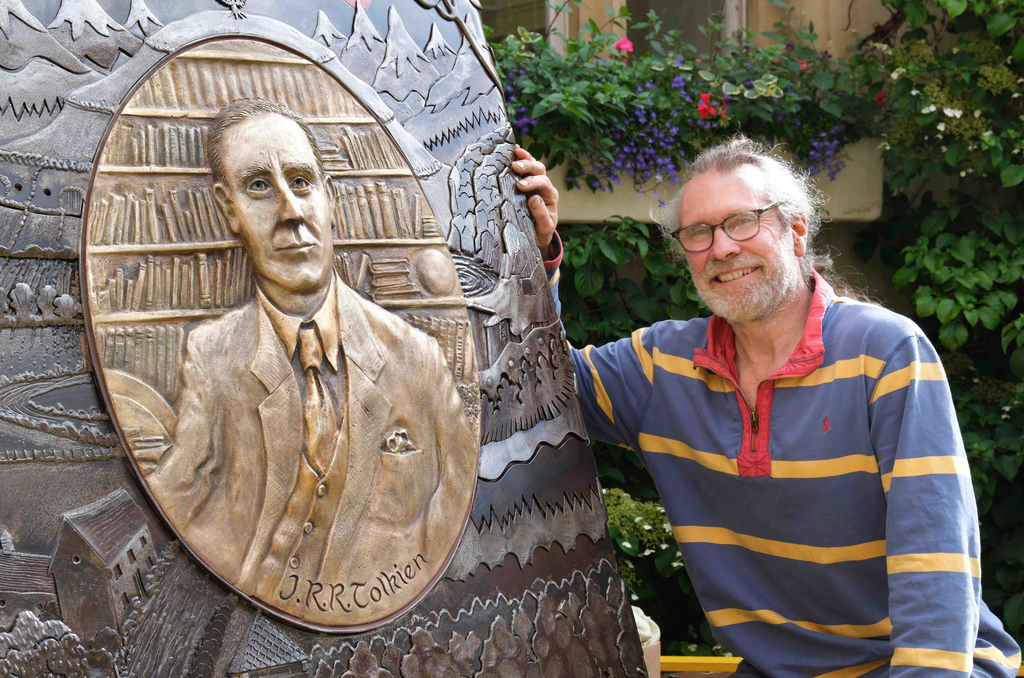
Have you ever imagined visiting a fictional world filled with elves, wizards, mysterious forests and legendary adventures?
J.R.R. Tolkien did something extraordinary: he created one of the most recognisable fantasy universes in literary history. Tolkien entered Exeter College in 1911, initially studying Classics before switching to English Language and Literature. He graduated in 1915 with first-class honours.
His academic interests in language, mythology and medieval literature played an important role in shaping his creative imagination.
Tolkien later worked as an academic at Oxford, teaching English language and literature. His best-known works, The Hobbit and The Lord of the Rings, became international literary sensations and inspired award-winning film adaptations.
His story is especially encouraging for students interested in humanities. It demonstrates that studying language, literature and history can lead to extraordinary creative possibilities.
Dorothy Crowfoot Hodgkin – The Nobel Prize-Winning Oxford Chemist
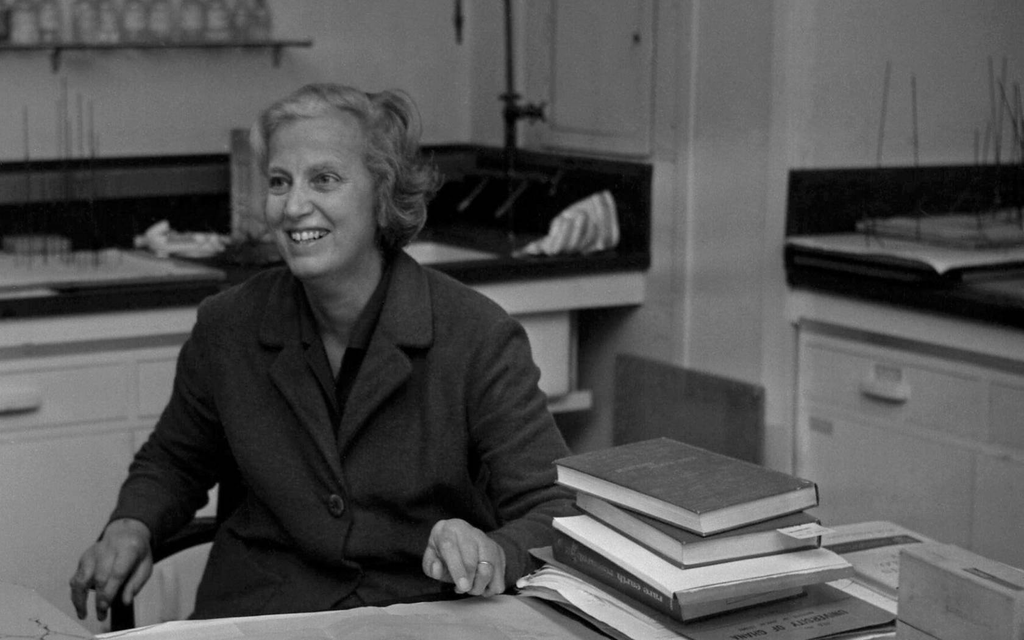
Scientific breakthroughs often begin with years of patient research, and Dorothy Crowfoot Hodgkin’s career is a remarkable example.
She studied chemistry at Somerville College, Oxford, and became one of the most influential scientists in structural chemistry.
Hodgkin advanced X-ray crystallography, a technique that allows scientists to determine the structures of complex molecules. Her research helped establish the structures of important biological substances, including penicillin, vitamin B12 and insulin.
In 1964, she received the Nobel Prize in Chemistry for her work on determining the structures of biochemical substances using X-ray techniques.
She remains the only British woman scientist to have received the Nobel Prize in Chemistry.
Her achievements are particularly inspiring for young women considering careers in science, technology, engineering and mathematics (STEM).
Margaret Thatcher – Oxford’s Chemistry Student Who Became Britain’s First Female Prime Minister
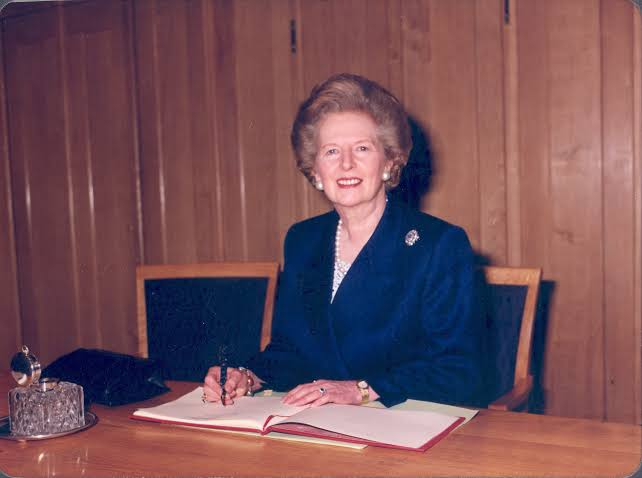
Margaret Thatcher’s academic background is an interesting reminder that your university subject does not necessarily determine your eventual profession.
She studied chemistry at Somerville College, Oxford, from 1943 to 1947. During her university years, she also became increasingly interested in politics and public affairs.
Thatcher went on to become the first woman to serve as Prime Minister of the United Kingdom, holding office from 1979 to 1990.
Her political career was marked by significant economic reforms, a strong approach to international relations and policies that continue to generate debate.
Whatever your opinion of her political legacy, her journey represents a significant milestone in British political history.
For students, her story highlights the value of developing interests beyond your chosen academic specialisation.
Tony Blair – The Oxford Law Graduate Who Led the United Kingdom
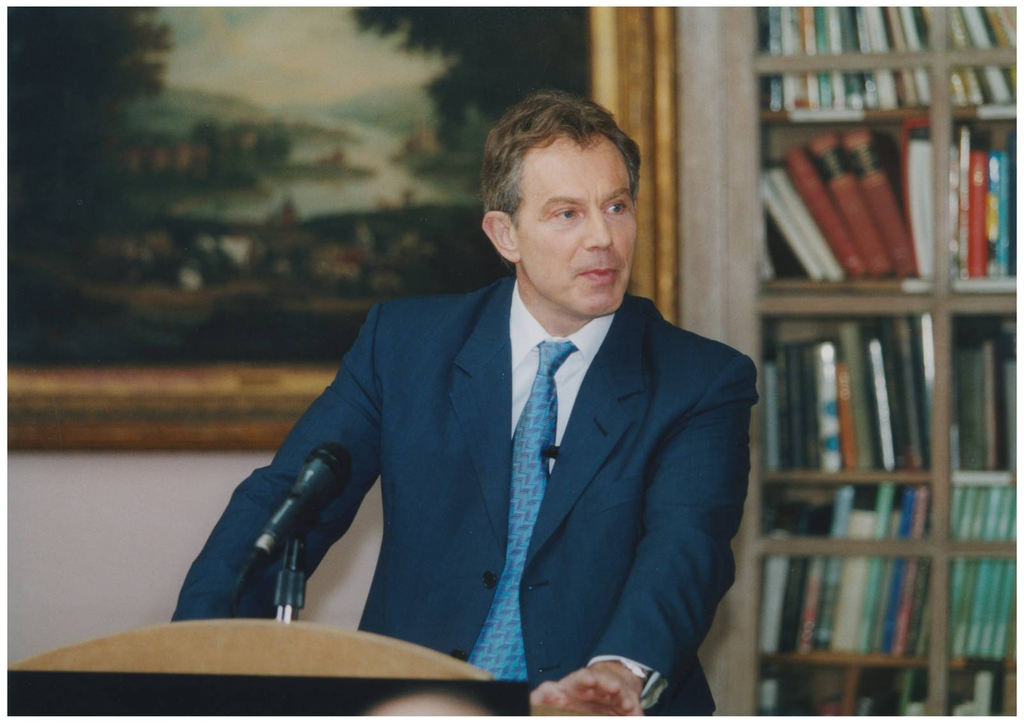
Tony Blair is another prominent political figure associated with Oxford.
He studied law at St John’s College between 1972 and 1975 before beginning his professional career as a barrister.
His political journey eventually took him to the highest office in British government. Blair became Prime Minister in 1997 and served until 2007.
During his leadership, his government introduced several domestic reforms, including changes to education and healthcare. He also played a significant role in the Good Friday Agreement of 1998, which helped establish a framework for peace in Northern Ireland.
His premiership remains a subject of political debate, particularly because of his government’s involvement in the Iraq War.
Nevertheless, Blair’s journey illustrates how an academic foundation in law, combined with political engagement, can lead to a career with international influence.
David Cameron – The Oxford PPE Graduate Who Became Prime Minister
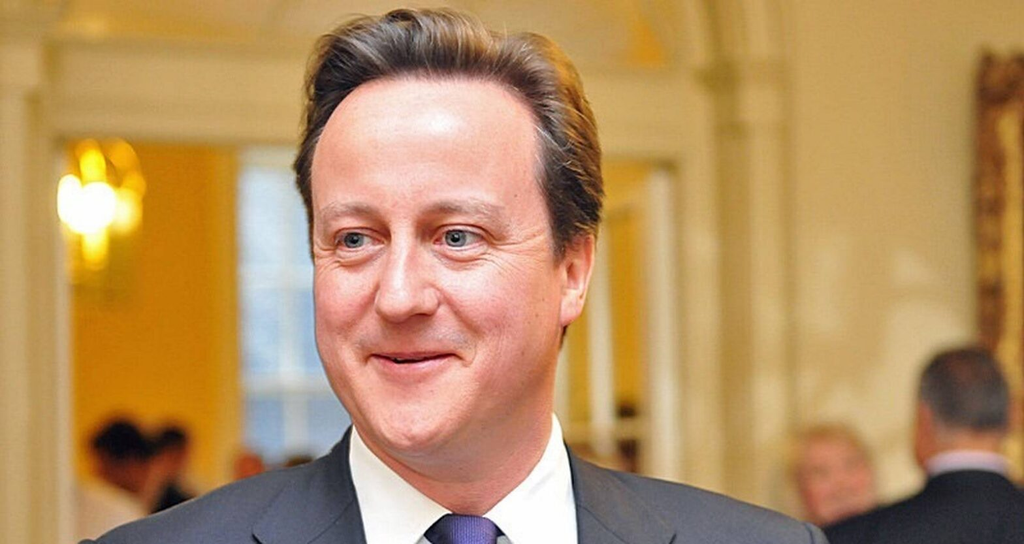
Oxford’s association with British political leadership is particularly visible in the careers of its PPE graduates.
David Cameron studied Philosophy, Politics and Economics at Brasenose College, graduating with first-class honours.
His political career progressed through the Conservative Party, and he became Britain’s Prime Minister in 2010.
During his time in office, his government introduced the Marriage (Same Sex Couples) Act 2013, which legalised same-sex marriage in England and Wales. He also oversaw the 2014 Scottish independence referendum and the 2016 EU referendum.
Cameron resigned following the UK’s decision to leave the European Union.
His Oxford connection is another example of how interdisciplinary education can provide a foundation for understanding complex political, economic and social issues.
Benazir Bhutto – The Oxford-Educated Leader Who Made Political History in Pakistan
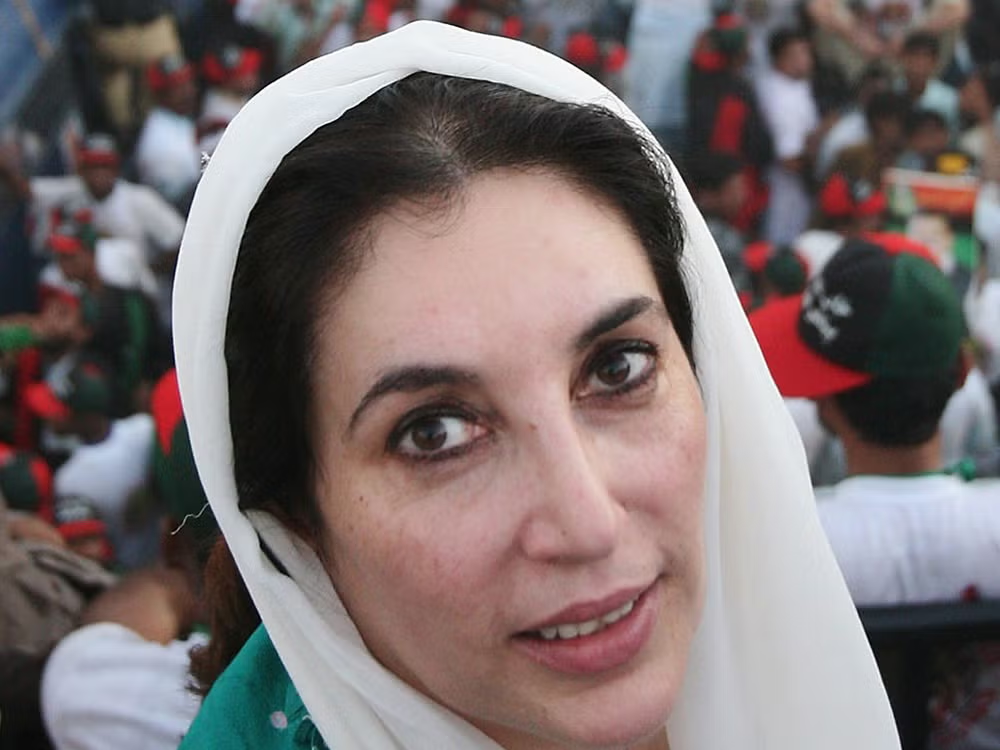
Benazir Bhutto holds an important place in the history of South Asian politics.
She studied at Oxford, including at Lady Margaret Hall and St Catherine’s College, where she pursued studies in politics, philosophy and economics.
Her Oxford experience included active participation in student life and the Oxford Union, where she became the first woman to serve as its president.
Bhutto later entered Pakistani politics and became Prime Minister in 1988, making history as the first woman elected to lead a democratic government in a Muslim-majority country.
She served two terms, from 1988 to 1990 and 1993 to 1996.
Her life and career remain an important part of discussions about women’s leadership, democratic participation and political representation in South Asia.
Bill Clinton – The Rhodes Scholar Who Studied at Oxford
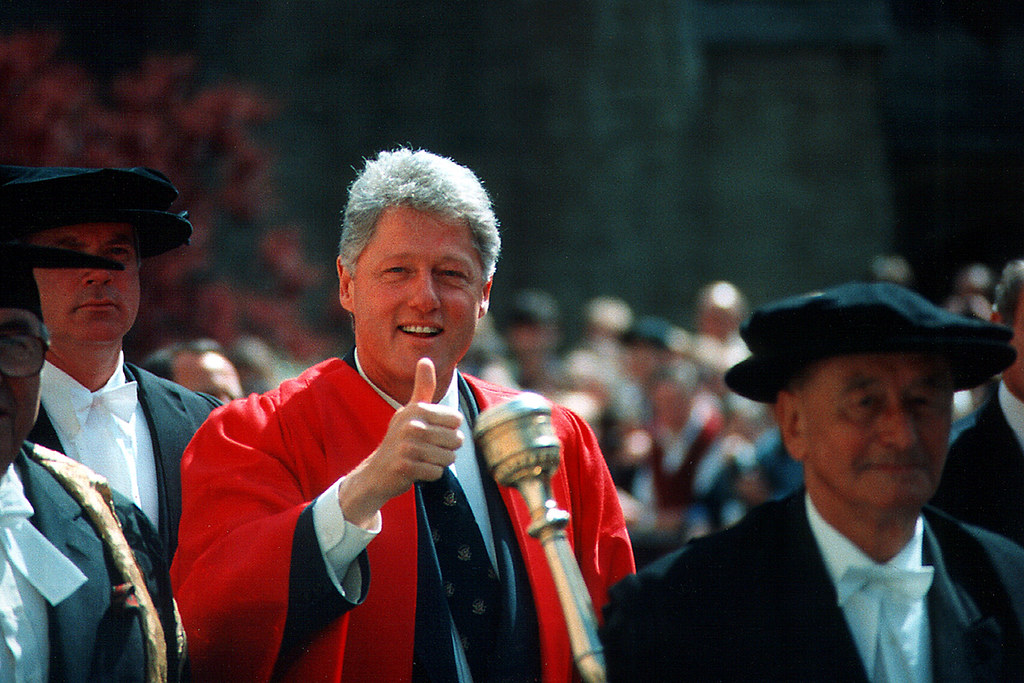
Did you know that a former President of the United States also spent part of his academic journey at Oxford?
Bill Clinton attended University College, Oxford, as a Rhodes Scholar in 1968. He studied at Oxford but did not complete a degree there before returning to the United States.
He subsequently attended Yale Law School and entered American politics, eventually becoming the 42nd President of the United States, serving from 1993 to 2001.
Clinton’s journey demonstrates how international academic exposure can introduce students to different perspectives, cultures and political ideas.
It also highlights the opportunities associated with prestigious international scholarship programmes.
Hugh Grant – The Oxford English Literature Student Who Became a Hollywood Favourite
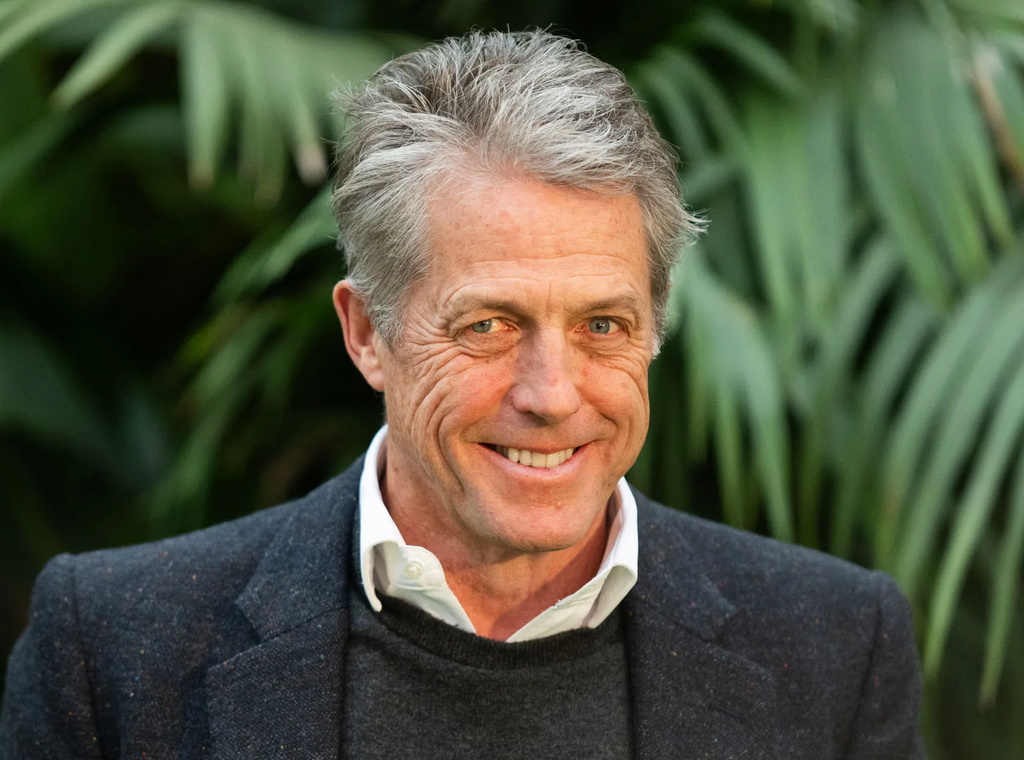
Oxford is not only associated with politicians, scientists and academics. It has also welcomed personalities from the entertainment industry.
Hugh Grant, one of Britain’s most recognisable actors, studied English Literature at New College, Oxford.
During his university years, he developed an interest in acting and appeared in Privileged, a film produced by the Oxford University Film Foundation.
He subsequently built a successful international acting career, starring in romantic comedies and several critically recognised productions.
His journey is an enjoyable reminder that a university experience can provide opportunities to explore interests beyond your classroom.
C.S. Lewis – The Oxford Academic Behind The Chronicles of Narnia
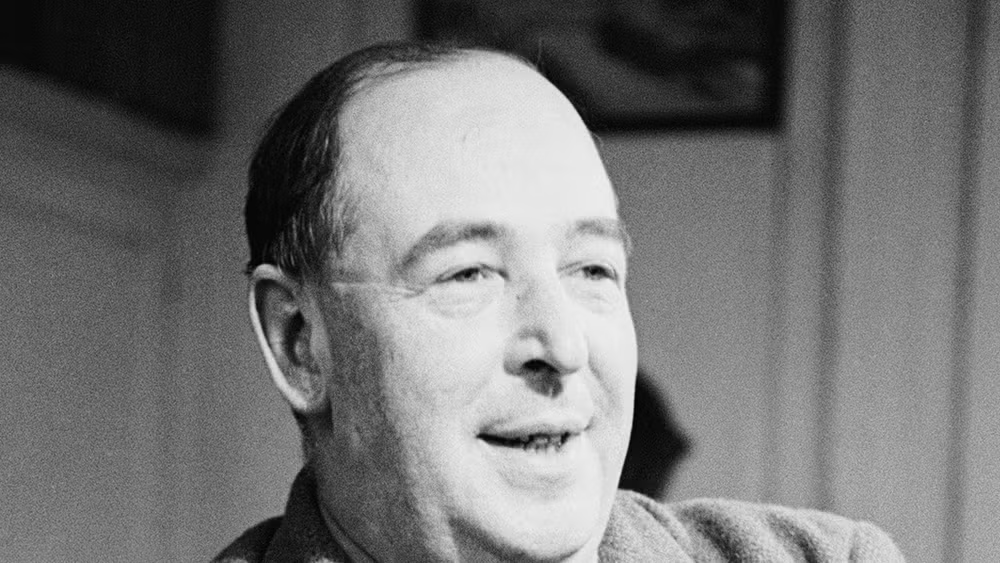
If you have ever read The Lion, the Witch and the Wardrobe, you may already be familiar with the imaginative world created by C.S. Lewis.
Lewis studied at University College, Oxford, and later became an academic at Magdalen College, where he taught English literature.
His writing explored literature, religion, philosophy and human nature. Although The Chronicles of Narnia remains his most widely recognised literary achievement, he also produced influential works of literary criticism and Christian apologetics.
His academic career and creative achievements reflect the close relationship between intellectual exploration and imaginative storytelling.
For students interested in literature, philosophy or creative writing, Lewis’s journey offers another reason to appreciate Oxford’s rich academic heritage.
Rowan Atkinson – The Oxford-Educated Engineer Who Made the World Laugh
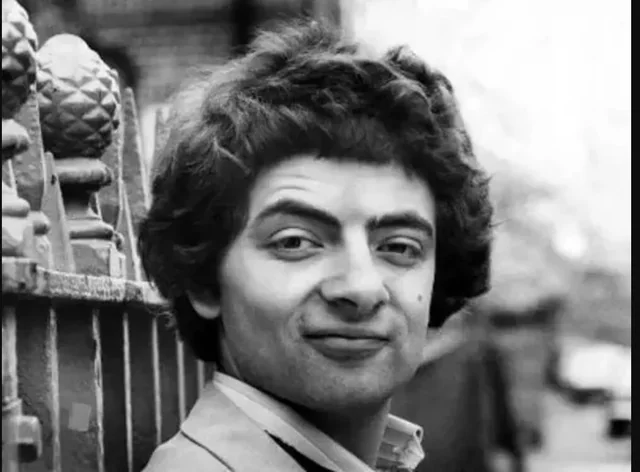
You probably recognise Rowan Atkinson as the wonderfully expressive character Mr Bean.
But before becoming an internationally celebrated comedian, Atkinson pursued a strong academic path in engineering.
He studied electrical engineering at Newcastle University before continuing his postgraduate studies at The Queen’s College, Oxford, where he earned an MSc.
His time at Oxford also brought him closer to the world of performance and comedy. He became involved in university theatrical activities and developed skills that eventually helped shape his entertainment career.
His success shows that an engineering degree does not prevent you from pursuing a creative profession.
Sometimes, the most interesting career journeys begin when you allow yourself to explore more than one passion.
Emma Watson – The Harry Potter Star Who Also Explored Oxford’s Academic Life
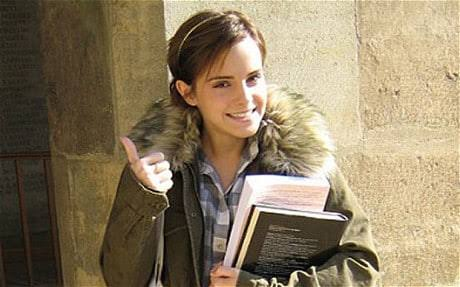
Emma Watson became internationally famous as Hermione Granger in the Harry Potter film series. However, her commitment to education is another important part of her story.
In 2011–12, she spent time at Worcester College, Oxford, as part of the university’s Visiting Student Programme. She subsequently graduated from Brown University in the United States with a degree in English Literature.
Watson has also become widely recognised for her advocacy for gender equality and her work as a UN Women Goodwill Ambassador.
Although she should not be described as an Oxford graduate, her experience provides an interesting example of how international students can access Oxford’s academic environment through visiting study opportunities.
Her journey is particularly relevant if you want to experience Oxford without necessarily committing to a full undergraduate degree there.
Indira Gandhi – The Indian Leader Whose Oxford Journey Inspires Generations
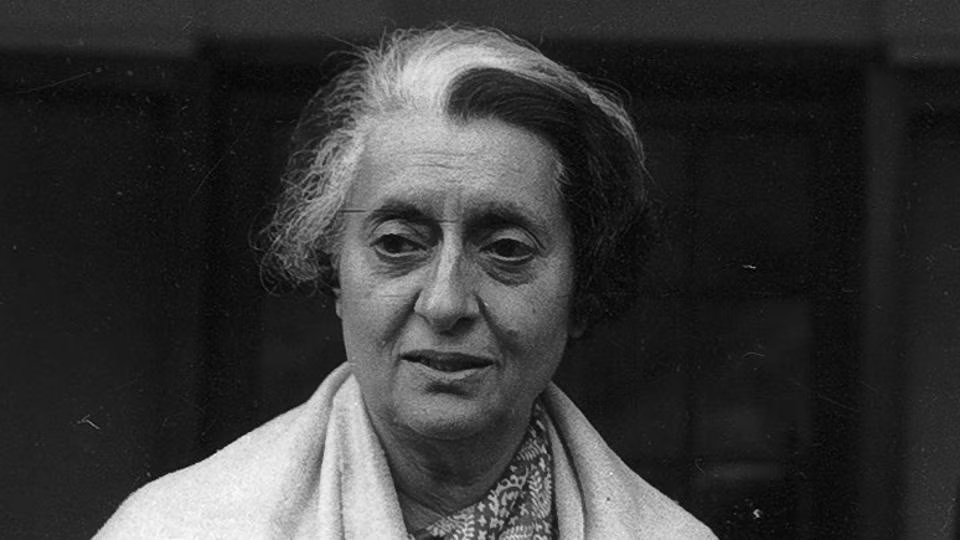
Let’s end our list of famous Oxonians with a personality whose journey holds particular significance for Indian students.
Indira Gandhi, India’s first woman Prime Minister, joined Somerville College, Oxford, in 1937 to study Modern History. However, health difficulties meant that she could not complete her course and returned to India in 1941. She later received an honorary Doctor of Civil Law degree from Oxford.
Her political journey eventually made her one of the most influential leaders in Indian history. She served as Prime Minister from 1966 to 1977 and again from 1980 until her assassination in 1984.
Her tenure included significant developments in India’s agricultural sector, particularly during the Green Revolution, as well as major political and economic decisions that shaped the country’s direction.
What makes her Oxford connection especially meaningful is the exposure she received to an international academic environment during her formative years.
For Indian students, her story creates a powerful connection between a historic British university and the political history of their own country.
It also reminds us that an Oxford experience does not have to follow a conventional path to become an important part of someone’s personal journey.
Conclusion
The stories of these famous Oxonians show us that Oxford’s influence extends far beyond its classrooms and historic buildings. From Stephen Hawking’s scientific discoveries and Tim Berners-Lee’s technological innovation to Malala Yousafzai’s advocacy and Indira Gandhi’s political legacy, the university has been connected with individuals who have made extraordinary contributions to the world.
But here is something we want you to remember: you do not have to become a Nobel Prize winner, a world leader or a celebrated author to dream of experiencing Oxford.
You simply need curiosity, ambition and the willingness to explore opportunities that could shape your future. Perhaps you are ready to begin preparing your Oxford University application. Perhaps you are still exploring universities in the UK. Or maybe you just want to see what studying in one of the world’s most renowned university cities feels like.
Whatever stage you are at, the journey can start today.
Experience the World of Famous Oxonians Through the G5 Study Tour 2027
Reading about Oxford is exciting, but experiencing the city in person can be even more memorable.
Think about walking along its historic streets, admiring the architecture of its colleges and seeing the surroundings associated with personalities such as Stephen Hawking, Oscar Wilde, Malala Yousafzai and Indira Gandhi.
For a student who has always imagined studying in the UK, this experience can be an important first step towards understanding international education.
The G5 Study Tour 2027 offers an opportunity to explore Oxford and get a closer look at the university environment that has inspired generations of students and accomplished individuals.
Whether you are considering an undergraduate degree, exploring postgraduate opportunities or simply curious about what makes Oxford special, experiencing the university can help you develop a clearer perspective.
Interested in studying at Oxford or experiencing its academic atmosphere through the G5 Study Tour 2027? Book a Free Consultation with ScholarshipKart and connect with our counsellors to understand the available study pathways, explore your university options and discover how you can become part of this exciting international education experience.
Let Oxford be more than a name on your dream university list. Take the first step towards experiencing it! Speak to our counsellors today and explore your Oxford possibilities for pursuing a degree or experiencing it with G5 Study Tour 2027.
FAQs
1. Who are the most famous alumni of the University of Oxford?
Some of the most recognised Oxford alumni include Stephen Hawking, Malala Yousafzai, Tim Berners-Lee, Oscar Wilde, J.R.R. Tolkien, Margaret Thatcher, Tony Blair, Benazir Bhutto and Indira Gandhi.
2. Which Indian Prime Minister studied at Oxford University?
Indira Gandhi studied Modern History at Somerville College, Oxford, although she did not complete her degree. Former Indian Prime Minister Manmohan Singh also studied at Oxford, earning a DPhil in Economics.
3. Did Malala Yousafzai graduate from Oxford University?
Yes. Malala Yousafzai studied Philosophy, Politics and Economics at Lady Margaret Hall, Oxford, and graduated in 2020. She received the Nobel Peace Prize in 2014.
4. Did Stephen Hawking study at Oxford?
Yes. Stephen Hawking studied physics through the Natural Sciences programme at University College, Oxford, graduating with first-class honours before pursuing doctoral research at Cambridge.
5. Can Indian students study at Oxford University?
Yes, Indian students can apply to the University of Oxford for undergraduate and postgraduate programmes. Admission is competitive and depends on academic excellence, course-specific eligibility, English language proficiency and other admission requirements. With proper preparation and guidance, studying at Oxford can become an achievable goal for ambitious Indian students.
6. Can I experience Oxford without enrolling in a full-time degree?
Yes. You can explore Oxford through educational tours, organised visits and eligible visiting-student programmes. The G5 Study Tour 2027 is an opportunity to discover the university environment without committing to a full-time Oxford degree.
7. What makes Oxford University attractive to international students?
Oxford is recognised for its academic reputation, research excellence, tutorial teaching, collegiate environment and international community. Its historic setting and extensive academic resources also contribute to its appeal among students worldwide.