
Completing a STEM degree is a significant achievement that opens the door to some of the most exciting and impactful career opportunities available today. Whether you have studied Science, Technology, Engineering, or Mathematics, you graduate with technical knowledge, analytical thinking, and practical problem-solving abilities that are valued across industries.

However, while earning the degree is an important milestone, deciding what comes next can often feel even more challenging. With countless career options, emerging industries, and different educational pathways available, many graduates find themselves wondering which direction best suits their interests and long-term ambitions.
The good news is that a STEM degree offers remarkable flexibility. It prepares graduates not only for traditional STEM careers but also for opportunities in business, finance, consulting, education, research, public services, and many other sectors.
Employers consistently seek professionals who can analyse data, solve complex challenges, think critically, and adapt to changing technologies. These qualities make STEM graduates highly employable in today’s rapidly evolving job market.
The demand for STEM professionals also continues to grow worldwide. According to recent labour market projections, STEM occupations are expected to grow by 8.1% through 2034, significantly faster than many non-STEM occupations.
Additionally, STEM professionals earn a median salary of approximately $103,580, which is more than double the median wage for many non-STEM careers. These figures highlight not only the strong earning potential but also the long-term stability offered by STEM-related professions.
At the same time, the STEM landscape is evolving rapidly. Technologies such as artificial intelligence, machine learning, cloud computing, cybersecurity, renewable energy, biotechnology, and advanced data analytics are transforming industries and creating entirely new career paths.
Employers increasingly expect graduates to combine technical expertise with communication, collaboration, creativity, and continuous learning. As automation changes routine tasks, professionals who can apply human judgement, innovation, and strategic thinking are becoming even more valuable.
Choosing the right career after a STEM degree, therefore, involves much more than selecting a job title. It requires understanding your interests, recognising your strengths, exploring different industries, staying informed about emerging trends, and seeking guidance from experienced professionals. Every graduate has different aspirations, and there is no single career path that suits everyone.
This comprehensive guide explains everything you need to know about what comes after earning a STEM degree. It explores the meaning of STEM, discusses the strengths that STEM graduates develop, explains how to choose the right career path, examines popular career options across each STEM discipline, and highlights the importance of lifelong learning in an increasingly technology-driven world.
Whether your goal is to enter the workforce immediately, pursue higher education, or develop specialised skills through professional certifications, understanding your options will help you build a rewarding and successful career.
Understanding STEM: Meaning, Disciplines and Importance
STEM stands for Science, Technology, Engineering, and Mathematics, four interconnected disciplines that drive innovation, scientific discovery, technological advancement, and economic development across the world. Together, these fields provide the knowledge and practical skills needed to solve complex challenges, improve everyday life, and develop sustainable solutions for future generations.
In the UK, STEM education plays an important role in preparing graduates to contribute to research, healthcare, engineering, digital transformation, environmental sustainability, and countless other industries.
Universities design STEM programmes to develop technical expertise while encouraging critical thinking, logical reasoning, creativity, and evidence-based decision-making. As industries continue to adopt new technologies and data-driven approaches, STEM graduates remain among the most sought-after professionals in the global workforce.
Although STEM is often discussed as a single category, each discipline offers unique academic experiences and career opportunities.
Science: Understanding the Natural World
Science focuses on exploring and understanding the world through observation, experimentation, analysis, and research. It covers a broad range of disciplines, including biology, chemistry, physics, environmental science, and related subjects that investigate how natural systems function.
Scientific knowledge contributes to advancements in healthcare, environmental conservation, pharmaceuticals, agriculture, and many other sectors. Students studying science develop strong research skills, laboratory techniques, analytical thinking, and the ability to interpret complex information. These capabilities prepare graduates for careers that involve investigation, innovation, and evidence-based decision-making.
Technology: Driving Digital Innovation
Technology applies scientific knowledge to develop practical tools, digital systems, and innovative solutions that improve productivity and everyday life. It includes disciplines such as computer science, information technology, artificial intelligence, software development, cybersecurity, and data science.
Technology continues to reshape industries worldwide through digital transformation. From developing intelligent software applications to protecting digital infrastructure, technology professionals play a central role in modern organisations.
Graduates develop programming abilities, computational thinking, system design expertise, and problem-solving skills that remain valuable across almost every industry.
Engineering: Turning Ideas into Practical Solutions
Engineering combines scientific knowledge with mathematics to design, build, improve, and maintain structures, machines, products, and complex systems. Engineering disciplines include civil engineering, mechanical engineering, electrical engineering, aerospace engineering, renewable energy engineering, and robotics, among many others.
Engineers solve practical problems by applying technical knowledge to real-world situations. Whether designing sustainable infrastructure, improving transportation systems, developing medical devices, or advancing clean energy technologies, engineering professionals help shape the future through innovation and practical application.
Engineering education also develops project management, teamwork, technical communication, and analytical thinking, enabling graduates to contribute to multidisciplinary projects across various industries.
Mathematics: The Foundation of STEM
Mathematics underpins every STEM discipline by providing the tools needed for logical reasoning, quantitative analysis, statistical modelling, and computational problem-solving. UK universities offer mathematics programmes covering pure mathematics, applied mathematics, statistics, and computational mathematics, preparing graduates for diverse analytical careers.
Mathematics graduates develop exceptional problem-solving abilities by working with complex models, interpreting numerical information, and identifying patterns within large datasets. These skills are increasingly valuable in sectors such as finance, technology, scientific research, insurance, business analytics, and government policymaking.
As organisations rely more heavily on data-driven decision-making, mathematical expertise has become an essential component of innovation across both technical and non-technical industries.
Why a STEM Degree Offers Endless Career Opportunities
A STEM degree equips graduates with technical expertise and highly transferable skills, making them valuable across a wide range of industries. Here are the key reasons why STEM graduates enjoy diverse career opportunities:
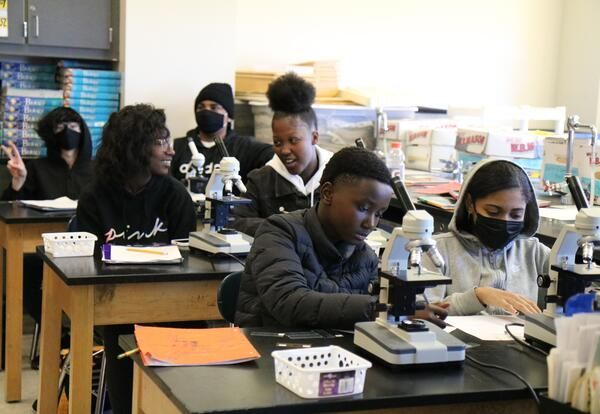
Develops Transferable Skills: A STEM degree builds essential skills such as analytical thinking, problem-solving, critical reasoning, data interpretation, research, communication, and teamwork. These skills are valued by employers across multiple sectors.
Opens Doors to Diverse Industries: STEM graduates are not limited to careers in science or technology. They can pursue opportunities in finance, business strategy, consulting, education, journalism, project management, public administration, and many other fields.
Prepares You for Real-World Challenges: Throughout a STEM programme, students learn to solve complex problems, analyse information, conduct research, interpret data, collaborate on projects, and communicate technical ideas effectively. These experiences prepare graduates for dynamic professional environments.
Provides Strong Career Flexibility: Many graduates begin their careers in research laboratories, engineering firms, healthcare organisations, software companies, environmental agencies, or technology businesses. Others choose postgraduate study or doctoral research to specialise further in emerging STEM disciplines.
Creates Opportunities Beyond Technical Roles: Employers outside traditional STEM industries actively recruit STEM graduates because of their logical thinking, quantitative skills, structured decision-making, and ability to tackle complex business challenges.
Supports Career Mobility: STEM disciplines often overlap, allowing graduates to transition between industries as their interests evolve. For example, mathematical knowledge can lead to careers in artificial intelligence or data science, while engineering expertise can be applied to renewable energy, robotics, or advanced manufacturing.
Keeps You Relevant in a Changing Job Market: As industries continue embracing innovation and digital transformation, STEM graduates remain well positioned to contribute to emerging technologies, scientific advancements, and business innovation.
Offers Long-Term Career Growth: Rather than following a single career path, STEM graduates have the flexibility to build careers that align with their interests, strengths, and long-term professional goals while adapting to changing industry demands.
Increases Employability Across Sectors: The combination of technical knowledge, practical experience, and adaptable skills makes STEM graduates highly employable in both STEM and non-STEM careers throughout their professional journey.
Ready to turn your STEM degree into a successful global career? Connect with ScholarshipKart today. Our expert counsellors can help you choose the right university, course, Scholarship opportunities and career pathway, guiding you every step of your study abroad journey.
Smart Tips for Choosing the Right Career After a STEM Degree
Choosing the right career after completing a STEM degree is one of the most important decisions you will make. While STEM qualifications provide access to a broad range of opportunities, finding the career that best matches your interests, skills, and long-term aspirations requires careful planning.
Instead of selecting a career based solely on salary or current demand, it is essential to evaluate your strengths, explore different industries, and understand how the job market is evolving. The following considerations can help you make an informed decision and build a rewarding career.
Recognise Your Interests and Passion
The first step towards choosing the right STEM career is understanding what genuinely interests and motivates you. Every STEM discipline offers numerous specialisations, and identifying the areas you enjoy most can help narrow your options.
Think about the subjects, projects, or activities that excited you during your studies. Some graduates enjoy conducting scientific research, while others prefer solving engineering challenges, developing software, analysing complex data, or creating innovative technologies. Understanding your interests allows you to choose a career that aligns with both your abilities and personal values.
For example, someone passionate about environmental conservation may find greater satisfaction working in environmental science or sustainable engineering than in a purely commercial role. Choosing a career that reflects your interests often leads to greater motivation, long-term job satisfaction, and professional growth.
Explore Different STEM Career Paths
One of the biggest advantages of a STEM degree is the wide variety of career opportunities available after graduation. While many students naturally consider careers directly related to their degree, STEM qualifications can also lead to opportunities across numerous industries.
Exploring different career paths broadens your perspective and helps you discover roles you may not have previously considered. Attending career fairs, speaking with industry professionals, networking with employers, and participating in informational interviews can provide valuable insights into different professions and workplace environments.
Many STEM graduates also discover rewarding careers outside traditional STEM industries. Their technical expertise and analytical abilities are highly valued in sectors such as finance, consulting, education, public services, journalism, and business management. Taking the time to research multiple career options enables you to make more confident and informed decisions.
Match Your Skills with the Right Career
A STEM degree develops far more than technical knowledge. Throughout your education, you acquire a combination of transferable skills that employers actively seek across different industries.
Strong analytical thinking, problem-solving, quantitative reasoning, research abilities, teamwork, communication, and project management all contribute to your professional profile. Identifying how these strengths align with different careers helps you choose roles where you can perform at your best.
For instance, a computer science graduate with excellent communication skills may thrive in technology consulting or project management, while a mathematics graduate with strong analytical abilities may excel in data science, actuarial science, or financial analysis. Understanding your complete skill set, not just your technical expertise, opens the door to a much wider range of career possibilities.
Stay Updated with Industry Trends
The STEM sector continues to evolve as new technologies, research breakthroughs, and industry innovations reshape the global workforce. Staying informed about these developments is essential for making career decisions that remain relevant over the long term.
Reading industry publications, attending conferences, participating in professional events, joining online communities, and following developments within your chosen field help you understand where future opportunities are emerging. This knowledge allows you to develop the skills employers will increasingly demand.
Growing fields such as artificial intelligence, machine learning, cybersecurity, renewable energy, biotechnology, cloud computing, robotics, and advanced data analytics continue to create exciting career opportunities for STEM graduates. Understanding these trends enables you to prepare for future roles while remaining competitive in an evolving employment market.
Seek Mentorship and Professional Guidance
Career decisions become much easier when supported by experienced professionals who understand the realities of working within STEM industries. Seeking guidance from mentors, university careers advisers, academic tutors, or industry experts provides valuable perspectives that cannot always be gained through independent research.
Experienced professionals can share practical advice about different career paths, explain current industry expectations, recommend skill development opportunities, and help you avoid common career mistakes. Their experiences often provide valuable insights into workplace culture, career progression, and emerging opportunities.
Networking with professionals may also lead to internships, graduate opportunities, collaborative projects, or long-term mentoring relationships that support your professional development throughout your career.
Essential Skills You Gain from a STEM Degree
One of the reasons STEM graduates remain highly employable is the broad range of practical and professional skills developed throughout their studies. These skills are valuable not only in technical professions but also across leadership, business, research, and management roles.

Problem-solving is perhaps the most significant skill developed during a STEM degree. Students learn to evaluate complex situations, identify solutions, test ideas, and make evidence-based decisions. These abilities allow graduates to approach workplace challenges with confidence and logical thinking.
Critical thinking is another core strength. Rather than accepting information at face value, STEM graduates learn to evaluate evidence, question assumptions, interpret results, and reach informed conclusions. This ability supports better decision-making across virtually every profession.
Analytical and quantitative skills also distinguish STEM graduates. Whether interpreting scientific research, analysing business performance, or evaluating technical systems, graduates develop confidence in working with numerical information and large datasets.
Communication and teamwork become increasingly important throughout STEM education. Many university projects involve collaborating with classmates, presenting findings, explaining technical concepts, and working towards shared objectives. These experiences prepare graduates for multidisciplinary workplace environments where effective communication is essential.
Time management and organisational skills are equally valuable. Managing multiple assignments, laboratory work, research projects, and group activities teaches students how to prioritise tasks, meet deadlines, and maintain productivity under pressure.
Many STEM programmes also provide experience using specialised software, digital tools, and technical platforms. This practical exposure demonstrates adaptability and a willingness to learn new technologies, qualities that employers increasingly value across modern workplaces.
University Support Can Shape Your Career Journey
Choosing a career path can feel overwhelming during university, but students are rarely expected to make these decisions alone. Many universities provide extensive career support designed to help STEM students explore opportunities, gain practical experience, and prepare for graduate employment.
Career services often assist students with career planning, CV development, interview preparation, internship applications, and employer networking opportunities. These resources allow students to understand industry expectations before entering the workforce.
Many STEM programmes also encourage students to complete industry placements or a year in industry. Practical work experience enables students to apply classroom knowledge in professional environments while developing valuable workplace skills. These experiences often help students determine whether they prefer research-focused careers, industrial roles, or commercial environments.
Strong university partnerships with leading employers also create valuable networking opportunities. Universities facilitating collaboration with industry professionals allow students to understand current workplace challenges, develop practical knowledge, and establish connections that may support future employment.
Academic tutors and personal advisers further contribute by helping students evaluate postgraduate opportunities, identify suitable career paths, and make informed decisions about their long-term professional development.
By combining academic learning with practical experience, professional guidance, and industry engagement, universities help STEM graduates build the confidence and skills needed to successfully transition into rewarding careers.
Career Options After a Science Degree
A science degree provides graduates with a strong foundation in scientific research, analytical thinking, and evidence-based problem-solving, making it one of the most versatile STEM qualifications.
Scientific knowledge contributes to advancements in healthcare, pharmaceuticals, environmental conservation, biotechnology, and laboratory research, creating numerous opportunities across both public and private sectors.
Many science graduates choose careers where they can conduct research, develop innovative solutions, or contribute to improving public health and environmental sustainability. Some of the most popular career options include biomedical scientist, environmental consultant, forensic scientist, clinical research associate, and pharmacologist.
Each of these professions requires scientific expertise while offering opportunities to make meaningful contributions to society through research, innovation, and scientific discovery.
Graduates who enjoy experimentation, investigation, and continuous learning often find science-based careers intellectually rewarding while benefiting from strong long-term career prospects.
Career Opportunities After a Technology Degree
Technology continues to transform every industry, making technology graduates among the most sought-after professionals worldwide. Organisations increasingly rely on digital innovation, cloud computing, artificial intelligence, cybersecurity, and data-driven decision-making, creating excellent employment opportunities for graduates with technology-related qualifications.
Technology graduates can pursue careers as software developers, data scientists, cybersecurity analysts, IT consultants, or artificial intelligence specialists. These roles involve designing software, protecting digital infrastructure, analysing complex datasets, developing intelligent systems, and helping organisations solve technological challenges.
The technology sector also offers significant career flexibility. As new technologies continue to emerge, graduates can specialise in rapidly growing fields while continuously expanding their expertise through professional learning and industry experience.
Engineering Careers After Graduation
Engineering graduates play an essential role in designing, building, maintaining, and improving the systems that support modern society. Engineering combines scientific knowledge with mathematical principles to solve practical challenges across infrastructure, manufacturing, transportation, healthcare, energy, and aerospace industries.
Popular engineering careers include civil engineer, mechanical engineer, aerospace engineer, renewable energy engineer, and robotics engineer. These professions involve designing innovative solutions, improving operational efficiency, developing sustainable technologies, and advancing infrastructure projects that positively impact communities worldwide.
Engineering also offers excellent career mobility, allowing professionals to work across multiple industries as technology and global priorities continue to evolve. Graduates with strong technical knowledge and practical problem-solving abilities remain valuable throughout their careers.
Career Opportunities with a Mathematics Degree
Mathematics graduates possess highly transferable analytical skills that are increasingly valuable in today’s data-driven economy. Their ability to interpret complex information, identify patterns, develop predictive models, and solve quantitative problems allows them to work across numerous industries.
Common career options include data analyst, actuary, financial analyst, operations research analyst, and statistician. These professionals help organisations make informed decisions by analysing data, managing financial risk, forecasting future trends, and improving operational performance.
As businesses continue relying on big data and advanced analytics, mathematical expertise has become increasingly important across finance, technology, healthcare, government, insurance, and scientific research.
Exciting STEM Careers Shaping the Future
One of the greatest advantages of earning a STEM degree is the opportunity to contribute to industries that are driving scientific progress and technological innovation. Beyond traditional career paths, graduates can pursue exciting roles that combine research, creativity, and technical expertise.
Astronomy: Astronomy offers opportunities to study stars, planets, galaxies, and the wider universe through scientific observation and advanced data analysis. Aerospace engineering focuses on improving aircraft, satellites, and space exploration technologies while contributing to more sustainable aviation.
Energy Engineering: Energy engineering is becoming increasingly important as countries seek innovative solutions for renewable energy generation and efficient power systems. Engineers in this field work with governments, private organisations, and research institutions to develop sustainable energy technologies.
Forensic Science: Forensic science combines biology, chemistry, and technology to support criminal investigations through scientific analysis of physical evidence. Professionals in this field often work in laboratories and collaborate with legal authorities during criminal investigations.
Game Design: Game design represents another growing career path where technology meets creativity. Game designers use programming, storytelling, user experience design, and software development to create engaging digital experiences across mobile, console, and PC platforms.
Geoscience: Geoscience enables graduates to study Earth’s natural systems while contributing to environmental conservation, geological research, climate studies, and resource management. Careers in this field often involve both scientific research and fieldwork.
Artificial intelligence and Machine Learning: Artificial intelligence and machine learning have become some of the fastest-growing areas within STEM. Professionals develop intelligent algorithms, build automated systems, and solve complex business challenges using advanced computing techniques.
Marine Biology: Marine biology provides opportunities to research ocean ecosystems, environmental conservation, fisheries, and marine biodiversity while contributing to the protection of aquatic environments.
Meteorology: Meteorology combines science, mathematics, and computing to forecast weather patterns and understand climate change. Meteorologists support industries ranging from aviation and shipping to government agencies and environmental organisations.
User experience Design: User experience (UX) design blends technology with human-centred design principles to create intuitive digital products, websites, and applications that improve user satisfaction.
The Growing Importance of AI in STEM Careers
Artificial intelligence is reshaping many STEM professions, particularly within technology, engineering, mathematics, and data science. Rather than replacing entire professions, AI is changing how professionals work by automating repetitive tasks and improving productivity.
Employers increasingly expect graduates to understand how AI tools can support software development, data analysis, research, and decision-making. However, technical knowledge alone is no longer enough. Organisations also value professionals who can evaluate AI-generated outputs, identify potential risks, communicate technical findings to non-technical audiences, and make informed strategic decisions.
Skills such as systems thinking, ethical judgement, collaboration, and problem-solving remain difficult to automate, making them increasingly valuable alongside technical expertise. Graduates who combine AI literacy with strong analytical and communication skills will be better positioned for future career success.
How to Stand Out as a STEM Graduate in Today’s Job Market
A STEM degree provides a strong academic foundation, but employers increasingly seek graduates who can apply their knowledge to solve real-world challenges.
In today’s competitive job market, technical expertise alone is no longer enough. Organisations value professionals who can combine scientific knowledge with adaptability, innovation, and a willingness to continuously learn as industries evolve.
One of the key qualities employers look for is practical experience. Graduates who have completed internships, industry placements, research projects, or collaborative university assignments often stand out because they can demonstrate how they have applied their knowledge in real-world settings. These experiences also reflect an ability to work in professional environments and contribute effectively to organisational goals.
Employers also value graduates who stay informed about emerging technologies and industry developments. Fields such as artificial intelligence, cybersecurity, renewable energy, biotechnology, and data science continue to evolve rapidly, making continuous learning an essential part of long-term career success. Professionals who actively update their knowledge and embrace new technologies are better equipped to meet changing business needs.

Adaptability has become another highly desirable quality. As organisations adopt digital transformation and automation, STEM graduates are expected to learn new tools, work across multidisciplinary teams, and adjust to changing project requirements. The ability to embrace change and quickly acquire new knowledge often distinguishes successful professionals from their peers.
Equally important is the ability to communicate technical concepts to different audiences. Whether presenting research findings, explaining data insights, or collaborating with colleagues from non-technical backgrounds, clear communication helps organisations make informed decisions and implement effective solutions.
Finally, employers appreciate graduates who demonstrate curiosity, initiative, and a genuine interest in solving meaningful problems. STEM professionals who continuously seek opportunities to innovate, improve processes, and contribute fresh ideas are well positioned for career progression in an increasingly technology-driven world.
Looking Beyond Traditional STEM Careers
Although many graduates begin their careers in science, technology, engineering, or mathematics, a STEM qualification also opens doors to numerous non-STEM professions. The transferable skills developed during university make graduates highly attractive to employers across many industries.
Many STEM graduates successfully build careers in finance, banking, business consulting, project management, journalism, education, government services, and corporate strategy. Their ability to analyse information, solve problems systematically, and make evidence-based decisions often gives them a competitive advantage in these sectors.
This flexibility demonstrates that earning a STEM degree does not restrict graduates to a single profession. Instead, it provides a strong foundation that supports career mobility, continuous learning, and long-term professional growth across a wide range of industries.
Conclusion
A STEM degree is far more than an academic qualification. It is the foundation for a dynamic and rewarding career. Whether your ambition is to conduct groundbreaking scientific research, develop innovative technologies, design sustainable infrastructure, analyse complex data, or explore opportunities beyond traditional STEM industries, the knowledge and transferable skills gained through your degree provide countless possibilities for professional success.
Choosing the right path after graduation requires careful consideration of your interests, strengths, career goals, and the changing demands of the global job market. Exploring different career options, staying informed about emerging technologies, building practical experience, and seeking guidance from experienced professionals can help you make confident and informed decisions.
As industries continue to embrace digital transformation, artificial intelligence, sustainability, and scientific innovation, the demand for skilled STEM graduates is expected to remain strong. At the same time, continuous learning and professional development will play an increasingly important role in maintaining long-term career success.
Ultimately, there is no single definition of the perfect STEM career. Every graduate’s journey is unique, and your first job is only the beginning of a career that can evolve alongside your ambitions and the world’s changing needs.
By embracing lifelong learning, developing both technical and interpersonal skills, and remaining open to new opportunities, you can build a fulfilling career that creates lasting value for both yourself and society.
Your STEM degree can open doors to world-class education and exciting career opportunities. Book a Free Consultation with ScholarshipKart for personalised guidance on choosing the right programme, university, admission guidance, visa application and future career path with confidence.
After completing a STEM degree, you can pursue careers in science, technology, engineering, mathematics, research, finance, consulting, education, public services, and business. You can also pursue postgraduate studies or professional certifications to specialise in a particular field.
STEM stands for Science, Technology, Engineering, and Mathematics. These interconnected disciplines focus on scientific discovery, technological innovation, problem-solving, engineering solutions, and quantitative analysis.
Career options depend on your specialisation and interests. Popular options include software developer, data scientist, cybersecurity analyst, biomedical scientist, environmental consultant, civil engineer, mechanical engineer, actuary, financial analyst, statistician, and AI or machine learning specialist.
Yes. STEM graduates can also pursue careers in finance, consulting, business management, journalism, education, project management, government services, and corporate strategy because STEM degrees develop transferable analytical and problem-solving skills.
Yes. STEM degrees provide technical knowledge along with transferable skills such as critical thinking, data analysis, research, problem-solving, communication, and teamwork. These skills are valued across many industries.
STEM graduates typically develop problem-solving, critical thinking, analytical reasoning, quantitative skills, research abilities, communication, teamwork, time management, and technical skills.