
Politics is one of the most fascinating fields of study, as it helps students understand the functioning of governments, international relations, policies, and the power structures that shape societies. For Indian students, studying politics abroad can open doors to global perspectives that go beyond textbooks and classroom learning.
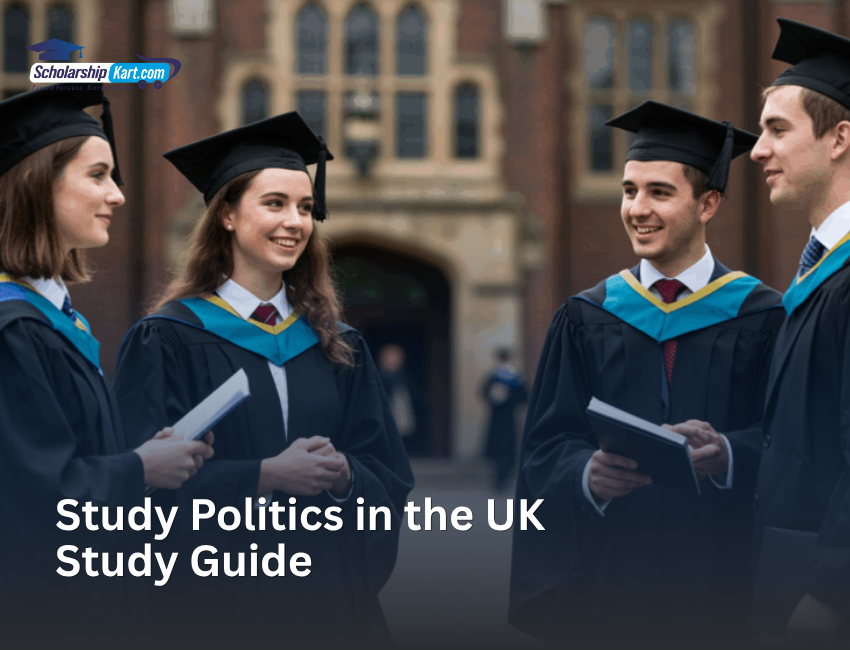
The UK stands out as one of the most sought-after destinations for pursuing a politics degree due to its rich political history and academic excellence. British universities offer strong theoretical and practical training, preparing students for diverse career opportunities worldwide. Moreover, the UK is home to global political institutions, think tanks, and international organisations, offering unique exposure.
For Indian students, studying politics in the UK also means becoming part of a multicultural learning environment. The degree not only enhances knowledge but also builds analytical and leadership skills. With high-quality education and strong employability rates, UK degrees are highly respected worldwide.
For those aspiring to work in government, diplomacy, or international organisations, a UK politics degree offers a solid foundation. Additionally, the availability of scholarships and post-study work opportunities makes the UK a practical and rewarding choice.
Why Study Politics in the UK?
The UK is globally recognised for its academic strength in politics, international relations, and public policy. It is home to universities that consistently rank among the best worldwide for social sciences and political studies.
With London being a hub for international organisations, think tanks, and political institutions, students gain exposure to real-world political dynamics. The UK’s teaching methods combine theoretical knowledge with practical case studies, making graduates more employable.
Furthermore, the UK’s political history and global influence create an enriching learning environment for students interested in understanding global power structures.
Key Benefits of Studying Politics in the UK
World-Class Universities – Institutions like Oxford, Cambridge, LSE, and King’s College London offer globally respected politics programs.
Global Political Hub – London and other UK cities host embassies, NGOs, and international organisations, offering valuable networking opportunities.
Diverse Specialisations – Students can explore fields such as international relations, political theory, public policy, human rights, and comparative politics.
Practical Exposure – Many programs include internships, research projects, and seminars with political leaders, enhancing real-world learning.
Multicultural Environment – Students interact with peers from around the world, building cross-cultural communication skills vital in politics.
Strong Employability – UK degrees are recognised globally, ensuring career prospects both in India and abroad.
Scholarships and Funding – Multiple scholarships are available for international students, reducing financial pressure.
Post-Study Work Opportunities – Through the Graduate Route Visa, students can stay back in the UK to work after completing their degree.
Types of Politics Degrees in the UK
UK universities offer a wide range of Politics degrees at both undergraduate and postgraduate levels.
These programmes are designed to provide students with a strong foundation in political theory, comparative politics, international relations, and policy analysis, while also developing critical thinking and research skills essential for careers in government, diplomacy, academia, and global organisations.
Undergraduate Politics Courses
Typically, a Bachelor of Arts (BA) or Bachelor of Science (BSc) in Politics, International Relations, or related fields. An undergraduate degree in Politics usually takes three to four years to complete. In the first year, students are introduced to core modules such as political ideologies, comparative politics, and the foundations of international relations.
As the course progresses, students can choose to specialise in areas such as global security, human rights, public policy, or political economy.
Core Subjects in Undergraduate Politics Degrees:
Political Theory: Exploring classical and modern political thought, ideologies, and philosophies of governance.
Comparative Politics: Studying political systems across countries to understand institutions, power structures, and policy-making.
International Relations: Examining global politics, diplomacy, and the role of international organisations.
Public Policy and Governance: Understanding how policies are formulated, implemented, and evaluated at national and international levels.
Political Economy: Analysing the interaction between politics and economics, including issues such as inequality, trade, and globalisation.
Many undergraduate programmes in politics also include an optional placement or “sandwich year,” where students gain professional experience in government departments, NGOs, think tanks, or political consultancies.
Popular Undergraduate Degrees:
- BA Politics
- BA Politics and International Relations
- BA Politics, Philosophy and Economics (PPE)
- BA International Relations
- BA Politics and Sociology
- BA Politics and Economics
Postgraduate Politics Courses
At the postgraduate level, Politics degrees allow students to delve deeper into specialised areas of interest. Most master’s programmes last one year full-time or two years part-time and combine advanced theoretical training with research opportunities.
Postgraduate Specialisations in Politics:
- MSc International Relations: Focused on diplomacy, global conflicts, and the role of international institutions in maintaining peace and security.
- MSc Political Theory: Provides advanced study of political philosophy, justice, democracy, and contemporary ideologies.
- MSc Public Policy: Equips students with practical and analytical skills for policy-making in government, international bodies, or NGOs.
- MSc Global Politics: Analyses globalisation, international cooperation, and the challenges of governance in a rapidly changing world.
- MSc Security Studies: Examines issues such as terrorism, cyber security, and global defence strategies.
Popular Postgraduate Degrees:
- MSc Politics
- MA International Relations
- MSc Political Economy
- MSc Global Governance
- MSc Human Rights and Politics
- MSc Public Policy
- MPhil Politics
PhD in Politics
A PhD in Politics is ideal for students aiming for careers in academia, research, or high-level policy analysis. Typically lasting three to four years, it requires conducting original research in a specialised area such as international diplomacy, comparative government, human rights, or political communication.
PhD candidates often contribute to public debates, publish academic work, and teach at the university level.
Politics Course Duration in the UK
The length of Politics degrees in the UK varies according to the level of study and the structure of the chosen programme:
Undergraduate Politics Courses (BA/BSc): Generally last three years, with the option to extend to four years if students choose a placement year, a professional internship, or a study abroad opportunity.
Postgraduate Politics Courses (MA/MSc): Most master’s degrees in Politics take one year to complete for full-time students or two years for part-time study, providing flexibility for working professionals.
PhD in Politics: A doctoral degree typically takes three to four years and involves original, independent research culminating in a thesis on a specialised area such as international relations, political theory, or public policy.
Tuition Fees for Politics Courses in the UK
Tuition fees for Politics degrees in the UK vary depending on the university, level of study, and location. Below is an approximate range of tuition fees for international students:
Undergraduate Politics Courses (BA): £16,000 to £32,000 per year.
Postgraduate Politics Courses (MA/MSc): £18,000 to £38,000 per year.
Prestigious institutions such as Oxford, Cambridge, and the London School of Economics (LSE) often charge higher fees due to their global reputation, distinguished faculty, and access to exceptional research resources.
Students should also consider living costs, which include accommodation, transport, food, and study materials. Major cities like London, Edinburgh, and Manchester can have higher living expenses, so careful budgeting is essential for a smooth academic experience.
Sample Tuition Fees at Top UK Universities (2025)
| University | Program | Tuition Fees |
| Cardiff University | Politics and International Relations BA (Hons) | £23,700 per year |
| King’s College London | Politics BA/BSc | £38,300 per year |
| University of Essex | BA Politics | £21,525 per year |
| University of Birmingham | Politics BA | £24,000 per year |
| Lancaster University | Politics BA Hons | £25,490 per year |
Scholarships for Politics Students in the UK
Many UK universities provide scholarships to support international students in managing tuition and living costs. These scholarships are usually awarded based on academic excellence, leadership potential, research achievements, or financial need.
Popular Scholarships for Politics Students:
Chevening Scholarships: Funded by the UK government, these scholarships support outstanding international students pursuing postgraduate degrees in Politics, International Relations, or related fields.
- Commonwealth Scholarships: Designed for students from Commonwealth countries, these scholarships cover tuition and living costs for postgraduate Politics programmes.
- GREAT Scholarships – Funded by the UK government in collaboration with UK universities.
- Research Funding for PhDs – Offered by the UK Research and Innovation (UKRI) and university departments.
- University-Specific Scholarships: Many universities offer targeted scholarships for Politics students. Examples include the LSE Undergraduate Support Scheme, Oxford Clarendon Scholarship, and scholarships at institutions like King’s College London or the University of Edinburgh.
Students are advised to apply early, as scholarships are highly competitive and require a thorough application, including academic records, personal statements, and references.
Career Opportunities After Studying Politics in the UK
Studying politics in the UK opens diverse global career opportunities. Graduates can work in government, policy-making, international organisations, NGOs, and research institutions. Many enter fields like journalism, law, consultancy, and academia.
A degree in politics also builds strong analytical and communication skills that employers highly value. For Indian students, opportunities exist both in the UK and India, with chances to contribute to public administration or international relations.
With a respected UK degree, graduates are well-positioned for leadership roles in public and private sectors.
Popular Career Paths in Politics
- Government Social Research Officer
- Policy Analyst
- Diplomat/Foreign Service Officer
- Political Consultant
- Journalist (Political Correspondent)
- Policy Officer
- Political Risk Analyst
- Politician’s Assistant
- Public Affairs Consultant
- Social Researcher
- International Development Specialist
- Trade Union Research Officer
- Academic Researcher
- Advice Worker
- Business Development Manager
- Charity Officer
- Diplomatic Service Officer
- Forensic Accountant
- Local Government Officer
- Market Researcher
- Marketing Executive
- Newspaper Journalist
- Public Relations Officer
Average Salary for Politics Graduates
Salaries for Politics graduates can vary widely depending on the sector, location, and role. Here’s a general overview:
Entry-Level Roles: £28,000 to £36,000 per year
Typical roles include research assistants, policy analysts, junior consultants, or roles in NGOs and think tanks.
Mid-Level Professionals: £40,000 to £70,000 per year
Professionals at this level may work as political advisors, campaign managers, policy officers, or in international organisations.
Senior-Level Roles: £80,000 and above
Senior positions include diplomatic roles, senior policy analysts, directors in NGOs or political consultancies, and academic leadership positions.
Graduates working in London or other major cities, or in high-demand sectors like international organisations, government think tanks, or consultancy, often earn salaries at the higher end of the scale.
Graduate Employability for Politics Graduates in the UK
UK politics graduates enjoy strong employability prospects due to the solid academic foundation and practical skills gained during their studies. Universities maintain strong connections with political institutions, media outlets, and think tanks. Many programs include placements and internships, ensuring graduates are job-ready.
Employers value UK-trained graduates for their critical thinking, research, and communication skills. Furthermore, the UK’s Graduate Route Visa allows international students to gain work experience after their studies, enhancing career opportunities.
According to the Times and Sunday Times Good University Guide 2026, the following universities have the highest graduate employability rates for Politics degrees:
| University | Graduate Employability Rate |
| University of Oxford | 91.9% |
| London School of Economics and Political Science | 91.4% |
| University of St Andrews | 90% |
| University College London | 89.5% |
| Durham University | 88.6% |
Entry Requirements for Politics Courses in the UK
Undergraduate Politics Courses:
A-Level Requirements: Typically, AAB to AAA, with strong emphasis on History, Government & Politics, or related social sciences. Some universities may also consider Mathematics or English for analytical and communication skills.
International Baccalaureate (IB): Minimum 36–39 points, including Higher Level subjects in Politics, History, or Social Sciences.
English Language Requirements (IELTS): Overall IELTS score of 6.5, with no individual component lower than 6.0. Some universities may accept TOEFL or other English proficiency tests.
Postgraduate Politics Courses:
Bachelor’s Degree: A relevant undergraduate degree in Politics, International Relations, Social Sciences, or a related field, usually with a 2:1 or equivalent classification.
Work or Research Experience: Certain MSc programmes may prefer applicants with prior experience in policy analysis, government, NGOs, or research projects in politics.
English Language Requirements (IELTS): Minimum IELTS overall score of 7.0, with no component below 6.5. Other accepted tests may include TOEFL or Cambridge English qualifications.
Top 10 Universities to Study Politics in the UK
According to The Times and Sunday Times Good University Guide 2026, the top 10 UK Universities to study Politics are:
University of St Andrews
London School of Economics and Political Science
Conclusion: Why Study Politics in the UK?
Studying politics in the UK equips students with a global perspective, critical thinking skills, and professional exposure that few countries can match. The UK’s prestigious universities, international environment, and direct connections to global political institutions create unmatched opportunities.
By studying in the UK, Indian students gain both academic excellence and career pathways in government, diplomacy, NGOs, and research worldwide. With scholarships, post-study work options, and a multicultural experience, the UK remains a top destination for politics education.
For students aspiring to make an impact in governance, diplomacy, or international affairs, a politics degree from the UK is a life-changing investment.