
Choosing a music college is about much more than finding somewhere to attend lectures, practise an instrument or earn a degree. It is about discovering an environment where your talent can grow, your creativity can flourish and your ambitions can become achievable career goals.

But how do you find an institution that offers all of this while preparing you for the realities of the professional music industry?
If you dream of performing on international stages, composing original music, conducting an orchestra or developing a career in music research, your choice of conservatoire can make a significant difference.
You need experienced mentors, opportunities to perform, access to professional facilities and a community that understands your passion.
This is where the Royal College of Music in London deserves your attention.
Recognised as one of the world’s leading conservatoires, the Royal College of Music (RCM) has built an international reputation for musical excellence, innovation and creative development. Ranked the world’s leading institution for music and performing arts in the QS World University Rankings by Subject in 2022, 2023, 2024 and 2025, it offers an inspiring academic and artistic environment for aspiring musicians.
However, prestigious rankings alone should not determine your university choice. What matters is what you will experience as a student and how that experience can shape your future.
From internationally respected professors and specialist music faculties to exceptional performance venues and London’s extraordinary cultural scene, there are several compelling reasons to consider studying here. Let’s explore what makes the Royal College of Music an exciting destination for your musical education.
Ready to turn your passion for music into a rewarding career? Connect with ScholarshipKart and explore the courses, facilities and opportunities at the Royal College of Music and discover what your musical future could look like.
Is the Royal College of Music London Worth Considering for Aspiring Musicians?

1. Study at One of the World’s Leading Music Conservatoires
Wouldn’t it be reassuring to know that your musical education is taking place at an institution recognised internationally for its excellence?
The Royal College of Music offers precisely that opportunity.
Its reputation is built on a long-standing commitment to developing talented musicians and preparing them for international careers as performers, composers and conductors. Its position at the top of the QS World University Rankings by Subject for Music and Performing Arts across four consecutive years (2022–2025) reflects its international standing.
For prospective students, this recognition provides an important indication of the institution’s academic and artistic reputation.
The RCM also achieved the highest ranking of Gold in the Teaching Excellence Framework (TEF) 2023, demonstrating its commitment to teaching quality and the student learning experience.
But what does studying at a highly regarded conservatoire actually mean for you?
It means becoming part of an environment where musical achievement is taken seriously. You will have opportunities to learn from experienced professionals, exchange ideas with talented musicians and challenge yourself through demanding artistic experiences.
- Why this matters: A respected musical education can strengthen your professional profile, introduce you to valuable networks and help you develop the confidence required to pursue opportunities in the international music industry.
2. Learn from Internationally Acclaimed Music Professors
Even exceptional musical talent needs the right guidance to reach its full potential. The quality of your teachers, mentors and artistic influences can shape the way you approach your instrument, interpret compositions and develop your professional identity.
One of the strongest reasons to study at the Royal College of Music is its experienced international faculty.
The College’s nine specialist faculties create supportive learning environments for students with different musical interests and ambitions. Its professors include internationally respected musicians, experienced educators and professional performers. Many are principal players with major London orchestras.
This means your education is connected to the professional music world rather than being limited to academic discussions.
Explore Nine Specialist Music Faculties
The RCM’s specialist teaching structure allows students to develop their abilities within their chosen musical disciplines.
These faculties include:
- Brass Faculty: Develop your technical skills, musical expression and performance abilities across brass instruments.
- Composition Faculty: Explore original musical ideas, composition techniques and contemporary creative practices.
- Conducting Faculty: Build the leadership, interpretative and communication skills required to direct musical ensembles.
- Historical Performance Faculty: Discover historical approaches to music-making and develop an understanding of period performance.
- Keyboard Faculty: Refine your musicianship and technical abilities through specialist keyboard training.
- Strings Faculty: Develop your performance skills across string instruments through expert instruction.
- Timpani and Percussion Faculty: Explore rhythmic precision, percussion techniques and orchestral performance.
- Vocal Faculty and Opera School: Strengthen your vocal technique, interpretation and stage presence.
- Woodwind Faculty: Develop instrumental control, musical interpretation and professional performance skills.
What makes this structure particularly valuable is the opportunity for collaboration.
Students from different faculties regularly work together in ensembles and special projects. You can exchange musical perspectives, learn from your peers and experience how different specialisms contribute to a successful performance.
After all, professional musicians rarely work in isolation. Learning to collaborate during your studies can help you become a more adaptable and confident artist.
3. Choose Music Courses That Match Your Career Ambitions

Every musician has a different journey.
Perhaps you want to become a concert pianist. Maybe you see yourself composing for orchestras, performing opera, conducting musical ensembles or exploring the academic side of music.
The good news is that the Royal College of Music offers a range of undergraduate and postgraduate programmes designed to accommodate different artistic interests.
Rather than following a completely rigid academic structure, students can benefit from opportunities to develop specialist skills and shape their educational experience around their ambitions.
Undergraduate Bachelor of Music (BMus)
The undergraduate Bachelor of Music (BMus) is a flexible four-year degree programme that combines principal study with faculty activities, core subjects and optional courses.
Your principal study forms an important part of your musical development, allowing you to concentrate on your chosen area while strengthening your wider musicianship.
One particularly attractive feature is the flexibility available throughout the programme.
As you progress through the four years, you may discover new interests, identify your strengths and develop a clearer understanding of the career you want to pursue. The course structure allows you to make academic choices that support your evolving aspirations.
This is particularly useful if you are still exploring the different directions your musical abilities could take you.
Taught Postgraduate Music Courses
Already have an undergraduate music qualification and want to take your artistic abilities further?
The RCM’s taught postgraduate programmes provide opportunities to refine your technique, deepen your musical understanding and prepare for professional responsibilities.
These programmes cover several areas, including performance, composition, conducting, research, music education and performance science.
Depending on your interests and eligibility, course options include:
- Artist in Composition GDip
- Artist in Opera GDip
- Artist in Performance GDip
- Composition MA
- Composition (with Study Abroad) MA
- Music in Composition MMus
- Music in Composition (Fast Track) MMus
- Music in Composition (with Study Abroad) MMus
- Music in Performance MMus
- Music in Performance (Fast Track) MMus
- Music in Performance (with Study Abroad) MMus
The College also offers opportunities for junior and piano accompaniment fellowships, helping talented musicians refine their artistic abilities and gain valuable experience.
- A useful tip: Before choosing a course, consider the professional role you eventually want to pursue. Compare the programme’s principal study requirements, specialist modules and performance opportunities. The right course should challenge you while supporting your long-term musical direction.
4. Gain Practical Performance Experience in World-Class Venues
Imagine preparing for a performance in a professional concert hall, walking onto the stage and sharing your music with an audience.
For many aspiring musicians, these experiences are not simply exciting moments. They are essential steps towards building a professional career.
The Royal College of Music places considerable emphasis on practical musical development. Its performance facilities provide students with opportunities to rehearse, perform, experiment and improve their stage confidence.
Explore Outstanding Performance Facilities
The College offers several impressive performance and rehearsal spaces, including:
- Amaryllis Fleming Concert Hall: An important performance venue for musical events and concerts.
- Performance Hall: A dedicated space for musical performances and artistic development.
- Performance Studio: A specialist environment for rehearsals, performances and creative activities.
- Britten Theatre: A theatre space supporting dramatic and operatic productions.
- Orchestral and Opera Rehearsal Rooms: Large rehearsal environments for ensemble and operatic preparation.
- Individual Practice Facilities: Dedicated spaces where students can concentrate on their musical development.
Access to these facilities allows you to experience different performance settings and become more comfortable working in professional environments. You can develop essential skills such as managing performance pressure, communicating with fellow musicians, interpreting musical works and responding to audiences.
These abilities are particularly important because technical excellence is only one part of becoming a successful musician. Confidence, discipline and the ability to perform under pressure matter just as much.
5. Access Advanced Music Technology and Professional Recording Facilities
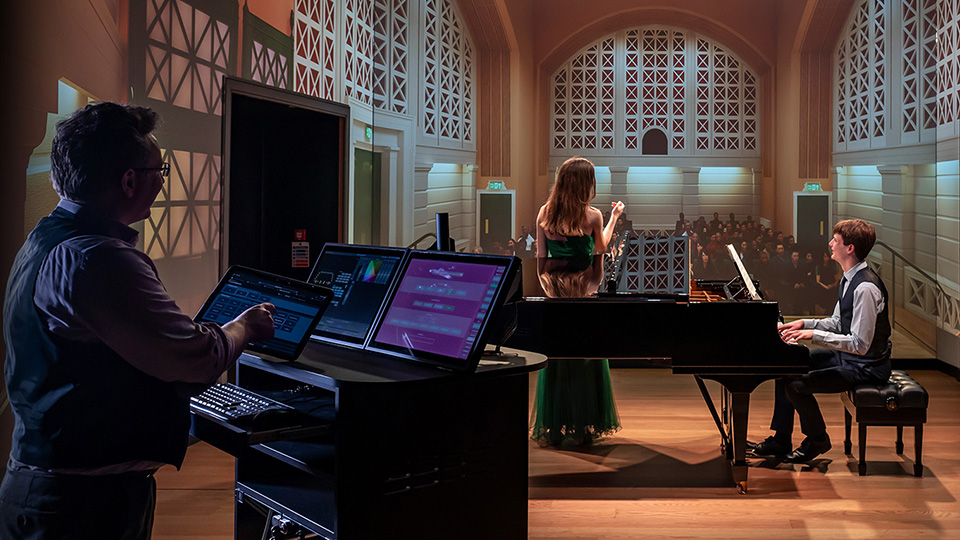
Modern musicians need more than traditional instrumental training.
Recording, digital production, audio engineering and music technology have become increasingly important across the creative industries. Whether you want to work as a performer, composer, recording artist or researcher, understanding these developments can broaden your professional possibilities.
The Royal College of Music recognises the importance of combining traditional musical education with technological innovation.
Students benefit from access to professional studio conditions, highly skilled technical engineers and specialist facilities.
The College’s pioneering Performance Simulator also provides an innovative environment for developing performance skills.
These resources allow students to explore music-making through a combination of artistic creativity and technological tools.
Why should you care?
Because the music profession is constantly evolving. Musicians increasingly work across different platforms, collaborate with creative professionals and explore new ways of presenting their work.
Having access to advanced facilities during your studies can help you become more comfortable with these developments and understand how technology can support your artistic ambitions.
6. Discover Unique Learning Opportunities Through Music Research
What if your interest in music extends beyond performing and composing?
Perhaps you are curious about how music influences human wellbeing, how musicians respond to performance pressure or how technology can transform the way people experience sound.
The Royal College of Music offers an exciting research environment for students who want to explore these questions.
Its research activities cover several areas, including:
- Performance science
- Music education
- Musicology
- Music and wellbeing
- Music’s material culture
- Composition and performance
- The College is home to two specialist research centres that contribute to its academic and creative environment.
Centre for Performance Science
The Centre for Performance Science is internationally recognised for its interdisciplinary approach to understanding musical performance and its wider impact on society.
Its research explores the relationship between performance, health, wellbeing and human experience.
For students interested in the science behind musical achievement, this offers an opportunity to understand music from a broader perspective.
Wolfson Centre in Music and Material Culture
Based within the RCM Museum, the Wolfson Centre in Music and Material Culture explores the historical, cultural and material dimensions of music.
Its work connects musical heritage with research, collections and wider cultural understanding.
The College also supports a substantial and diverse doctoral community, with research projects covering a broad spectrum of musical subjects.
This makes the RCM particularly appealing if you are considering a future in academic research, higher education, performance science or music scholarship.
You do not have to limit your ambitions to the concert stage. Music offers many professional pathways, and research can open doors to some fascinating opportunities.
7. Become Part of a Diverse International Music Community
Moving to another country to study can feel exciting, but it can also raise several questions.
Will you find people who share your interests? Will you feel comfortable in a new academic environment? Will you have opportunities to build meaningful friendships and professional connections?
At the Royal College of Music, international diversity is an important part of the student experience.
The College welcomes musicians from more than 60 countries, creating a genuinely international community.
You will meet students with different musical traditions, educational backgrounds and artistic perspectives. This diversity can enrich your learning experience in ways that extend far beyond classroom activities.
For example, working with musicians from different cultural backgrounds can introduce you to unfamiliar musical styles, interpretations and performance traditions.
You may discover new approaches to composition, learn different ways of understanding musical expression or develop creative partnerships with fellow students.
The College’s professors also come from across the world, bringing a wealth of international experience and professional expertise.
Another advantage is the collaborative atmosphere across its faculties. Students are encouraged to work together, share knowledge and participate in projects that bring different musical disciplines together.
For an aspiring musician, these relationships can become valuable throughout your career.
The people you meet during your studies could become future collaborators, performers, composers or professional contacts.
8. Study in the Cultural Heart of London’s South Kensington

Your university experience is shaped by more than the buildings in which you study.
The surrounding neighbourhood, cultural attractions, performance venues and opportunities to explore the city can all contribute to your personal and professional development.
The Royal College of Music enjoys an exceptional location in South Kensington, one of London’s most attractive cultural and educational districts.
Its position opposite the iconic Royal Albert Hall places students in an inspiring artistic environment.
South Kensington has a fascinating history. Its development as a major cultural and educational centre was closely connected to Prince Albert’s vision during the nineteenth century. Today, the area continues to bring together leading institutions dedicated to education, science and the arts.
Explore London’s Famous Museums and Cultural Attractions
One of the most exciting advantages of studying in South Kensington is the number of internationally recognised cultural institutions nearby.
These include:
- Victoria and Albert Museum (V&A): Discover outstanding collections of art, design and decorative objects.
- Natural History Museum: Explore fascinating scientific collections and exhibitions.
- Science Museum: Experience scientific innovation, technology and interactive displays.
- Royal Albert Hall: Enjoy a major London venue hosting performances across different musical genres.
- Hyde Park: Take a relaxing break from your academic routine in one of London’s most famous green spaces.
These attractions can provide inspiration beyond your regular music studies.
Visiting museums, attending exhibitions and experiencing different artistic environments can help you develop a wider appreciation of creativity and culture.
The RCM also maintains close relationships with neighbouring cultural institutions. Its students regularly participate in chamber recitals and are invited to contribute to gallery openings, exhibition launches and special events.
This creates opportunities to perform in different settings and connect with audiences outside traditional concert halls.
9. Experience London’s Exciting Music and Performing Arts Scene

If you are serious about building a career in music, studying in a city with an active cultural scene can be a significant advantage.
And London certainly delivers.
As one of Europe’s leading cultural capitals, London offers an extraordinary variety of musical experiences. From classical orchestras and opera productions to jazz performances, contemporary music and large-scale concerts, the city provides opportunities to explore almost every musical genre.
Some of its internationally recognised venues include:
- Royal Albert Hall: A celebrated venue for classical concerts, orchestral performances and major musical events.
- Wigmore Hall: Particularly renowned for chamber music and vocal recitals.
- Southbank Centre: A major cultural destination hosting concerts, festivals and artistic events.
- Barbican Centre: A leading venue for classical music, contemporary performance and multidisciplinary arts.
- Royal Opera House: An important destination for opera and ballet.
- Ronnie Scott’s: One of London’s best-known jazz venues.
- Roundhouse: A major performance venue hosting contemporary music and cultural events.
Beyond these venues, London has a thriving musical landscape across neighbourhoods such as Camden, Brixton, Hammersmith and Notting Hill.
For a student at the RCM, this means having access to a city where music is constantly being performed, discussed and experienced.
You can attend concerts, observe professional musicians, explore different performance styles and gain a better understanding of the music industry.
It is also an opportunity to enjoy being a student in a city full of theatres, galleries, restaurants, independent shops and cultural events.
And when you need a break from the intensity of practice and academic work, there is always something new to discover.
10. Benefit from International Student Support and Accommodation Guidance
Studying overseas involves practical responsibilities that you should consider before making your final university decision.
You may need to understand UK visa requirements, arrange accommodation, plan your finances and become familiar with living in a new country.
The Royal College of Music recognises that international students need guidance as they make this transition.
Its Registry and Student Services teams provide support and advice to international and EU students across various areas, including:
- UK visa and immigration guidance
- Living and working in the UK
- Financial advice
- Student services and practical support
- Making the most of university life
This support can make the transition into a new academic and cultural environment more manageable.
Find Suitable Student Accommodation in London
Accommodation is another important consideration, particularly when you are moving to London from overseas. The RCM provides guidance on accommodation options, including its hall of residence, Prince Consort Village.
Having access to accommodation support can help you understand your options and plan your move more effectively. When comparing places to live, consider more than just the monthly rent. Think about travel time, transport connections, access to practice facilities, personal safety and everyday expenses.
London offers a wide range of neighbourhoods and accommodation choices, so planning early can make a real difference.
Remember to include living costs, food, transport, study materials and other personal expenses in your overall budget.
A well-planned move can help you focus on what matters most: developing your musical abilities and enjoying your student experience.
11. Develop Professional Skills for a Changing Music Industry

A successful musical career requires much more than the ability to play an instrument exceptionally well.
You also need adaptability, creativity, communication skills, professional discipline and the confidence to work with different people. The Royal College of Music designs its degrees to develop both academic and practical musical abilities.
Its educational approach encourages students to become thoughtful, flexible and well-informed musicians. Through specialist tuition, ensemble collaborations, performances, research activities and access to professional facilities, students can develop skills that support different career directions.
Depending on your interests, these may include:
- Solo and orchestral performance
- Opera and vocal performance
- Composition and arranging
- Conducting and ensemble leadership
- Music education
- Performance science
- Academic research
- Collaborative music-making
The music industry continues to evolve, and professional opportunities are not restricted to traditional performance careers.
Some musicians combine performing with teaching, recording, research or composing. Others develop careers across different creative sectors.
Studying at an institution that encourages flexibility and artistic exploration can help you understand your strengths and identify the opportunities that suit your ambitions.
The important thing is to remain curious, make the most of your training and build a professional identity that reflects your abilities.
Is the Royal College of Music Worth Considering?
By now, you can see that the Royal College of Music offers considerably more than a prestigious name.
It brings together specialist musical education, experienced international professors, outstanding performance facilities, advanced music technology and a vibrant research environment.
Its international student community creates opportunities for collaboration, while its South Kensington location places you within one of London’s most exciting cultural districts.
However, whether the RCM is the right institution for you depends on your individual goals.
Before applying, take time to consider:
- Your musical specialism: Does the College offer a programme that matches your instrument, interests and career ambitions?
- Entry requirements: Do you meet the academic and audition requirements for your chosen course?
- Performance opportunities: Will the learning environment help you develop the practical experience you need?
- Financial planning: Can you manage tuition fees, accommodation and London’s living expenses?
- Career direction: Does the course support the kind of professional musician you want to become?
It is also worth exploring the College’s official course pages, audition guidance, scholarship opportunities and international student resources before submitting an application.
Making an informed decision now can help you avoid unnecessary surprises later.
How ScholarshipKart Supports Your Study Abroad Journey

Planning to study abroad involves several important decisions, from choosing the right university and course to exploring scholarships, arranging finances and finding suitable accommodation. With the right guidance, students can navigate these steps with greater clarity and confidence as they prepare for an international education experience.
ScholarshipKart assists students aspiring to study in the UK by providing guidance at various stages of their study abroad journey. Its services cover key aspects of the process, including:
- University and Course Selection: Identify academic programmes and universities that align with your interests, academic background and long-term career goals.
- Admission Guidance: Get assistance with university applications, understanding admission requirements and keeping track of application deadlines.
- Scholarship Assistance: Discover relevant scholarship opportunities and learn about eligibility requirements, application procedures and deadlines.
- Student Visa Guidance: Understand student visa requirements and receive guidance on preparing the necessary supporting documents.
- IELTS and PTE Preparation: Access preparation guidance to help meet English language proficiency requirements, where applicable.
- Accommodation and Pre-Departure Support: Prepare for your move abroad with guidance on accommodation options, travel arrangements and other essential pre-departure considerations.
- Educational Loan Guidance: Explore potential education financing options and plan your study-related expenses more effectively.
By offering support across these essential areas, ScholarshipKart helps students make informed decisions, stay organised throughout the application process and prepare for the transition to studying and living in the UK.
Conclusion
Choosing where to study music is a deeply personal decision. You are not simply selecting a university; you are choosing the environment in which you will develop your abilities, discover your artistic identity and take your first steps towards a professional future.
The Royal College of Music offers an impressive combination of internationally recognised teaching, specialist musical training, exceptional performance spaces and opportunities to explore the wider world of music.
Whether you aspire to perform on prestigious international stages, compose original works, lead orchestras or contribute to music research, the College provides an environment in which you can challenge yourself and explore your potential.
Its international community, collaborative teaching culture and location in London’s cultural heart make the experience even more appealing.
Of course, the final decision should come down to your musical goals, financial circumstances and expectations from higher education. Take the time to explore your course options, understand the admission process and think carefully about the kind of musician you want to become.
But if you are looking for a conservatoire where musical tradition meets innovation, where talented students learn from accomplished professionals and where creativity is encouraged at every stage, the Royal College of Music is certainly worth exploring.
Your musical journey deserves a strong beginning. Could London be the place where your next chapter starts? Take the next step towards your musical ambitions! Explore the Royal College of Music’s courses and admission requirements today. Book a Free Consultation with ScholarshipKart and start planning your journey to becoming an accomplished musician.
FAQs
1. Can international students apply to the Royal College of Music in London?
Yes, the Royal College of Music welcomes applications from talented musicians across the world, with students representing more than 60 countries. International applicants must meet the relevant academic, musical and audition requirements for their chosen programme.
2. What entry requirements are needed for international students?
For undergraduate programmes, international students generally need an International Baccalaureate (IB) Diploma with at least 24 points and an IELTS score of 5.5 in each of the four components. For Master’s programmes, applicants typically require a Bachelor’s degree or equivalent international qualification, usually in music. Admission to performance programmes is primarily based on an audition, which can be attended in person at the London campus or selected overseas venues, or submitted by video if attending in person is not possible.
3. Does the Royal College of Music offer undergraduate and postgraduate courses?
Yes, the RCM offers undergraduate Bachelor of Music (BMus) programmes and a range of postgraduate qualifications, including MA, MMus and Graduate Diploma courses. These programmes cover areas such as performance, composition, opera and conducting.
4. Do international students need to audition for admission?
Yes, admission to most performance-based programmes involves an audition as part of the selection process. Depending on your chosen course, you may also need to submit academic documents, recordings or additional application materials.
5. Does the Royal College of Music offer scholarships to international students?
The RCM offers merit-based scholarship and financial support opportunities for eligible students, including those applying from overseas.
6. Can international students get accommodation near the Royal College of Music?
Yes, the College provides accommodation guidance and offers access to options including Prince Consort Village, its hall of residence. Students should explore accommodation availability, costs and application deadlines early to secure suitable housing.
7. Is the Royal College of Music a good choice for building an international music career?
Absolutely! The RCM combines specialist musical training, experienced professors, performance opportunities and an international student community. Its connections with London’s vibrant music scene can also help you develop professional experience and valuable industry relationships.
8. Can international students work while studying at the Royal College of Music?
International students holding an eligible UK Student visa may be permitted to work part-time, subject to visa conditions and any restrictions that apply to their course.