
Physiotherapy is a dynamic healthcare profession that combines scientific knowledge, practical clinical skills and patient-focused care. Physiotherapists can work with people across different stages of life and in a variety of healthcare environments, making it a diverse and rewarding career choice.
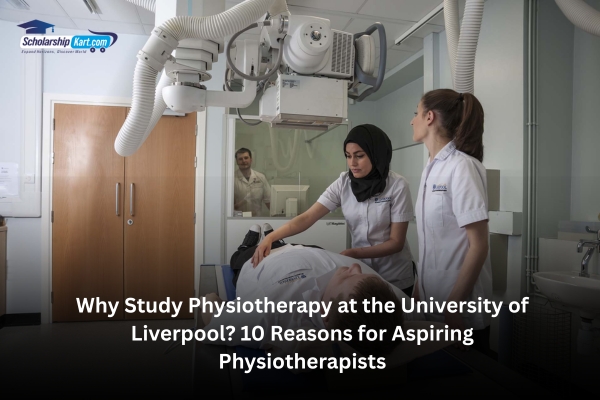
From paediatrics and older persons’ care to the NHS, private practice, sport, research and teaching, physiotherapy offers graduates a broad range of professional pathways.
The University’s centrally located School of Allied Health Professions and Nursing is situated near the Quadrangle on Brownlow Hill, behind the Victoria Gallery and Museum on the North Campus. The School occupies the Thompson-Yates, Whelan and Johnston buildings.
Build Your Physiotherapy Career at the University of Liverpool
For students planning to study physiotherapy in the UK, choosing the right university is an important first step. The University of Liverpool offers an established healthcare education environment supported by more than 100 years of experience in developing healthcare professionals.
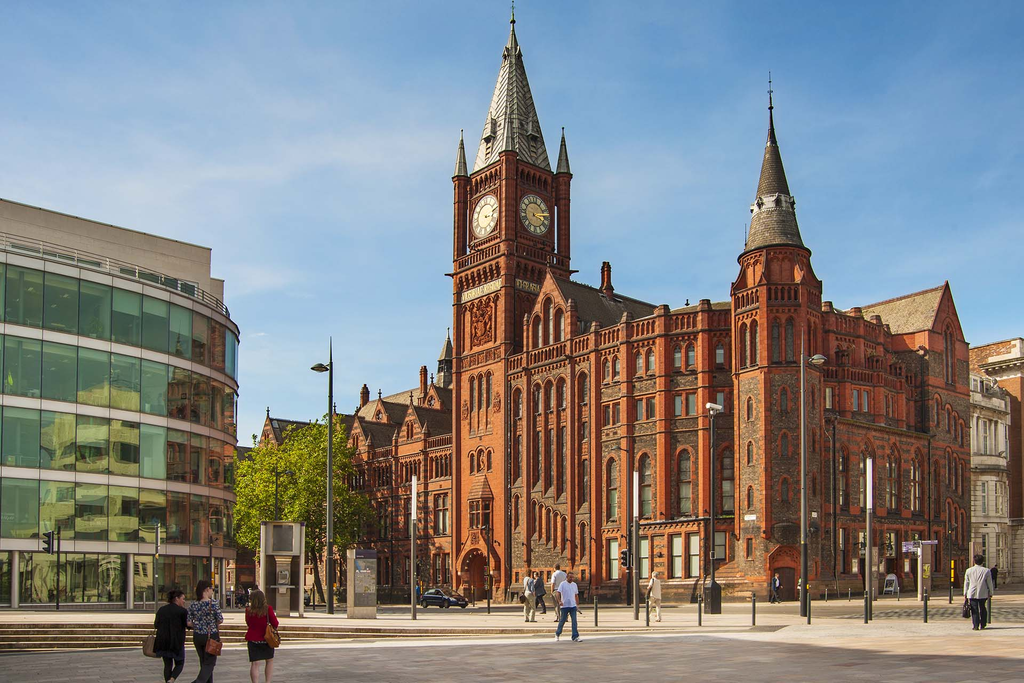
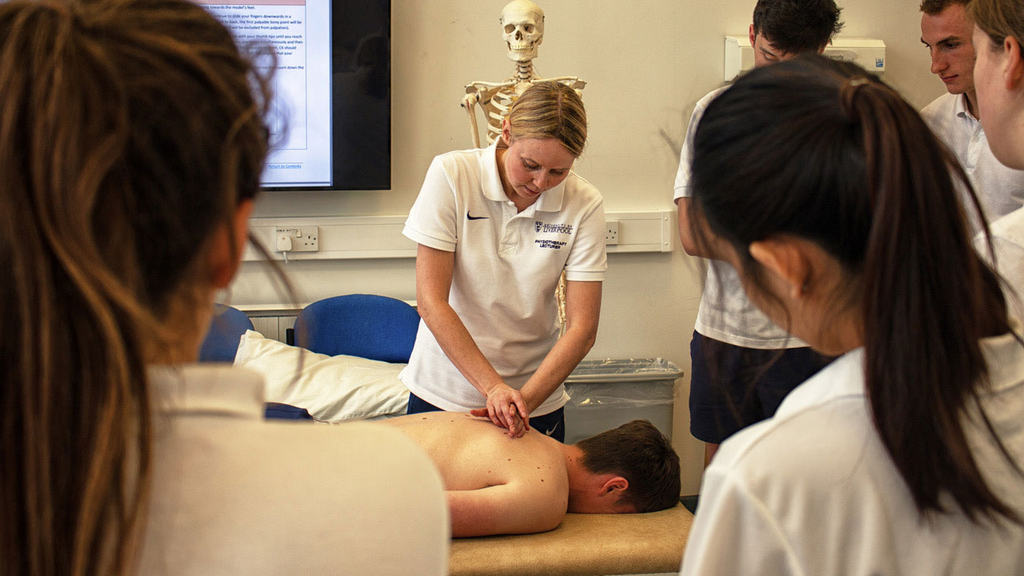
Its School of Allied Health Professions and Nursing combines research-led teaching with specialist facilities, simulation-based learning and clinical teaching spaces. Students can develop practical skills using specialist equipment in realistic environments while receiving guidance from technical experts.
Liverpool was also ranked 1st for Physiotherapy in The Complete University Guide 2027 and received a Gold rating for educational excellence in TEF 2023. The University offers two physiotherapy programmes: Physiotherapy BSc (Hons) and Physiotherapy (Pre-registration) MSc.
Physiotherapy Programs Offered at Liverpool
Undergraduate Physiotherapy Program
BSc (Hons) Physiotherapy
Duration: 3 Years
International Tuition Fees: £32,000 per year.
The BSc (Hons) Physiotherapy programme at the University of Liverpool is designed to prepare students for modern physiotherapy practice through a combination of academic study, practical training and research-informed learning.
This undergraduate programme reflects current developments in physiotherapy and integrates university-based teaching with practice-based components, allowing students to progressively build the knowledge, clinical skills and professional abilities needed for a healthcare career.
The programme follows a modular structure in which academic and practice-based learning are integrated throughout the degree. Students develop their knowledge and practical abilities progressively across three years.
In Year 1, students establish a foundation in core physiotherapy knowledge and profession-specific practical skills, with particular attention to the structure and function of tissues within the human body.
Year 2 builds on this foundation through further academic and practical learning, with a stronger emphasis on pathology.
In Year 3, students focus on advanced skills and techniques and develop their ability to apply their learning effectively in practice.
Alongside physiotherapy-specific knowledge, the curriculum develops transferable skills such as critical thinking, scientific understanding, research gathering, data collection and analysis, teamwork and observation. These skills can support students in managing their personal and professional development after graduation.
Entry Requirements
A Levels: AAB, including Biology, PE, Sport Science, or the Active Leisure Industry.
Where a science subject such as Chemistry, Biology, Geology or Physics has been taken at A level, students must also achieve a pass in the relevant science practical assessment.
International Baccalaureate: A minimum of 34 points overall.
English Language Requirements
International applicants must demonstrate English language proficiency with an IELTS overall score of 7.0, with no individual component below 6.5.
Postgraduate Physiotherapy Program
Physiotherapy (Pre-registration) MSc
Duration: 24 Months
International Tuition Fees: £32,000 per year
The Physiotherapy (Pre-registration) MSc at the University of Liverpool is a two-year accelerated conversion course for graduates who want to study physiotherapy for the first time at master’s level. The programme combines academic learning with clinical experience to develop the skills, knowledge and professional qualities required for modern physiotherapy practice.
This Master’s course is built around three key themes: clinical practice, professional development and evidence-based practice. Practice-based learning is an essential component, giving students experience across a range of clinical settings while helping them connect theory with practice and develop clinical, professional and leadership skills.
Students develop:
- Understanding of multi-professional healthcare environments
- Communication and patient-care skills
- Ability to manage a range of physical health problems
- Leadership and professional skills
- Research and report-writing abilities
In Year 1, students build foundational physiotherapy knowledge, including the management of musculoskeletal and surgical patients.
Year 2 focuses on more complex physiotherapy issues, advanced clinical skills, leadership and service delivery.
This accelerated program is designed as a conversion course for graduates studying physiotherapy for the first time. It is not intended for students who already hold a physiotherapy degree.
Postgraduate Entry Requirements
Applicants normally need a 2:1 honours degree from a UK university or an equivalent international qualification in biological sciences, health sciences or a sports-related discipline. Applicants with a 2:2 may be considered where they have relevant experience or further study.
Paid or voluntary experience working with the general public, children, older people or people with special needs can also strengthen an application.
English Language Requirements
An IELTS score of 7.0 overall, with no component below 6.5.
Clinical Placement and Professional Recognition
The programme includes placement opportunities that allow students to gain practical experience with industry professionals and develop valuable employability skills.
After successful completion, graduates will be eligible to apply for registration as a physiotherapist with the Health and Care Professions Council (HCPC) and apply for professional membership of the Chartered Society of Physiotherapy.
Ready to Study Physiotherapy at the University of Liverpool? Turn your ambition into a clear study plan with ScholarshipKart. Get personalised counselling to choose the right Physiotherapy programme, guidance throughout your university application, and step-by-step assistance with your UK student visa process.
Top 10 Reasons to Choose the University of Liverpool to Study Physiotherapy
The University of Liverpool offers a well-rounded environment for students who want to study physiotherapy and prepare for a rewarding healthcare career. From its long-standing experience in healthcare education and research-led teaching to its specialist facilities and practical learning opportunities, the University provides several advantages for aspiring physiotherapists.
If you want to study in the UK, consider the following reasons that highlight what makes Liverpool a strong choice for studying physiotherapy in the UK.
1. Study Physiotherapy at a University with Over 100 Years of Healthcare Education Experience
The University of Liverpool’s School of Allied Health Professions and Nursing has more than 100 years of experience in healthcare education.
This long-standing experience provides an established foundation for educating future healthcare professionals. For physiotherapy students, it means studying within a School with a substantial history of developing healthcare professionals and delivering dynamic, research-led education.
The School’s experience also supports a learning environment where academic knowledge and professional preparation are closely connected.
2. Study at a University Ranked 1st for Physiotherapy
One of the most notable reasons to choose Liverpool is its position in the Complete University Guide 2027, where the University of Liverpool is ranked 1st for Physiotherapy.
For prospective students comparing physiotherapy universities in the UK, this ranking provides a useful indicator of the University’s standing for the subject.
Combined with its specialist healthcare facilities, research-led teaching and practical learning opportunities, the ranking makes Liverpool a strong option for students considering a physiotherapy degree.
3. Experience Gold-Rated Teaching Excellence
The University of Liverpool has received a Gold rating for educational excellence in the Teaching Excellence Framework (TEF) 2023.
Teaching quality is particularly important when studying a healthcare subject because students need to develop both academic understanding and practical capabilities. Liverpool’s Gold TEF rating adds to the University’s profile as an institution focused on educational excellence.
For aspiring physiotherapists, this provides another reason to consider the University when comparing where to study physiotherapy in the UK.
4. Develop Practical Physiotherapy Skills in Realistic Learning Environments
Physiotherapy education requires students to translate theoretical knowledge into practical skills. Liverpool supports this development through a range of sophisticated simulation and clinical teaching spaces within the School.
These environments allow students to become familiar with specialist equipment in realistic settings. Students can develop important practical skills while being guided by technical experts.
This approach helps create a learning experience that goes beyond classroom-based study and gives students opportunities to develop skills relevant to their future professional environment.
5. Strengthen Your Anatomy Knowledge at the Human Anatomy Resource Centre
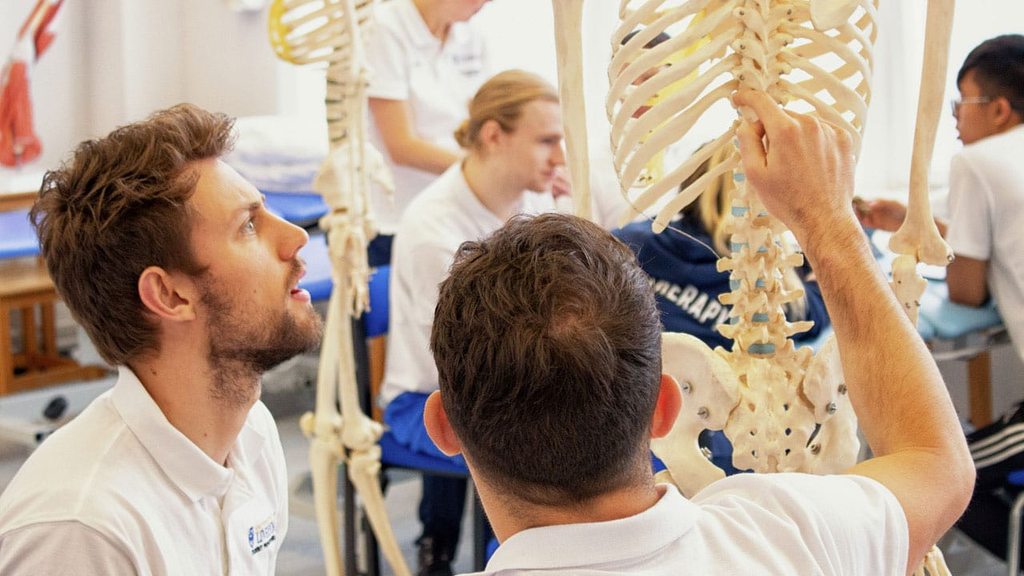
A strong understanding of human anatomy is essential for physiotherapy education. Students at Liverpool benefit from the Human Anatomy Resource Centre (HARC), a dedicated facility for teaching related to human biology.
HARC contains three-dimensional recreations of human bodies, including representations of organs and musculoskeletal systems.
For physiotherapy students, access to dedicated anatomy resources can support their understanding of the human body and provide an important foundation for developing clinical knowledge and practical skills.
6. Learn Through Research-Led Physiotherapy Education
Another important advantage of studying physiotherapy at Liverpool is the School’s more than 100 years of experience in dynamic, research-led teaching.
The School also provides an active research environment, allowing students to study within a setting where research and healthcare education are closely connected.
A research-led approach can encourage students to engage critically with their subject and develop a deeper understanding of physiotherapy and healthcare practice. It also provides an academic environment suited to students who may eventually wish to explore research or teaching as part of their career.
7. Choose Between BSc and Pre-Registration MSc Physiotherapy Programmes
The University of Liverpool offers two dedicated physiotherapy study routes:
Physiotherapy BSc (Hons)
Physiotherapy (Pre-registration) MSc
This provides prospective students with different academic routes into physiotherapy depending on their educational background and circumstances.
The University’s postgraduate provision also includes flexible programmes and specialist training incorporating taught and clinical placement components.
Whichever route students pursue, the focus remains on developing the knowledge and skills required to progress towards professional physiotherapy practice.
8. Prepare for Diverse Physiotherapy Careers in Healthcare and Beyond
A major attraction of physiotherapy is the diversity of career opportunities available to qualified professionals. A physiotherapy degree from Liverpool can provide a foundation for careers across a variety of professional environments.
Graduates may pursue opportunities in:
NHS Physiotherapy Careers: Many physiotherapy graduates find employment within the NHS, making public healthcare an important career pathway for those entering the profession.
Private Physiotherapy Practice: Graduates can also develop careers in private practice, where physiotherapy provides another professional environment for applying clinical knowledge and practical skills.
Sports Physiotherapy Careers: Sport is another area identified among the professional environments available to graduates. Students interested in physiotherapy and sport can therefore explore opportunities within this sector.
Physiotherapy Research Careers: Graduates interested in evidence, investigation and academic development can consider research as a professional pathway. Liverpool’s active research environment can provide an appropriate academic setting for students interested in this direction.
Physiotherapy Teaching Careers: Teaching is another potential career environment for graduates. This can appeal to those who want to contribute to the education and development of future healthcare professionals.
Physiotherapy Careers Across Different Clinical Settings
Physiotherapists can work across a broad range of clinical settings, including paediatrics and older persons’ care. This illustrates the diversity of people and healthcare environments that physiotherapy professionals can encounter throughout their careers.
Job options related to a Physiotherapy degree:
- Animal Physiotherapist
- Higher Education Lecturer
- Physiotherapist
- Sports Therapist
- Acupuncturist
- Chiropractor
- Dance Movement Psychotherapist
- Exercise Physiologist
- Health Service Manager
- Health Improvement Practitioner
- Osteopath
- Personal Trainer
- Prosthetist/Orthotist
- Sports Coach
- Sports Development Officer
The range of professional environments means that physiotherapy can provide opportunities for graduates to develop and pursue different areas of interest over the course of their careers.
9. Develop Career-Ready Skills with Dedicated Employability Support
A successful university experience should prepare students not only for graduation but also for the transition into professional life. Liverpool provides dedicated careers and employability support to help students plan their careers, understand the job market and strengthen their networking skills.
The University’s Career Studio gives students and graduates access to trained career coaches. Support includes finding and applying for full-time and part-time jobs, placements, internships and graduate schemes.
Students can also receive help with job interviews, explore careers events and workshops, develop networking skills and investigate opportunities within different professional sectors.
Liverpool also develops programmes with employers in mind. Students are supported in strengthening long-term employment prospects through exposure to professionals, different sectors and collaborative activities designed to develop transferable skills.
Digital employability tools, including the Handshake platform, provide additional opportunities to connect with employers and access Career Studio support.
10. Study in a Supportive and International University Community
The quality of student life can also influence the university experience. Liverpool describes itself as having a vibrant student community drawn from across the UK and around the world.
Students can encounter different perspectives, ideas and experiences both on and off campus. This creates an environment where students can develop academically while becoming part of a diverse university community.
The University also provides dedicated student support. Its student services team can assist with studies, health and wellbeing and financial advice. Students can access confidential counselling, while the Disability Advice and Guidance Team can help identify appropriate support provisions for students with differing needs.
Professional Recognition and Future Physiotherapy Opportunities
A key consideration when choosing a physiotherapy programme is how the qualification supports progression towards professional practice.
Successful graduates from the University’s physiotherapy programmes will be eligible to apply for registration as a physiotherapist with the Health and Care Professions Council (HCPC) and to apply to become professional members of the Chartered Society of Physiotherapy.
The qualification also meets the Government’s criteria for ‘fitness for purpose’ and ‘fitness for practice’.
With potential career environments spanning the NHS, private practice, industry, sport, research and teaching, graduates can explore different professional directions. Clinical opportunities can also extend across areas such as paediatrics and older persons’ care.
Furthermore, the UK qualification can provide opportunities to work abroad in many countries, giving graduates an additional potential pathway for developing an international career.
International Scholarships for Physiotherapy at the University of Liverpool
- Liverpool Excellence Scholarship for Undergraduates
- Kaplan Digital Pathways Excellence Scholarship
- University of Liverpool International College Excellence Scholarship
- University of Liverpool International College First Class Scholarship
- Graduate Loyalty Scholarship – International
- Liverpool Attainment Scholarship for India
- Liverpool Achievement Scholarship for India
- Liverpool Excellence Scholarship for Postgraduates
Conclusion
Studying physiotherapy is an opportunity to build a career in a profession that combines healthcare knowledge, practical skills and meaningful patient-focused work. Choosing the right university can help students develop the academic foundation, practical capabilities and professional confidence needed for this journey.
The University of Liverpool offers a distinctive combination of more than a century of healthcare education experience, research-led teaching, specialist simulation facilities, clinical learning spaces and dedicated anatomy resources. Its 1st-place ranking for Physiotherapy in the Complete University Guide 2027 and Gold TEF 2023 rating further strengthen its appeal.
With BSc and pre-registration MSc routes, professional progression towards HCPC registration, access to employability support and career possibilities across the NHS, private practice, sport, industry, research and teaching, Liverpool provides an encouraging environment for aspiring physiotherapists.
For students ready to develop their knowledge, strengthen their practical skills and prepare for a diverse healthcare career, the University of Liverpool can be a compelling place to begin the next stage of their physiotherapy journey.
Take the Next Step Towards Your Physiotherapy Career
Planning to study Physiotherapy at the University of Liverpool? Book a Free Consultation with ScholarshipKart today. Our expert counsellors can simplify your journey with expert guidance, programme selection support, application, scholarship and visa guidance. From making the right course choice to preparing for your move to the UK, get support at every important stage.
Yes. The University of Liverpool offers two physiotherapy programmes: Physiotherapy BSc (Hons) and Physiotherapy (Pre-registration) MSc.
The BSc (Hons) Physiotherapy programme has a duration of 3 years.
The international tuition fee listed in the provided content is £32,000 per year.
The A-level requirement is AAB, including Biology, PE, Sport Science, or the Active Leisure Industry. The International Baccalaureate requirement is a minimum of 34 points overall.
International applicants need an IELTS overall score of 7.0, with no individual component below 6.5.
Yes. The Physiotherapy (Pre-registration) MSc is a 24-month accelerated conversion course for graduates who want to study physiotherapy for the first time at master’s level.