
For nearly two centuries, The Bartlett Faculty of the Built Environment at University College London has stood at the forefront of architectural education, shaping how the built world is imagined, designed, and transformed.
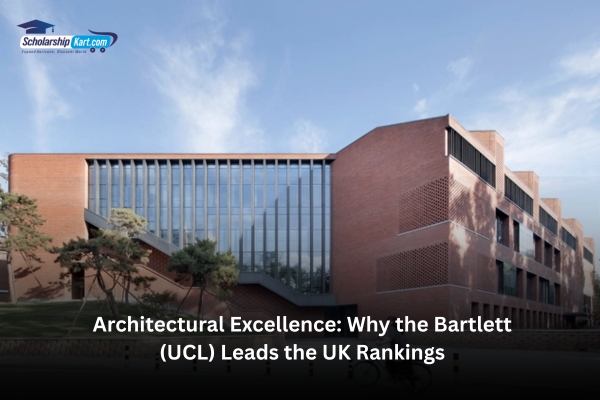
Its reputation is not the result of a single strength but of a rare convergence of history, scale, intellectual ambition, and an unwavering commitment to innovation.
As the UK’s largest and most multidisciplinary hub dedicated to the built environment, The Bartlett attracts a diverse constellation of students, educators, researchers, and practitioners from across the globe. This diversity is not incidental. It is foundational to how architecture is taught, questioned, and redefined within its walls.
The Bartlett School of Architecture, in particular, is internationally recognised as one of the most influential and forward-thinking architecture schools in the world. Its fame stems from its ability to anticipate the future of architecture while remaining deeply engaged with the social, environmental, and cultural realities of the present.
Students are not trained merely to design buildings, but to think critically about space, power, sustainability, justice, and technology. This philosophy has consistently positioned The Bartlett at the pinnacle of architectural education, earning it the distinction of being ranked number one in the UK for architecture and the built environment for ten consecutive years by the QS World University Rankings 2025.
Dreaming of studying Architecture at University College London (UCL)? Let ScholarshipKart turn your ambition into admission. From IELTS coaching and SOP guidance to personalised university selection and application support, we help you navigate every stage from application to visa process with confidence. Reach out now and begin your path to success in the UK!
How The Bartlett at UCL Redefines Architectural Leadership
Let’s delve into how The Bartlett at UCL has emerged as a global epicentre of architectural thought, where history, innovation, and ethical responsibility converge to shape the architects and cities of tomorrow:
A Legacy Rooted in History, Evolving Through Innovation
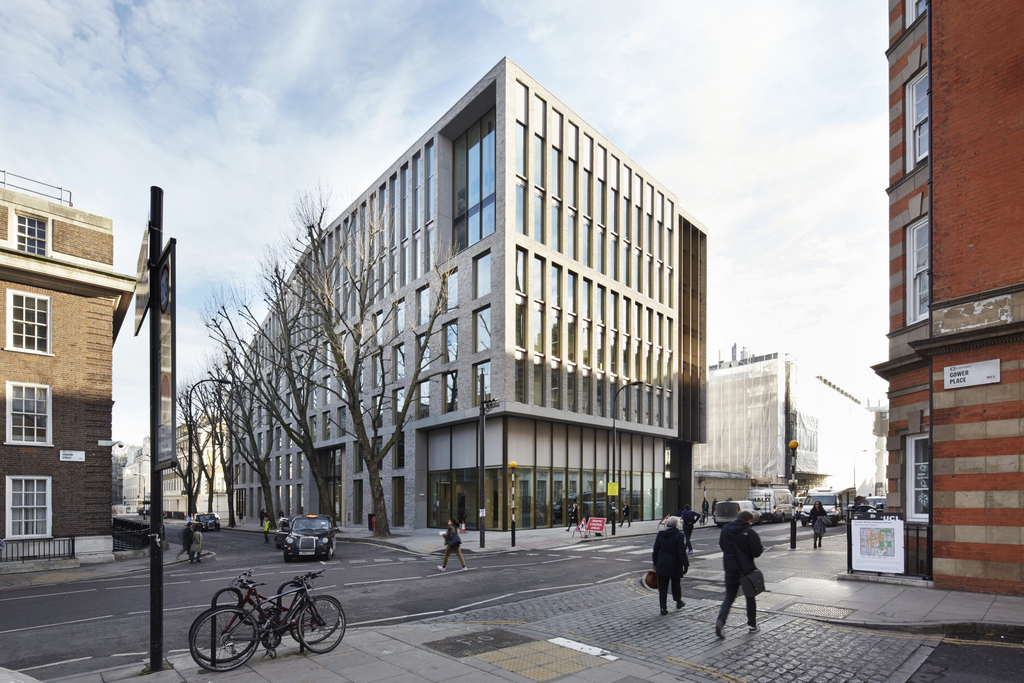
Bartlett’s story stretches back nearly 200 years, offering a lineage of architectural thought that few institutions can rival. Yet, what makes this legacy remarkable is not its age, but its capacity for renewal.
Rather than resting on tradition, The Bartlett continuously reinvents its pedagogical and research practices to remain relevant in an ever-changing world. This balance between heritage and experimentation creates an academic environment where history informs innovation rather than constraining it.
Within this context, students encounter architecture as a living discipline, one that responds to contemporary challenges such as climate change, urban inequality, technological disruption, and cultural transformation.
For learners arriving from different educational systems and cultural backgrounds, this approach offers a rare opportunity to engage with architecture not as a fixed profession, but as a flexible, critical, and socially responsive practice.
Rankings That Reflect Substance, Not Symbolism
Bartlett’s dominance in national and global rankings is not symbolic prestige. It is grounded in measurable academic excellence and research impact.
· Ranked 1 in the UK for Architecture and the Built Environment for ten consecutive years (QS World University Rankings 2025)
· Ranked 1 in the World for Architecture and Built Environment Studies (QS World University Rankings 2025)
· Ranked 1 for Research Power, with 91% of research rated “world-leading” or “internationally excellent” (Research Excellence Framework 2021)
These rankings matter because they reflect sustained quality across teaching, research, and industry engagement.
For students entering the field from outside the UK, such recognition assures that their education is globally respected and academically rigorous, enhancing both credibility and mobility in future professional pathways.
A Community Where Spectrum Enhances Individual Growth
The Bartlett School of Architecture is home to a vibrant academic community of approximately 1,700 students and over 400 staff members. This structure enables a dynamic exchange of ideas while still allowing for close mentorship and intellectual collaboration.
Faculty members are not only educators but also leading researchers and practitioners responsible for award-winning buildings and pioneering studies worldwide.
Students benefit from being immersed in a community where architecture intersects with design, engineering, history, computation, biology, performance, and urbanism. Exposure to such a broad spectrum of perspectives fosters intellectual agility, allowing learners to develop design approaches that are both imaginative and grounded in research.
For those studying far from home, this sense of academic community provides stability, belonging, and a shared purpose rooted in collective inquiry.
Research That Engages the World’s Most Urgent Questions
Research at The Bartlett operates across scales, disciplines, and collaborations, reflecting the complexity of the challenges architecture must address today.
From spatial, social, and racial justice to climate-responsive design, computational research, and community-led regeneration, the school’s work demonstrates architecture’s profound engagement with society and technology.
What distinguishes this research culture is its ethical orientation. Projects are designed not only to innovate but to engage responsibly with global, environmental, and urban challenges. Bartlett actively nurtures inclusive and collaborative research communities, ensuring that diverse voices and experiences inform architectural inquiry.
For students, particularly those navigating unfamiliar cultural or professional contexts, this ethical grounding reinforces architecture as a practice with social responsibility rather than purely aesthetic ambition.
Interdisciplinarity as a Pedagogical Foundation
At The Bartlett, architecture is never taught in isolation. The school’s interdisciplinary environment encourages collaboration across technology, art, theory, engineering, and environmental sciences. This fusion creates a learning atmosphere where experimentation is not only encouraged but expected.
State-of-the-art facilities support this approach, offering design studios, specialised workshops for wood, metal, and digital fabrication, advanced computing suites, and one of the UK’s most comprehensive libraries dedicated to the built environment.
Access to technologies such as CNC machines and 3D printers enables students to translate speculative ideas into tangible outcomes.
For students adapting to new academic cultures, such hands-on, exploratory learning provides a universal language through which creativity and critical thinking can flourish.
Design Units and Radical Pedagogy
One of The Bartlett’s most defining features is its design unit system, which has shaped architectural education at the school for over 25 years.
Design units and research clusters allow students and tutors to pursue evolving themes rooted in shared research interests. Each unit adopts a distinct position on architecture, encouraging students to explore speculative, critical, and experimental design methodologies.
This structure fosters independence, intellectual risk-taking, and deep engagement with complex questions. Students learn not just how to design, but how to formulate arguments through space, text, and representation.
For learners entering a new educational system, this model cultivates confidence, agency, and the ability to articulate ideas across cultural and disciplinary boundaries.
Undergraduate Education: Laying a Global Foundation

Bartlett’s undergraduate degrees in architecture are designed to shape the future of the profession by combining creativity, sustainability, and interdisciplinary learning.
Undergraduate Courses such as Architecture BSc, Architecture MSci, Architectural & Interdisciplinary Studies, and Engineering & Architectural Design offer varied pathways tailored to different intellectual interests and career ambitions.
These programmes are world-renowned for their scope and creativity, providing rigorous teaching within a culture that values experimentation and critical inquiry. Graduates emerge with highly transferable skills, enabling careers not only in architecture but also in construction, design, engineering, performance arts, and creative industries.
For international students studying away from their home countries, this versatility offers resilience and adaptability in global job markets.
Postgraduate Study: Pushing Boundaries Further
Postgraduate education at The Bartlett is defined by intellectual depth and boundary-pushing exploration.
From Architectural Design and Architectural Computation to Landscape Architecture, Urban Design, and Cinematic and Videogame Architecture, the range of postgraduate programmes reflects architecture’s expanding disciplinary reach.
These courses encourage students to challenge conventions, engage with emerging technologies, and explore architecture’s relationship with film, gaming, performance, history, and ecology.
Being part of a global postgraduate cohort fosters cross-cultural dialogue and collaborative problem-solving, equipping graduates to engage meaningfully with diverse professional contexts worldwide.
Doctoral Research and Intellectual Leadership
PhD study at The Bartlett offers a dynamic environment for advanced architectural research. Doctoral candidates work across theory, history, digital fabrication, sustainability, and urbanism, supported by expert supervision and world-class facilities.
The emphasis on interdisciplinary approaches allows research to transcend traditional boundaries, contributing new knowledge that shapes both academia and practice.
For researchers relocating from different academic traditions, this openness encourages intellectual confidence and originality, positioning them as contributors to global architectural discourse rather than passive learners.
Values That Shape Ethical Practitioners
The culture of The Bartlett is deeply rooted in community, practice, and social responsibility. The school actively prioritises spatial justice, climate justice, decolonisation, and decarbonisation within both pedagogy and practice.
Diversity of experience is recognised as a strength, enriching design thinking and fostering graduates who are ethically aware and socially engaged. Students are encouraged to ask ambitious, radical, and sometimes uncomfortable questions about architecture’s role in society.
This emphasis on advocacy and activism ensures that graduates leave not only with technical expertise but with a sense of purpose and accountability toward the world they will help shape.
External Engagement and Real-World Impact
Collaboration with external partners lies at the heart of The Bartlett’s engagement strategy.
By working with industry, government bodies, charities, social enterprises, and architectural practices, the school translates research into real-world solutions. These partnerships expose students to professional contexts while reinforcing architecture’s capacity to effect meaningful change.
Facilities such as B-made and B-media exemplify this ethos, merging craft, science, technology, and media production into shared spaces of experimentation.
Access to such resources allows students to develop skills that are both creative and technically advanced, strengthening their readiness for diverse professional environments.
Shaping Future Architects: The Role of the Bartlett School of Architecture Society (BSAS)
BSAS plays a vital role in shaping a progressive, inclusive, and critically engaged learning environment at UCL. As a student-led departmental society, BSAS actively amplifies student voices and works towards meaningful cultural and curricular change within architectural education.
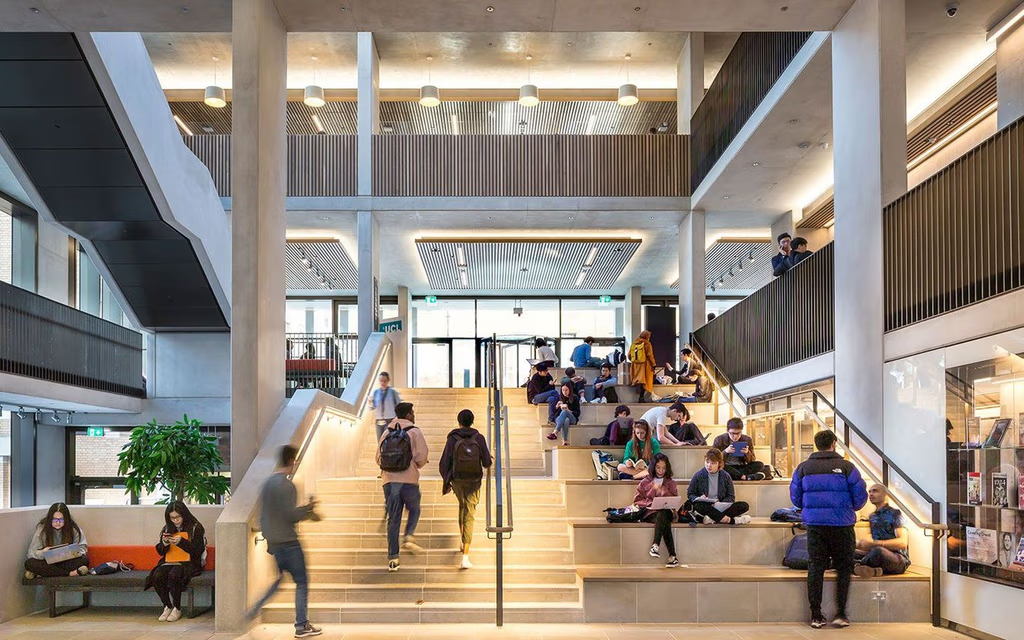
The society recognises that architecture must respond to social, cultural, and environmental crises through holistic education and creates platforms for dialogue, collaboration, and experimentation beyond the studio by connecting the diverse backgrounds, skills, and perspectives of students across programmes.
Initiatives such as The Bartlett Autumn Show Book, the flagship Summer Show and its companion publication, and the interactive Bartlett Show Archive, celebrate and spread student work on a global stage.
Together, these platforms allow students to critically reflect on their design thinking, gain international visibility, and engage with architecture as a socially responsive and evolving discipline, helping them excel academically and professionally.
Scholarships and Funding Opportunities at The Bartlett
Bartlett’s strong commitment to accessibility is reflected in its wide range of scholarships and funding opportunities that support students at every stage of their academic journey.
Whether pursuing an undergraduate, master’s, or PhD degree, students can access financial support that allows them to focus fully on learning, research, and professional development.
Undergraduate students benefit from initiatives such as The Bartlett Promise Scholarship, while postgraduate architecture students have access to dedicated funding, including Architecture MArch (ARB/RIBA Part 2) scholarships and bursaries.
For research-focused students, opportunities such as the Research Excellence Scholarship and The Bartlett Promise MPhil/PhD Scholarship provide essential support for advanced study and ground-breaking research.
These funding pathways reduce financial barriers, encourage academic excellence, and empower students to pursue ambitious ideas, reinforcing The Bartlett and UCL’s position as global leaders in architectural education.
London as a Living Classroom
Located in London, ranked among the best student cities globally, The Bartlett benefits from a rich urban context that serves as an extended classroom.
The city’s architectural diversity, cultural institutions, and international networks offer continuous inspiration while fostering meaningful connections with architects, planners, researchers, and peers from across the world.
As a global architectural capital, the city provides constant exposure to leading firms, live projects, exhibitions, and professional events, creating strong opportunities for internships, part-time work, and industry engagement even during the course of study.
London’s multicultural and globally connected environment cultivates a strong global mindset, encouraging students to engage with diverse perspectives, social contexts, and urban challenges beyond national boundaries.
This immersive exposure not only strengthens design thinking and professional confidence but also equips students with the cultural fluency, networks, and adaptability required for long-term global architectural careers.
Conclusion
Bartlett’s sustained leadership in UK and global architecture rankings is the result of depth, not spectacle. Its excellence lies in the integration of research, teaching, values, and community into a coherent educational philosophy.
By fostering interdisciplinary collaboration, ethical engagement, and radical imagination, The Bartlett prepares architects who are equipped to respond to the complexities of the contemporary world.
For students from across continents, The Bartlett offers more than an education; it provides a platform for transformation. It cultivates thinkers, makers, and leaders who understand architecture as a tool for improving human experience, addressing global challenges, and leaving a constructive legacy for future generations.
In doing so, The Bartlett does not merely lead the rankings; it continuously redefines what architectural excellence truly means.
Ready to study Architecture at University College London? Book a Free Consultation with ScholarshipKart today and get expert guidance on choosing the right course, preparing your application, securing your visa, and unlocking scholarship opportunities. Take the first step toward your UK education journey with professionals who understand every step of the process.
The Bartlett is internationally recognised for its academic excellence, innovative teaching, interdisciplinary approach, and strong research culture. It has been ranked No. 1 in the UK for Architecture and the Built Environment for ten consecutive years in the QS World University Rankings 2025.
The Bartlett offers a wide range of undergraduate, postgraduate, and doctoral programmes, including Architecture BSc, Architecture MSci, Architectural Design, Architectural Computation, Landscape Architecture, Urban Design, and Cinematic and Videogame Architecture.
The Bartlett combines architecture with areas such as technology, engineering, environmental sciences, art, computation, and urbanism. Its design-unit system also encourages students to explore experimental and critical approaches to architecture.
Yes. The Bartlett offers various scholarships and funding opportunities across undergraduate, postgraduate, and PhD study, including The Bartlett Promise Scholarship, architecture scholarships and bursaries, and research scholarships.
Students have access to design studios, specialist wood and metal workshops, digital fabrication facilities, advanced computing suites, CNC machines, 3D printers, and a comprehensive built-environment library.
London provides students with exposure to diverse architecture, cultural institutions, leading architectural practices, exhibitions, live projects, and professional events, making the city an extended learning environment.