
The top-notch education standards that UK Universities offer make the United Kingdom the most preferred destination for international students. Graduates holding UK degrees are in demand by high-profile employers, leading students to study in the UK and accomplish their career and life goals.
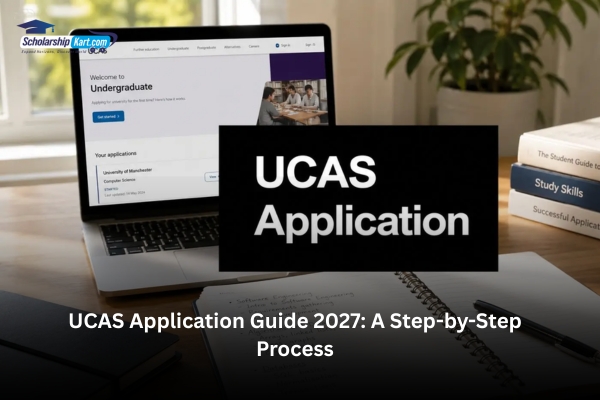
However, international students desiring to gain cutting-edge education in the UK may presume that the admission process to their desired UK University is complicated, detailed, and cumbersome. Nonetheless, to their relief, the process is straightforward.
The centralised online platform UCAS (the Universities and Colleges Admissions Service) provides a single podium to students wishing to apply for enrolment in a bachelor/undergraduate program at multiple UK Universities. Students who are pursuing the last year of their schooling or who have just left school can easily apply to their desired Bachelor’s program through UCAS.
Other than undergraduate applications, students can apply for:
- Music, drama, screen and production programs at undergraduate and postgraduate levels through UCAS Conservatoires
- Teacher training programs at undergraduate and postgraduate levels in Wales and Scotland Universities through UCAS Teacher Training
- Some postgraduate programs through UCAS Postgraduate
These applications, popularly known as UCAS Applications, have their specific formalities.
To help students understand the UCAS process and enable them to create the best possible application, we are discussing everything in detail in this step-by-step guide so that you can apply to your desired UK University without facing any difficulty.
Read further to know in detail about the UCAS application process. To start your UCAS application, book a free counselling session with ScholarshipKart today. Our dedicated team of consultants will guide you in applying to your dream UK University and beyond that, help you in accommodation and travel arrangements and preparation for your life in the UK.
UCAS Application Process
The UCAS application process has several steps and may seem challenging to applicants. However, with the right approach, you can complete it.

Here is a breakdown of each step:
Registration
The first step is registering in the UCAS Hub. On the UCAS Website (www.ucas.com), generate a UCAS account, create a password and confirm your email address to activate your account.
You will need to answer some basic registration questions. Once you create your account, you will be directed to your UCAS Hub dashboard, where you’ll find a section labelled ‘Your application.’ Click ‘Start’ to begin the application process.
Is a UCAS buzzword required?
When beginning your UCAS undergraduate application, you’ll need to connect it to the school, college, or registered centre providing support with your application. They will give you a unique word or code that allows your application to be linked to their organisation.
If you’re applying on your own without support from a school, college, or centre, you won’t need to provide this.
Complete Your Personal Information
The second step is providing personal details:
- Name
- Date of Birth (day/month/year)
- Nationality
- Address History
- Contact Number
- Gender
- Supporting Information
- Finance and Funding, etc.
- Write answers in UK English.
Remember, errors can delay your application, or you may lose some opportunities; hence, it is crucial to ensure that you provide accurate information. For example, enter your name exactly as it appears on official documents like passports and birth certificates.
If your qualifications are under a different name from your UCAS application, you can upload proof of your previous name to help universities verify your results. This applies to 2027 entry and 2026 applications submitted after 30 June.
You can provide up to two nationalities if you hold dual citizenship.
In the address history section, you will be required to enter your current address, the one where you spend most of your time. You may need to provide additional addresses covering the three years before your course starts. Your home address will be used to determine your fee status.
When providing contact details, enter your phone number, email address, and postal address. You can give nominated access to a parent, guardian, or adviser if you want them to be able to speak to UCAS on your behalf.
Students should use an email address that they regularly access. Check the mail regularly so you don’t miss important updates and information from universities.
UCAS will ask about your residency status, personal circumstances such as your parental education, and how you are managing your funds to pursue your program.
Entering the buzzword will link your application to your school, enabling them to provide support, add your reference and track your progress. You can enter your buzzword at any time from your application if you didn’t enter it during registration.
Use the finance section to explain how you plan to fund your studies.
It is not required to fill out the application in one sitting. Students can save their progress and return whenever they wish, so there is no reason to postpone filling out your application until you prepare everything.
Enter Educational Qualifications
Applicants should enter their educational qualifications from secondary school, including qualifications for which results are still outstanding, and you are waiting for final grades. In such cases, your referee must add the predicted grades to your application because the university will not consider your application without the predicted score.
Some qualifications are not on the UCAS list. In this case, the student needs to add them manually.
Once you receive the final results, send them directly to your selected universities. UCAS can send results like A levels, GCSEs, and International Baccalaureates directly to your chosen universities.
Uploading documents to your application: New for the 2027 cycle
For the 2027 entry cycle, UCAS is introducing a document upload service that allows applicants to submit relevant supporting documents directly through their application. This is designed to help universities and colleges access the information they need when reviewing your application.
If you are applying for university or college to start your studies in 2027, or submitting a 2026 application after 30 June, you may be able to upload supporting documents as part of your application.
The service can help you:
- Submit relevant official documents directly through your application.
- Make sure you provide the required supporting information.
- Keep track of the documents you need to provide.
Documents You Can Submit with Your UCAS Application
Depending on the information included in your application, you may be asked to upload official documents to support certain sections.
| Application section | Documents you may need to upload |
| Personal details – Change of name | Marriage certificate; Civil Partnership certificate; Deed Poll certificate; Change of Name certificate |
| Education – Qualifications | Official qualification certificates; official translated qualification certificates; official qualification transcripts, such as High School, SAT or ACT records |
| Education – English language | English language certificates, such as TOEFL, IELTS, PTE, LanguageCert, PSI or Trinity College Dublin certificates |
| Nationality – Passport and visa | A current official visa or immigration status document showing your name; a copy of the photo page of your valid passport showing your name |
Key points to note:
Only upload documents that are relevant to the information provided in your application. Make sure your documents are official, current where required, and clearly show your name and relevant details.
Enter all qualifications from secondary education onwards, including:
- Completed qualifications.
- Qualifications with an unsuccessful (U) grade.
- Qualifications where results are still awaited.
- Include all attempts and sittings, even if you later improved your result.
- Include GCSEs, A Levels, vocational, international, modular, and self-studied qualifications.
- Include STEP Mathematics and English language tests such as IELTS and TOEFL.
- Include international qualifications such as SAT Subject Tests and Advanced Placement (AP) courses.
- Include specialist qualifications, such as Extended Project, music, performance, and sports qualifications.
Enter the exact qualification title shown on your certificate or current course. Do not use NARIC equivalents.
Missing or incorrect qualifications may affect your application.
If you cannot find your qualification, select “All qualifications” and search using the awarding organisation, qualification title, and subject.
If you have any questions regarding entry requirements, speak to the university before you apply.
You will be required to provide details about the course that you pursued in a school/college but didn’t finish. Provide start and finish dates and state that you didn’t finish the course.
Employment History
If you have a history of paid employment (full-time or part-time), you need to provide accurate information such as company names, addresses, job descriptions, and start/finish dates in this section.
However, listing unpaid placements, internships and volunteering is not required. Students should not hesitate to leave this section blank if they don’t have any paid job yet.
Extra Activities
Strengthen your application by including additional courses, summer schools, taster courses, and other relevant activities.
Select Your Course Choices
An applicant can make five applications. You can apply to five universities or apply for five courses. To make an informed decision on course selection, you can use the UCAS course search tool to browse available programs.
Your course choice should be based on an evaluation of some critical factors such as course content, entry requirements, career prospects, location, etc.
You can add your selected courses by keying in the course codes. You need not prioritise your course choices as a university will not see where else you have applied.
Statement of Purpose
Statement of Purpose is a critical part of your UCAS application. An SOP reflects your academic and professional achievements, skills and inspirations, encouraging you to apply to your selected program.
Students applying to start university from 2026 onwards will complete their personal statement by answering three questions instead of writing one long statement. Each answer must contain a minimum of 350 characters.
Plan your content: Organise your ideas around your motivations, academic interests, relevant experiences, and career goals.
Show your passion: Highlight your aptitude, genuine interest in the subject, and commitment to higher education.
Include relevant experiences: Mention extracurricular activities and experiences that demonstrate useful skills and strengths.
Explain your choice: Clearly state why you have chosen the UK for higher studies and how UK education supports your career goals.
Revise and refine: Keep your statement clear, concise, compelling, and free from plagiarism and grammatical errors.
Make an impact: Use the statement to demonstrate your motivation, suitability, and commitment to your chosen undergraduate programme.
Reference
You are required to complete your reference from someone who is not a family member, friend, partner, or former partner.
A reference is a written recommendation from a teacher, adviser or professional who knows you academically.
If you are applying through a UCAS-registered school or college, you can use the ‘Send to referee’ button so that your referee can check over all the details and input the reference.
If your school/college isn’t registered with UCAS, you will need to get the reference from the referee and paste it into the application.
Allow your referee enough time to prepare a strong reference. Request it as soon as you complete the Education section to ensure it is ready before the submission deadline.
Submit your UCAS Application
Once you’ve completed your application, you can see your full application. Revise every single section carefully and make edits, if necessary. Finally, read and agree to the declaration.
UCAS will process your information and send it to your selected universities/colleges.
Application Fee and Sending your application
After submitting your reference, you need to pay the application fee. For 2027, the application fee is £34.50 for up to five choices.
For 2026, the application fee was £28.95.
Now, you can send the UCAS application to universities.
As the UCAS application is completed, it is time to wait for universities’ responses to start coming in. Universities reply via UCAS with a rejection, unconditional offer, or conditional offer.
We are confident that you will be able to submit a strong application by using this helpful guide and secure a spot in your desired UK University.
How can you use UCAS optimally in addition to filling out an undergraduate application?
UCAS provides information regarding admission to UK Universities through the Search option, and students or any person interested in UK study can get valuable information through the UCAS portal besides applying to undergraduate programs in the UK.
You can explore courses and career options, and it even helps to prepare for pursuing higher education.
What do you need to know about the UCAS Tariff?

UK Universities receive thousands of applications from international students with a wide range of qualifications for admission into their programs every year.
To compare qualifications and assess applications, UCAS uses a points-based system, the UCAS Tariff. Students’ academic achievements and grades are converted into UCAS Tariff points that help in fair decision-making to make offers.
Each grade in a qualification is assigned a certain number of points. For example, at A-level, an A* is worth 56 points, an A is worth 48 points, and a B is worth 40 points.
Universities ask for UCAS points instead of grades, and to convert grades to UCAS points, they use the UCAS tariff calculator to determine if applicants meet the entry requirements for a specific course.
UCAS Application Deadlines
The major deadlines for UK University applications:
· January: Application deadline for the majority of undergraduate courses for domestic and international students on an equal consideration basis
· June: Final application deadline for all undergraduate courses
· October: Deadline for applications to the universities of Oxford and Cambridge, and for most courses in medicine, dentistry, and veterinary medicine/science
Key Dates for UCAS 2027 Applications
| 28 April 2026 | UCAS’ search tool displays courses for 2027 entry |
| 5 May 2026 | The adviser portal opens for 2026 entry |
| 12 May 2026 | Undergraduate applications open for 2026 entry |
| 9 Jul 2026 | Conservatoire applications open for 2026 entryApplicants can register, pay, and send their applications |
| 1 Sep 2026 | Completed undergraduate applications can be submitted to UCAS |
| 1 Oct 2026 | Application deadline for conservatoire music applications |
| 15 Oct 2026 | Deadline for applications to the universities of Oxford and Cambridge, and for most courses in medicine, dentistry, and veterinary medicine/science for 2026 entry. |
| 13 Jan 2027 | Equal consideration date for applications for most undergraduate courses. Deadline for most conservatoire undergraduate dance, drama or musical theatre courses |
| 13 Jan 2027 | Application deadline for the majority of undergraduate courses |
| 25 Feb 2027 | UCAS Extra opens |
| 6 April 2027 | UCAS Conservatoires applicants declined by default |
| 5 May 2027 | UCAS Undergraduate applicants are declined by default. If you’ve received all decisions by 31st March, you must reply by 5 May; otherwise, your application will be declined by default. |
| 12 May 2027 | UCAS Undergraduate rejection by default |
| 30 June 2027 | Deadline for most undergraduate courses for 2027 entry. After this time, applications automatically enter into Clearing. |
| 1 July 2027 | Last day for applicants to add an Extra choice in their application |
| 2 July 2027 | UCAS Clearing opens for eligible applicants |
| 23 Sep 2027 | Final date for 2027 entry applications |
| 18 Oct 2027 | Last date to add a 2027 entry Clearing choice |
FAQs
Do I have to complete every section of the UCAS application?
Yes. All mandatory questions and sections must be completed before you can submit your application.
Do I have to complete my application in one sitting?
No. You can save your progress and return to your application whenever you wish.
When can I submit my application?
Once all required sections are complete, your reference has been added, and the application fee has been paid, you can submit your application to UCAS. For 2027 entry, completed undergraduate applications can be submitted from 1 September 2026.
How much does a UCAS application cost for 2027 entry?
The application fee for 2027 entry is £34.50 for up to five university or college choices.
How many choices can I make?
You can make up to five choices on a standard undergraduate application. Conservatoire applicants can make up to six choices.
Do I need a reference before submitting my application?
Yes. A reference must be added before the application can be sent to UCAS.
What qualifications should I include?
Include all relevant qualifications and results, including completed qualifications, resits, unsuccessful grades, dropped qualifications, and qualifications from different examination centres.
What if I am still waiting for my results?
Include the qualification and indicate that the result is pending or awaited, where the application provides that option.
What is a UCAS buzzword?
A buzzword is used to link an application to a school, college, or centre supporting the applicant.
What is deferred entry?
Deferred entry means applying for a course now but starting university at a later date, usually after taking a year out.
What are the key UCAS deadlines for 2027 entry?
For most 2027-entry undergraduate courses, the equal consideration deadline is 13 January 2027 at 18:00 UK time. The deadline for the University of Oxford, University of Cambridge, and most medicine, dentistry, and veterinary medicine/science courses is 15 October 2026 at 18:00 UK time.
What should I check before submitting?
Make sure every mandatory section is complete, your qualifications and grades are accurate, your contact details and primary email are up to date, your reference has been added, your choices and course details are correct, any required supporting documents have been provided, and the application fee has been paid.
Do you want to start your undergraduate or postgraduate applications at your desired UK university and realise your dream of studying in UK? Book Your FREE Consultation with ScholarshipKart for expert advice and discover your path to success.