
Imperial College London has earned its global reputation by doing something few universities achieve consistently: turning scientific imagination into solutions that change the world. For over a century, Imperial has been synonymous with excellence in engineering, science, and technology, creating a powerful ecosystem where ideas move seamlessly from theory to real-world application.
Founded in 1907 with a mission to support society and the economy through science and engineering, Imperial has remained unwavering in its focus on solving humanity’s most pressing challenges.
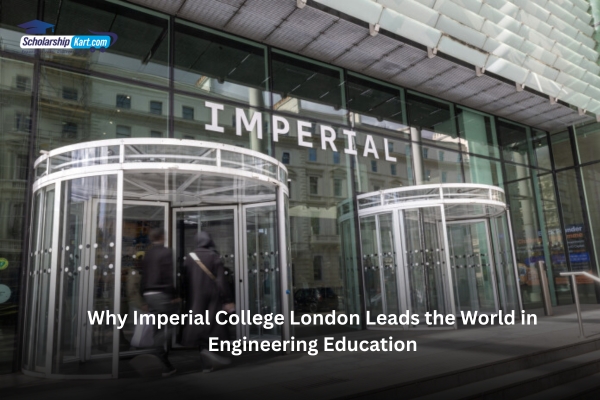
Today, it stands as London’s world-leading university for science, technology, engineering, mathematics, and business, and a destination of choice for ambitious engineering students from across the globe.
Take the next step toward studying Engineering at Imperial College London with confidence. Reach out to ScholarshipKart for complete assistance, from course selection and admission counselling to visa preparation, scholarship guidance, and premium IELTS training. Let our experts help you craft an impressive SOP and achieve your study-abroad goals seamlessly.
Why Imperial College London Stands at the Pinnacle of Engineering Education
For students aspiring to pursue undergraduate, postgraduate, or doctoral studies in engineering, Imperial represents far more than a degree-awarding institution.
It is a place where curiosity is encouraged, rigour is expected, and impact is inevitable. Ranked among the very best universities in the world, Imperial provides an environment where future engineers are shaped into global leaders, innovators, and problem-solvers equipped to thrive in a rapidly changing world.
A Globally Recognised Benchmark of Excellence
Imperial’s standing in global rankings reflects not only academic prestige but also the tangible outcomes its graduates achieve. Its consistent performance across international league tables highlights the strength of its engineering education, research intensity, and graduate employability.
Ranked No. 2 in the World – QS World University Rankings 2026
Ranked No. 1 in Europe – QS World University Rankings 2026
Ranked No. 3 Student City in the World – QS Best Student Cities 2026
University of the Year for Graduate Employment – The Times and Sunday Times Good University Guide 2026
For engineering students, these rankings translate into real advantages. Studying at a globally recognised institution enhances professional credibility, opens doors to international opportunities, and signals to employers that graduates have been trained at the highest level.
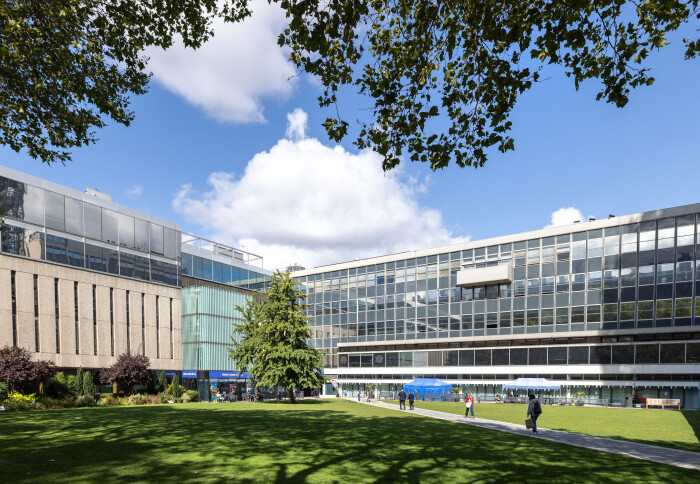
Being based in London, one of the world’s most dynamic cities, further enriches the student experience through exposure to global industries, cultures, and professional networks.
An Engineering Education Designed for Ambitious Minds
Imperial offers an extraordinary breadth of engineering education through a range of courses, with over 110 undergraduate degree options and more than 200 postgraduate taught programmes across science, engineering, medicine, and business.
Whether students choose to pursue undergraduate study, a specialised master’s degree, or doctoral research, Imperial provides flexible pathways that accommodate diverse ambitions. Doctoral candidates can pursue PhDs based on independent research ideas, structured studentships, or integrated PhD programmes within Imperial’s multidisciplinary training centres.
Options such as study abroad, industry placements, research placements, and joint degrees with management or languages allow students to tailor their education to their career goals.
At every level, the emphasis is on developing advanced technical expertise alongside the ability to think critically, collaborate effectively, and lead innovation.
A Unique Concentration of Engineering Excellence
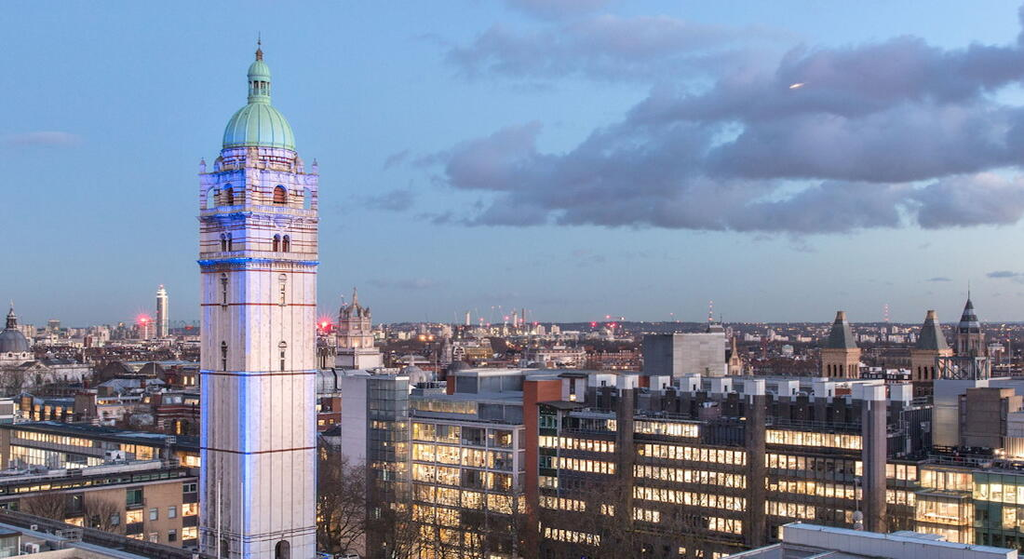
One of Imperial’s most distinctive strengths is the structure of its Faculty of Engineering. All ten academic departments are located on a single campus in South Kensington, creating a rare concentration of talent that fuels collaboration and intellectual exchange.
This physical proximity fosters a vibrant research culture where ideas flow freely across disciplines and where students are immersed in a truly multidisciplinary environment.
The Faculty of Engineering comprises:
- Department of Aeronautics
- Department of Bioengineering
- Department of Chemical Engineering
- Department of Civil and Environmental Engineering
- Department of Computing
- Dyson School of Design Engineering
- Department of Earth Science and Engineering
- Department of Electrical and Electronic Engineering
- Department of Materials
- Department of Mechanical Engineering
Together, these departments cover the full spectrum of engineering disciplines, enabling students to explore intersections between fields and approach problems from multiple perspectives.
For students, this means access to expertise that goes beyond narrow specialisation. An engineering challenge can be explored through materials science, computing, design, and systems engineering, all within the same academic ecosystem.
This integrated approach mirrors how engineering problems are solved in the real world, preparing graduates for complex, interdisciplinary careers.
Research That Shapes the World
Research lies at the heart of Imperial’s engineering excellence. The Faculty of Engineering is a powerhouse of innovation, with research funding exceeding £100 million per year and a community of 1,746 staff, including academics, researchers, and support professionals.
Nearly 8,000 students, including around 1,700 research students, contribute to a dynamic environment where discovery and application go hand in hand.
Imperial’s engineering research focuses on multidisciplinary growth areas that address global challenges such as future manufacturing, biomedical engineering, energy systems, security, data science, and urban infrastructure.
Students at all levels benefit directly from this research intensity. Undergraduate students learn from academics who are shaping their fields, postgraduate students develop advanced skills through cutting-edge projects, and doctoral candidates contribute original knowledge with real-world impact.
Crucially, Imperial places strong emphasis on translating research outcomes into products, processes, and services that benefit society. This culture of impact ensures that students do not engage with research in isolation but understand how engineering solutions can improve lives, economies, and the environment.
Multidisciplinary Institutes Driving Innovation
Imperial’s multidisciplinary research institutes and centres provide platforms for collaboration across departments, faculties, and external partners. By bringing together previously dispersed research capabilities, these institutes create space for ambitious ideas to flourish and for discoveries to be transformed into concrete solutions.
The School of Convergence Science exemplifies Imperial’s forward-looking approach. Designed to accelerate discovery across four mission-led areas, such as Health and Technology, Sustainability, Space, Security and Telecoms, and Human and Artificial Intelligence, it represents a radical rethinking of how science and engineering are pursued.
Convergence Science breaks down the traditional way of working and integrates disciplines extensively, enabling students and researchers to work together on challenges that will shape the future of humanity.
This approach benefits engineering students by exposing them to new models of research, cross-sector partnerships, and mission-driven innovation. Students learn not only technical skills but also how to collaborate across disciplines, engage with industry and society, and contribute to solutions that matter.
Leading Research Centres Supporting Student Growth
Imperial hosts a remarkable array of research centres and networks that further enrich the engineering learning environment.
Data Science Imperial empowers AI-driven innovation and hosts Europe’s largest open-source data observatory, providing students with access to advanced data resources and interdisciplinary expertise.
The collaboration known as DSI Squared, developed with the London School of Economics, bridges social sciences and STEM through seminars, networking, and joint research initiatives, broadening students’ understanding of technology’s societal impact.
The Data and AI for Climate Lab brings together experts in artificial intelligence, data, and climate science to address environmental challenges, while the Energy Futures Lab promotes innovation for a sustainable energy future and supports researchers across multiple themes. Students engaging with these initiatives gain insight into how engineering contributes to global sustainability and energy transformation.
The Institute for Molecular Science and Engineering focuses on molecular-based solutions to complex societal challenges, uniting researchers across science, engineering, medicine, and business. Similarly, the Institute of Biomedical Engineering coordinates over 100 research groups working at the interface of engineering and healthcare, delivering medical technology innovations that address unmet clinical needs.
Imperial’s commitment to security and resilience is reflected in institutes such as the Institute for Security Science and Technology and RITICS, which focus on cyber-physical systems and cybersecurity. Recognised as a UK Academic Centre of Excellence in cyber security, Imperial provides students with exposure to cutting-edge research in an increasingly critical field.
Additional centres, including SpaceLab, the Centre for Transport Studies, the Centre for Infrastructure Robotics Ecosystems, and the Centre for Quantum Engineering, Science and Technology, further demonstrate the breadth of opportunities available.
These centres allow students to engage with space exploration, transport systems, robotics, quantum technologies, and more, all within a supportive and research-intensive environment.
Faculty Expertise and a Culture of Excellence
The Faculty of Engineering is widely recognised as one of the world’s leading engineering schools. Imperial’s academic staff are not only exceptional teachers but also internationally leading researchers and scholars.
This dual strength ensures that students receive an education grounded in the latest advances while benefiting from mentorship by experts who shape global engineering agendas.
Imperial’s faculty is unique in the UK for supporting world-class education and fundamental research across the full range of engineering disciplines. Students learn in inspiring physical and virtual environments equipped with state-of-the-art facilities, gaining hands-on experience that complements theoretical knowledge.
Being part of such a concentrated and high-performing academic community motivates students to aim higher and achieve more.
Preparing Engineers for Global Careers
Imperial’s focus on employability and leadership is evident in its recognition as University of the Year for graduate employment. Engineering graduates from Imperial possess not only technical excellence but also the skills, knowledge, and attitudes required to lead in industry, academia, and research.
Exposure to multidisciplinary collaboration, real-world research challenges, and global perspectives ensures that graduates are adaptable and in demand across the world. Students benefit from being part of a leading research community where learning is closely tied to innovation and impact.
Whether they pursue careers in engineering industries, technology startups, research institutions, or academia, Imperial graduates carry with them a reputation for rigour, creativity, and problem-solving ability.
A Transformative Journey for Aspiring Engineers
If you aspire to pursue an engineering degree by studying in the UK, then consider Imperial College London, which provides a transformative experience. It is an opportunity to learn at a global top 10 university, engage with world-changing research, and become part of a community that believes deeply in the power of science and engineering to build, heal, and lead.
From the concentration of engineering departments on a single campus to the breadth of research institutes and centres, Imperial offers an environment where ambition is nurtured and potential is realised.
For undergraduate students, Imperial provides a strong foundation in engineering principles alongside exposure to cutting-edge research.
For postgraduate students, it offers advanced specialisation, interdisciplinary exploration, and professional development.
For doctoral candidates, it provides the support, resources, and intellectual freedom to contribute original knowledge that shapes the future.
Conclusion: Choosing Imperial, Shaping the Future
Imperial College London stands as one of the best universities in the world to study engineering because it combines academic excellence, research intensity, multidisciplinary collaboration, and global impact in a way few institutions can match. For aspiring engineers, Imperial is not just a place to study; it is a place to grow, to innovate, and to make a difference.
By choosing Imperial, students place themselves at the forefront of engineering education, supported by world-class faculty, cutting-edge research centres, and a culture that values imagination, rigour, and societal impact.
In an era defined by complex global challenges, Imperial equips its engineering students with the tools, mindset, and opportunities needed to lead the world forward.
Ready to begin your academic journey in Engineering at Imperial College London? Book a Free Consultation with ScholarshipKart today and get expert guidance on choosing the right course, preparing strong applications, securing scholarships, and navigating the UK student visa process. From IELTS coaching to personalised SOP support, we help you build a winning profile for your dream university.
Imperial College London offers a highly research-intensive and multidisciplinary Engineering education, combining advanced technical learning, world-class research, specialist facilities and opportunities to work across different engineering disciplines.
Yes. Imperial College London is presented in the article as one of the world’s leading institutions for Engineering, Science and Technology. Its Faculty of Engineering covers a broad range of disciplines and has a strong focus on research, innovation and real-world impact.
Imperial offers Engineering education across undergraduate, postgraduate and doctoral levels. Students can study disciplines including Aeronautics, Bioengineering, Chemical Engineering, Civil and Environmental Engineering, Computing, Design Engineering, Earth Science and Engineering, Electrical and Electronic Engineering, Materials and Mechanical Engineering.
The article highlights Imperial College London’s strong global position, including a No. 2 ranking in the QS World University Rankings 2026 and No. 1 in Europe. These rankings reflect the university’s broader academic reputation and research strength.
Yes. The article positions Imperial as a destination for ambitious Engineering students from across the globe and highlights its international environment, global opportunities and diverse academic pathways.
Imperial’s Faculty of Engineering includes ten academic departments: Aeronautics, Bioengineering, Chemical Engineering, Civil and Environmental Engineering, Computing, Dyson School of Design Engineering, Earth Science and Engineering, Electrical and Electronic Engineering, Materials, and Mechanical Engineering.