
The University of Oxford is globally celebrated for medicine, not simply because of its age or prestige, but because of how deeply medicine is woven into its academic identity. For decades, Oxford has shaped medical education through a model that blends rigorous scientific inquiry with meaningful clinical practice.
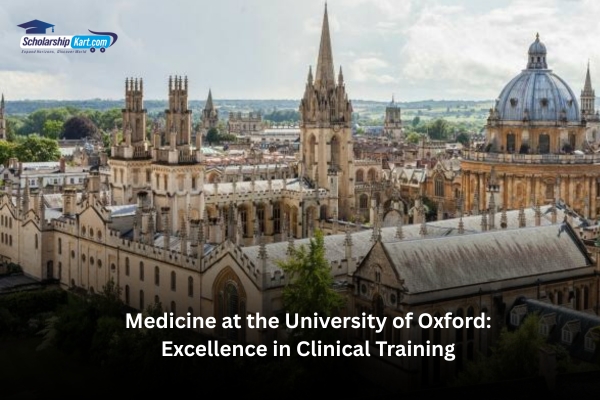
Medicine at the University of Oxford is not taught as a collection of facts but as a living discipline driven by research, curiosity, and responsibility toward human life.
This philosophy has made Oxford a benchmark for medical education worldwide and a destination of choice for students who wish to become doctors informed by science, ethics, and empathy.
Dreaming of joining the University of Oxford to study medicine? Let ScholarshipKart guide you from start to finish! Receive personalised advice on choosing the right course, mastering your application and visa procedures, and finding the best scholarships. Strengthen your profile with IELTS training, SOP guidance, and essential UK study and settlement insights for an outstanding learning experience abroad.
Why Oxford Is the World’s Best Place to Study Medicine
Choosing where to study medicine is one of the most important decisions a future doctor will make. Let’s delve deeper to know why Oxford University continues to stand apart as the world’s most respected and influential medical institution:
Global Recognition That Reflects Real Excellence
Oxford’s reputation in medicine is firmly grounded in global rankings that consistently place it at the very top.
Oxford Medical Sciences has been ranked number one for the last ten years in the Times Higher Education World University Rankings for clinical, pre-clinical, and health sciences.
Oxford is ranked second globally in the QS World University Rankings, 2025.
These rankings matter for international students because they signal worldwide recognition, academic credibility across borders, and strong career mobility. A medical degree from Oxford carries weight in healthcare systems and academic institutions around the globe, offering graduates a truly international professional identity.
A Course Structure Designed for Depth and Mastery
Oxford’s standard medical course is distinctive in its clear separation between pre-clinical and clinical training. The first three years focus on pre-clinical medicine, during which students develop a deep understanding of the scientific foundations of health and disease.

This stage culminates in a BA Honours degree in Medical Sciences, an achievement that underscores Oxford’s belief that excellent doctors must first be excellent scientists.
The following three years are devoted to clinical medicine, where students apply their scientific training directly to patient care. This progression ensures that students do not merely memorise clinical protocols but understand why diseases occur and how treatments work.
For international students, this structure offers clarity, intellectual confidence, and a strong academic base that translates across healthcare systems worldwide.
The Graduate Entry Pathway: Medicine Reimagined
Oxford’s four-year Graduate Entry Medicine programme reflects its commitment to flexibility and academic excellence. Designed for graduates with strong scientific backgrounds, the programme builds upon prior academic training and accelerates the journey to becoming a doctor without compromising depth.
The course emphasises discussion-based learning in a small cohort, early and integrated clinical exposure across hospitals and general practice, and opportunities to pursue personal academic interests. Shared clinical years with undergraduate students create a cohesive learning community.
For international graduates, this pathway offers a prestigious, time-efficient route into medicine while maintaining Oxford’s rigorous academic standards.
Medicine as an Intellectual and Human Endeavour

Oxford is transparent about the realities of medicine. The university recognises that while medicine is prestigious, secure, and impactful, it is also demanding, stressful, and not suited to everyone.
This honesty shapes a learning environment where students are encouraged to reflect deeply on their motivations. At Oxford, medicine is chosen not because of expectation, but because of conviction.
This reflective approach benefits international students by preparing them emotionally and intellectually for the realities of global medical practice. It fosters resilience, ethical awareness, and a long-term commitment to lifelong learning, qualities essential for success in medicine anywhere in the world.
Research at the Heart of Medical Training
One of the most defining features of studying medicine at Oxford is the central role of research.
Every medical student undertakes an experimental research project as part of the BA in Medical Sciences. These projects are conducted in laboratories across a wide range of departments within the Medical Sciences Division, exposing students to diverse fields and methodologies.
This early immersion in research trains students to think critically, analyse primary scientific literature, and contribute to innovation. For international students, this experience is invaluable.
It builds skills that are transferable across borders, strengthens applications for global postgraduate training, and positions graduates at the forefront of evidence-based medicine.
A Small School with a Global Impact
Despite its global influence, the School of Medicine and Biomedical Sciences at Oxford remains relatively small.
This intentional scale fosters a relaxed, friendly, and collaborative atmosphere where students and staff know each other well. Learning is personal, not anonymous.
For international students, this environment is especially beneficial. It eases cultural transitions, encourages academic confidence, and ensures that students receive individual attention and guidance throughout their demanding medical journey.
Learning Medicine Through Dialogue: The Oxford Tutorial
At the core of Oxford’s teaching philosophy lies the tutorial system. Tutorials typically involve two or three students engaging in regular, intensive discussions with an academic tutor who is also an active researcher. This format transforms learning into a conversation rather than a lecture.
In medicine, this means students are constantly challenged to justify their reasoning, question assumptions, and integrate scientific evidence with clinical thinking.
For international students, tutorials offer a rare opportunity to receive personalised feedback, refine academic communication, and adapt confidently to the UK’s medical education style.
A Pre-Clinical Experience Grounded in Science and Relevance
During the pre-clinical years, students study the major systems of the human body, exploring their structure, function, and the mechanisms of disease. Clinical relevance is introduced from the outset, with regular visits to GP tutors reinforcing the connection between theory and practice.
As students progress into the BA Honours stage, they specialise in selected biomedical sciences, working closely with primary research literature and developing advanced laboratory and data-handling skills.
This balance of structure and independence benefits international students by nurturing both academic discipline and intellectual autonomy.
Clinical Training Integrated with the NHS
In the clinical years, teaching is delivered primarily by clinicians from the Oxford University Hospitals NHS Trust, alongside university academic staff and primary care physicians.
This integration with the NHS exposes students to a diverse patient population and a wide range of medical conditions.
For international students, training within the NHS provides unparalleled insight into one of the world’s most comprehensive healthcare systems. It develops cultural competence, adaptability, and a deep understanding of multidisciplinary teamwork, skills essential for global medical practice.
A Support System That Prioritises Student Wellbeing

Oxford places strong emphasis on student welfare and success.
The college system ensures that students are part of a close-knit academic community while benefiting from the resources of a world-renowned university.
Weekly teaching with college tutors, strong pastoral care, and responsive support structures create a stable environment for demanding medical studies.
Guaranteed accommodation for first-year students and continued housing options in later years provide security and peace of mind, particularly for international students relocating from abroad.
This stability allows students to focus fully on their academic and personal development.
World-Class Resources That Enrich Learning
Oxford’s learning resources are among the best in the world.
Students have free access to extensive libraries, cutting-edge laboratories, research equipment, museums, gardens, IT services, and language resources. This access ensures that financial barriers do not limit academic exploration.
For international students, these resources offer an enriched learning experience and eliminate the need for costly academic materials. They also encourage interdisciplinary curiosity, a hallmark of Oxford education that enhances both medical understanding and personal growth.
Preparing Doctors for a Changing World
Studying medicine at Oxford is about more than earning a degree. It is about developing the confidence to think independently, the humility to keep learning, and the courage to make decisions that affect human lives.
Oxford’s emphasis on research, discussion, and real-world application ensures that graduates are not only clinically competent but intellectually agile.
International students benefit from an education that transcends borders. An Oxford medical degree equips them to work in diverse healthcare systems, contribute to global research, and lead with integrity and insight.
Conclusion
Oxford is the best in the world for medicine because it unites scientific excellence, human understanding, and educational innovation in a way few institutions can.
Its globally recognised rankings reflect a deeper truth: medicine at Oxford is taught with seriousness, curiosity, and care. From personalised tutorials and research-driven learning to clinical training within the NHS and a supportive college system, every element is designed to shape thoughtful, capable doctors.
For international students aspiring to become doctors by studying in the UK, Oxford offers not just education, but transformation. It provides a foundation that lasts a lifetime, a community that nurtures ambition, and a qualification that opens doors worldwide.
While choosing Oxford for medicine, students choose a place where knowledge heals, inquiry inspires, and the future of healthcare is continuously reimagined.
Planning to study Medicine at the University of Oxford in the UK? Book a Free Consultation with ScholarshipKart for expert guidance on course selection, application and visa processes, and scholarship opportunities. Get professional IELTS coaching, SOP assistance, and practical study and settlement tips to ensure a smooth and successful academic journey in the UK.
The University of Oxford is renowned for its research-led medical education, rigorous academic training, personalised tutorials, and clinical experience within the NHS. Its Medical Sciences Division has consistently achieved top global recognition.
Oxford’s standard Medicine course is divided into pre-clinical and clinical stages. The first three years focus on pre-clinical medicine and lead to a BA Honours degree in Medical Sciences, followed by three years of clinical medicine and patient-focused training.
Yes. Oxford offers a four-year Graduate Entry Medicine programme designed for graduates with strong scientific backgrounds. It combines discussion-based learning, early clinical exposure, and opportunities for academic specialisation.
Oxford tutorials typically involve two or three students working closely with an academic tutor. This allows students to discuss complex topics, defend their reasoning, question assumptions, and receive personalised academic feedback.
Yes. Every medical student undertakes an experimental research project as part of the BA in Medical Sciences. Students can work across different departments within Oxford’s Medical Sciences Division and develop laboratory, data-handling, and critical-analysis skills.
Clinical teaching is primarily delivered by clinicians from Oxford University Hospitals NHS Trust, along with university academics and primary care physicians. Students gain experience with a diverse patient population and a wide range of medical conditions.