
If you are searching for a fashion degree in the UK, you have probably come across two popular options: Fashion Design and Fashion Management. Although both degrees belong to the fashion industry, they prepare students for very different areas of professional life.
Choosing between Fashion Design and Fashion Management is therefore not simply a matter of deciding which course sounds more interesting. It is about understanding whether you want to create fashion products or work on the business, commercial and strategic side of fashion.
This distinction can be particularly important for international students, mature learners and career changers considering a UK fashion degree. Your choice of programme can influence the skills you develop, the way you study, the careers you pursue and the type of working environment you eventually enter.
In simple terms, Fashion Design is primarily a creative and technical discipline, while Fashion Management is a business and management discipline applied to the fashion industry.
Neither course or degree is universally better. The right choice depends on your strengths, interests, career ambitions and preferred way of working.
Let us explore the difference between Fashion Design and Fashion Management, including subjects, skills, study styles, career opportunities, salary considerations and UK student finance.
Fashion Design vs Fashion Management
What Is Fashion Management?
Fashion Management is the business side of the fashion industry. A Fashion Management degree combines principles of business and management with specialist knowledge of clothing, apparel, accessories, retail and fashion markets.
Instead of concentrating primarily on drawing garments or constructing clothing, students learn how fashion businesses operate and make commercial decisions.
The subject can cover areas such as:
- Fashion marketing
- Consumer behaviour
- Retail buying and merchandising
- Fashion business strategy
- Brand management
- Supply chain management
- Sustainable fashion
- Digital marketing
- E-commerce
- Market research
A Fashion Management student may analyse consumer preferences, investigate market trends, develop brand strategies, examine supply chains or explore how digital commerce is changing fashion retail.
The University of the Arts London, for example, describes Fashion Management education through areas such as product planning, brand management, sustainability, supply chains, business analysis, financial accounting, retail, and marketing.
The central question behind Fashion Management is:
How can a fashion business successfully develop, market, sell and manage its products and operations?
Fashion Management Subjects
Although modules differ between universities, students can expect to encounter subjects such as:
Principles of Management
- Financial Management
- Fashion Marketing
- Consumer Behaviour
- Market Research
- Supply Chain Management
- Fashion Entrepreneurship
- Digital Marketing
- E-Commerce
- Retail Operations
- Fashion Business Strategy
- Brand Identity and Communications
- Sustainable Fashion
These subjects make Fashion Management particularly relevant to students who enjoy business strategy, communication, analysis, planning and commercial decision-making.
What Is Fashion Design?
Fashion Design is a creative and studio-based discipline focused on developing clothing, accessories and other fashion products.
Fashion designers transform ideas into wearable products by combining creativity with technical knowledge. Their work can involve research, sketching, textiles, pattern cutting, draping, garment construction, digital design and collection development.
Unlike Fashion Management, which concentrates on the commercial side of the industry, Fashion Design focuses primarily on creating the fashion product itself.
Typical areas of study include:
- Fashion illustration
- Textile science
- Pattern making
- Garment construction
- Draping
- Computer-aided design
- Fashion forecasting
- Fashion history
- Fashion marketing and merchandising
- Portfolio development
In a UK Fashion Design degree, creativity goes hand in hand with practical skills. Students may explore drawing, pattern cutting, draping, textiles, digital media, 3D fashion design and portfolio development as they learn how to turn creative ideas into finished fashion concepts.
The central question behind Fashion Design is:
How can an idea be transformed into an original, functional and visually compelling fashion product?
Fashion Design Is More Than Drawing Clothes
It is easy to assume that Fashion Design is simply about sketching attractive outfits. In reality, the discipline combines artistic creativity with technical and practical skills.
A designer needs to understand how fabrics behave, how patterns are constructed, how garments fit the body and how an idea can be developed into a finished product.
That is why Fashion Design students typically spend considerable time developing practical skills and creating a professional portfolio.
Fashion Design vs Fashion Management: Key Differences
The most important difference between the two degrees is their purpose.
| Area | Fashion Design | Fashion Management |
| Primary focus | Creating fashion products | Managing fashion businesses |
| Main discipline | Creative and technical | Business and management |
| Learning style | Studio, workshop and practical work | Lectures, seminars and business projects |
| Core skills | Illustration, textiles, pattern cutting and garment construction | Marketing, analytics, management and strategy |
| Typical projects | Garments, prototypes and collections | Business strategies, research and commercial plans |
| Portfolio | Usually highly important | Less focused on creative portfolio development |
| Career direction | Designer and other creative roles | Management, retail, buying, marketing and commercial roles |
| Working environment | Studios, workshops and creative spaces | Offices, retail environments and business operations |
The distinction is therefore clear: Fashion Design is primarily about creating the product, while Fashion Management is primarily about managing the business surrounding that product.
Turn your interest in fashion into a clear study plan with ScholarshipKart. From choosing between Fashion Design and Fashion Management to finding suitable courses, applying to universities, exploring scholarship opportunities, preparing for IELTS and understanding the UK student visa process, get guidance at every stage.
Fashion Design vs Fashion Management: Study Style
Your preferred learning environment is another important factor when choosing a degree.
Fashion Design Study Style
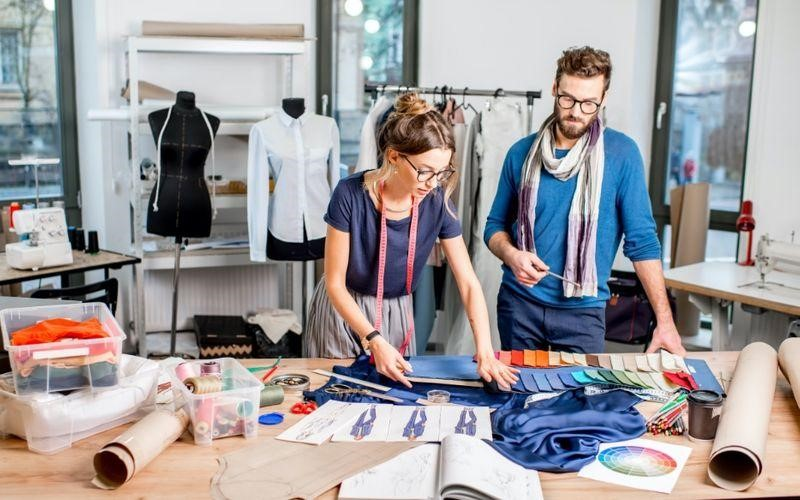
Fashion Design is generally hands-on. Students may work with fabrics, patterns, sewing techniques, digital design software and prototypes.
Assessment can involve practical projects, design development, technical files, samples, portfolios and final collections.
For example, UK Fashion Design course information includes assessment through garment construction, practical design development, sample work, portfolios and final projects.
This means Fashion Design can suit students who enjoy:
- Practical learning
- Creative experimentation
- Making physical products
- Studio work
- Visual communication
- Developing ideas through trial and error
Regular attendance may be particularly important because students need access to studios, workshops, equipment and materials.
Fashion Management Study Style
Fashion Management is generally more closely aligned with business education.
Students may learn through:
- Lectures
- Seminars
- Group projects
- Case studies
- Written assignments
- Presentations
- Market research
- Data analysis
- Business projects
This can make the programme suitable for students who prefer research, strategy, analysis and commercial problem-solving.
Some fashion management programmes may also provide flexible or distance-learning formats. However, students should always check the specific university and course structure before applying.
Fashion Design vs Fashion Management: Subjects You Study
Subjects You Study in Fashion Design
Fashion Design programmes vary, but common subjects include:
1. Fashion Illustration: Students learn to communicate fashion concepts visually and develop sketches that represent design ideas.
2. Textile Science and Fabric Knowledge: Understanding fibres, materials, textures and fabric behaviour helps designers select suitable materials for different garments.
3. Pattern Making: Pattern cutting teaches students how two-dimensional patterns can be developed into three-dimensional garments.
4. Garment Construction: Students learn how designs are assembled into finished clothing through practical construction techniques.
5. Draping: Draping involves developing garment forms directly on a dress form, helping designers explore shape, proportion and structure.
6. Computer-Aided Design: Digital tools can support fashion illustration, garment development and visualisation. Software such as Adobe Illustrator, Adobe Photoshop and CLO 3D may be relevant to digital fashion workflows.
7. Fashion Forecasting: Students explore trends and consumer influences to understand how fashion directions develop.
8. Portfolio Development: A strong portfolio allows students to demonstrate their creative thinking, technical development and finished work.
Subjects You Study in Fashion Management
Fashion Management focuses on the commercial side of the industry.
1. Fashion Marketing: Students learn how fashion products and brands are positioned, promoted and communicated to consumers.
2. Consumer Behaviour: Understanding why people buy particular products helps fashion businesses develop appropriate products and marketing strategies.
3. Retail Buying and Merchandising: Buying involves selecting products for a retail environment, while merchandising focuses heavily on the commercial and financial performance of products.
4. Supply Chain Management: Students explore how fashion products move through sourcing, production, distribution and retail.
5. Fashion Business Strategy: This area examines how fashion organisations develop strategies to compete, grow and respond to market changes.
6. Digital Marketing and E-Commerce: As fashion increasingly operates across digital platforms, students can explore online retail, digital promotion and e-commerce strategies.
7. Fashion Entrepreneurship: Students interested in creating their own fashion company can develop knowledge of business planning, branding and commercial operations.
Fashion Design vs Fashion Management: Skills Required
Skills Required for Fashion Design
Fashion Design requires a combination of creative, technical and professional skills.

Technical Skills
Important technical abilities include:
- Fashion illustration
- Pattern making
- Draping
- Garment construction
- Textile knowledge
- Fabric selection
- Digital Skills
Modern fashion design can also involve digital technologies and software, including:
- Adobe Illustrator
- Adobe Photoshop
- CLO 3D
- Creative and Professional Skills
Successful design work also requires:
- Creativity
- Attention to detail
- Trend awareness
- Communication
- Time management
- Adaptability
- Commercial awareness
A designer needs both imagination and the patience to refine an idea until it becomes a workable product.
Skills Required for Fashion Management
- Fashion Management requires a different skill set.
- Business and Analytical Skills
- Students benefit from developing:
- Financial budgeting
- Data analysis
- Market research
- Supply chain management
- Trend forecasting
- Commercial analysis
- Leadership and Communication Skills
Management-oriented careers also require:
- Team coordination
- Communication
- Leadership
- Time management
- Adaptability
- Decision-making
- Fashion Industry Knowledge
Fashion managers need to understand more than business theory. Knowledge of retail operations, fashion products, consumer behaviour, textiles, digital commerce and sustainability can help them make informed commercial decisions.
Career Opportunities in Fashion Design and Fashion Management
Career Opportunities After Fashion Design
A Fashion Design degree can lead to a variety of creative careers.
Potential roles include:
- Fashion Designer
- Apparel Designer
- Textile Designer
- Surface Designer
- Costume Designer
- Accessory Designer
- Footwear Designer
- Fashion Illustrator
- Pattern Cutter
- Fashion Stylist
- Visual Merchandiser
- Digital Fashion Designer
- Trend Forecaster
- Freelance Designer
- Sustainable Fashion Consultant
Some graduates may also establish their own fashion labels or work independently.
However, creative careers can be highly competitive. Building a strong portfolio, developing practical experience and establishing professional connections can all contribute to long-term career development.
Fashion design salaries vary according to experience, specialisation, employer and location. Prospects gives indicative salary ranges from approximately £18,000–£24,000 for design assistants, £25,000–£30,000 for junior designers and £30,000–£45,000 for designers, while senior designers may reach approximately £50,000–£60,000. These are indicative figures rather than guaranteed earnings.
Career Opportunities After Fashion Management
Fashion Management can open pathways into the commercial and operational side of the industry.

Potential careers include:
- Fashion Buyer
- Fashion Merchandiser
- Brand Manager
- Retail Manager
- E-Commerce Manager
- Fashion Marketing Executive
- Product Development Manager
- Supply Chain Coordinator
- Fashion PR Professional
- Fashion Communications Professional
- Sustainability Manager
- Retail Strategist
- Merchandise Coordinator
- Fashion Entrepreneur
Buying and merchandising are two examples of careers where commercial decision-making is central.
According to Prospects, buyers research trends and select products, while merchandisers focus on areas including commercial viability, financial performance, stock flow and product performance.
Salary levels vary according to role and experience. Prospects gives indicative figures of approximately £25,000–£35,000 for junior buyers and £18,000–£22,000 for assistant merchandisers, with opportunities for progression as experience increases.
These figures should be viewed as guidance rather than a guarantee of future earnings.
Which Fashion Degree Is Right for You?
The best way to make the decision is to compare the type of work you genuinely enjoy.
Choose Fashion Management If You:
- Are interested in fashion and business
- Enjoy marketing and consumer behaviour
- Want to work in fashion retail
- Are interested in buying or merchandising
- Enjoy research and data analysis
- Like strategic decision-making
- Want to understand supply chains
- Are interested in fashion entrepreneurship
- Want to work in brand management
- Prefer business projects to studio-based practical work
- Want to combine fashion knowledge with management skills
Fashion Management can be particularly suitable for someone who loves the fashion industry but wants to work on strategy, business growth, retail, marketing or operations rather than garment creation.
Choose Fashion Design If You:
- Have strong creative interests
- Enjoy drawing and visual communication
- Want to design clothing or accessories
- Like working with fabrics and textiles
- Want to learn pattern cutting
- Enjoy making physical products
- Prefer studio-based learning
- Want to build a creative portfolio
- Are interested in garment construction
- Want to pursue a designer or maker career
- Have a clear creative vision
Fashion Design can be a natural fit for students who want to spend their time developing, making and communicating fashion products.
Fashion Design or Fashion Management: Ask Yourself One Question
If you are still undecided, reduce the choice to one fundamental question:
- Do you want to create the fashion product, or do you want to manage the business behind it?
- If you want to create, Fashion Design may align more closely with your interests.
- If you want to manage, Fashion Management may be more relevant.
Of course, the real fashion industry is collaborative. Designers need commercial awareness, while fashion managers need to understand the products, trends and creative processes they are managing.
That overlap means neither degree exists in isolation. They represent different functions within the same industry.
Conclusion
There is no universally better option between Fashion Design and Fashion Management. The better choice for you depends on your interests, abilities, preferred learning environment and career ambitions.
Fashion Design focuses on creativity, technical construction, textiles, garment development, digital design and portfolio building. It is appropriate for students who want to create fashion products and pursue creative careers.
Fashion Management focuses on business strategy, marketing, consumer behaviour, retail, buying, merchandising, supply chains, e-commerce and commercial operations. It is appropriate for students who want to manage, market, develop or grow fashion businesses.
Before applying to a UK university, compare the actual modules, assessment methods, entry requirements, portfolio expectations, study format, career opportunities and student-finance eligibility for each course.
Most importantly, do not choose a degree simply because you love fashion. Ask yourself which part of fashion you want to make your profession.
If you dream about turning sketches, fabrics and ideas into garments, explore Fashion Design. If you are fascinated by brands, consumers, retail, strategy and the business decisions that make fashion commercially successful, explore Fashion Management.
Once you understand that difference, choosing your UK fashion degree becomes much less confusing, and much more closely connected to the future you want to build.
Not sure whether Fashion Design or Fashion Management is right for your career goals? ScholarshipKart can help you understand your study options and navigate the journey to studying in the UK. Get expert guidance with course selection, counselling, university applications, scholarships, IELTS preparation and visa support.
Book a Free Consultation with ScholarshipKart and explore your UK fashion study options today.
Fashion Design focuses on creating fashion products through skills such as illustration, textiles, pattern making and garment construction. Fashion Management focuses on the business side of fashion, including marketing, retail, strategy, buying, merchandising and supply chain management. Pasted markdown
Neither degree is universally better. The right choice depends on your interests, strengths, preferred learning style and career goals. Pasted markdown
Fashion Design programmes can include fashion illustration, textile science, pattern making, garment construction, draping, computer-aided design, fashion forecasting and portfolio development.
Fashion Management can include fashion marketing, consumer behaviour, retail buying and merchandising, supply chain management, business strategy, digital marketing, e-commerce and fashion entrepreneurship.
Drawing and visual communication are important skills in Fashion Design, but the degree also involves technical areas such as pattern making, textiles, draping and garment construction.
Yes. Fashion Management combines fashion-industry knowledge with business, management, marketing, analytics, strategy and commercial decision-making. Pasted markdown