
Let’s get one thing straight! A career in accounting is not just about sitting in front of a computer, calculating figures, preparing balance sheets, and checking whether the numbers match. If that is what you imagine when someone says Chartered Accountant, you are looking at only a tiny part of the profession.

Chartered Accountants are among the professionals who help businesses make important financial decisions. They advise organisations on investments, identify financial risks, manage taxation, conduct audits, and ensure that businesses follow financial regulations. From working with international companies to becoming a finance director or setting up your own consultancy, there is plenty of room to grow in this profession.
And the demand for accounting professionals is evolving rather than disappearing. According to the US Bureau of Labour Statistics, employment of accountants and auditors is projected to grow by 5% between 2025 and 2035, with approximately 115,300 job openings expected annually.
What about the UK? According to ICAEW’s 2026 research, 83% of surveyed mid-tier accountancy firms expect continued demand for accountants, highlighting the profession’s strong employment prospects despite changing industry requirements and the growing adoption of AI and automation. The report also highlighted growing demand for specialist knowledge in areas such as technology, data analytics, sustainability, and financial advisory.
So, if you enjoy working with numbers, understanding how businesses operate, and solving financial problems, becoming a Chartered Accountant could be a rewarding career choice.
The UK has a long-standing reputation for accounting education and professional training. It is home to internationally respected accounting institutions, established financial centres, well-known universities, and opportunities to gain practical experience while building your professional network.
Whether you are a school graduate planning your first degree or someone looking to pursue a professional qualification after graduation, the UK offers several pathways into accountancy.
Let’s explore everything you need to know about becoming a Chartered Accountant in the UK in 2026, including qualifications, examinations, entry requirements, top universities, course fees, salaries, and career opportunities.
What Is a Chartered Accountant?

A Chartered Accountant (CA) is a professionally qualified accounting expert who has completed the required education, professional examinations, practical training, and membership requirements of a recognised chartered accountancy body.
Chartered Accountants do much more than maintain financial records. They help organisations understand their financial position, prepare financial statements, manage tax obligations, evaluate business performance, identify risks, and make informed financial decisions.
In the UK, the main professional organisations and qualification routes include:
- Institute of Chartered Accountants in England and Wales (ICAEW): Awards the ACA qualification and membership to eligible candidates who complete its professional requirements.
- Institute of Chartered Accountants of Scotland (ICAS): Offers the Scottish CA qualification through its professional training programme.
- Chartered Accountants Ireland (CAI): Provides professional accountancy education and membership across Ireland and Northern Ireland.
- Association of Chartered Certified Accountants (ACCA): Offers the globally recognised ACCA qualification, leading to membership as an ACCA Chartered Certified Accountant.
- Chartered Institute of Management Accountants (CIMA): Offers the management accounting pathway leading to the Chartered Global Management Accountant (CGMA) designation for eligible members.
Each organisation has its own examination structure, practical experience requirements, and membership criteria. Therefore, students should understand the differences before selecting a qualification.
Accountant vs Chartered Accountant: What’s the Difference?
Although the terms accountant and Chartered Accountant are often used interchangeably, they represent different professional levels.
An accountant may work in bookkeeping, payroll, budgeting, preparing financial statements, and maintaining financial records. They may hold a university degree, a vocational qualification, a professional certification, or relevant workplace experience.
A Chartered Accountant, however, has completed a recognised professional qualification and fulfilled the relevant practical experience and membership requirements. Depending on their specialisation and authorisation, they may undertake more advanced responsibilities such as statutory auditing, financial advisory, taxation, corporate reporting, and business consultancy.
In simple words, all Chartered Accountants work in accounting, but not everyone working as an accountant is a Chartered Accountant.
Ready to take the first step towards becoming a Chartered Accountant in the UK? Connect with Dreaming of turning your creative passion into a successful career? Connect with ScholarshipKart and the right universities, compare professional qualifications, and find a course that aligns with your career goals. With the right guidance and preparation, your journey towards a rewarding career in accountancy can start today!
How to Become a Chartered Accountant in the UK in 2026
Becoming a Chartered Accountant requires a combination of academic knowledge, professional examinations, workplace experience, and ethical training.
You do not necessarily need to complete a university degree before entering the profession. Depending on your qualifications, you can choose a university route, a school-leaver pathway, an apprenticeship, or direct professional training.
Here is how the process works.
1. Complete Your School Education
Start by completing your secondary education or an equivalent qualification. Subjects such as mathematics, economics, business studies, and accounting can provide a useful foundation.
However, studying accounting at school is not compulsory for every professional pathway. Entry requirements vary between universities and professional accounting organisations.
For international students, qualifications such as CBSE, ISC, A-levels, and the International Baccalaureate may be considered according to the institution’s individual admission requirements.
2. Pursue an Accounting or Finance Degree
One popular route is to complete an undergraduate degree in Accounting, Accounting and Finance, Business, Economics, or a related discipline.
A bachelor’s degree generally introduces students to financial accounting, management accounting, auditing, taxation, business law, economics, and corporate finance.
Some university programmes are accredited or recognised by professional accounting bodies, which may provide exemptions from certain professional examinations. However, exemptions depend on the specific programme, modules studied, accreditation arrangements, and the relevant professional body’s rules.
You can also pursue a postgraduate qualification if you already hold a bachelor’s degree and want to develop advanced knowledge of accounting and finance.
3. Choose a Recognised Professional Qualification
After establishing your academic foundation, select a professional qualification that matches your career goals.
The main options in 2026 are:
A. ICAEW ACA Qualification
The Associate Chartered Accountant (ACA) qualification is one of the principal routes to becoming a Chartered Accountant in England and Wales.
ICAEW introduced its Next Generation ACA qualification for students starting from 1 July 2025. In 2026, this is the relevant structure for new students entering that pathway.
The qualification consists of three main elements:
- 14 Business, Finance and Accountancy examinations: These cover technical knowledge and professional applications, with sustainability, ethics, and technology integrated into the learning.
- 30 units of Specialised Learning: Students complete a minimum of 30 units to develop knowledge relevant to their professional roles and business environments.
- Professional skills and experience: Students develop 25 professional skills, build ethical judgement and professional scepticism, and complete at least 450 days of professional work experience.
The ACA is completed through an approved training arrangement, and students must fulfil all applicable requirements before applying for ICAEW membership.
Students who registered before 1 July 2025 may still be following the previous ACA structure under ICAEW’s transitional arrangements. The previous qualification included 15 examinations across three levels. ICAEW is phasing out the old examinations between 2025 and 2027, so students must follow the transition rules applicable to their registration date.
B. ACCA Qualification
The Association of Chartered Certified Accountants (ACCA) offers a professional qualification for individuals interested in accounting, auditing, taxation, and financial management.
Under the current 2026 structure, the qualification includes 13 examinations, although exemptions may be available depending on previous academic qualifications.
The examinations are divided into three stages:
- Applied Knowledge: Business and Technology, Financial Accounting, and Management Accounting.
- Applied Skills: Corporate and Business Law, Taxation, Financial Reporting, Performance Management, Financial Management, and Audit and Assurance.
- Strategic Professional: Strategic Business Reporting, Strategic Business Leader, and two optional advanced papers.
In addition to examinations, candidates must complete the Ethics and Professional Skills module and at least 36 months of relevant practical experience, including nine performance objectives.
C. ICAS Chartered Accountant Qualification
The Institute of Chartered Accountants of Scotland (ICAS) offers the CA qualification through a structured programme combining professional education, examinations, and workplace experience.
Its updated syllabus is organised into Knowledge, Skills, and Integration levels. Students cover accounting, assurance, taxation, business law, financial management, reporting, and professional ethics, with specialist options including data analytics and sustainability.
Candidates generally complete a training contract of at least three years and a minimum of 450 days of relevant practical experience, subject to their individual route and requirements.
D. CIMA Professional Qualification
The Chartered Institute of Management Accountants (CIMA) is particularly suitable for students interested in management accounting, financial strategy, business performance, and corporate decision-making.
Its CGMA Professional Qualification is organised into three levels: Operational, Management, and Strategic. Students study nine subjects across Enterprise, Performance, and Financial areas.
To obtain the relevant professional membership and CGMA designation, candidates must complete the required assessments and at least three years of verified relevant practical experience.
It is worth remembering that CIMA focuses on management accounting, whereas ACA and ICAS are Chartered Accountancy pathways and ACCA leads to the Chartered Certified Accountant designation.
4. Gain Relevant Practical Work Experience

Professional accountancy qualifications require candidates to apply their academic knowledge in real workplace situations.
For example, ICAEW ACA students must complete at least 450 days of professional work experience as part of an authorised training arrangement.
ACCA candidates must complete 36 months of relevant practical experience and demonstrate the required performance objectives.
ICAS candidates must complete the applicable training contract and practical experience requirements.
During this period, you may work on financial reporting, taxation, audit assignments, budgeting, risk assessment, and business advisory projects.
This experience helps you develop professional judgement, understand workplace responsibilities, and become comfortable handling real financial challenges.
5. Complete Professional Examinations
Passing professional examinations is a major part of the qualification process.
The examinations test your understanding of accounting principles, financial reporting, auditing, taxation, business law, corporate finance, management accounting, and strategic decision-making.
The number of examinations and their structure depend on your chosen qualification.
Some universities offer examination exemptions through recognised accreditation arrangements. Always confirm your exemption eligibility with the professional body rather than assuming that a particular degree automatically removes examination requirements.
6. Complete Ethics and Professional Development Requirements
Accountants frequently handle sensitive financial information and make decisions that affect businesses, investors, employees, and the public.
This makes professional ethics an essential part of the qualification process.
Candidates must complete the ethics and professional development components specified by their accounting body. These requirements help develop integrity, confidentiality, professional scepticism, independence, and responsible decision-making.
7. Apply for Professional Membership
After successfully completing the examinations, practical experience, ethics requirements, and other applicable training conditions, you can apply for membership of your chosen professional body.
Once your application is approved, you can use the relevant professional designation in accordance with the organisation’s membership rules.
For example, eligible ICAEW members can use ACA, ICAS members can use CA, and ACCA members can use ACCA.
Why Study Chartered Accountancy in the UK?
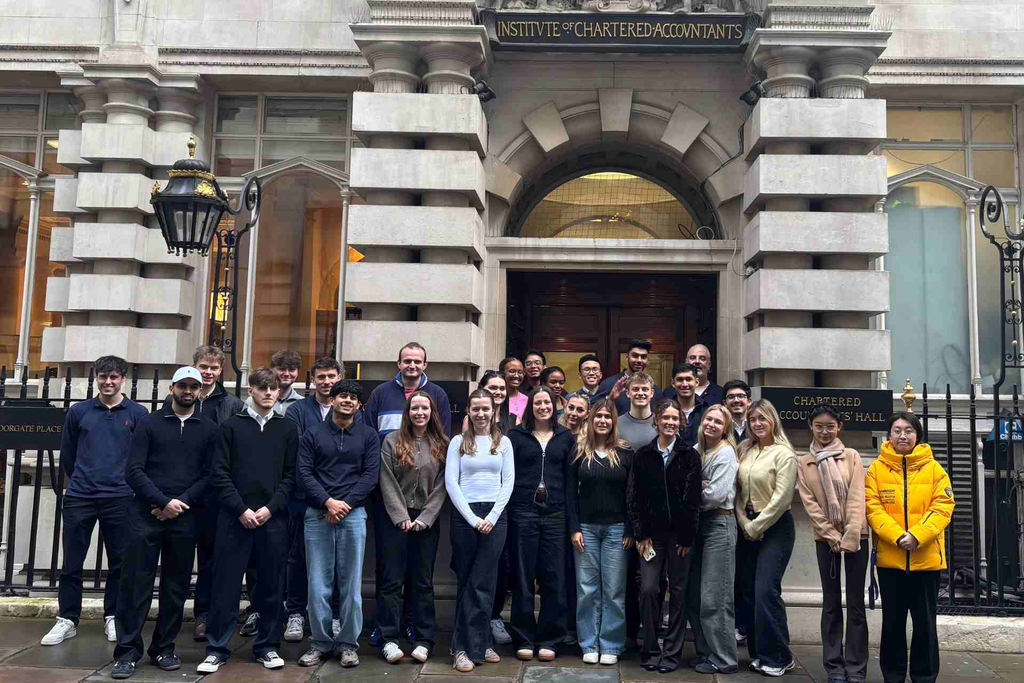
Choosing the UK for accounting education can offer several academic and professional advantages. The country combines established universities, professional accounting institutions, a developed financial services sector, and opportunities to gain practical experience.
Here are some of the key benefits.
1. Internationally Respected Professional Qualifications
The UK is home to respected professional accounting organisations such as ICAEW, ACCA, ICAS, and CIMA.
Their qualifications are recognised by employers in many international markets. However, professional recognition, statutory audit rights, and practising permissions vary between countries.
2. Industry-Oriented Education
UK universities offer accounting and finance programmes that combine theoretical concepts with practical business applications.
Students explore financial reporting, taxation, auditing, corporate finance, and management accounting through case studies, assignments, research, and business scenarios.
3. Exposure to a Developed Financial Sector
The UK has an established financial services and professional accountancy industry, particularly in London, Manchester, Edinburgh, Birmingham, and other major business centres.
Students can explore internships, graduate recruitment schemes, placements, and professional training opportunities with accountancy firms, banks, consultancies, and corporate finance departments.
4. Multiple Career Specialisations
A qualification in accounting and finance can help students explore different professional areas.
These include auditing, taxation, forensic accounting, financial management, risk assessment, corporate finance, sustainability reporting, and business consultancy.
You can develop expertise in the area that best matches your interests and career ambitions.
5. International Student Community
UK universities attract students from different countries and academic backgrounds.
Studying in this environment can help you improve communication, teamwork, cultural awareness, and professional networking skills, which are valuable when working with international businesses.
6. Networking and Professional Development
Many universities organise career fairs, employer presentations, professional workshops, networking events, and industry sessions.
These opportunities allow students to understand recruitment expectations, connect with potential employers, and explore future career pathways.
7. Opportunities to Develop Technology Skills
Accounting is changing as businesses increasingly use artificial intelligence, automation, cloud accounting, and data analytics.
ICAEW’s 2026 research highlights the importance of technology, data analytics, sustainability, and financial advisory skills.
Studying in the UK can help students build an understanding of these developments and prepare for the changing expectations of the accounting profession.
Chartered Accountant UK Entry Requirements
The entry requirements depend on whether you are applying for a university programme, professional qualification, or apprenticeship.
Academic Qualifications
For undergraduate programmes, universities generally require A-levels or equivalent qualifications. International students must meet the academic criteria specified for their country and qualification board.
For postgraduate programmes, applicants usually need a recognised bachelor’s degree. Some universities require a relevant background in accounting, finance, mathematics, or business.
ICAEW ACA Entry Requirements
A university degree is not compulsory for ACA registration.
ICAEW accepts a range of academic qualifications that meet its minimum entry standards, including appropriate A-levels, recognised vocational qualifications, foundation degrees, and comparable international qualifications.
For example, its published minimum criteria include two A-level passes and three GCSE passes, or recognised equivalents. Students who do not meet the listed requirements may be able to meet the standard through the ICAEW Certificate in Finance, Accounting and Business (CFAB).
The precise eligibility of overseas qualifications should be confirmed directly with ICAEW.
ACCA Entry Requirements
ACCA offers different entry pathways depending on a candidate’s academic background.
Students with appropriate school qualifications may enter the main qualification, while those who do not meet the requirements can consider the Foundations in Accountancy route.
Graduates may also qualify for exemptions from selected examinations based on their previous studies.
English Language Requirements
International students applying to UK universities may need to demonstrate English language proficiency through IELTS, TOEFL, or another accepted test.
The required score varies between universities and programmes.
Practical Experience
Professional accounting qualifications require relevant workplace experience. The required duration depends on the qualification, and experience must meet the professional body’s standards.
Essential Personal Skills
Candidates should also demonstrate analytical thinking, attention to detail, communication, problem-solving, time management, business awareness, and technological proficiency.
Top 10 Universities in the UK for Accounting and Finance in 2026
If you are planning to study accounting or finance in the UK, selecting the right university is an important decision.
The following institutions offer relevant undergraduate or postgraduate programmes. This is a selected list of universities to explore, not an official ranking of the top ten institutions for chartered accountancy.
1. London School of Economics and Political Science (LSE)

Popular course: BSc Accounting and Finance
LSE offers a three-year undergraduate programme combining accounting, finance, economics, mathematics, and statistics. Students explore financial reporting, management accounting, financial markets, and the role of accounting in business and society.
The programme is suitable for students interested in professional accountancy, investment banking, financial analysis, and management consultancy.
2. University of Warwick

Popular course: BSc Accounting and Finance
Warwick Business School provides a strong academic foundation in accounting, corporate finance, financial management, and business analysis. Students develop the ability to evaluate financial information and understand how organisations make strategic financial decisions.
3. University of Aberdeen

Popular course: MA Accountancy
The University of Aberdeen offers an undergraduate programme covering accountancy, finance, business law, economics, and quantitative methods. Students can progress to advanced subjects such as auditing, sustainability, accountability, and public sector accounting.
4. University of Edinburgh

Popular course: MA Accounting and Finance
The University of Edinburgh combines accounting and financial education with a wider understanding of business operations and economic environments. Students study financial reporting, accounting principles, finance, and business-related subjects while developing analytical and research skills.
5. University of Bath

Popular course: BSc Accounting and Finance
The University of Bath provides a comprehensive programme covering financial accounting, management accounting, economics, statistics, corporate finance, and business management. Students develop their knowledge through core subjects and optional modules, with opportunities to explore practical business applications.
6. University of Glasgow
Popular course: BFin Finance
The University of Glasgow offers a finance-focused programme covering financial markets, economics, investment, and financial decision-making. Students develop analytical and quantitative skills that can support careers in banking, financial services, investment, and related accounting roles.
7. Bangor University

Popular course: MSc Accounting and Finance
Bangor’s postgraduate programme develops advanced knowledge of accounting theory, financial reporting, corporate finance, and investment management. Students explore financial decision-making, risk assessment, regulatory developments, and contemporary issues affecting businesses.
8. Durham University

Popular course: Accounting and Finance
Durham offers accounting and finance education covering financial accounting, management accounting, taxation, economics, business law, and financial management. The programme helps students understand organisational performance, financial reporting, auditing, and business decision-making.
9. University of Leeds

Popular course: MSc Accounting and Finance
The University of Leeds offers postgraduate study combining advanced accounting knowledge with corporate finance and quantitative analysis. Students explore financial reporting, organisational performance, research methods, and contemporary financial issues.
10. University of Strathclyde

Popular course: BA Joint Honours Accounting and Finance
Strathclyde Business School offers an accounting and finance programme covering financial reporting, management accounting, taxation, auditing, business analysis, and corporate governance. Students can also explore related business disciplines and develop a broader understanding of financial management.
Skills Required to Become a Chartered Accountant in the UK
Professional examinations are important, but technical knowledge alone is not enough to build a successful accountancy career.
Chartered Accountants need a combination of financial expertise, business awareness, communication skills, and professional judgement.
Some of the most important skills include:
- Analytical Thinking: Understanding financial data, identifying patterns, and evaluating business performance.
- Attention to Detail: Reviewing financial statements, checking transactions, and ensuring accuracy.
- Business Awareness: Understanding how organisations operate and how financial decisions affect their performance.
- Communication: Explaining complex financial information to clients, managers, and stakeholders.
- Problem-Solving: Identifying financial challenges and recommending appropriate solutions.
- Time Management: Managing examination schedules, reporting deadlines, and multiple professional responsibilities.
- Technological Skills: Working with accounting software, spreadsheets, data analytics, cloud platforms, and AI-assisted tools.
- Professional Ethics: Maintaining confidentiality, integrity, independence, and responsible judgement.
- Adaptability: Responding to changes in financial regulations, accounting standards, technology, and business practices.
In 2026, technology and data literacy are particularly important. Accountants are increasingly expected to interpret information, evaluate risks, and provide strategic advice rather than focus exclusively on routine calculations.
What Does a Chartered Accountant Do?
A Chartered Accountant’s responsibilities depend on their specialisation, experience, and employer.
However, some common responsibilities include:
- Preparing and reviewing financial statements.
- Managing taxation and monitoring regulatory compliance.
- Conducting audits and reviewing financial controls, where authorised.
- Monitoring budgets, expenditure, and cash flow.
- Identifying financial risks and recommending improvements.
- Advising organisations on financial planning and business strategies.
- Analysing financial performance and preparing forecasts.
- Maintaining accurate accounting records.
- Supporting mergers, acquisitions, and financial restructuring.
Chartered Accountants can work with small businesses, multinational companies, government organisations, charities, financial institutions, and professional services firms.
Career Opportunities After Becoming a Chartered Accountant
One of the biggest advantages of chartered accountancy is the variety of professional opportunities available.
Some popular career options include:
- Audit and Assurance
- Tax Consultant
- Financial Analyst
- Management Accountant
- Corporate Finance Consultant
- Forensic Accountant
- Finance Manager
- Chief Financial Officer (CFO)
Other progression opportunities include financial controller, finance director, audit partner, and independent financial consultant.
Chartered Accountant Salary in the UK in 2026
Salary is an important consideration when choosing a career, and accountancy offers opportunities for financial progression as professionals gain experience and specialise.
According to the 2026 accountancy salary trends published by Hays, the average UK salary for a newly qualified auditor was approximately £58,699, based on the underlying 2025 salary data.
Salary levels vary considerably depending on the employer, location, professional qualification, industry, and level of experience. Newly qualified professionals working in London or larger financial services organisations may receive higher compensation than those in smaller firms or regional positions.
As professionals progress, they may move into senior accounting, financial management, corporate finance, and leadership roles with higher earning potential.
It is important to remember that a newly qualified auditor’s salary is not the same as the average salary of every Chartered Accountant in the UK. Actual earnings depend on the role and employment market.
Chartered Accountant Course Duration in the UK
The time required to become a Chartered Accountant depends on your educational background and selected professional pathway.
Here is a general overview:
- Undergraduate degree: Usually three years in England, Wales, and Northern Ireland. Many Scottish undergraduate honours programmes take four years.
- Postgraduate degree: Commonly one year for full-time taught master’s programmes, although some take longer.
- ICAEW ACA: Professional work experience requires at least 450 days. This normally takes between three and five years, depending on the training arrangement and individual progress.
- ACCA: Requires at least 36 months of relevant practical experience, alongside examinations and the ethics module.
- ICAS CA: The standard training contract is at least three years, with the applicable practical experience and examination requirements.
- CIMA: The average student takes approximately four years to complete the professional qualification, although the duration varies. Three years of relevant practical experience are also required.
Students who complete a university degree before beginning professional training may take longer overall than those who enter through school-leaver or apprenticeship pathways.
How ScholarshipKart Supports Your Study Abroad Journey
Planning to study abroad involves several important decisions, from choosing the right university and course to exploring scholarships, arranging finances and finding suitable accommodation. With the right guidance, students can navigate these steps with greater clarity and confidence as they prepare for an international education experience.
ScholarshipKart assists students aspiring to study in the UK by providing guidance at various stages of their study abroad journey. Its services cover key aspects of the process, including:
University and Course Selection: Identify academic programmes and universities that align with your interests, academic background and long-term career goals.
Admission Guidance: Get assistance with university applications, understanding admission requirements and keeping track of application deadlines.
Scholarship Assistance: Discover relevant scholarship opportunities and learn about eligibility requirements, application procedures and deadlines.
Student Visa Guidance: Understand student visa requirements and receive guidance on preparing the necessary supporting documents.
IELTS and PTE Preparation: Access preparation guidance to help meet English language proficiency requirements, where applicable.
Accommodation and Pre-Departure Support: Prepare for your move abroad with guidance on accommodation options, travel arrangements and other essential pre-departure considerations.
Educational Loan Guidance: Explore potential education financing options and plan your study-related expenses more effectively.
By offering support across these essential areas, ScholarshipKart helps students make informed decisions, stay organised throughout the application process and prepare for the transition to studying and living in the UK.
Conclusion
So, after going through everything, do you still think becoming a Chartered Accountant is just about working with numbers all day? Hopefully, not!
A career in chartered accountancy can take you into some genuinely interesting areas of business. You could help a company make better financial decisions, investigate financial irregularities, advise international clients, manage corporate finances, or eventually lead an organisation as its CFO.
Yes, getting there takes dedication. You will have examinations to prepare for, practical experience to complete, and professional responsibilities to understand. But the good thing is that you have more than one way to begin. You can choose a university degree, explore an apprenticeship, or start working towards a recognised professional qualification such as ACA, ACCA, or ICAS.
And if the UK is your preferred study destination, you have access to respected universities, established professional accounting organisations, and an international business environment that can help you build your career.
The most important thing is to choose a route that suits your educational background and long-term ambitions. Research your universities, compare professional qualifications, understand the costs, and check the latest entry requirements before applying.
Remember, becoming a Chartered Accountant is not simply about earning a qualification. It is about developing the knowledge, judgement, and professional skills to become someone businesses can trust with their financial decisions. And that is what makes this career worth considering!
Your dream of becoming a Chartered Accountant in the UK is closer than you think! From choosing the right university to understanding professional qualifications and career opportunities, every step matters. Book a Free Consultation with ScholarshipKart. Get expert guidance today, explore your study options, and take the next step towards building a successful accounting career in the UK.
FAQs
1. Can international students become Chartered Accountants in the UK?
Yes, international students can become Chartered Accountants in the UK by completing a recognised professional qualification, such as the ACA, ACCA or ICAS CA. They must also meet the relevant examination, practical work experience and membership requirements.
2. Which qualifications are required to become a Chartered Accountant in the UK?
The main professional qualifications include the ICAEW ACA, ACCA, ICAS CA and CIMA CGMA. Each has its own examination structure, practical experience requirements and membership criteria, so students should choose according to their career goals.
3. Can I study accounting in the UK without a background in commerce?
Yes, many UK universities accept students from different academic backgrounds for undergraduate accounting and finance programmes. However, entry requirements vary, so check the specific university’s eligibility criteria before applying.
4. How much does it cost to study accounting in the UK as an international student?
Tuition fees vary depending on the university, course level and location, with international students generally paying higher fees than UK students. You should also budget for accommodation, food, travel, study materials and other living expenses.
5. Can I get a job in the UK after completing my accounting degree?
Yes, international graduates can apply for accounting and finance roles, including accounts assistant, audit associate and financial analyst positions. Securing a job depends on your qualifications, experience, skills and the employer’s recruitment and visa requirements.
6. Is IELTS required to study accounting in the UK?
Most UK universities require international students to demonstrate English language proficiency through IELTS or an accepted alternative. The required score depends on the university and programme, so check the course-specific admission requirements.
7. Can I get exemptions from professional accounting exams after completing my degree?
Yes, certain university degrees and modules may qualify you for exemptions from some ACCA, ICAEW or other professional examination requirements. Exemptions depend on the professional body’s recognition of your course and your academic results.
8. Can international students stay in the UK after completing their accounting course?
Eligible international graduates may apply for the UK Graduate visa after successfully completing an eligible course with an approved education provider. The visa duration and eligibility rules depend on when you apply, so always check the latest UK government guidance before making plans.