
The United Kingdom stands as one of the world’s most distinguished destinations for advanced legal studies. For centuries, it has nurtured some of the finest legal minds who have gone on to shape international law, governance, and human rights systems globally.
The country’s academic heritage, combined with its rigorous approach to analytical reasoning, debate, and legal research, makes it a preferred choice for LL.M. aspirants from across the world.
The UK’s prominence in legal education stems from several key factors. It is home to some of the oldest and most prestigious universities in existence, whose legal traditions date back hundreds of years. Moreover, the British legal system, known for its clarity and influence, forms the foundation for many common law jurisdictions around the globe.
From England’s thriving metropolitan legal centres to Scotland’s ancient universities, each institution provides a unique environment for academic excellence, intellectual inquiry, and professional growth.
London, in particular, remains one of the world’s leading financial and technological hubs, making it an ideal setting for specialisations such as Banking and Finance Law, Energy Law, and Competition Law. Yet, opportunities are not confined to the capital alone; universities across the north of England and Scotland also offer exceptional programs that rival their London counterparts.
The result is a rich spectrum of LL.M. programs that cater to diverse academic and professional aspirations, providing both intellectual depth and real-world applicability.
Make your mark in law with an LLM in the UK. Connect with ScholarshipKart and meet our expert counsellors to navigate university and course choices, streamline applications and visa processes, and access scholarships. Strengthen your profile with IELTS training, SOP guidance, and practical UK study and settlement tips.
Explore the 10 Best LLM Degrees for 2026
The following section explores the top 10 LL.M. degrees in the UK, each recognised for academic excellence, historical prestige, and specialised legal expertise (QS Ranking 2025 (Law & Legal Studies).
1. University of Oxford – Faculty of Law
The University of Oxford represents the pinnacle of legal education, combining centuries of tradition with a forward-thinking academic approach. Although Oxford does not offer an LL.M. in the conventional sense, its Magister Juris (MJur) and Bachelor of Civil Law (BCL) are widely recognised as equivalent and even superior in academic depth and global reputation.
The Faculty of Law at Oxford offers a dynamic range of postgraduate programs, including the MSc in Criminology and Criminal Justice, which enhances interdisciplinary learning in law and policy. Oxford’s approach to postgraduate teaching is rooted in independent analysis, debate, and critical reasoning.
Students are expected to engage with complex legal materials, develop well-reasoned arguments, and contribute to high-level discussions through Graduate Discussion Groups and Legal Research and Mooting Skills Programmes.
The institution also places great emphasis on practical learning experiences through Mooting in Oxford, a hallmark of British legal education. Law students benefit from a deeply academic yet practice-oriented environment supported by College Law Societies and structured work opportunities within the Faculty.
Oxford’s rigorous standards, combined with its tradition of fostering intellectual independence, continue to make it one of the most sought-after destinations for postgraduate legal studies.
International Fees: £56,540

2. University of Cambridge – Faculty of Law
With a history that positions it as the second-oldest English-language university in the world, the University of Cambridge upholds an unmatched legacy in law and academia. Its Faculty of Law consistently ranks among the top in the UK and worldwide, with excellence recognised in both teaching and research.
Cambridge offers two main postgraduate programs: the LL.M. (Master of Law) and the Master’s in Corporate Law (MCL). The Cambridge LL.M. is a nine-month intensive degree that begins in October and concludes in June. Designed for students who have completed their first degree in law, the program suits those pursuing academic careers or intending to practice law at a higher level.
Students select four courses from approximately 30 available options, covering a broad range of legal disciplines. Each course is crafted specifically for the LL.M. curriculum, ensuring a tailored and advanced academic experience distinct from undergraduate studies. While examinations serve as the primary mode of assessment, students may choose to undertake a dissertation for one course, subject to approval.
Cambridge’s learning outcomes emphasise deep analytical and critical thinking. Graduates emerge with refined abilities to interpret legal materials, evaluate theoretical and policy arguments, and contribute meaningfully to their chosen fields.
The LL.M. reflects Cambridge’s long-standing commitment to producing well-rounded legal scholars who combine intellectual precision with professional excellence.
International Fees: £60,411

3. The London School of Economics and Political Science (LSE) – LSE Law School
The LSE Law School is one of the largest and most respected legal departments in the United Kingdom. Known for its vibrant academic environment and world-class faculty, the London School of Economics offers LL.M. students unparalleled flexibility in shaping their education.
The LSE LL.M. Programme allows students to customise their academic pathways according to their interests and career goals. It offers a wide range of specialisms, including Human Rights Law, Intellectual Property Law, European Law, and Banking/Finance/Securities Law. The program is particularly well-regarded for its focus on International Tax Law and Competition Law, reflecting LSE’s strength in law, business, and economics.
LL.M. students typically complete eight courses within one year of full-time study, seven of which are taught modules chosen from over 70 postgraduate offerings. Whether students prefer a general LL.M. or a specialised track, the curriculum supports both academic exploration and professional application. The program’s adaptability, coupled with LSE’s research excellence, makes it one of the most dynamic law schools globally.
International Fees: £39,900

4. University College London (UCL) – Faculty of Laws
Situated in the heart of legal London, the UCL Faculty of Laws stands out for its research-led teaching and global perspective. The faculty fosters a diverse academic community of bright and ambitious students eager to engage in contemporary legal issues.
UCL’s LL.M. Programme spans ten months and provides a strong foundation for legal specialisation. The shorter duration enables students to accelerate their careers while maintaining the academic intensity expected of a top-tier institution. University College London also offers part-time options extending from two to five years, catering to practising professionals.
The curriculum covers an impressive range of modules- Commercial and Corporate Law, Human Rights Law, Global Health Governance, Environmental Law, and Intellectual Property, among others. Students may either pursue broad legal study or specialise in niche areas such as Comparative Law, Competition Law, or Environmental Law and Policy.
Through research-driven teaching, UCL equips graduates with critical thinking skills, legal interpretation techniques, and a comprehensive understanding of multiple jurisdictions.
International Fees: £39,200

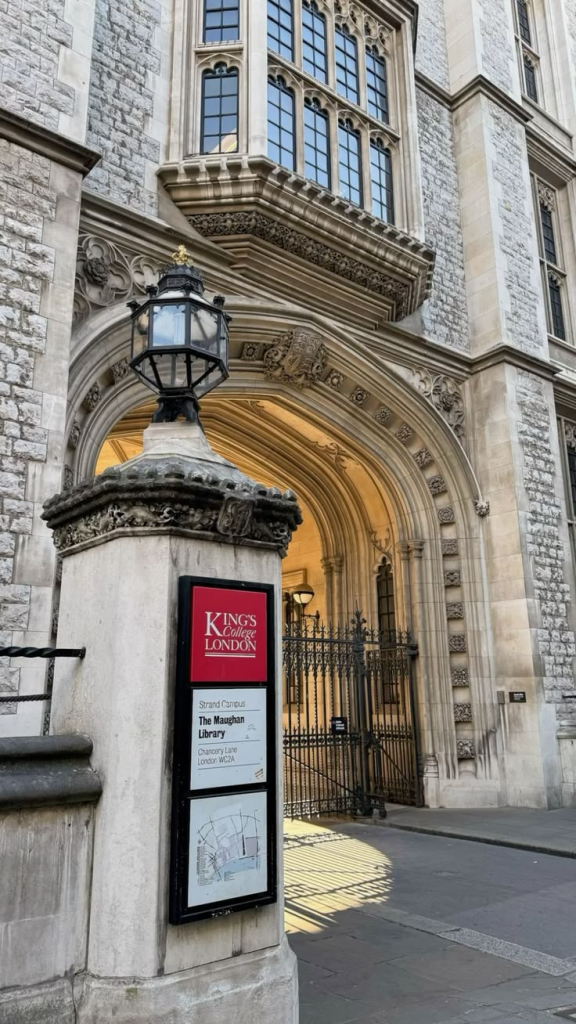
5. King’s College London – The Dickson Poon School of Law
The Dickson Poon School of Law at King’s College London (KCL) has built a reputation as one of the world’s most distinguished centres for legal education. Established formally in 1909, the law school combines traditional academic excellence with innovation and global engagement.
KCL’s LL.M. Programme offers one general pathway and nine specialised ones, including International Financial Law, International Business Law, Competition Law, Intellectual Property and Information Law, Law and Technology, and Transnational Law. The program emphasises comparative and international perspectives, helping students develop a holistic understanding of law’s global context.
Located in the iconic Somerset House East Wing, the school benefits from proximity to major courts, the Inns of Court, and global law firms, fostering strong connections between academia and professional practice.
The curriculum integrates innovative teaching, real-world problem solving, and interactive learning experiences that reflect contemporary legal challenges. This combination of location, expertise, and academic rigour makes King’s an outstanding choice for postgraduate law study.
International Fees: £38,300
6. Queen Mary University of London (QMUL) – The School of Law
The School of Law at Queen Mary University of London has evolved into one of the UK’s most respected centres for postgraduate legal education. Founded in 1965, the school quickly established a reputation for academic innovation and professional relevance.
QMUL’s LL.M. framework is uniquely flexible, allowing students to customise their degrees by selecting from a vast array of specialisations, over twenty in total. Some of the popular areas include Banking and Finance Law, Competition Law, Human Rights Law, Environmental Law, Technology, Media and Communications Law, and Fashion Law. The program also offers emerging specialisms such as AI and the Law and Art, Business and Law.
Students can design their LL.M. pathway after learning about the modules during induction, ensuring informed and interest-based choices. Opportunities to attend guest lectures, networking events, and law firm sessions from leading names like Clifford Chance, Baker McKenzie, and Dentons enrich the student experience. The elective dissertation option further allows focused research on individual legal interests, making the QMUL LL.M. one of the most versatile programs in the UK.
International Fees: £33,000

7. University of Edinburgh – Edinburgh Law School
Founded in 1707, the University of Edinburgh’s Law School is one of Scotland’s oldest and most respected institutions. Located in the historic Old College, it embodies the perfect balance between tradition and modernity in legal education.
Edinburgh offers a General LL.M. as well as specialised degrees in fields such as Commercial Law, Criminology, EU Law, Medical Law and Ethics, and Global Environment and Climate Change Law. The program allows students to choose courses from across the law school’s wide portfolio, tailoring their studies to their interests and career goals.
Renowned for research excellence, Edinburgh Law School was ranked 3rd in the UK for law in the 2021 Research Excellence Framework (REF2021). Its programs are recognised for academic rigour and global relevance, supported by an international community of scholars and professionals.
With 80% of research outputs rated as “world-leading” or “internationally excellent,” Edinburgh offers both intellectual challenge and academic prestige.
International Fees: £32,000

8. Durham University – Durham Law School
The Durham Law School is widely acknowledged for its research-driven approach and academic distinction. Its LL.M. Master of Laws program reflects the school’s commitment to offering both depth and flexibility in legal education.
Students can choose from a wide range of modules covering Corporate Law, European Trade and Commercial Law, Intellectual Property Law, International Dispute Resolution, International Law and Governance, and Medical Law and Ethics. This diversity allows learners to personalise their legal education according to professional interests.
The one-year full-time LLM course at Durham combines lectures, seminars, and tutorials with a major dissertation guided by expert supervision. Durham’s faculty, composed of leading academics and researchers, actively contributes to shaping legal frameworks both nationally and internationally.
Its focus on innovative research and student engagement has made Durham Law School a global leader in legal education.
International Fees: £30,500

9. The University of Manchester – School of Social Sciences
The University of Manchester offers a forward-looking LL.M. in Law, designed to connect theory with real-world practice. The program integrates teaching from legal, criminological, and ethical specialists, ensuring a multidisciplinary approach to law.
Students can select from diverse optional units in commercial, public, and international law, tailoring a pathway that reflects their aspirations. The curriculum balances academic rigour with practical exposure, preparing graduates for professional, policy, and research careers alike.
Distinct features such as the Justice Hub, where students provide free legal advice under supervision, offer hands-on experience that builds professional confidence. The program’s strong ties with NGOs, global companies, and government bodies enhance its impact.
Faculty members at Manchester contribute to policymaking at organisations like the United Nations and the World Trade Organisation, ensuring that teaching remains relevant and globally informed.
International Fees: £31,000

10. University of Bristol – School of Law
The University of Bristol combines a rich academic tradition with a modern, student-centred approach to legal education. Its LL.M. in General Legal Studies provides the broadest range of specialisation options across its portfolio, allowing students to design personalised pathways.
With over forty postgraduate units to choose from, including World Trade Law, Environmental Law, Human Rights, and Intellectual Property, Bristol’s curriculum promotes both flexibility and depth. The program encourages analytical and communication skills, aligning with the expectations of top law firms and global employers.
Bristol ranks among the top UK universities for employer reputation in law and legal studies and third for legal research excellence according to REF 2021 analysis. The LL.M. is taught through lectures, seminars, and workshops, reflecting a vibrant academic community.
Its variety of specialisations, from Banking and Finance Law to Law, Innovation, and Technology, makes Bristol a compelling choice for students seeking a tailored legal education in one of the UK’s most liveable cities.
International Fees: £29,400

Conclusion: Building a Legal Future in the United Kingdom
The United Kingdom’s LL.M. programs represent more than academic advancement. They symbolise intellectual rigour, professional readiness, and global opportunity. From Oxford’s time-honoured Magister Juris to Bristol’s flexible and career-driven LL.M., each university offers a unique approach to postgraduate legal education.
Across all ten institutions, a few constants emerge: research excellence, analytical depth, and the encouragement of independent thought. Whether one aspires to specialise in Corporate Law, Human Rights, Environmental Policy, or International Finance, studying in the UK provides the ideal environment to refine one’s expertise and shape a meaningful career.
Ultimately, pursuing an LL.M. in the UK is not just about acquiring a degree; it is about joining a legacy of global legal excellence that continues to influence justice, governance, and legal innovation worldwide.
Step into the world of UK legal excellence with an LLM! Book a Free Consultation with ScholarshipKart for guidance on university and course selection, applications and visas, and scholarships. Boost your chances with IELTS coaching, SOP support, and essential study and settlement tips for a smooth transition.
An LLM (Master of Laws) is a postgraduate law degree designed for law graduates and legal professionals who want to specialise in a particular area of law, enhance their legal expertise, or advance their careers internationally.
The UK is home to some of the world’s most prestigious law schools and offers globally recognised qualifications, diverse legal specialisations, strong industry connections, and excellent career opportunities.
Top choices include University of Oxford, University of Cambridge, London School of Economics and Political Science, and University College London. The best option depends on your specialisation and career goals.
Most full-time LLM programs in the UK can be completed within 9–12 months, while part-time options may take 2–5 years.
Most universities require proof of English proficiency. IELTS is widely accepted, though some institutions may also accept PTE, TOEFL, or alternative qualifications.
Yes. International students on a Student Visa can usually work up to 20 hours per week during term time and full-time during official holidays, subject to UK visa regulations.