
The United Kingdom has long held a reputation as one of the most sought-after destinations for higher education, and when it comes to STEM (Science, Technology, Engineering, and Mathematics), its global standing is unmatched.
UK universities consistently rank among the world’s top 100 institutions, offering courses that blend academic excellence with practical learning.
Why the UK is a Hub for STEM Education
What sets the UK apart is not just the prestige of its degrees but also the holistic learning environment. Students benefit from state-of-the-art research facilities, industry-driven curricula, and close ties with employers across diverse sectors.
A STEM degree from the UK equips graduates not only with technical expertise but also with critical problem-solving, analytical, and communication skills that employers worldwide value.
STEM courses in the UK are also designed to meet real-world needs, whether tackling climate change through environmental science, advancing healthcare through biomedical research, or revolutionising industries through data science and artificial intelligence.
By studying in the UK, students gain access to innovation-driven programs, expert faculty, global perspectives, and high employability rates.
In today’s world, where nearly every industry, from retail and leisure to aerospace and medicine, relies on STEM knowledge, pursuing such a degree in the UK is a launchpad to limitless opportunities.
The Foundations of STEM: What It Really Means
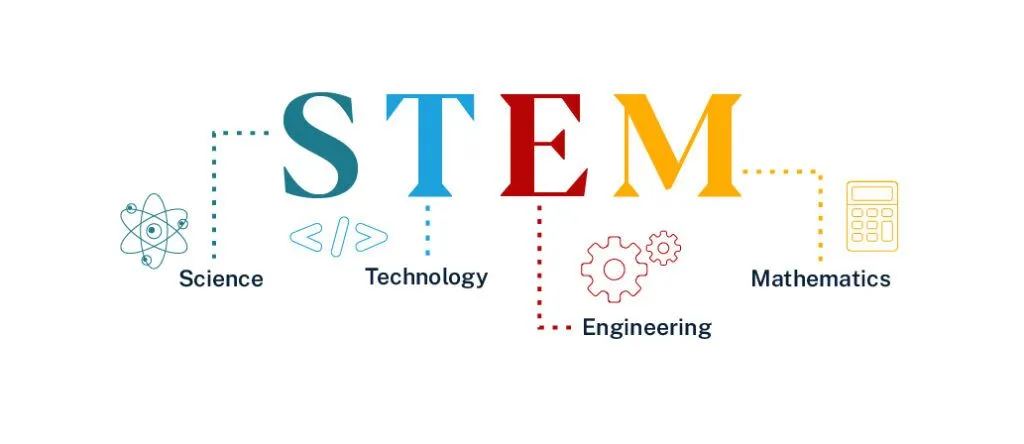
STEM stands for Science, Technology, Engineering, and Mathematics. Each component represents a vital pillar of modern society, and together, they form the backbone of innovation and progress. Understanding each discipline is key to appreciating the breadth of career options available.

Science: Decoding Nature’s Mysteries
Science encompasses fields such as biology, chemistry, physics, biomedical sciences, and environmental studies. Its essence lies in exploration, observing natural phenomena, experimenting, and developing solutions for global challenges.
From biomedical science that advances healthcare, to environmental science addressing climate change, a science degree equips graduates to become researchers, consultants, and innovators shaping the future.
Technology: Shaping the Digital Era
Technology applies scientific knowledge to create solutions that improve human life. This includes fields like computer science, artificial intelligence, and information technology.
In the UK, technology programs emphasise both theoretical depth and hands-on learning. Graduates enter careers such as software development, cybersecurity, and IT consulting, fields that are indispensable in the digital economy.
Engineering: Designing the Future
Engineering transforms theory into practice by designing, constructing, and maintaining systems, machines, and infrastructure. From civil, chemical and mechanical engineering to robotics and aerospace, UK universities offer a wide variety of engineering disciplines.
Engineers play a central role in sustainable development, renewable energy solutions, and technological advancements, making this one of the most versatile STEM fields.
Mathematics: The Language of Logic
Mathematics underpins all STEM fields, offering tools for data analysis, quantitative reasoning, and modelling complex problems. Whether in finance, research, or technology, mathematics graduates provide clarity in a data-driven world.
Careers in actuarial science, statistics, and data analytics highlight how mathematical skills remain universally relevant.
Why the UK is the Perfect Place for STEM Studies
Studying STEM in the UK is more than just earning a degree; it is about immersing yourself in a system that blends academic rigour with practical experience. Here are the key reasons why the UK is considered the best destination for STEM studies:

Globally Ranked Universities
UK universities consistently feature in the world’s top 100, especially for STEM disciplines. Institutions such as Oxford, Cambridge, Imperial College London, and University College London are globally recognised for cutting-edge research and innovation.
A degree from such institutions holds immense credibility worldwide, opening international career opportunities.
Innovation-Driven Learning
UK universities prioritise creativity and problem-solving. Students are encouraged to question, innovate, and find real-world solutions.
Courses integrate the latest scientific discoveries, technological tools, and industry applications, ensuring graduates stay ahead of global trends.
Hands-On Practical Exposure
From laboratories equipped with the latest technology to fieldwork in industries, UK STEM courses emphasise learning by doing. Students participate in research projects, case studies, and simulations that sharpen their professional skills.
Strong Industry Linkages
Universities in the UK have deep connections with leading employers in healthcare, engineering, IT, and finance. These partnerships often lead to internships, live projects, and direct recruitment opportunities, bridging the gap between academia and industry.
High Employability of Graduates
Employers worldwide seek UK STEM graduates because they are not only technically skilled but also critical thinkers and problem solvers. This reputation translates into higher placement rates and career growth opportunities.
Scholarship Opportunities
The UK actively supports international students through scholarships, bursaries, and travel grants, making quality education more accessible. For STEM, many organisations fund projects or research to encourage innovation.
Cultural Diversity and Networking
Studying in the UK allows students to learn in a multicultural environment with peers from around the globe. This diversity builds cross-cultural communication skills and a global mindset, both of which are critical in STEM careers.
Gateway to Research and Development
The UK invests heavily in R&D, particularly in fields like renewable energy, healthcare technology, and artificial intelligence. Students benefit from access to this ecosystem and can directly contribute to ground-breaking projects.

Dreaming of a STEM degree in the UK? Let ScholarshipKart guide your journey with expert support in finding the right university, selecting the best-fit course, handling applications, visa processes, and securing scholarships. We also provide top-notch IELTS coaching and personalised SOP guidance to make your application stand out. Connect with us today and take the first step towards your global career.
How to Approach STEM Education in the UK
To fully benefit from STEM education, students must align their studies with long-term career aspirations. Here are some strategies:

Choose Courses That Match Your GPA and Goals
Options in STEM are vast, ranging from bioinformatics and epidemiology to artificial intelligence and renewable energy. Selecting a program that aligns with academic strengths ensures success and confidence in career progression.
Pursue Internships
Internships in research labs, business development, or IT not only enhance employability but also help students explore different career paths. Working alongside professionals fosters cultural competence and industry-specific knowledge.
Learn by Doing
Active participation in research projects with professors and scientists gives students invaluable hands-on experience. This transforms classroom theory into practical expertise, making graduates more confident and career-ready.
Scholarships and Grants
The UK offers financial support that helps international students access high-quality education. Grants make STEM more inclusive and ensure that talented students can achieve their ambitions without financial stress.
Steps to Choosing the Right STEM Career
Graduating with a STEM degree opens countless doors, but choosing the right career path is essential. Here is a roadmap:
Recognise Your Passion – Whether you enjoy solving equations, coding, or working outdoors, identifying passions ensures career satisfaction.
Explore Diverse Options – Attend career fairs and network with professionals to understand the breadth of opportunities.
Match Skills to Careers – Combine technical knowledge with soft skills like communication to find unique roles such as consulting or project management.
Stay Updated with Trends – STEM evolves rapidly, so staying informed ensures you remain competitive in emerging fields.
Seek Mentorship – Guidance from industry experts can help navigate challenges and open new opportunities.
Top UK Universities to Study STEM Degrees in the UK
| STEM Subject | Universities |
| Sciences | University of Oxford University of Cambridge Imperial College London University College London University of Edinburgh |
| Technology | University of Glasgow University of Sheffield University College London Ulster University Northumbria University |
| General Engineering | University of Bristol University of Cambridge University of Sheffield University of Oxford Imperial College London |
| Mathematics | University of Oxford Imperial College London University of Cambridge University of St Andrews Heriot-Watt University |
| Computer Science | Imperial College London University of Oxford University of Cambridge University of Birmingham University of St Andrews |
Career Opportunities after a STEM Degree
A STEM degree from the UK acts as a passport to careers across industries. The following are the main career directions available after each discipline:
1. Careers after a Science Degree
Science graduates can move into diverse and impactful careers.
Biomedical Scientist – Conducts medical testing and research to improve healthcare systems.
Environmental Consultant – Advises businesses and governments on sustainable practices.
Forensic Scientist – Works with law enforcement agencies to analyse evidence.
Clinical Research Associate – Oversees clinical trials and ensures compliance with regulations.
Pharmacologist – Studies drug interactions to develop safe, effective medicines.
2. Careers after a Technology Degree
Technology is one of the fastest-growing industries globally.
Software Developer – Builds applications and systems for various industries.
Data Scientist – Extracts insights from complex data for decision-making.
Cybersecurity Analyst – Protects digital infrastructure from cyber threats.
AI Specialist – Designs intelligent systems like chatbots, self-driving cars, and robotics.
IT Consultant – Helps organisations integrate and optimise technology.
3. Careers after an Engineering Degree
Engineering graduates can shape the future by designing, constructing, and innovating.
Civil Engineer – Develops infrastructure such as bridges, dams, and railways.
Mechanical Engineer – Creates machinery, vehicles, and advanced manufacturing systems.
Aerospace Engineer – Works on aircraft and spacecraft design.
Renewable Energy Engineer – Focuses on solar, wind, and other green technologies.
Robotics Engineer – Combines AI and mechanics to create intelligent machines.
4. Careers after a Mathematics Degree
Mathematics graduates are highly valued across industries for their analytical skills.
Data Analyst – Identifies patterns in data to support business decisions.
Actuary – Applies mathematical models to assess financial risks.
Financial Analyst – Provides insights into investments and financial strategies.
Statistician – Designs data collection systems and interprets results.
Operations Research Analyst – Improves efficiency in logistics, manufacturing, and services.
Examples of High-Demand STEM Careers in the UK
STEM careers are not only diverse but also financially rewarding. According to salary data from Indeed UK, here are some of the most in-demand jobs and their roles:

Statistician
Expected Average Salary– £41,314 per year
Statisticians design data collection methods, analyse results, and present findings to help businesses identify trends. Their insights guide policies, business strategies, and innovations.
Mathematician
Expected Average Salary- £37,842 per year
Mathematicians apply theories, formulas, and models to solve real-world problems in finance, research, and technology. Their ability to interpret data makes them valuable across industries.
Software Developer
Expected Average Salary– £44,547 per year
Responsible for designing, coding, and testing applications, software developers create solutions that power industries from healthcare to e-commerce. They ensure programs are efficient and user-friendly.
IT Manager
Expected Average Salary- £44,883 per year
IT Managers oversee technological systems within organisations, ensuring smooth operations, security, and innovation. They also lead IT teams and develop strategies for digital growth.
Mechanical Engineer
Expected Average Salary- £36,292 per year
Mechanical engineers design, maintain, and upgrade engines, tools, and machines. Their work spans sectors like construction, automotive, and renewable energy.
Civil Engineer
Expected Average Salary- £37,301 per year
Civil engineers manage the design and construction of infrastructure like roads, airports, and water systems. They also conduct feasibility studies and oversee safety measures.
Physician
Expected Average Salary- £61,262 per year
Physicians diagnose, treat, and prevent illnesses while also conducting medical research. They are essential in hospitals, clinics, and healthcare institutions.
Biologist
Expected Average Salary- £34,558 per year
Biologists study plants, animals, and ecosystems. They conduct experiments, analyse data, and contribute to environmental sustainability and medical research.
Geospatial Engineer
Expected Average Salary- £50,414 per year
Specialising in mapping and spatial analysis, geospatial engineers use satellite imagery and digital tools to create maps for government, defence, and environmental projects.
Economist
Expected Average Salary- £43,399 per year
Economists analyse financial and social data to forecast market trends. They advise businesses, policymakers, and governments on economic decisions.
Data Scientist
Expected Average Salary- £49,000 per year
Data scientists are among the most in-demand professionals in the UK. They interpret vast datasets to provide actionable insights for businesses, governments, and NGOs.
AI Engineer
Expected Average Salary- £55,000 per year
Artificial Intelligence engineers design systems that replicate human intelligence, including voice recognition, robotics, and autonomous vehicles. This is one of the UK’s fastest-growing fields.
Renewable Energy Engineer
Expected Average Salary- £42,000 per year
With the UK’s focus on sustainability, renewable energy engineers play a vital role in developing solar, wind, and hydro technologies that reduce dependence on fossil fuels.
Cybersecurity Analyst
Expected Average Salary- £45,000 per year
Cybersecurity professionals protect organisations from cyber-attacks, ensuring safe digital infrastructure. The growing reliance on technology makes this a high-demand role.
Financial Analyst
Expected Average Salary- £40,000 per year
Financial analysts use mathematical and analytical skills to guide businesses and investors on market opportunities, making them key players in the finance sector.
Why STEM Careers Are Limitless
Did you know STEM professionals can be climate change warriors, video game designers, or financial strategists?
STEM is not confined to laboratories. It extends into entertainment, business, healthcare, and beyond. This flexibility makes STEM one of the most dynamic career pathways in today’s global economy.
Conclusion: Turning a STEM Degree into a Global Career
Pursuing a STEM degree in the UK is not just about academic achievement; it is about preparing for a future where knowledge transforms into real-world impact. The UK offers the perfect ecosystem of world-class education, practical exposure, scholarships, and strong industry connections, giving students a competitive edge in the global market.

The career possibilities are as diverse as they are rewarding. Whether you become a biomedical scientist saving lives, a data analyst shaping business strategies, or an engineer driving sustainable innovation, your journey begins with the decision to pursue STEM in the UK.
In the end, the formula for success is simple: know your passion, explore opportunities, match your skills, stay informed, and seek guidance. With these steps, a UK STEM degree can truly unlock global opportunities and set you on a path toward a fulfilling and impactful career.
Turn your UK STEM study dream into reality. Book a Free Consultation with ScholarshipKart! From choosing the right university and course to managing applications, visa procedures, and scholarship opportunities, we cover it all. Our dedicated IELTS coaching and tailored SOP support ensure you’re fully prepared to succeed. Reach out now and start building your future in the UK with confidence.