
If you are planning to study Computer Science in Dubai, you are choosing one of the most exciting technology hubs in the world. Computer Science (CS) powers everything from artificial intelligence and cybersecurity to cloud computing and digital innovation. With its rapidly growing tech ecosystem, world-class universities, and strong government support for innovation, Dubai has quickly become a top destination for international students who want to build successful careers in technology.
From cryptography that secures online banking to algorithms that recommend the next song in your playlist, CS underpins the digital experiences we now take for granted.
In short, if today’s economy were a house, computer science would be its foundation, wiring, and control system all rolled into one.
Computer Science in the Age of Acceleration
For students who want to be architects of the future, those who would rather build the tools that change industries than simply use them, a degree in Computer Science is more than a qualification: it is a ticket to influence, innovation, and impact.
And if you are thinking about where to study, Dubai has emerged as a compelling runway. The emirate is rapidly transforming from a desert economy into a global tech stage, and studying CS here puts you literally where innovation meets implementation.
At ScholarshipKart, study abroad education consultants, we have seen a sharp rise in interest among Indian students exploring Dubai for undergraduate and postgraduate study. If you are ready to make that leap, the trick is simple. Book a Free consultation with ScholarshipKart today and learn more about universities, courses, application and visa process.
Top Reasons Why Dubai is the Future Hub for Computer Science Education
One of the biggest advantages of choosing to study Computer Science in Dubai is the city’s strong connection between universities and global technology companies.
Below you will find an immersive, highly explanatory guide that lays out why Dubai is fast becoming a top destination to study Computer Science, explained point-by-point and packed with practical insights to help you decide.
1. Government-Led Tech Vision: Policies that Pull You Forward
Dubai doesn’t leave tech to the whims of the market. The government has launched targeted programs like Smart Dubai, Dubai Metaverse Strategy, and UAE AI Strategy 2031 to accelerate the adoption of digital tech across public services and commerce.
For CS students, this matters because curricula, internship projects, and research collaborations often align with these city-scale initiatives.
In plain terms: your academic projects can feed directly into large, funded deployments, giving you experience with systems that serve real users.
Why it matters: When policy and academia pull in the same direction, student work becomes strategic work. That linkage boosts employability and gives students meaningful case studies for their portfolios. A win-win.
2. Dense Tech Ecosystem: A Mini Silicon Valley in the Middle East

Dubai’s tech zones, like Dubai Internet City, Dubai Silicon Oasis, cluster startups, multinational R&D labs, and innovation centres, are all in one place. Major firms such as Microsoft, IBM, Oracle, and global cloud providers run regional operations here.
For CS students, this ecosystem is like a multipurpose training ground. Plenty of internships, mentorship, and exposure to both product development and enterprise engineering.
Why it matters: Proximity to companies reduces friction between learning and doing. You are not just studying algorithms, you are applying them to problems faced by global teams every day.
3. Industry-Focused Curriculum: Theory Meets Practice
Universities in Dubai design CS programs that balance rigorous fundamentals such as data structures, algorithms, and operating systems with contemporary technologies like cloud computing, data science, cybersecurity, and AI. Frequent hackathons, labs, and capstone projects ensure you graduate with a portfolio employers can evaluate.
Why it matters: employers hire for demonstrable skill. If your coursework includes production-ready projects and internships, you will leapfrog peers who only know theory. Show, don’t tell.
4. Internship Pipeline & Industry Collaborations: Real Work Before Graduation
Many Dubai universities have formal pipelines with tech companies for internships, co-ops, and industry-guided projects. Students often work on real systems, from scaling microservices to hardening security in enterprise applications.
Why it matters: internships shorten the time between graduation and career. You gain references, real-world problem-solving skills, and a sense of workplace code quality, all of which employers prize.
5. Cutting-Edge Labs & Resources: Hardware and Cloud at Your Fingertips
Universities in Dubai invest in labs, cloud credits, GPU clusters for AI, and IoT testbeds. That means you can train deep learning models, spin up distributed systems, or prototype embedded systems without waiting months for access.
Why it matters: Real systems behave differently from toy examples. Hands-on access accelerates learning and instils engineering discipline.
6. Multicultural, Global Campus Life: Soft Skills That Scale
Dubai’s international student population brings together perspectives from across the globe. Collaboration, code reviews, and team projects in such an environment teach cultural fluency and communication skills that multinational engineering teams require.
Why it matters: technical skills get you the interview; communication and collaboration get you the job and the promotion. Remember, it takes two to tango.
7. Strategic Location: Regional Access, Global Reach
Dubai sits at the crossroads of Europe, Asia, and Africa. For CS professionals, this geographic advantage translates into exposure to diverse markets and problems, from fintech in London-style markets to logistics in South Asia or enterprise systems across the Gulf.
Why it matters: Engineers who have worked on regional deployments understand scale, latency, and compliance trade-offs across jurisdictions, and such experience is rare and valuable.
8. Strong Demand & Attractive Salary Prospects
The rise of startups and digital transformation programs has increased demand for software engineers, data scientists, security specialists, and cloud architects. Entry-level compensation is competitive. With experience and internships, the pay trajectory becomes compelling.
Why it matters: A CS degree from Dubai often converts to early career stability and opportunities to work on high-impact projects.
9. Entrepreneurial Momentum & Startup Support
Dubai offers incubators, accelerators, and investor networks. University-driven entrepreneurship centres mentor students turning projects into startups, and government schemes often provide grants and workspace.
Why it matters: If you dream of launching a tech venture, Dubai’s ecosystem reduces the friction between idea and market. You can prototype, pitch, and scale without hopping continents.
10. Safety, Quality of Life, and Student Amenities
Beyond academics, Dubai offers modern campuses, safe neighbourhoods, and excellent transport, making student life manageable and enjoyable. From tech meetups to global expos, the city offers plenty of extracurricular learning opportunities.
Why it matters: A stable environment allows you to focus on study and projects without unnecessary distractions. You get what you pay for.
What You’ll Study — Core Computer Science Curriculum in Dubai
Foundational Pillars
Most CS degrees in Dubai emphasise these core modules in the early years:
- Programming Languages: Python, Java, C/C++ — the tools you will use daily.
- Data Structures & Algorithms: The logic that governs efficiency and scalability.
- Operating Systems & Networks: How systems manage resources and communicate.
- Database Systems: Designing, managing, and securing data at scale.
Why it matters: Strong foundations make advanced concepts approachable. If your basics are solid, learning new frameworks and tech stacks becomes far easier.
Advanced & Applied Topics
As you progress, expect courses and projects in:
- Artificial Intelligence & Machine Learning — training models and applying them to vision, NLP, and recommendation systems.
- Data Science & Big Data Analytics — extracting insights from massive datasets.
- Cybersecurity & Ethical Hacking — defending systems and understanding attacker tactics.
- Cloud Computing & Distributed Systems — designing scalable, resilient architectures.
- Software Engineering & DevOps — building maintainable systems and automating delivery.
Why it matters: These applied topics map directly to high-demand roles in industry. They are the difference between a graduate who can compile code and an engineer who can deliver production systems.
Top Universities & Programs for Computer Science in Dubai
Many international students prefer to study Computer Science in Dubai because the city hosts globally recognised universities offering industry-focused programs.
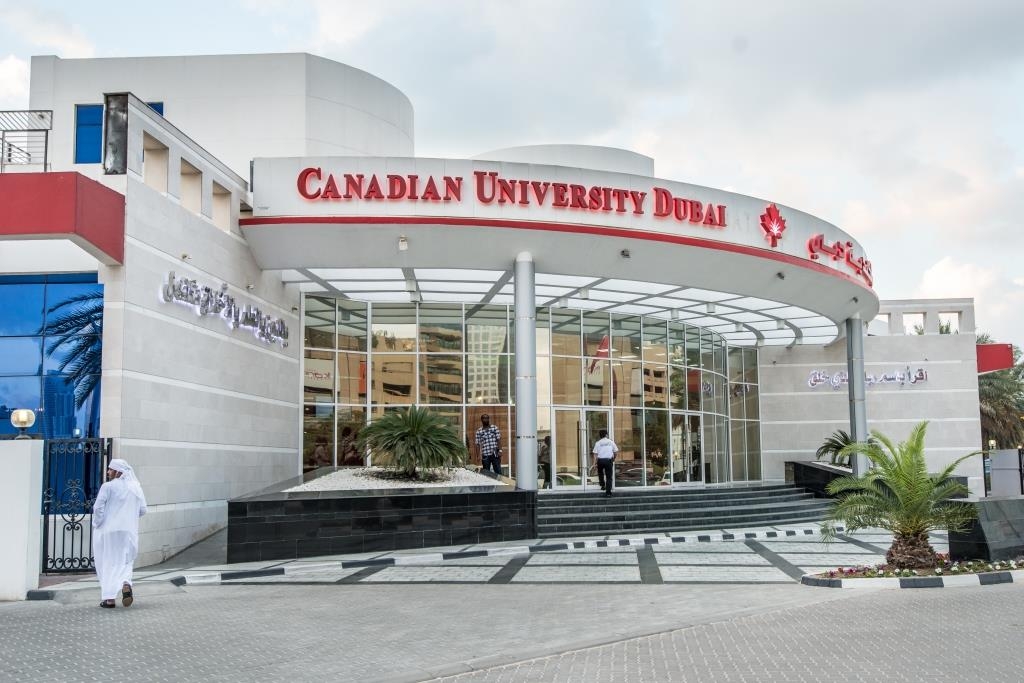
Dubai hosts internationally accredited universities and branch campuses renowned for CS:
- University of Dubai (UD) — strengths in cybersecurity and data analytics.
- Heriot-Watt University, Dubai — UK-based curriculum with emphasis on AI and software engineering.
- University of Wollongong in Dubai (UOWD) — strong industry linkages and practical training.
- Canadian University Dubai (CUD) — specialisations in network engineering and computing.
- Rochester Institute of Technology (RIT) Dubai — famous for internship placement and applied learning.
Why it matters: Choose a program that matches your career goals, research, industry, AI specialisation, or software engineering. Each school has unique strengths and industry partnerships.
Internship, Research & Industry Exposure
Internships: The Career Accelerator
Dubai has carved out a niche as a bridge between academia and industry, making internships a golden ticket for computer science students. The city’s universities collaborate closely with global giants like Microsoft, IBM, SAP, and homegrown enterprises within Dubai Internet City and Dubai Silicon Oasis.
Universities actively place students at global firms and government tech initiatives. Typical industry partners include large multinationals and Dubai’s Smart Government projects. Internships often cover areas such as artificial intelligence, data science, software engineering, and cybersecurity, giving students practical skills that go far beyond textbooks.
Internships often lead to full-time roles and give students real responsibilities like feature development, system integration, and security audits.
Why it matters: Internships teach soft skills, code hygiene, version control, and team workflows, practical experience that cannot be replicated in classrooms.
Research Opportunities: From Labs to Publications
Hackathons, research collaborations, and government-led projects like Smart Dubai also open doors to real-world challenges. These opportunities don’t just pad resumes; they frequently lead to job offers, professional networks, and the confidence to hit the ground running after graduation.
If research excites you, Dubai’s universities collaborate with industry on applied research in AI, computer vision, cybersecurity, and data analytics. You can contribute to papers, patents, or prototype products that address real-world problems.
Why it matters: Research experience is a passport to advanced roles, PhD programs, or R&D positions within companies.
Post-Study Opportunities — Careers & Global Mobility
Graduates who study Computer Science in Dubai often secure roles in software development, artificial intelligence, data science, and cybersecurity.
Career Paths in Demand
Graduates commonly move into roles such as:
- Software Developer / Engineer — application and systems programming.
- Data Scientist / ML Engineer — data models and predictive systems.
- Cybersecurity Analyst / Engineer — threat detection and mitigation.
- Cloud Architect / DevOps Engineer — systems design & automation.
- Software QA & Reliability Engineer — ensuring systems withstand real-world pressure.
Why it matters: Dubai’s burgeoning tech economy and multinational firms provide diverse job profiles and rapid career progression.
Global Opportunities & Remote Work
A degree from a recognised Dubai university can open international doors. Additionally, many companies offer remote roles. So you can work for global teams while based in the UAE or beyond.
Why it matters: Flexibility and mobility increase your lifetime career options and earning potential.
Student Life — Campus, Culture, and Beyond

Multicultural Communities & Networking
Campus life includes tech societies, developer clubs, and hackathons. Events attract industry speakers and recruiters, creating natural networking channels.
Why it matters: Your cohort and connections are assets. Building relationships with peers and mentors can translate into job referrals and startup co-founders.
Work-Life Balance & Recreation
Beyond coding, Dubai offers beaches, deserts, cultural festivals, and world-class conferences. The balance of hard work and leisure helps sustain long-term productivity.
Why it matters: A healthy student life fosters creativity and prevents burnout, essential for sustained learning in demanding fields.
Costs, Scholarships & Financial Planning
Tuition and Living Costs
Typical tuition for CS programs varies depending on the university and level of study.
- Undergraduate Programs: AED 50,000 – AED 85,000 annually.
- Postgraduate Programs: AED 55,000 – AED 100,000 annually.
Living costs vary by lifestyle; sharing accommodation can substantially reduce monthly expenses. Many institutions provide scholarship options, merit-based waivers, and flexible payment plans.
Why it matters: Financial planning is crucial. Investigate scholarships, part-time work options, and university fee structures before applying.
Return on Investment
Given the demand for technical talent and the region’s competitive salaries, many students find the return on investment favourable, particularly when internships and industry projects lead to early-career job offers.
Why it matters: Think long-term. A well-chosen program that provides internships and industry ties often pays dividends soon after graduation.
Admission Criteria
Typical Entry Requirements
For Bachelor’s: High school diploma with a strong math and science background.
For Master’s: Bachelor’s degree in CS or related field, academic transcripts, statement of purpose (SOP), CV, and references.
English proficiency: IELTS/TOEFL where required.
Some universities may require coding tests or interviews.
Why it matters: Prepare your SOP, sharpen coding basics, and gather references early. A solid application is the first step to landing your preferred program.
Future Trends in Computer Science in Dubai
Computer science in Dubai is racing ahead, fuelled by visionary government strategies and rapid industry adoption. Artificial intelligence and machine learning are expected to dominate sectors like healthcare, fintech, and logistics, while blockchain will strengthen Dubai’s reputation as a secure digital economy.
The rise of cloud-native systems and smart city applications means specialists in data science, IoT, and cybersecurity will be in high demand. The city is also investing heavily in metaverse platforms and immersive technologies, offering fresh ground for developers and innovators.
In short, the future of computer science in Dubai is not just about following global trends; it is about setting them. Students who adapt quickly will find themselves ahead of the curve.
How to Maximise Your Time in Dubai — Practical Tips
Choose programs with strong industry partnerships. Internship pipelines are golden.
- Participate in hackathons and open-source projects. Build a portfolio that employers can evaluate.
- Learn cloud platforms (AWS/Azure/GCP) and DevOps basics. These skills are in high demand.
- Network aggressively. Attend meetups, tech talks, and career fairs.
- Balance depth and breadth. Specialise in one discipline (AI, security, systems) while maintaining broad systems knowledge.
- Consider entrepreneurship paths. Use incubators and grants to pilot ideas.
Why it matters: Effective choices during your studies dramatically change outcomes, and Dubai offers the tools to make those choices work.
Final Thoughts — Is Dubai the Right Place for Your Computer
If you want global exposure, hands-on industry experience, and strong career prospects, choosing to study Computer Science in Dubai can be a smart investment in your future.Science Journey?
Dubai is not just selling a shiny skyline; it is building a tech ecosystem with serious institutional support, international partnerships, and real commercial demand. Studying Computer Science here means you are learning where technology is being designed, deployed, and scaled in the Middle East and beyond.
You will leave Dubai not just with a degree, but with practical experience, industry contacts, and a portfolio of projects that prove you can build real systems. Studying CS in Dubai is a bold move that places you squarely in the path of technological momentum.
If your aim is to become a software engineer, data scientist, cybersecurity expert, or systems architect and you want experience that blends academic rigour with industry impact, Dubai offers a rare combination of opportunity and execution.
Ready to take the leap? The runway is ready. All you need is the code.
Dreaming of studying in Dubai? Connect with ScholarshipKart today. Our expert counsellors help you choose the right university and the ideal course that perfectly fits your career goals. Start your application and begin your academic journey in one of the world’s fastest-growing education hubs today! With our expertise, your dream of studying Computer Science in Dubai can become a reality.
FAQs – Study Computer Science in Dubai
Dubai offers world-class universities, cutting-edge labs, and strong industry connections, making it an ideal destination to study Computer Science in Dubai for both practical skills and career opportunities.
Some leading universities to study Computer Science in Dubai include University of Dubai, Heriot-Watt University Dubai, University of Wollongong in Dubai, Canadian University Dubai, and RIT Dubai.
Students learn programming, data structures, algorithms, AI, cybersecurity, cloud computing, and software engineering when they study Computer Science in Dubai.
Yes, universities in Dubai collaborate with tech companies like Microsoft, IBM, and SAP to provide internships, allowing students who study Computer Science in Dubai to gain real-world experience.
Tuition fees for CS programs range from AED 50,000 – 85,000 per year for undergraduate programs and AED 55,000 – 100,000 for postgraduate studies, making financial planning important for students who study Computer Science in Dubai.
Graduates can pursue roles as software engineers, data scientists, cybersecurity analysts, cloud architects, or AI specialists after they study Computer Science in Dubai.