
Artificial Intelligence (AI) and Data Science are changing the way we understand the world, solve problems and make decisions. From analysing enormous volumes of information to developing intelligent systems that can perform complex tasks, these fields are becoming increasingly important across industries.
If you are interested in understanding how technology works, finding meaningful patterns in data or creating systems that can make intelligent decisions, studying Data Science and Artificial Intelligence could be an exciting step towards your future.
The University of Edinburgh offers an opportunity to explore these fast-developing disciplines through its internationally recognised School of Informatics. Combining academic excellence, research-led teaching and a wide selection of undergraduate and postgraduate programmes, the university provides an environment where students can develop both technical knowledge and practical expertise.
Edinburgh’s academic reputation is another reason to consider it. According to the QS World University Rankings by Subject 2026, the university ranks 22nd globally and 5th in the UK for Computer Science. It also ranks 30th worldwide for Data Science and Artificial Intelligence in the same subject rankings.
Whether you are considering an undergraduate degree, a specialised master’s programme or an interdisciplinary qualification exploring the ethical implications of emerging technologies, Edinburgh offers several pathways worth exploring.
So, what makes this university stand out? Let’s look at its courses and the reasons why it could be an excellent destination for studying Data Science and AI.
Ready to Build Your Future in Data Science and Artificial Intelligence? Connect with ScholarshipKart to explore the undergraduate and postgraduate programmes at the University of Edinburgh and discover how you can develop the knowledge, technical skills and practical experience to thrive in the evolving world of technology. Explore the courses and find the programme that matches your ambitions!
What Courses Can You Study in Data Science and Artificial Intelligence at the University of Edinburgh?

The University of Edinburgh offers undergraduate and postgraduate programmes that cover different aspects of computing, artificial intelligence, data analysis and technology governance. Each programme has its own academic focus, allowing students to choose a pathway that reflects their interests and future ambitions.
Here are five programmes to explore.
1. Artificial Intelligence and Computer Science BSc (Hons)

This 4-year Artificial Intelligence and Computer Science BSc (Hons) combines two closely connected disciplines. While Computer Science explores the understanding, design, implementation and application of computing systems, Artificial Intelligence focuses on developing systems capable of intelligent behaviour.
The programme begins with a common foundation in mathematics, programming and informatics. Students do not need previous Computer Science or programming experience, as computational concepts are introduced from a shared starting point. However, a background in mathematics is important.
Programme structure:
- Year 1: Introduction to programming, computation and fundamental mathematical concepts required for informatics.
- Year 2: More advanced programming, data structures, relevant mathematics, and broader professional and societal issues.
- Year 3: Greater flexibility to select specialised courses in Artificial Intelligence, Computer Science and other areas of Informatics.
- Year 4: Advanced subject options and an individual honours project, through which students develop a viable project based on an assigned topic.
The four-year structure also allows students to explore subjects outside their primary degree during the first two years before deciding on areas of specialisation.
2. Artificial Intelligence BSc
The four-year Artificial Intelligence BSc (Hons) at the University of Edinburgh offers a flexible learning structure, allowing students to explore a variety of subjects alongside their main degree. During the first two years, students can choose courses from other disciplines that match their interests or complement their studies. This provides an opportunity to develop a broader academic foundation before deciding which subject areas to pursue in greater depth during the honours years.
Programme structure:
- Year 1: Introduction to university-level mathematics, basic programming principles and computational concepts.
- Year 2: Development of advanced programming skills, data structures and an understanding of ethical issues surrounding computing in the real world.
- Year 3: More focused study, with greater choice of specialised courses based on individual interests. Students also undertake a System Design Project, gaining practical experience of building a large-scale system and working collaboratively as part of a team.
- Year 4: Advanced course options and opportunities to specialise through an individual project, dissertation or thesis on a chosen topic, agreed with an academic supervisor.
3. Data Science MSc

The MSc in Data Science focuses on the computational principles, methods and systems used to extract, organise and apply knowledge from data.
With large datasets generated across science, healthcare, business, social media and other sectors, the ability to identify meaningful patterns has become increasingly important.
The programme explores several interconnected areas, including:
- Machine Learning, Statistics and Optimisation: Courses include Machine Learning Practical, Advanced Topics in Machine Learning, Statistical Programming and Large Scale Optimization for Data Science.
- Databases and Data Management: Options include Introduction to Databases, Distributed Systems, Fundamentals of Data Management and Advanced Database Systems.
- Applications: Students can explore subjects such as Text Technologies for Data Science, Accelerated Natural Language Processing and Computer Vision.
The programme includes two taught semesters featuring lectures, tutorials, project work and written assignments. Students also develop research skills through literature reviews and project planning before completing their final project and dissertation during the summer.
It is particularly relevant to students interested in data science careers in industry, the public sector or further academic research.
4. Artificial Intelligence MSc

The Artificial Intelligence MSc is taught at the UK’s longest-established academic centre for studying Artificial Intelligence.
The programme aims to develop the fundamental knowledge and practical skills required to design, build and apply AI systems in a chosen area of specialisation.
Teaching draws on research from internationally recognised academics working across Artificial Intelligence and related disciplines, including neuroscience, cognitive science, linguistics and mathematics.
Students can explore several specialist areas, such as:
- Machine Learning
- Natural Language Processing
- Robotics
- Other areas of Artificial Intelligence
There is also flexibility to select courses from other Informatics disciplines, including Computer Systems, Theoretical Computer Science, Software Engineering and Social and Biological Computation.
At least half of the taught course credits must be selected from Artificial Intelligence subject areas, ensuring a strong foundation in the discipline.
5. Data and Artificial Intelligence Ethics MSc
The MSc in Data and Artificial Intelligence Ethics takes an interdisciplinary approach to the responsible development, use and governance of AI and data-intensive technologies.
As intelligent technologies become increasingly influential, organisations need professionals who understand more than their technical capabilities. They also need to consider questions of fairness, accountability, transparency, privacy and human rights.
This programme explores the relationship between Artificial Intelligence, ethics, law, public policy and technology governance.
Students develop an understanding of:
- Ethical principles and their relationship with AI and Data Science.
- Legal and policy frameworks governing emerging technologies.
- Responsible data practices and algorithmic accountability.
- Stakeholder engagement across industries and communities.
- Practical approaches to evaluating and governing AI systems.
The programme includes compulsory courses exploring AI governance, ethics and real-world case studies, alongside optional courses offered through the Edinburgh Futures Institute.
Students also have opportunities to work with external organisations and apply their knowledge to practical challenges. The final project allows them to investigate an issue connected to their interests and professional goals.
Entry Requirements for Studying Data Science and Artificial Intelligence
Undergraduate Entry Requirements
To apply for the undergraduate programme, students must meet the following academic and English language requirements:
- A-levels
– A-level grades ranging from A*A*A*.
– Mathematics at grade A is required.
– The remaining A-level subjects can be in any other disciplines.
- International Baccalaureate (IB)
– IB grades ranging from 43 points with 777 at Higher Level (HL) to 34 points with 665 at HL.
– Mathematics: Analysis and Approaches at HL, grade 6, is required.
– The other Higher Level subjects can be in any discipline.
English Language Requirements
IELTS Academic: Overall score of 6.5, with a minimum of 5.5 in each component.
Postgraduate Entry Requirements
Applicants to the postgraduate programme should hold a UK 2:1 honours degree or an international equivalent in a relevant subject.
Eligible academic backgrounds include:
- – Informatics or Artificial Intelligence
- – Cognitive Science or Computer Science
- – Econometrics or Electrical Engineering
- – Linguistics or Mathematics
- – Philosophy or Physics
- – Psychology or another quantitative discipline
English Language Requirements
IELTS Academic: Overall score of 7.0, with at least 6.5 in three components and 6.0 in the remaining component.
10 Reasons to Study Data Science and Artificial Intelligence at the University of Edinburgh

Choosing a university is about more than selecting a degree. You also want an environment that encourages curiosity, supports your development and gives you opportunities to explore your chosen field. Here are ten reasons why Edinburgh deserves a place on your shortlist.
1. Learn in One of the UK’s Largest Informatics Departments
Being part of a large academic community can make a real difference to your university experience. At Edinburgh, you will join a School of Informatics with more than 280 academic and research staff and over 2,000 taught and research students.
The department brings together undergraduate students, master’s students and researchers working across different areas of computing and technology. This creates an environment where you can interact with people who have varied academic interests, exchange ideas and discover different perspectives on Artificial Intelligence and Data Science.
With students and staff from more than 100 countries, you will also experience an international learning environment that extends beyond your chosen subject.
2. Learn from Academics Actively Involved in Research
Wouldn’t it be interesting to learn about Artificial Intelligence from academics who are also contributing to its development?
The School of Informatics has an established research presence, with its research power in Computer Science and Informatics ranked first in the UK by the Research Excellence Framework (REF) 2021.
Research-led teaching gives students the opportunity to engage with subjects that are closely connected to ongoing academic work. The university’s research also extends beyond traditional computing, influencing areas such as science, industry, public policy and society.
For students, this means exploring Artificial Intelligence and Data Science in an environment where research, education and real-world applications are closely connected.
3. Choose Courses That Match Your Interests and Career Goals
Not everyone enters university with a fixed idea of what they want to specialise in. You might begin with an interest in programming and later discover a passion for Machine Learning, Natural Language Processing, robotics or data management.
Edinburgh’s flexible degree structure gives students opportunities to explore different subject areas and gradually develop their specialisations.
Undergraduate students following the four-year Artificial Intelligence and Computer Science degree can study subjects outside their main programme during the first two years before making more focused choices in the honours years.
Postgraduate students can also explore different specialist areas through their course options. Whether your interest lies in developing intelligent systems, analysing complex datasets or understanding the ethical implications of technology, you can shape your academic experience around your ambitions.
4. Gain Practical Experience Through Specialist Learning Facilities
Studying technology should involve more than understanding concepts in lectures. Having access to equipment and facilities where you can experiment, develop and test ideas adds another dimension to learning.
The School of Informatics provides high-specification computer laboratories, software support and dedicated teaching spaces in Appleton Tower.
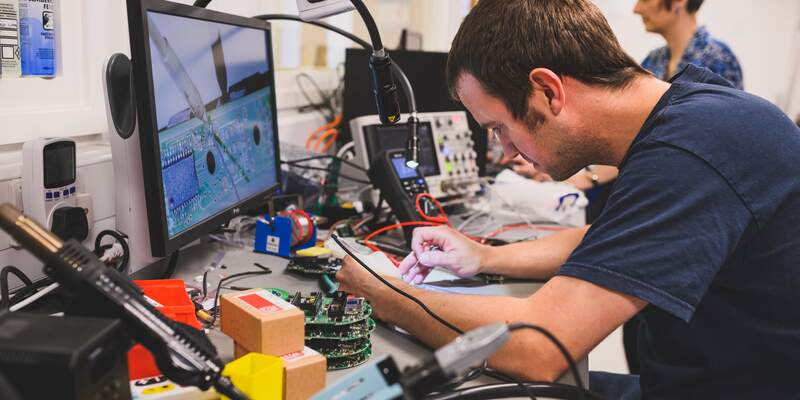
One particularly interesting facility is the Informatics Makerspace, which gives students access to a variety of equipment and programmable platforms, including:
- UltiMaker 3D printers
- Arduino and Raspberry Pi devices
- Robots, robotic arms and components
- Laser cutters
- Benchtop and PCB milling equipment
- Soldering stations
- 3D scanners
These resources provide opportunities to explore practical applications of computing, robotics and technology while developing hands-on experience alongside academic learning.
5. Build Industry Connections Through Technology Events and Hackathons
University is also a great time to meet people, explore professional interests and start building connections within your chosen field.
The School of Informatics has strong links with local, national and international industry networks. Its student societies regularly organise technology meetups, workshops, hackathons and industry events.
Some recent speakers at society events have represented well-known organisations such as Spotify, Meta and Amazon.
Students can also participate in societies such as CompSoc, Scotland’s largest technology society, and Hoppers, which supports women and gender minorities in technology.
Other subject-focused groups explore Artificial Intelligence, Machine Learning, robotics, rocketry and automotive technology. These activities offer opportunities to collaborate with fellow students, exchange ideas and learn more about developments across the technology sector.
6. Receive Dedicated Academic Guidance and Peer Support
Starting a university degree can feel challenging, especially when you are learning new programming concepts, mathematical methods and technical subjects.
Edinburgh provides several support systems to help students throughout their studies.
Each student has access to a named Student Adviser who can provide guidance at important stages of their academic journey and when personal circumstances change.
A Cohort Lead also supports a group of students, helping them navigate their studies.
There are additional peer-learning initiatives, including:
- InfPALS: A peer-support service for first-year students, focusing on course material and general Informatics topics.
- InfBase: A drop-in help desk where first- and second-year students can receive additional tutoring and academic support.
- Academic Families: Small student communities led by students in later years, offering opportunities for mentorship, friendship and connection.
These initiatives make it easier to seek guidance, connect with fellow students and feel part of the wider Informatics community.
7. Study in the Heart of Edinburgh’s City Centre
Your university experience is not limited to the classroom, and Edinburgh offers plenty to explore outside your academic commitments.
The School of Informatics is based in the University’s Central Campus area, with most lectures, tutorials and classes taking place in Appleton Tower.
You will also attend some classes at the Nucleus building on the King’s Buildings campus, approximately 15 minutes away by bus. This modern learning and social hub has been designed with sustainability and environmental efficiency in mind.
Edinburgh itself offers a distinctive combination of historic architecture, natural beauty, cultural attractions and modern city life. It is also a growing technology hub, creating an interesting setting for students interested in the future of computing and innovation.
The city ranked second in the UK and 15th globally in the QS Best Student Cities 2026.
8. Explore an International Student Community and an Active Campus Life
Moving to a new city is also about finding your community. At Edinburgh, student life offers opportunities to connect with people who share your interests, explore new hobbies and participate in activities beyond your degree.
The School of Informatics has several technology-focused societies, including:
- Beneficial AI: Focused on Artificial Intelligence.
- EdIntelligence: Dedicated to Machine Learning.
- HumanED: Focused on robotics.
- Endeavour: Interested in rocketry.
- Edinburgh University Formula Student: Exploring automotive technology.
- Hyped: Focused on Hyperloop technology.
- Women in STEM: Supporting engagement in science, technology, engineering and mathematics.
You can also explore university-wide societies and sports clubs, giving you opportunities to meet people outside your academic department.
Whether you enjoy building technology, participating in competitions or simply meeting people with similar interests, there are plenty of ways to become involved.
9. Access Career Development Opportunities Across Different Industries
A degree in Data Science, Artificial Intelligence or Computer Science can lead to several professional pathways. Edinburgh’s graduates have opportunities across the technology sector and other industries where computing and analytical expertise are valued.
Depending on your programme and specialisation, possible career directions include software engineering, data analysis, Machine Learning, technical consultancy, data engineering and responsible AI governance.
The university’s industry connections include organisations such as Google, Meta, Amazon, IBM, Intel, Samsung, ARM, SkyScanner, NatWest and J.P. Morgan.
The university also offers career guidance through its Careers Service, helping students explore employment opportunities, understand their strengths and prepare for professional life.
10. Benefit from Career Support During Your Studies and After Graduation
Career preparation does not have to wait until your final semester. Edinburgh’s Careers Service supports students throughout their university experience and continues to provide assistance for up to two years after graduation.
You can access digital resources to identify your skills, explore different career options and understand the experience employers look for.
The service also provides support with:
- Finding part-time employment and vacation work.
- Exploring internships and graduate opportunities.
- Preparing for job interviews through practice sessions.
- Attending employer-focused careers events.
- Connecting with recruiters through the annual Careers in Tech and Data Fair.
- Making informed decisions about your professional future.
This continued support can be particularly useful when you are deciding which direction to take after completing your degree, whether that means entering the technology industry, exploring research or pursuing opportunities in another sector.
What Career Opportunities Can You Explore After Studying Data Science and AI?
A qualification in Data Science, Artificial Intelligence or Computer Science can open doors to different professional pathways.
Depending on your specialisation, you could work in software development, data analytics, machine learning, engineering, technology management or responsible AI governance.
For example, students interested in working with large datasets may consider becoming Data Scientists, Data Engineers or Predictive Analysts. Those fascinated by intelligent systems could explore Machine Learning Engineering or related technical roles.
Meanwhile, graduates with an interest in the social and ethical dimensions of technology can consider careers in privacy, compliance, policy and responsible innovation.
The university’s Careers Service, industry connections and student technology societies provide additional opportunities to explore these professional directions.
How ScholarshipKart Supports Your Study Abroad Journey
Planning to study abroad involves several important decisions, from choosing the right university and course to exploring scholarships, arranging finances and finding suitable accommodation. With the right guidance, students can navigate these steps with greater clarity and confidence as they prepare for an international education experience.
ScholarshipKart assists students aspiring to study in the UK by providing guidance at various stages of their study abroad journey. Its services cover key aspects of the process, including:
University and Course Selection: Identify academic programmes and universities that align with your interests, academic background and long-term career goals.
Admission Guidance: Get assistance with university applications, understanding admission requirements and keeping track of application deadlines.
Scholarship Assistance: Discover relevant scholarship opportunities and learn about eligibility requirements, application procedures and deadlines.
Student Visa Guidance: Understand student visa requirements and receive guidance on preparing the necessary supporting documents.
IELTS and PTE Preparation: Access preparation guidance to help meet English language proficiency requirements, where applicable.
Accommodation and Pre-Departure Support: Prepare for your move abroad with guidance on accommodation options, travel arrangements and other essential pre-departure considerations.
Educational Loan Guidance: Explore potential education financing options and plan your study-related expenses more effectively.
By offering support across these essential areas, ScholarshipKart helps students make informed decisions, stay organised throughout the application process and prepare for the transition to studying and living in the UK.
Is the University of Edinburgh the Right Place to Study Data Science and Artificial Intelligence?
If you are looking for a university that combines academic reputation, research excellence, flexible learning and a vibrant student community, Edinburgh is certainly worth considering.
Its School of Informatics offers several pathways, from undergraduate Artificial Intelligence and Computer Science to specialised postgraduate degrees in Data Science, Artificial Intelligence and AI Ethics.
You can develop technical expertise, explore emerging research areas, gain practical experience and investigate the wider impact of technology on society.
And beyond the classroom, Edinburgh offers a welcoming international student community, technology-focused societies, academic support and access to a growing technology hub.
Ultimately, studying Data Science and Artificial Intelligence is about understanding the technologies shaping tomorrow. At the University of Edinburgh, you can explore these disciplines in an environment that encourages both academic discovery and practical thinking.
Take the Next Step Towards Your Future in AI and Data Science!
From research-led teaching and specialist learning facilities to industry connections and diverse career pathways, the University of Edinburgh offers plenty to explore. Ready to turn your interest in intelligent technologies into an academic and professional journey? Book a Free Consultation with ScholarshipKart and discover your study options at the University of Edinburgh today!
FAQs
1. Why should international students study Data Science and Artificial Intelligence at the University of Edinburgh?
The University of Edinburgh offers internationally recognised programmes through its well-established School of Informatics, supported by research-led teaching and specialist learning facilities. International students can also benefit from a diverse academic community, industry engagement and opportunities to explore different areas of technology.
2. What Data Science and Artificial Intelligence courses are available at the University of Edinburgh?
Students can choose from programmes including Artificial Intelligence and Computer Science BSc (Hons), Data Science MSc, Artificial Intelligence MSc and Data and Artificial Intelligence Ethics MSc. These programmes cover areas ranging from programming and Machine Learning to data management, robotics and responsible AI governance.
3. Can international students study Artificial Intelligence at Edinburgh without previous programming experience?
Yes, students applying for the Artificial Intelligence and Computer Science BSc (Hons) do not need previous Computer Science or programming experience, as programming and computation are taught from a common starting point. However, a background in mathematics is important for the programme.
4. How long does it take to complete a Data Science or Artificial Intelligence degree at Edinburgh?
The Artificial Intelligence and Computer Science BSc (Hons) takes four years to complete. The master’s programmes follow postgraduate study structures, with the MSc in Data Science including two taught semesters followed by a summer project and dissertation.
5. What career opportunities are available after studying Data Science and AI at Edinburgh?
Graduates can explore roles such as Data Scientist, Data Engineer, Machine Learning Engineer, Software Engineer, Quantitative Developer and Technical Analyst. Those specialising in Data and Artificial Intelligence Ethics can also pursue opportunities in privacy, policy, compliance, responsible innovation and regulatory oversight.
6. Does the University of Edinburgh provide career support to international students?
Yes, the university’s Careers Service supports students throughout their studies and for up to two years after graduation. Students can access career resources, interview preparation, internship and graduate job guidance, and employer networking opportunities through events such as the Careers in Tech and Data Fair.
7. What facilities are available to Data Science and Artificial Intelligence students at Edinburgh?
Students have access to high-specification computer laboratories, software support, libraries and dedicated teaching spaces in Appleton Tower. The Informatics Makerspace also provides equipment such as 3D printers, Raspberry Pi devices, Arduino platforms, robots, laser cutters and 3D scanners.
8. What is student life like for international students studying at Edinburgh?
Students become part of a multicultural academic community with members from more than 100 countries. They can participate in technology societies, hackathons, workshops, student meetups and sports clubs while enjoying life in Edinburgh, a city recognised for its history, cultural attractions and growing technology sector.