
Artificial intelligence (AI), blockchain, cloud computing and machine learning are changing how businesses operate, make decisions and develop new solutions. As organisations explore these technologies, professionals who understand both technical innovation and business strategy are becoming increasingly valuable.
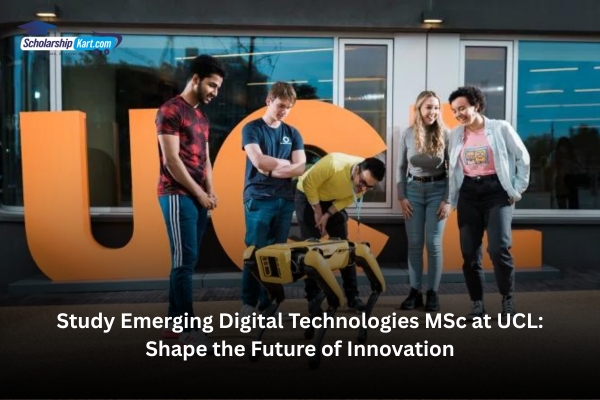
The Emerging Digital Technologies MSc at University College London (UCL), UK, offers an opportunity to explore this evolving landscape through a one-year master’s programme that combines computing, finance, technology and business strategy. Designed by the UCL Centre for Blockchain Technologies, the course aims to prepare students to apply emerging technologies in real-world business environments.
Whether you have a background in computing, finance, economics or a combination of these disciplines, this programme can help you develop the knowledge to evaluate new technologies, identify opportunities for innovation and solve complex business challenges.
Ready to explore the future of AI, blockchain and digital innovation? Discover the Emerging Digital Technologies MSc at UCL, UK, and find out how this one-year master’s programme can help you connect technological expertise with business strategy. Let ScholarshipKart help you get started. From personalised counselling, university admissions, and scholarships to visa guidance, our experts can support you at every step of your study-abroad journey.
Here are 10 reasons why studying the Emerging Digital Technologies MSc at UCL could be a valuable step towards your academic and professional goals.
10 Reasons to Study Emerging Digital Technologies MSc at UCL

1. Learn How Emerging Digital Technologies Transform Businesses
Emerging technologies are reshaping industries, from financial services to technology consulting. UCL’s Emerging Digital Technologies MSc helps you understand these developments and explore how businesses can use them effectively.
During the programme, you can study areas such as:
- Artificial intelligence and machine learning: Understand how artificial intelligence systems and data-driven methods support business decisions.
- Blockchain and distributed ledger technologies: Explore digital systems that can transform transactions and information sharing.
- Cloud computing: Examine the role of cloud-based infrastructure in modern digital operations.
- Data science: Learn how data analysis can support insights, innovation and strategic planning.
This combination can help you evaluate technology beyond its technical features and understand its wider business applications.
2. Combine Computing Skills with Business Strategy
Technical knowledge is valuable, but understanding how to apply it to business challenges is equally important. The programme brings together digital technologies and business strategy, helping students connect technological developments with organisational objectives.
The Digital Technologies and Business Strategy module explores this important relationship. It can help you develop a broader perspective on how organisations assess emerging technologies, identify opportunities and approach digital innovation.
This interdisciplinary approach is particularly relevant if you want to work at the intersection of technology, management, finance and entrepreneurship.
3. Study at UCL, a Globally Recognised University

Choosing a university is an important decision, and institutional reputation can be one factor when comparing postgraduate programmes.
UCL was ranked 9th in the QS World University Rankings 2026. This international standing adds to the appeal of studying at an institution recognised for its academic and research environment.
UCL Computer Science also demonstrated strong research performance in the UK’s Research Excellence Framework (REF) 2021, ranking first in England and second in the UK for research power in Computer Science and Informatics.
For students, studying in this research-focused environment offers an opportunity to engage with advanced ideas, learn from academics and develop a deeper understanding of technological change.
4. Explore Blockchain Technologies Through UCL’s Specialist Expertise
Blockchain is an important area of emerging digital technology, with applications extending beyond cryptocurrencies into digital transactions and financial services.
The programme was designed by the UCL Centre for Blockchain Technologies, a large, internationally recognised research centre specialising in blockchain. This connection gives the degree a distinctive focus for students interested in understanding blockchain and its business applications.
The Blockchain Technologies module provides a dedicated opportunity to explore this field as part of your master’s studies.
If you are interested in fintech, digital finance or technology-driven business models, this specialisation can help you build knowledge relevant to a rapidly evolving area of digital innovation.
5. Build a Strong Foundation in Data Science and Databases
Data plays a central role in modern technology, from training machine learning models to supporting business intelligence and digital services. Understanding how to work with data can therefore complement your knowledge of emerging technologies.
The programme includes two relevant core modules:
- Data Science: Develop an understanding of data-driven approaches and their potential applications.
- Database Fundamentals: Explore the foundations of organising and managing data.
Together, these subjects can support your understanding of how digital systems use information to generate insights and enable business applications.
This foundation in data science is particularly useful if you are considering career paths involving data analytics, technology consulting, digital finance or other data-intensive environments.
6. Customise Your Learning with Optional Modules

Students can explore additional areas of interest through optional modules, allowing them to develop knowledge aligned with their academic interests and career ambitions.
Depending on the available module choices, options include:
- Algorithmic Trading: Explore the intersection of technology and financial markets.
- Advanced Machine Learning in Finance: Examine advanced machine learning applications in finance.
- Digital Finance: Study technology-driven developments in financial services.
- Innovation and Strategy in Finance: Explore innovation and strategic decision-making in the financial sector.
- Machine Learning with Applications in Finance: Investigate how machine learning can be applied to financial problems.
- Software Engineering and Product Management in Financial Technology: Explore software development and product management in fintech.
Optional modules may be particularly attractive if you want to connect emerging technologies with financial services, product development or innovation management. Check the current course catalogue for module availability and selection requirements.
7. Apply Your Knowledge Through a Significant Project
Learning about technology becomes more meaningful when you can apply concepts to a practical problem. A significant project forms an important part of the Emerging Digital Technologies MSc.
You may undertake a project addressing a real-world problem with a company or pursue an academic research project, depending on the available opportunities.
Some projects are conducted in collaboration with industry partners through the UCL Industry Exchange Network (IXN). UCL’s industry relationships include organisations such as Fidelity, Ripple, NatWest, Santander and BNP Paribas.
Working on a substantial project can help you strengthen your analytical thinking, investigate complex challenges and develop practical problem-solving skills.
It also gives you an opportunity to explore how concepts from data science, blockchain or other digital technologies can be applied beyond the classroom.
8. Learn in London’s Technology and Financial Environment
UCL’s location in London is another consideration for students interested in emerging technologies. The city is a major international centre for finance, business and technology, offering a dynamic environment in which to explore digital innovation.
Studying in London can place you closer to technology companies, entrepreneurial initiatives, industry practitioners and professional networking events.
The programme also offers opportunities to connect with fellow students, academics and industry participants through collaborative projects and research seminars.
These interactions can help you learn about different career paths, exchange ideas and develop professional connections. Although networking does not guarantee employment, engaging with the wider technology community can provide useful insights into industry expectations and emerging opportunities.
9. Develop Skills for Technology, Finance and Consulting Careers
The Emerging Digital Technologies MSc is designed to help students understand how emerging technologies can be applied in complex business environments. Its combination of technical subjects, strategic thinking and project work can support preparation for several career directions.
Potential areas to explore after graduation include:
- Data analytics: Use data to identify patterns and support business decisions.
- Financial technology (fintech): Contribute to technology-led financial products and services.
- Technology consulting: Help organisations evaluate digital solutions and address technology-related challenges.
- Computer security and digital policy: Explore issues associated with secure systems and the wider governance of digital technologies.
- Technology start-ups: Apply digital knowledge to developing or growing a technology-focused business.
UCL’s career events programme also connects students and graduates with employers and alumni, offering insights into different sectors, roles and recruitment processes.
Career outcomes depend on individual skills, experience, employer requirements and market conditions. However, developing relevant technical and analytical capabilities can help you prepare for opportunities across technology-focused industries.
10. Prepare for Research, Innovation and Entrepreneurship
A master’s degree can be a starting point for more than a conventional professional role. If you enjoy investigating difficult questions, developing new ideas or exploring how technologies could solve existing problems, this programme offers opportunities to build those capabilities.
Its research-based components can strengthen your analytical and problem-solving skills, which may be valuable for research-intensive industry positions or potential doctoral studies.
Students interested in entrepreneurship can also benefit from UCL’s academic and industry networks, which provide a supportive environment for exploring business ideas and developing technology-focused ventures.
Alongside research projects and academic engagement, university clubs and societies offer opportunities to connect with people who share your interests and ambitions.
By combining technological knowledge with independent thinking and an understanding of business applications, you can build a foundation for continued learning and innovation throughout your career.
Conclusion

The Emerging Digital Technologies MSc at UCL offers an interdisciplinary approach to understanding some of the technologies shaping modern business. Its combination of data science, blockchain technologies, business strategy, optional specialisations and substantial project work provides several ways to explore the relationship between technical innovation and practical applications.
UCL’s research strengths, the expertise of its Centre for Blockchain Technologies, industry connections and London location add to the programme’s appeal for students interested in technology, finance, consulting or entrepreneurship.
If you want to move beyond simply understanding emerging technologies and learn how to evaluate and apply them in business settings, this master’s programme is worth exploring. Review the current entry requirements, module choices and project opportunities to determine whether it matches your academic background and long-term ambitions.
With a clear learning goal and a willingness to engage with complex challenges, you can use your postgraduate experience to build relevant skills and take a confident step towards a future in digital innovation.
Your future in digital innovation starts with the right choice. Explore the Emerging Digital Technologies MSc today to learn more about the curriculum, entry requirements and study opportunities. Take the next step towards building your expertise in emerging technologies and preparing for a technology-driven career. Book a Free Consultation with ScholarshipKart for expert counselling, admission assistance, scholarship guidance and visa support.
FAQs
1. How long does the Emerging Digital Technologies MSc at UCL take to complete?
The Emerging Digital Technologies MSc at University College London (UCL) is a one-year master’s programme. It combines computing, emerging technologies and business strategy to help students understand how digital innovation can be applied in professional settings.
2. What are the entry requirements for the Emerging Digital Technologies MSc at UCL?
Applicants need a minimum of an upper second-class UK Bachelor’s degree (or an international qualification of equivalent standard) in computer science, mathematics, statistics, physics, engineering or a similarly quantitative subject. The English language requirement is an overall IELTS score of 7.0, with a minimum of 6.5 in reading and writing and 7.0 in listening and speaking.
3. What subjects are covered in the Emerging Digital Technologies MSc at UCL?
The programme covers data science, blockchain technologies, digital technologies and business strategy, and database fundamentals. Depending on their optional module choices, students can also explore digital finance, machine learning in finance, algorithmic trading and fintech product management.
4. Is the Emerging Digital Technologies MSc at UCL suitable for students from a non-computing background?
The programme welcomes applicants from relevant quantitative disciplines, including mathematics, statistics, physics and engineering, as well as computer science. Applicants should ensure their academic qualifications meet UCL’s subject-specific entry requirements before applying.
5. What career opportunities are available after completing this MSc at UCL?
Graduates can explore opportunities in data analytics, financial technology (fintech), technology consulting, computer security, digital policy and technology start-ups. Career outcomes depend on individual skills, experience, specialisation and employer requirements.
6. What are the benefits of studying at UCL as an international student?
UCL offers an internationally recognised academic environment, research-led learning and opportunities to connect with academics, fellow students and industry professionals. Its London location also provides access to a major technology and financial centre, alongside career events, networking opportunities and university societies.