
What if your university education could help shape the buildings people live in, the infrastructure communities depend on, and the cities future generations will call home? Studying Architecture, Building and Civil Engineering at Loughborough University offers an opportunity to explore these possibilities through an education that combines academic knowledge, practical experience, technological innovation and industry collaboration.
Loughborough University’s School of Architecture, Building and Civil Engineering brings together disciplines that play a vital role in creating sustainable, resilient and inclusive environments. Whether you aspire to design innovative buildings, manage complex construction projects, develop infrastructure or plan smarter cities, the school offers a learning environment designed to prepare you for the challenges of the modern built environment.
The university emphasises interdisciplinary learning, specialist facilities, professional accreditation and opportunities to gain experience in industry. Here are ten important reasons to consider studying architecture, building and civil engineering at Loughborough University.
Ready to turn your passion for design, engineering or construction into a rewarding career? Let ScholarshipKart help you get started. Discover how studying Architecture, Building and Civil Engineering at Loughborough University can help you explore your interests, develop practical skills and take the first step towards shaping the built environment. From choosing the right university and course to personalised counselling, university admissions, scholarships and visa guidance, our experts can support you at every step of your study-abroad journey.
Why Study Architecture, Building and Civil Engineering at Loughborough University?

1. Study at a Leading School for Architecture, Building and Civil Engineering
Choosing the right university is an important step towards building a successful career. Loughborough University’s integrated School of Architecture, Building and Civil Engineering brings together academic disciplines that collectively influence how buildings, infrastructure and urban spaces are designed, developed and managed.
The school is committed to educating the next generation of architects, engineers, construction managers and planners. Its approach combines theoretical learning with practical application, helping students understand not only the principles behind their chosen subjects but also how these principles can be applied to real-world challenges.
The university’s rankings for 2027 highlight its strength across several built environment disciplines:
- 1st in the UK for Architecture: Complete University Guide 2027.
- 1st in the UK for Building: Complete University Guide 2027.
- 1st in the UK for Graduate Prospects in Building: Complete University Guide 2027.
- 2nd in the UK for Architecture: The Times and Sunday Times Good University Guide 2027.
- 3rd in the UK for Town and Country Planning and Landscape: The Times and Sunday Times Good University Guide 2027.
- Top 10 in the UK for Civil Engineering: Guardian University Guide 2027.
These distinctions provide useful context when comparing universities and courses. More importantly, the school’s integrated structure allows students to explore how architectural design, engineering, construction and planning contribute to the development of the built environment.
2. Explore Architecture, Engineering and Construction Courses
Loughborough University offers a range of undergraduate and postgraduate courses for students interested in different aspects of the built environment. From architectural engineering and civil engineering to quantity surveying, construction management and urban planning, the available pathways address a variety of academic interests and career ambitions.
Courses available at Loughborough University
Architectural Engineering
- Architectural Engineering BEng: A design-led degree that develops an understanding of engineering principles and their application to architectural design projects.
- Architectural Engineering MEng: Builds on the BEng through deeper subject knowledge, advanced skills, a major design project and further study in architectural and environmental engineering.
Architecture
- Architecture MArch: Focuses on practical learning, technical knowledge, communication and project management skills to prepare students for architectural practice.
Civil Engineering
- Civil Engineering BEng: Combines extensive design work based on real-life engineering problems with technical learning, teamwork, presentation, project management and report-writing skills.
- Civil Engineering MEng: Includes advanced civil engineering analysis, design and management, specialist optional modules and industry-focused projects in the fourth year. The course fully meets the educational requirements for becoming a Chartered Engineer (CEng).
Building and Construction Management
- Commercial Management and Quantity Surveying BSc: Covers construction project challenges, including costs, contracts and carbon emissions, with opportunities to develop project management skills alongside industry partners.
- Construction Engineering Management BSc: Develops the technical knowledge and managerial capabilities needed for a career in construction project management.
Urban Planning
- Urban Planning BSc: Develops an understanding of spatial planning and placemaking, with a particular emphasis on digital and data skills for planning smart cities.
- Urban Planning MPlan: Provides more in-depth study of specialist planning areas, including transport planning, infrastructure planning and advanced analysis for smart cities. Students starting on the BSc may transfer to the MPlan up to the end of their second year, subject to progression requirements.
Foundation Year
- Civil Engineering and Architectural Engineering with a Foundation Year: A four-to-five-year full-time pathway, including the foundation year, undergraduate course and an optional placement year. The streamed Foundation Studies programme gives students additional time to develop their academic preparation and decide which course within their chosen stream is right for them.
With these options, prospective students can compare courses according to their interests, preferred areas of specialisation and long-term professional goals. Course-specific entry requirements, structures and accreditation details should be checked before applying.
3. Learn Through an Integrated Approach to the Built Environment

Buildings and cities are rarely shaped by one profession alone. Architects develop design concepts, engineers address structural and technical challenges, construction managers coordinate projects, and planners consider how places function within wider communities.
Loughborough University’s integrated approach helps students appreciate these connections. By learning alongside students from different disciplines, you can develop a broader understanding of the built environment while strengthening your collaboration and problem-solving abilities.
This interdisciplinary learning also encourages you to consider the wider consequences of design and construction decisions. For example, a successful building project requires more than an attractive design. It also involves technical feasibility, project coordination, responsible resource use and an understanding of how people will use the finished space.
The school’s Cross School Design Week provides a practical example of this approach. Students work in interdisciplinary teams to develop solutions to real-life challenges, drawing on their different areas of knowledge.
Previous projects have included:
- Exploring ways to improve sustainability.
- Developing ideas for a new community hub.
- Redesigning an area of the university campus.
The resulting proposals are showcased to a panel of established industry partners. This gives students an opportunity to practise presenting their ideas, communicating with different audiences and responding to built environment challenges collaboratively.
4. Access Advanced Architecture, Construction and Civil Engineering Facilities
Specialist facilities are an important part of technical education, particularly when students need to test ideas, develop designs or understand how engineering systems work in practice.
Loughborough University’s School of Architecture, Building and Civil Engineering offers extensive design studios and computer laboratories to support specialist teaching. Its facilities include a 3,000-square-metre open-plan laboratory, described as one of the biggest of its kind in the country.
The facilities support a range of activities across design, engineering and construction research.
Key resources include:
- Digital Fab Lab: Supports practical exploration and digital fabrication.
- 3D concrete printing machine: Provides access to advanced concrete-printing technology relevant to construction innovation.
- Augmented Reality suite: Helps students develop and visualise building designs.
- Water hydraulics tank: Supports work involving water-related hydraulic processes.
- National Slope Simulator: Offers a way to monitor and understand processes that can lead to landslides.
- Computer laboratories and design studios: Support digital design, technical work and specialist teaching.
The school has also invested well over £1 million in high-tech equipment with industry partners and research councils. This investment includes 3D printers, laser cutters and robotics capable of building complex structures using different materials.
Access to such resources can help students connect classroom concepts with practical applications. It also introduces them to technologies and methods that are relevant to contemporary architecture, civil engineering and construction research.
5. Gain Practical Experience Through Industry Connections
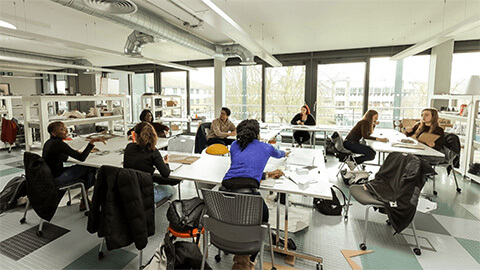
A university degree becomes particularly valuable when you can connect academic concepts with professional practice. Loughborough University’s School of Architecture, Building and Civil Engineering places considerable emphasis on combining theoretical learning with practical skills and industry engagement.
Industry-led projects allow students to work on real-world challenges alongside leading industry professionals. These experiences can help you understand the considerations involved in delivering projects, from initial ideas and technical decisions to coordination and implementation.
The school also offers placement opportunities with reputable employers. A placement year gives students the chance to apply their knowledge in a professional environment, develop workplace skills and earn money while gaining experience.
For students considering careers in architecture, engineering, surveying or construction management, industry exposure can provide a useful bridge between university study and the workplace. It can also help you develop a clearer understanding of how teams operate and how technical knowledge is used to address project requirements.
6. Develop Global Perspectives Through Study Abroad
The built environment is shaped by geographical, cultural and social differences. Architectural styles, construction approaches, infrastructure priorities and planning decisions can vary considerably between places.
Loughborough University’s study abroad programme offers students the opportunity to experience another culture, develop new skills and gain a broader perspective on their subject.
International study can encourage you to consider how different communities approach the challenges of designing buildings, organising cities and developing infrastructure. It can also expose you to new ways of thinking, helping you appreciate the importance of context when working on built environment projects.
Students participating in the programme can earn a Diploma in International Studies (DIntS).
Alongside its academic benefits, an international experience may help you develop independence, adaptability and communication skills. These capabilities can be useful in professional environments where teams collaborate across cultural and geographical boundaries.
For students who want to understand the built environment beyond a single national context, study abroad offers another way to broaden their university experience.
7. Earn an Accredited Degree and Work Towards Professional Recognition
Professional accreditation is an important consideration when selecting an architecture, building or engineering degree. It helps prospective students understand how a course relates to the educational expectations of relevant professional bodies.
Loughborough University’s school offers courses accredited by leading industry organisations, including:
- Royal Institute of British Architects (RIBA).
- Royal Institution of Chartered Surveyors (RICS).
- Chartered Institute of Building (CIOB).
- Joint Board of Moderators (JBM).
Accreditation is course-specific, so students should confirm the relevant professional body’s recognition for their chosen degree.
The Civil Engineering MEng, for example, fully meets the educational requirements for becoming a Chartered Engineer (CEng). Professional registration may require additional practical experience and successful completion of the relevant professional assessment or examination.
For students entering architecture, surveying, construction or engineering, understanding the professional pathway early can help with long-term planning. You can identify the qualifications associated with your chosen career and understand what further experience or assessments may be needed after graduation.
This combination of academic education and professional preparation can help you work towards recognised standards in your chosen field.
8. Build Career-Ready Skills and Explore Graduate Opportunities

Technical knowledge is essential in the built environment, but employers also value the ability to communicate effectively, manage time, work with others and solve problems.
Loughborough University’s courses are designed to help students develop these transferable skills alongside their subject expertise. Design projects, collaborative assignments and industry engagement can provide opportunities to practise presenting ideas, coordinating tasks and responding to complex challenges.
The school’s career-focused approach also helps students explore the range of opportunities available across the built environment and related sectors.
Students can benefit from several forms of career support and professional engagement:
- University Careers Network: Offers workshops, advice and talks to help students prepare for employment.
- Careers Fair: Provides an opportunity to meet industry partners and explore different professional roles. The school highlights a careers fair during the first semester.
- Industry connections: Projects and placement opportunities can help students gain insight into professional working environments.
- Practical learning: Design work and real-world projects allow students to apply technical knowledge while developing professional skills.
Potential career directions include architecture, civil engineering, construction project management, quantity surveying, commercial management and urban planning, depending on your degree and subsequent professional development.
The university’s first-place ranking for Graduate Prospects in Building in the Complete University Guide 2027 is another relevant point for students comparing options in this field.
Although individual outcomes depend on factors such as qualifications, experience and the wider employment market, combining technical expertise with professional skills can help graduates prepare for a range of career opportunities.
9. Contribute to Sustainable, Resilient and Inclusive Cities
Modern built environment professionals must consider more than the immediate requirements of a building or infrastructure project. Their decisions can influence how communities function, how resources are used and how places respond to changing needs.
Loughborough University’s educational approach encourages students to explore the relationship between design, engineering, construction and the wider environment. Its emphasis on sustainable, resilient and inclusive cities provides a context for understanding the responsibilities associated with these professions.
Different disciplines contribute to this goal in different ways:
- Architecture: Explores how buildings are designed to respond to their intended use and surrounding context.
- Architectural engineering: Connects engineering principles with architectural design.
- Civil engineering: Applies technical knowledge to real-life engineering problems and infrastructure-related challenges.
- Construction management and quantity surveying: Addresses project delivery, cost control, contracts and carbon emissions.
- Urban planning: Examines spatial planning, placemaking and the use of digital and data skills in developing smarter cities.
The school’s research facilities also provide opportunities to engage with technical challenges. For example, the National Slope Simulator supports the monitoring and understanding of processes associated with landslides, while advanced construction equipment supports research into innovative building methods.
Through this combination of disciplines, students can develop a broader understanding of how professional decisions influence the places people use every day.
For those motivated by the opportunity to make a meaningful contribution to the built environment, these areas of study offer a way to connect professional ambitions with wider societal needs.
10. Experience Collaboration, Innovation and a Supportive Learning Environment

University is not only about lectures, laboratories and examinations. It is also an opportunity to exchange ideas, build relationships and learn from people with different perspectives.
At Loughborough University, the integrated school structure encourages students to collaborate across disciplines. The annual Cross School Design Week is a particularly valuable example, bringing students together to tackle practical challenges and present their solutions to industry professionals.
Working in an interdisciplinary team can help you understand how different specialists approach the same problem. It also creates opportunities to practise essential skills such as:
- Communicating ideas clearly.
- Sharing responsibilities and managing time.
- Evaluating alternative solutions.
- Presenting proposals to professional audiences.
- Responding to feedback and collaborating towards shared goals.
These experiences are relevant to careers in which architects, engineers, planners and construction professionals need to coordinate their work.
The school also has a team of experts available to help students use its specialist equipment and develop their ideas. Combined with its design studios, laboratories and industry engagement, this environment supports practical exploration alongside academic study.
Whether you are beginning to investigate architectural design or preparing for a future in civil engineering or construction management, collaboration can help you develop the confidence to approach unfamiliar challenges and learn from others.
Conclusion
Choosing where to study is ultimately about finding a course that aligns with your interests, strengths and long-term ambitions. If you enjoy solving problems, developing creative ideas or understanding how places are designed and built, Loughborough University offers several pathways worth exploring.
Before making your decision, consider which subject excites you most, whether you prefer design-led or technically focused learning, and what kind of professional role you hope to pursue. Compare the course structures, entry requirements, placement options and relevant accreditation to determine which programme suits your goals.
A well-informed choice will help you begin university with greater clarity, confidence and purpose, ready to turn your interest in the built environment into a meaningful professional journey.
Your future in the built environment starts with the right choice. Book a Free Consultation with ScholarshipKart for expert counselling, admission assistance, scholarship guidance and visa support. Explore Loughborough University’s architecture, building and civil engineering courses, compare your options, and take the next step towards building a career that makes a difference!
FAQs
1. Why should international students study Architecture, Building and Civil Engineering at Loughborough University?
Loughborough University offers an integrated learning environment where students can explore architecture, civil engineering, construction management and urban planning. Its specialist facilities, industry-led projects and strong UK subject rankings make it an option worth considering for international students interested in the built environment.
2. What courses are available in Architecture, Building and Civil Engineering at Loughborough University?
International students can explore courses such as Architectural Engineering BEng and MEng, Architecture MArch, Civil Engineering BEng and MEng, Commercial Management and Quantity Surveying BSc, Construction Engineering Management BSc, and Urban Planning BSc and MPlan. A foundation year pathway is also available for Civil Engineering and Architectural Engineering.
3. Is Loughborough University highly ranked for Architecture and Civil Engineering?
Yes. The Complete University Guide 2027 ranks Loughborough first in the UK for Architecture and Building, while the Guardian University Guide 2027 places Civil Engineering in the UK’s top 10. These rankings can help international applicants compare universities when selecting a suitable course.
4. Can international students gain practical experience while studying at Loughborough University?
Yes. Students can benefit from practical design projects, specialist laboratories, industry-led activities and placement opportunities, subject to the arrangements available for their course. These experiences can help them apply academic knowledge, strengthen professional skills and understand workplace expectations.
5. Does Loughborough University offer placement years for built environment courses?
The school offers placement opportunities that allow students to gain professional experience, apply their learning and earn money during a placement year. Depending on the course and applicable arrangements, students may also have opportunities to work towards the Diploma of Industrial Studies (DIS) or Diploma of Professional Studies.
6. Are Architecture, Building and Civil Engineering degrees at Loughborough University professionally accredited?
The school offers courses accredited by professional organisations, including the Royal Institute of British Architects (RIBA), the Royal Institution of Chartered Surveyors (RICS), the Chartered Institute of Building (CIOB) and the Joint Board of Moderators (JBM). International applicants should check the accreditation of their specific course and whether it supports their intended professional pathway in their home country.
7. Can international students study abroad while enrolled at Loughborough University?
Loughborough University’s study abroad programme gives eligible students an opportunity to experience another culture, develop new skills and gain an international perspective. Participants can earn a Diploma in International Studies (DIntS), subject to the programme’s applicable requirements.
8. What career opportunities are available after studying Architecture, Building and Civil Engineering at Loughborough University?
Depending on their degree and professional development, graduates can explore careers in architecture, civil engineering, construction project management, quantity surveying, commercial management and urban planning. The university also offers career support through its Careers Network, including workshops, advice and talks to help students prepare for employment.