
Aerospace engineering is a field where scientific knowledge meets ambitious design, advanced technology, and real-world problem-solving. From developing more efficient aircraft to exploring spacecraft systems, aerospace engineers help shape the technologies that connect people, industries, and the wider world.
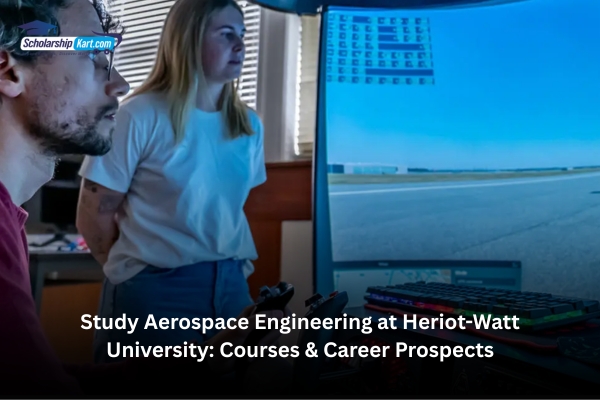
As commercial space exploration, drone technology, low-carbon innovation, and aerospace commerce continue to develop, the discipline offers an exciting environment for aspiring engineers.
Heriot-Watt University in Edinburgh offers an opportunity to explore this dynamic discipline through its BEng (Hons) and MEng (Hons) Aerospace Engineering degrees. But what should you look for when choosing an aerospace engineering programme, and how can the right university help you prepare for the challenges of this evolving field?
Ranked among the top 10 universities in the UK for Aerospace Engineering in The Times and The Sunday Times Good University Guide 2027, and first in Scotland in the 2026 edition, Heriot-Watt University provides a compelling starting point for exploring your options.
Read on to discover what makes its aerospace engineering programmes worth considering and which opportunities could help you shape your future in aviation, spacecraft design, and advanced engineering.
Ready to pursue your passion for aerospace engineering? Let ScholarshipKart help you get started. From choosing the right university and course to personalised counselling, university admissions, scholarships and visa guidance, our experts can support you at every step of your study-abroad journey. Connect with ScholarshipKart and take the first step towards your engineering career.
Top Reasons to Study Aerospace Engineering at Heriot-Watt University
Choosing an aerospace engineering or aeronautical engineering degree involves more than comparing course titles. Prospective students should consider the curriculum, practical training, research environment, specialist equipment, project opportunities, international exposure, and graduate outcomes.
Here are compelling reasons why Heriot-Watt University deserves consideration.
1. Study Aerospace Engineering at a Highly Ranked UK University

University rankings can help prospective students assess the academic standing of a programme, particularly when comparing engineering degrees across institutions.
Heriot-Watt University’s Aerospace Engineering programme was ranked in the top 10 in the UK in The Times and The Sunday Times Good University Guide 2027. It was also ranked first in Scotland in The Times and The Sunday Times Good University Guide 2026.
These rankings provide a useful starting point for students evaluating their university options. They sit alongside other factors, including the course structure, specialist facilities, teaching approach, and opportunities to apply engineering principles to practical challenges.
The university has also performed strongly in related engineering disciplines. It was ranked first in Scotland for Mechanical Engineering in the Guardian University Guide 2026 and second in Scotland for Mechanical Engineering in The Times and The Sunday Times Good University Guide 2026.
2. Choose Between BEng and MEng Aerospace Engineering Degrees
Heriot-Watt University offers two undergraduate routes to help students select a programme that aligns with their academic interests and longer-term ambitions.
BEng (Hons) Aerospace Engineering: A three-to-four-year full-time degree focused on developing core engineering skills and specialist aerospace knowledge.
MEng (Hons) Aerospace Engineering: A four-to-five-year full-time integrated master’s degree that offers additional opportunities for advanced study and a major aerospace design project.
Both programmes combine mechanical engineering principles with applications relevant to the aeronautical industry. Students build foundational knowledge before progressing towards more specialised aerospace subjects.
The BEng is worth considering if you want to establish a strong technical foundation through an undergraduate degree. The MEng offers a longer academic pathway, with further opportunities to explore advanced aerospace engineering concepts and undertake a substantial design challenge in the fifth year.
3. Build Strong Foundations in Mechanical and Aerospace Engineering
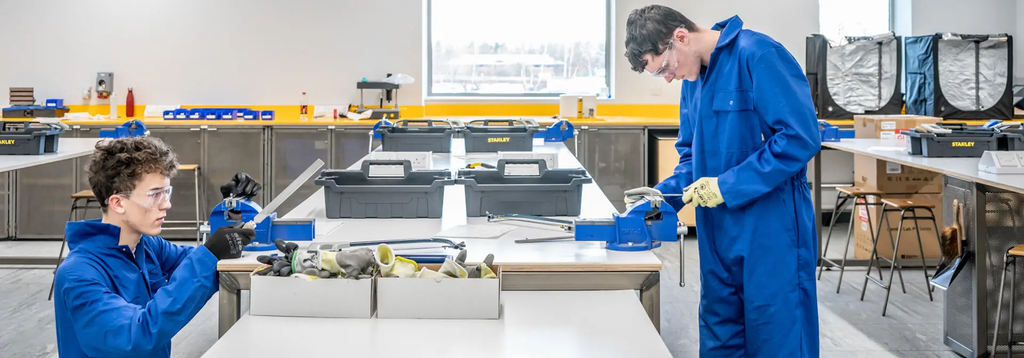
Aerospace engineering requires an understanding of how engineering components behave, how systems can be designed, and how scientific principles can be applied to complex technical problems. Mechanical engineering provides an important foundation for developing these capabilities.
At Heriot-Watt University, the aerospace curriculum combines core mechanical engineering disciplines with specialist applications in aerospace. Students develop the knowledge required to analyse engineering components, investigate design challenges, and propose solutions to real-world problems.
During the first two years, students study courses drawn from the university’s established mechanical engineering degree while being introduced to key aerospace engineering concepts. This structure helps them develop essential engineering knowledge before progressing to more specialised study.
The programme is designed for students interested in aircraft, spacecraft, and satellite development. It also provides opportunities to explore the relationship between engineering theory, design decisions, materials, and practical performance.
4. Gain Hands-On Experience in Specialist Aerospace Engineering Laboratories
Aerospace engineering is not a discipline that can be fully understood through textbooks and lectures alone. Students need opportunities to connect theoretical principles with practical experiments, measurements, and design decisions.
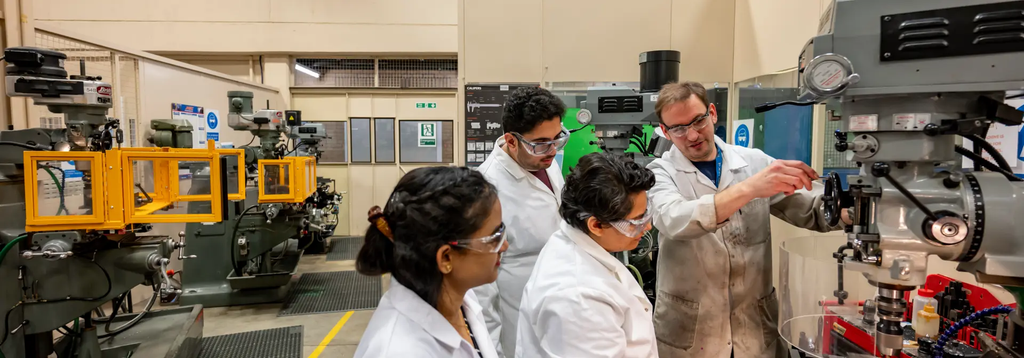
Heriot-Watt University’s learning environment includes a large-scale aerospace engineering laboratory where students can undertake practical work involving dynamics, materials, and design. Access to specialist equipment supports the application of classroom knowledge to engineering tasks.
The facilities include high-speed wind tunnel rigs for fluid mechanics and aerodynamics, a supersonic test rig, a uniaxial testing machine, machining and manufacturing facilities, 3D printers, and specialist equipment for engineering experiments and design projects.
Students can use these resources to support academic assignments and develop their understanding of how engineering systems behave under different conditions. The facilities may also provide opportunities to explore personal and extracurricular projects.
5. Learn Industry-Relevant Software for Aerospace Design and Analysis

Modern aerospace engineering relies on digital tools to model components, evaluate performance, analyse structures, and investigate fluid behaviour. Familiarity with appropriate software is therefore an important part of developing technical competence.
At Heriot-Watt University, students can work with industry-standard software for:
Computational fluid dynamics (CFD): Used to investigate fluid flow and aerodynamic behaviour.
Finite element analysis (FEA): Used to analyse the behaviour of components and structures under specified conditions.
Computer-aided design (CAD): Used to create and develop engineering designs.
These tools complement laboratory activities and engineering coursework. They help students explore design alternatives, examine technical behaviour, and develop a more systematic approach to engineering analysis.
6. Explore Specialised Aerospace Engineering Subjects
One of the advantages of studying aerospace engineering at degree level is the opportunity to move from broad engineering fundamentals towards subjects that match your interests.
Heriot-Watt University’s curriculum includes optional courses that allow students to explore particular areas of aerospace and related engineering. Examples include Spacecraft Engineering, Unmanned Aerial Vehicle Technologies, Aerospace Simulation, and Industrial and Sustainable Aerodynamics.
The wider engineering options also include areas such as energy studies, spacecraft systems, automotive technologies, and orbital mechanics, subject to the relevant course structure and availability.
These subjects cover different aspects of engineering, from understanding spacecraft systems to examining the design and operation of unmanned aerial vehicles. Aerospace simulation provides another route for exploring how engineering systems can be modelled and evaluated.
7. Develop Professional Skills Through Real-World Design Projects
Engineering education involves more than acquiring technical knowledge. Engineers must also evaluate problems, compare potential solutions, communicate decisions, and take responsibility for completing projects.
Heriot-Watt University’s project-based learning provides opportunities to develop these capabilities. In the later stages of the programme, students undertake projects that require them to apply engineering science to current engineering problems and work towards practical solutions.
The fourth-year project work is designed to help students develop individual capabilities and take responsibility for carrying an idea through to completion. These projects provide experience in addressing engineering assignments at a professional standard and receiving feedback on their work.
Students on the MEng route also complete a major aerospace design project in the fifth year. This involves working in a team to address a complex aerospace engineering challenge, incorporating design, analysis, and professional considerations.
8. Learn From Research-Active Aerospace and Engineering Academics
The quality of an engineering degree depends partly on how effectively teaching connects established principles with developing knowledge and research.
At Heriot-Watt University, learning is informed by the expertise of research-active aerospace engineers and academics. The university’s Mechanical, Process and Energy Engineering research institute contributes to the research-informed environment supporting the BEng (Hons) Aerospace Engineering programme.
The research themes demonstrating the breadth of engineering research associated with the institute are Biomedical Engineering, Digital Engineering, Energy Harvesting and Conversion, and Multiphase Flow.
The university’s research performance also provides context for this academic environment. In the REF 2021, 96% of Heriot-Watt University’s engineering research was classed as world-leading. The university was ranked first in Scotland and third in the UK for engineering research through a joint submission with the University of Edinburgh.
Research-informed teaching can help students understand how engineering knowledge develops and how established principles are used to investigate new challenges. It provides an academic context for learning about the technologies and methods shaping contemporary engineering.
9. Study Engineering With an Awareness of Sustainability
The aerospace sector is influenced by continuing interest in efficiency, environmental performance, and technological development. Understanding these considerations can help future engineers evaluate design decisions in a broader context.
Heriot-Watt University’s aerospace curriculum includes Industrial and Sustainable Aerodynamics as an optional subject. This creates an opportunity to explore an area of engineering that connects aerodynamic principles with sustainability considerations.
The university also emphasises research and practical problem-solving across wider challenges, including climate change, alongside its commitment to forward-thinking design and sustainable business practices.
For aspiring aerospace engineers, sustainability is a useful lens through which to examine how engineering systems are developed and assessed. It encourages consideration of performance alongside the wider implications of design and technology.
10. Apply Your Knowledge at GRID, the Centre for Global Research Innovation and Discovery
Learning opportunities at Heriot-Watt University extend beyond traditional teaching spaces. The Centre for Global Research Innovation and Discovery, known as GRID, provides a multidisciplinary environment built around practical learning and collaboration.
Located beside the university’s campus loch, GRID supports the institution’s emphasis on learning by doing. Students can work on real-world problems, collaborate across disciplines, and develop practical solutions to challenges with wider relevance.
The centre provides spaces for individual and group work, alongside technology and specialist equipment. These resources can support the development and testing of ideas, allowing students to explore how different disciplines contribute to engineering solutions.
11. Join Aerospace and Engineering Societies to Build Practical Skills
University life offers opportunities to explore engineering interests outside formal coursework. At Heriot-Watt University, students can take part in engineering-related societies and teams that bring technical concepts into practical projects.
Relevant opportunities include:
CanSat: Build a satellite the size of a can and gain the opportunity to compete in the AAS CanSat Competition.
Aero-Watt: Work on building a fully autonomous aircraft for the IMechE UAS Challenge.
HWRacing: Contribute to building and competing with a car in the Formula Student Competition at Silverstone.
IMechE Railway Challenge team: Help build a small-scale locomotive for the national challenge.
These activities expose students to engineering tasks beyond the formal curriculum. Depending on the project and their involvement, participants may develop experience in design, construction, teamwork, testing, and technical problem-solving.
The societies also provide opportunities to meet like-minded students, participate in social and networking events, and learn more about career paths in aerospace, mechanical engineering, and related industries.
12. Customise Your Degree Around Your Engineering Interests
Aerospace engineering encompasses a range of subjects, and students may develop different interests as they progress through their studies. Some may prefer aircraft aerodynamics, while others may be more interested in spacecraft systems, simulation, or unmanned aerial technologies.
Heriot-Watt University’s optional modules provide opportunities to shape parts of the degree around these interests. Students follow the required aerospace, mechanical, and electrical engineering courses while selecting eligible options from the available curriculum.
For students pursuing the five-year MEng route, the stated structure includes the opportunity to choose additional optional courses over the course of their studies. The specific choices depend on the programme’s requirements and the modules available in the relevant academic year.
This flexibility allows students to investigate specialist topics while retaining a broad foundation in engineering principles.
13. Explore International Study Through the Go Global Programme
Engineering increasingly involves technologies, teams, and industries that operate across national borders. International exposure can help students appreciate different perspectives and develop a broader understanding of the world beyond their home campus.
Heriot-Watt University’s Go Global programme gives students the opportunity to transfer their studies to another global campus or a partner university. The programme is designed to allow students to experience a different country and culture while continuing their degree.
The university identifies inter-campus transfer opportunities involving Dubai and Malaysia. Students interested in this route should check the current eligibility requirements, programme availability, and arrangements for their specific degree.
The Edinburgh campus itself also offers an international environment. More than 10,500 staff and students are based there, with approximately one-third coming from outside the UK.
14. Study in Edinburgh Within an International Campus Community
The setting of a university can influence the overall student experience, from everyday campus life to opportunities for social engagement and personal development.
Heriot-Watt University’s Edinburgh campus combines a dedicated university environment with access to one of Europe’s exciting cities. The campus hosts a substantial international community, creating opportunities to interact with students and staff from different backgrounds.
The university also recognises that student life extends beyond academic achievement. Heriot-Watt Student Union supports the broader university experience, helping students engage with campus life while completing their degrees.
For international students, a welcoming environment and access to appropriate support can be important considerations when choosing where to study. Students should explore the services and resources available to them when planning their move to Edinburgh.
15. Consider Graduate Employability and Aerospace Engineering Career Prospects
Career opportunities are an important factor when choosing an undergraduate engineering programme. Aerospace engineering graduates may pursue roles connected with aircraft, spacecraft, satellites, engineering design, analysis, simulation, and other technical activities, depending on their skills, experience, and career choices.
Heriot-Watt University emphasises career preparation through its engineering curriculum, practical facilities, project work, and industry-relevant software. Together, these elements provide opportunities for students to develop technical knowledge and transferable skills.
The university reports that almost 90% of its graduates are in employment or further education, according to the Graduate Outcomes Survey 2024.
BEng vs MEng Aerospace Engineering at Heriot-Watt University
Understanding the distinction between the two degree routes can help you choose the programme that best matches your academic plans.
| Feature | BEng (Hons) | MEng (Hons) |
| Full-time duration | 3–4 years | 4–5 years |
| Academic focus | Core mechanical engineering and specialist aerospace knowledge | Core engineering foundations followed by more advanced aerospace specialisation |
| Practical learning | Laboratory work, engineering analysis, and project activities | Laboratory work, engineering analysis, project activities, and an additional major aerospace design project |
| Specialist subjects | Aerospace options available within the course structure | Opportunities for further specialist study, subject to module availability |
| Final-stage emphasis | Development of undergraduate engineering capabilities | Advanced study and a major team-based aerospace design challenge in Year 5 |
Both routes are designed to develop essential engineering knowledge and provide opportunities to apply theory in practical contexts. The most suitable choice depends on your intended depth of study, preferred duration, and academic and professional ambitions.
What Will You Study in Aerospace Engineering at Heriot-Watt University?
The programme progresses from foundational engineering concepts towards specialist aerospace applications.
In the early stages, students develop an understanding of core mechanical engineering principles and encounter key aerospace concepts. This foundation supports the more focused study undertaken in later years.
In Years 3 and 4, students have opportunities to expand their aerospace knowledge through a Group Design Project and specialist optional courses. These may include spacecraft engineering, unmanned aerial vehicle technologies, aerospace simulation, and industrial and sustainable aerodynamics.
For MEng students, the fifth year brings more advanced specialisation and a major aerospace design project. Working as part of a team, students address a complex engineering challenge involving design, analysis, and professional considerations.
Across the programme, practical laboratory activities, engineering software, coursework, examinations, and project work help connect academic concepts with their applications. The exact assessment structure and module availability should be checked against the current course information.
Career Opportunities in Aerospace Engineering
- Academic Researcher
- Aerospace Engineer
- CAD Technician
- Design Engineer
- Electronics Engineer
- Higher Education Lecturer
- Maintenance Engineer
- Manufacturing Systems Engineer
- Materials Engineer
- Mechanical Engineer
- Automotive Engineer
- Consulting Civil Engineer
- Control And Instrumentation Engineer
- Patent Attorney
- Product Designer
- Production Manager
- Quality Manager
- Software Engineer
- Technical Sales Engineer
Entry Requirements for BEng (Hons) Aerospace Engineering
Students applying for the BEng (Hons) Aerospace Engineering programme at Heriot-Watt University must meet the relevant academic and English language criteria.
Academic Qualifications
A Levels: Applicants need BBC grades, including Mathematics and Physics, with at least a B in each of these subjects.
International Baccalaureate (IB): Applicants should obtain an overall score of 29 points, including Mathematics and Physics at Higher Level, with a minimum grade of 5 in both subjects.
English Language Proficiency
Applicants must demonstrate an English language proficiency level equivalent to IELTS 6.0, with a minimum score of 5.5 in each component. Equivalent qualifications may also be accepted, subject to the university’s requirements.
Alternative Foundation Pathway
Students who do not meet the direct entry criteria may wish to explore the foundation route offered by Heriot-Watt Global College. The Engineering with an Accelerator Programme pathway provides an alternative route towards the degree, with progression to the second year subject to meeting the applicable programme and progression requirements.
International Tuition Fees
The annual tuition fee for international students is £26,840 for 2027. Applicants should check the university’s official course information for the latest fee details, eligibility criteria, and any changes to admission requirements before applying.
Conclusion
If you are curious about how aircraft fly, how spacecraft are engineered, or how advanced technologies can solve complex problems, aerospace engineering offers an opportunity to turn that curiosity into practical expertise.
For students aspiring to build a career in aerospace engineering, Heriot-Watt University is an option worth exploring when evaluating where to pursue their higher education. Consider how the programme aligns with your academic interests, career ambitions, budget, and expectations for university life, and take the next step towards building your engineering future.
Choosing Heriot-Watt University could be the first step towards turning your passion for aerospace engineering into a fulfilling and future-focused career.
Turn your interest in flight and space technology into a future in engineering. Book a Free Consultation with ScholarshipKart for expert counselling, admission assistance, scholarship guidance and visa support. Discover Heriot-Watt University’s aerospace engineering course, career opportunities and start planning your application today.
Yes, Heriot-Watt University in Edinburgh is worth considering for Aerospace Engineering. It was ranked among the top 10 universities in the UK for Aerospace Engineering in The Times and The Sunday Times Good University Guide 2027.
Heriot-Watt University offers two degree options: BEng (Hons) Aerospace Engineering, which takes 3–4 years, and MEng (Hons) Aerospace Engineering, which takes 4–5 years of full-time study
For the BEng (Hons) programme, A-level applicants need BBC grades, including at least a B in Mathematics and Physics. IB applicants need 29 points overall, with Mathematics and Physics at Higher Level and a minimum grade of 5 in both subjects.
International applicants must demonstrate English proficiency equivalent to IELTS 6.0, with a minimum score of 5.5 in each component. The university may accept equivalent qualifications, subject to its requirements.
The annual tuition fee for international students is £26,840 for 2027, according to the provided article. Students should confirm the latest fee with the university before applying.
The programme combines mechanical engineering fundamentals with specialist aerospace subjects. Optional courses may include Spacecraft Engineering, Unmanned Aerial Vehicle Technologies, Aerospace Simulation, and Industrial and Sustainable Aerodynamics.