
Choosing where to study pharmacy is about much more than selecting a university with a strong academic reputation. Pharmacy combines chemical, biological and medical sciences with clinical practice, medicines optimisation, communication and patient care.
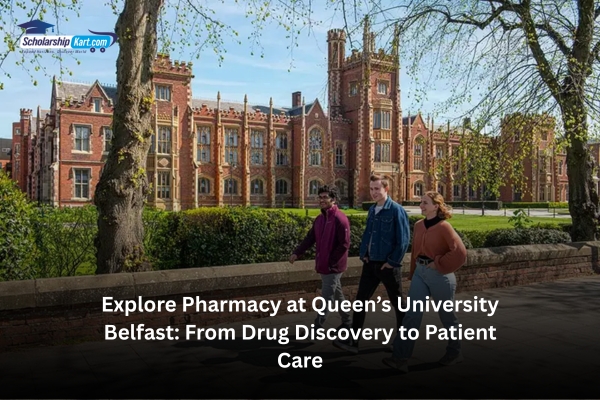
For students who want to understand how medicines are designed, developed, tested and used while also building the skills required to support patients, the School of Pharmacy at Queen’s University Belfast offers an education shaped around these interconnected areas.
Located at the Medical Biology Centre in Belfast, the School of Pharmacy combines teaching, clinical experience, research and industry engagement in a setting designed to prepare students for the changing healthcare and pharmaceutical sectors. Strong national and international rankings support its reputation. For example, the School is ranked 2nd in the UK for Pharmacy and Pharmacology in the Complete University Guide 2027.
But rankings are only one part of the story. Here are the key reasons why studying pharmacy at Queen’s University Belfast can provide an academically rich, practically focused and career-oriented university experience.
Turn your QUB Pharmacy ambition into a clear plan with ScholarshipKart. Get expert guidance on admissions, scholarships, and visa support to take the next step towards studying at Queen’s University Belfast.
Why Study Pharmacy at Queen’s University Belfast?
What does it take to turn a passion for medicines into a meaningful career in healthcare? Let’s explore why studying Pharmacy at Queen’s University Belfast could be the beginning of that journey, bringing together scientific discovery, hands-on clinical learning, patient care, industry exposure and innovative research in one dynamic environment.

1. Study Pharmacy at a Globally Recognised School of Pharmacy
One of the clearest reasons to consider Queen’s University Belfast for pharmacy is the international standing of its School of Pharmacy. The School is ranked 19th globally for Pharmacy and Pharmacology in the QS World University Rankings by Subject 2026, placing it within the global top 20 for the subject.
The QS ranking evaluates areas including academic reputation, employer reputation, research impact and international research collaboration, giving students an indication of the School’s standing beyond the UK.
The School also performs strongly nationally, ranking 2nd in the UK for Pharmacy and Pharmacology in the Complete University Guide 2027. The School is the highest-ranked provider of the MPharm degree in the country in that ranking. It is also ranked 1st in the UK for student satisfaction in Pharmacy and Pharmacology in the 2026 National Student Survey.
For prospective students, this combination of UK and international recognition provides an important academic context. It means pharmacy education at Queen’s takes place within a School known for teaching, research and pharmaceutical science.
Students can therefore study pharmacy within an environment with a strong subject-specific reputation rather than simply relying on the wider reputation of the university.
2. Learn Pharmacy Through Science, Clinical Practice and Patient Care

Pharmacy is a multidisciplinary healthcare subject, and the Queen’s approach reflects this breadth. The discipline involves the design, evaluation, production and use of medicines, drawing on chemical, biological and medical sciences as foundations for clinical and community practice.
Pharmacists also have an important role in monitoring and optimising how patients use medicines.
At Queen’s, the MPharm Pharmacy programme is designed to develop scientific, clinical, technical and communication skills. This is important because professional pharmacy requires more than understanding the chemistry of a medicine.
Pharmacists also need to communicate effectively with patients and understand the social and behavioural dimensions of healthcare.
This integrated approach can help students connect scientific learning with its practical purpose. Rather than seeing medicines solely as pharmaceutical products, students can develop an understanding of how medicines relate to patients, healthcare environments and therapeutic outcomes.
3. Gain Practical Experience Through Clinical Placements
For students asking why to study MPharm Pharmacy at Queen’s University Belfast, practical clinical experience is a significant part of the answer.
Clinical experiential learning placements in both primary and secondary care settings are embedded throughout all years of the MPharm programme. These placements are supported by preparation within practice-based modules.
This structure allows students to encounter pharmacy practice progressively while developing their academic knowledge. Students can learn how pharmaceutical knowledge operates in real healthcare environments rather than studying the subject exclusively through lectures and laboratory sessions.
Students are taught by practising pharmacists from primary and secondary care. This provides an opportunity to connect classroom learning with professional experience and contemporary pharmacy practice.
The emphasis on clinical experience is particularly relevant to students who want to become pharmacists because it supports the development of practical, communication and professional skills alongside scientific knowledge.
4. Study on an MPharm Programme with Professional Accreditation
Queen’s offers a Master of Pharmacy (MPharm) Pharmacy programme designed to prepare students for professional pharmacy practice. The programme is accredited by the General Pharmaceutical Council (GPhC) and the Pharmaceutical Society of Northern Ireland (PSNI).
Professional accreditation is an important consideration when comparing pharmacy degrees because students need an educational route that is aligned with professional pharmacy requirements.
The Queen’s MPharm combines scientific, clinical, technical and communication development with practical learning.
The programme therefore brings together several dimensions of pharmacy education rather than concentrating on pharmaceutical science alone. Students can develop knowledge of medicines while also building the professional skills needed to contribute to patient care.
For applicants researching accredited pharmacy degrees in the UK, this professional focus makes the MPharm an important programme to explore.
5. Learn in a Purpose-Built Pharmacy Practice Environment
The School’s Pharmacy Practice Unit is designed to give students an authentic learning environment resembling aspects of community pharmacy practice. The facility includes currently available medicines, refrigerated storage, a Controlled Drugs safe and up-to-date electronic resources.
Students also have access to individual dispensing workspaces equipped with touch-enabled screens and industry-leading dispensing software. This allows practical pharmacy activities to be incorporated into learning rather than leaving dispensing and practice skills entirely theoretical.
The purpose of this environment is to help students become familiar with professional pharmacy processes in a controlled educational setting. It can also help bridge the gap between university-based learning and clinical or community practice.
For students searching for practical pharmacy education in the UK, access to a dedicated pharmacy practice environment is therefore a significant feature of the Queen’s learning experience.
6. Develop Skills in State-of-the-Art Pharmacy Laboratories
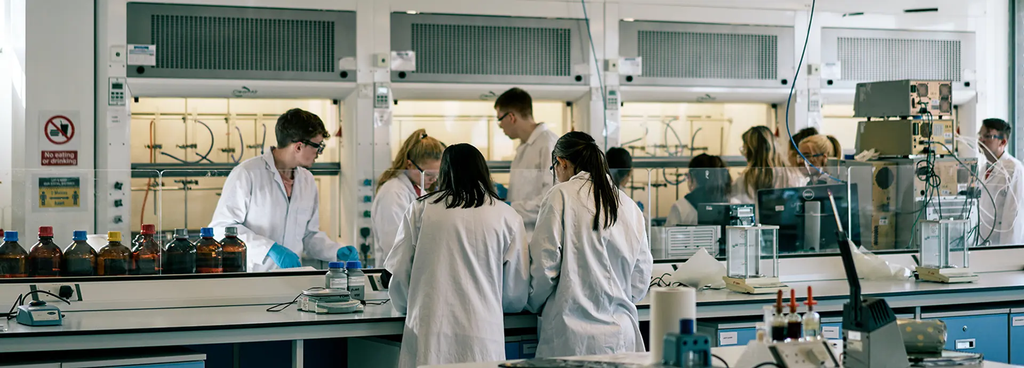
Pharmacy students need strong practical and scientific foundations, particularly as the pharmaceutical sector increasingly depends on advanced technologies and interdisciplinary research.
Queen’s School of Pharmacy provides extensive research facilities covering areas such as cell and molecular biology, analytical science, microbiology, medicinal chemistry, molecular modelling, pharmaceutical science, materials science, drug formulation and engineering.
The School also has access to the Advanced Imaging Core Technology Unit, providing advanced microscopy and image-analysis capabilities. These facilities support the wider research environment in which pharmacy and pharmaceutical science students learn.
Its research facilities are world-class, with equipment supporting its major research themes and collaboration with academic and industrial partners.
For students interested in drug formulation, pharmaceutical technology, biotechnology, drug delivery or research, this breadth of facilities creates opportunities to understand how modern pharmaceutical science operates across multiple disciplines.
7. Explore Cutting-Edge Research in Pharmacy and Pharmaceutical Sciences
Research is a major part of the Queen’s School of Pharmacy experience. Its research focuses on producing real-world improvements for patients through pharmaceutical science and practice.
The School currently organises its research around five principal themes: Nanomedicine and Biotherapeutics; Pharmaceutical Materials Science and Formulation; Drug Delivery and Biomaterials; Infection and Antimicrobial Resistance; and Healthcare Delivery and Medicines Optimisation.
These themes demonstrate the breadth of modern pharmacy research. They include the development of targeted therapies, innovative formulations, drug-delivery systems, biomaterials, infection research and interventions designed to improve patient outcomes.
Queen’s University Belfast’s Pharmacy research stands out for its strong focus on patient care and real-world healthcare impact. Through research in healthcare delivery and medicines optimisation, the School explores practical ways to improve health outcomes across primary and secondary care, helping students see how pharmaceutical research can translate into better, more effective patient care.
8. Learn About Nanomedicine, Drug Delivery and Pharmaceutical Innovation
Students interested in the future of medicines can explore research areas extending beyond traditional pharmacy practice. Queen’s School of Pharmacy has dedicated research activity in nanomedicine, biotherapeutics, drug delivery, biomaterials and pharmaceutical formulation.
Its nanomedicine research includes novel technologies and targeted therapies for advanced healthcare solutions. The School’s drug delivery and biomaterials work investigates materials that interact with the body and can support functions such as drug delivery, infection resistance and monitoring of drug or biological markers.
The School also has specialist laboratories and research teams working on advanced drug-delivery systems. These include work involving sustained and controlled-release drug delivery devices and advanced polymeric systems for transdermal and topical drug delivery.
For students fascinated by drug development, formulation, nanomedicine and pharmaceutical technology, this research environment provides a direct connection between pharmacy and emerging healthcare technologies.
9. Benefit from Strong Pharmaceutical Industry Links
A pharmacy education becomes particularly valuable when students can see how academic knowledge connects with the pharmaceutical industry. Queen’s School of Pharmacy has developed relationships with industry stakeholders at international levels.
Academics teaching on the BSc programmes collaborate with major organisations including GSK, Eli Lilly, Pfizer, Teva, AstraZeneca, Reckitt, Almac and Norbrook, among others, according to the information supplied by the School.
These relationships help ensure that teaching reflects aspects of current industrial practice. They also expose students to the wider pharmaceutical ecosystem, which extends from drug discovery and formulation to manufacturing, testing and related healthcare technologies.
For students considering careers outside traditional pharmacy practice, these connections are particularly relevant. The School’s industry engagement demonstrates that pharmaceutical education can lead towards a broad range of scientific, technical and industry-related career paths.
10. Choose from Multiple Pharmaceutical Science Pathways
Queen’s offers more than the MPharm. Its undergraduate portfolio includes BSc Pharmaceutical Sciences and BSc Pharmaceutical Biotechnology, alongside the MPharm Pharmacy programme.
The Pharmaceutical Sciences degree focuses on areas including drug delivery and formulation, manufacturing and product testing, with the option of a sandwich year involving a year-long industrial placement. The Pharmaceutical Biotechnology degree focuses on areas such as drug discovery and development, biomanufacturing and precision medicine, also offering an optional sandwich year.
This range allows students to distinguish between different interests within the pharmaceutical sector. Someone interested in professional pharmacy practice may choose the MPharm, while a student more focused on pharmaceutical science or biological medicines may explore the relevant BSc pathway.
The availability of these related programmes also reflects the breadth of the modern medicines sector, where pharmacy, pharmaceutical science and biotechnology increasingly intersect.
11. Build Career-Ready Skills and Explore Global Opportunities
A pharmacy degree can provide pathways into healthcare, pharmaceutical companies, research organisations and related sectors. Queen’s provides opportunities for graduates in pharmaceutical, biotechnology and medical-device companies, research institutions and regulatory agencies across Europe, North America and Asia.
The School also provides dedicated employability support. Its Careers Liaison Officer works alongside the University’s wider employability services to help students understand career opportunities and prepare for CV writing, applications, selection processes and interviews.
91% of its graduates were in employment and/or further study 15 months after completing their course, based on HESA Graduate Outcomes data for 2023/24.
The School also provides opportunities for further study, including Master’s programmes and research degrees. Its postgraduate research portfolio covers the five major pharmacy research themes, while programmes such as MSc Industrial Pharmaceutics provide specialist preparation for careers in the pharmaceutical industry.
12. Experience a Supportive Student Environment
Academic quality is only one component of university life. Student experience is another important consideration when choosing a pharmacy school, and Queen’s performs strongly in this area.
The School is ranked 1st in the UK for Student Satisfaction in Pharmacy and Pharmacology in the 2026 National Student Survey. 97.4% of final-year students were positive about their course overall and 98.7% about how well it was organised and run.
The School also emphasises a supportive and vibrant student community, combining teaching, laboratory experience, placements, research opportunities and industry engagement.
13. Study at a Russell Group University with a Long History
Queen’s University Belfast is a member of the Russell Group, a group of 24 UK research-intensive universities. The University also has 175 years of history and heritage and is described as the ninth-oldest university in the UK.
This history places modern pharmacy education within a university environment with a long-standing connection to research, teaching and innovation. At the same time, the School of Pharmacy continues to focus on emerging areas such as nanomedicine, biotherapeutics, pharmaceutical materials and drug delivery.
The combination of heritage and modern scientific research creates an environment where established academic traditions coexist with contemporary pharmaceutical innovation. For international students in particular, this can provide the experience of studying at a historic UK university while engaging with current developments in medicines and healthcare.
14. Benefit from Belfast’s Student-Friendly Setting

Location can have a meaningful influence on the overall university experience. Queen’s School of Pharmacy is based at the Medical Biology Centre in Belfast, placing students within a modern capital city with a strong history of industry and innovation.
Belfast city centre is approximately a ten-minute walk from campus, providing access to food, culture, arts and shopping. The city is also described as having a friendly welcome and a strong connection with progress and innovation.
Cost is another consideration for students planning their university experience. Northern Ireland has the lowest student living costs in the UK, according to the Save the Student National Student Money Survey 2025.
For students comparing UK study destinations, the combination of university facilities, city access and comparatively low student living costs can make Belfast an important location to consider.
15. Continue into Postgraduate Pharmacy and Pharmaceutical Research
Studying pharmacy at Queen’s does not have to be the end of an academic journey. Graduates can progress into further study through MSc programmes and research degrees.
One example is MSc Industrial Pharmaceutics, which is designed to provide specialist knowledge and practical skills for careers within the global pharmaceutical industry. Industrial pharmaceutics plays a central role in the development, validation and manufacture of medicines, including considerations of safety, quality and effectiveness.
Students interested in research can also pursue PhD or MPhil opportunities across the School’s research themes. This progression can be particularly attractive to students who discover an interest in pharmaceutical research, drug development, formulation or healthcare research during their undergraduate studies.
What Makes Queen’s University Belfast Pharmacy Different?
When the different elements are considered together, the appeal of studying pharmacy at Queen’s becomes clearer. The School combines:
- Strong global subject recognition, including 19th in the world for Pharmacy and Pharmacology in QS 2026.
- High UK standing, with 2nd place for Pharmacy and Pharmacology in the Complete University Guide 2027.
- High reported student satisfaction, with the School ranked 1st in the UK in Pharmacy and Pharmacology in the 2026 NSS.
- Professional pharmacy education through the accredited MPharm programme.
- Clinical experiential learning throughout the MPharm programme.
- Dedicated pharmacy practice facilities that simulate elements of professional practice.
- Advanced laboratories covering pharmaceutical science, medicinal chemistry, formulation, microbiology, molecular biology and related disciplines.
- Strong industry engagement involving major pharmaceutical and healthcare organisations.
- Research strengths spanning nanomedicine, biotherapeutics, drug delivery, formulation, antimicrobial resistance and medicines optimisation.
- Career and employability support, including CV, application and interview preparation.
- Global career possibilities across pharmaceutical, biotechnology, medical-device, research and regulatory environments.
- Further study opportunities through MSc, MPhil and PhD pathways.
- A central Belfast location with the city centre around ten minutes from campus.
- A research-intensive Russell Group university environment supported by a long academic history.
Conclusion
A pharmacy degree can open the door to far more than a traditional career behind the dispensary counter. At Queen’s University Belfast, students can begin with a strong foundation in medicines and healthcare while discovering where their interests can take them—from working directly with patients to exploring pharmaceutical innovation, research, biotechnology and the development of new approaches to treatment.
What makes the Queen’s experience particularly compelling is the opportunity to learn within a School where pharmacy is closely connected to the challenges shaping healthcare today. For students who are curious about how medicines work, how they can be improved and how pharmacists can make a meaningful difference to patients, Queen’s University Belfast offers a place to turn that curiosity into knowledge, practical skills and a future in pharmacy.
Ready to Begin Your QUB Pharmacy Journey?

Book a Free Consultation with ScholarshipKart today. From choosing the right course to securing admission, scholarships and your UK student visa, our experienced counsellors can support you throughout the process. Speak to our counsellors today and take the first step towards studying Pharmacy at Queen’s University Belfast.
FAQs
1. Is Pharmacy at Queen’s University Belfast a good choice for international students?
Queen’s University Belfast offers an internationally recognised Pharmacy programme with clinical placements, practical learning and strong research opportunities. Its global reputation and industry connections can provide international students with a valuable academic and professional environment.
2. Is the MPharm Pharmacy at Queen’s University Belfast accredited?
Yes, the MPharm Pharmacy programme at Queen’s University Belfast is accredited by the General Pharmaceutical Council (GPhC) and the Pharmaceutical Society of Northern Ireland (PSNI). The programme combines scientific, clinical, technical and communication skills to prepare students for pharmacy practice.
3. What practical experience do Pharmacy students gain at Queen’s University Belfast?
Students gain clinical experiential learning placements in both primary and secondary care settings throughout the MPharm programme. They also develop practical skills in the School’s Pharmacy Practice Unit and simulated learning environments.
4. What career opportunities are available after studying Pharmacy at Queen’s?
Graduates can pursue opportunities across pharmacy practice, pharmaceutical companies, biotechnology, medical devices, research and regulatory organisations. The School also provides careers support, including guidance with CVs, applications, interviews and other employability skills.
5. Can international students study Pharmaceutical Sciences or Pharmaceutical Biotechnology at Queen’s?
Yes, Queen’s University Belfast offers BSc Pharmaceutical Sciences and BSc Pharmaceutical Biotechnology alongside its MPharm Pharmacy programme. These programmes provide different routes into areas such as drug development, formulation, manufacturing, biopharmaceuticals and precision medicine.
6. Does Queen’s University Belfast offer scholarships for international students?
International students should check the latest Queen’s University Belfast scholarship opportunities and eligibility requirements for their chosen programme. Scholarship availability, deadlines and criteria can vary, so prospective students should review the current information before applying.
7. What research areas can Pharmacy students explore at Queen’s University Belfast?
The School of Pharmacy conducts research across areas including nanomedicine and biotherapeutics, pharmaceutical formulation, drug delivery and biomaterials, infection and antimicrobial resistance, and healthcare delivery and medicines optimisation. These research areas connect pharmaceutical science with emerging healthcare challenges and patient needs.
8. How can international students get help with Pharmacy admission and a UK student visa?
International applicants can seek guidance on course selection, admission requirements, documentation, scholarships and the UK student visa process before beginning their studies. ScholarshipKart can support students with counselling, university applications, scholarship guidance and visa assistance for their Queen’s University Belfast journey.