
Study Computer Science at University College London and explore a field that goes far beyond coding and technical skills. Here, computer science connects powerful ideas with real-world challenges, giving students the opportunity to understand technology, question what is possible and develop solutions that can make a meaningful difference.

At UCL Computer Science, ambitious students learn alongside influential academics and researchers in an environment shaped by innovation, collaboration and practical thinking. The department’s long history of pioneering computing research continues to influence how students learn, explore and think about the future of technology.
Located at UCL’s Bloomsbury Campus in central London, the department offers an exciting setting for students ready to turn their interest in technology into deeper knowledge, practical experience and new possibilities.
Let’s discover important reasons to consider when exploring Computer Science at UCL.
Planning to study Computer Science at UCL? From admission guidance and course selection to scholarship support and visa counselling, ScholarshipKart can help you navigate your study-abroad journey with greater clarity. Connect with our expert counsellors today and take the first step towards studying Computer Science at UCL.
Study Computer Science at UCL: Discover a World-Class Future in Technology

Learn how studying Computer Science at UCL can help you build the knowledge, practical skills and global perspective needed to shape the future of technology.
UCL Computer Science Stands Out in Global and UK Rankings
UCL Computer Science stands out for its strong position in both university rankings and research performance. UCL is ranked joint 8th in the world in the QS World University Rankings 2027, while its Computer Science subject ranking places it 4th in the UK in the QS World University Rankings 2026.
The department is also ranked 7th in the UK for Computer Science in both the Complete University Guide Rankings 2027 and The Times and Sunday Times University Guide Rankings 2027.
Beyond league tables, UCL Computer Science has a strong record in research. In the Research Excellence Framework (REF 2021), it was ranked 1st in England and 2nd in the UK for Computer Science research power, highlighting the scale and strength of its research activity and real-world impact.
The department was also the first Computer Science department in the UK to receive the prestigious Athena Swan Gold Award, reflecting its commitment to creating a fairer study and working environment.
The department’s strong academic environment is complemented by graduate outcomes. UCL Careers Graduate Data (2023–24) reports an average undergraduate starting salary of £71,000 and an average postgraduate starting salary of £55,000.
Students also benefit from studying at UCL’s Bloomsbury campus, located in the heart of London, a city that has consistently ranked among the top three cities in the world for university students in the QS Best Student Cities rankings for 2022–26.
Overall, these rankings, research achievements, graduate outcomes and London location give prospective students several ways to understand what studying Computer Science at UCL can offer.
Experience Computer Science Education Shaped by World-Class Research
A major strength of UCL Computer Science is the close relationship between education and research. Students are learning within a department whose academics are actively engaged in advancing the discipline, rather than studying computer science in isolation from current research.
This matters because computing changes exceptionally quickly. Artificial intelligence, machine learning, cybersecurity, data engineering, robotics and software systems are continually developing, creating demand for graduates who can understand both established principles and emerging technologies.
UCL places considerable emphasis on building strong scientific foundations. Its approach combines rigorous computer science theory with practical applications, giving students an opportunity to understand not only how computing systems work, but also how computer science can be used to solve meaningful problems.
The department’s REF 2021 performance reinforces the strength of this research environment. UCL Computer Science achieved the highest position in England and second position in the UK for research power.
For a student interested in research, innovation or eventually pursuing doctoral study, studying alongside an active research community can provide a valuable academic foundation.
Choose a Computer Science Degree That Matches Your Ambition
UCL provides several routes into computer science, from undergraduate study to specialist postgraduate degrees. This breadth of subjects is one of the department’s strongest features because students do not have to approach computing from a single academic direction.
Computer Science BSc
The Computer Science BSc provides a broad foundation in computer science, combining programming, artificial intelligence, machine learning, software and systems engineering with practical learning and opportunities for industry engagement.
It is suited to students who want to establish a comprehensive foundation before moving into professional computing, further study or a specialist area of technology.
Computer Science MEng
The Computer Science MEng is a four-year integrated degree that combines advanced computer science, engineering principles, practical projects, teamwork and independent research, with opportunities for a placement year or study abroad route.
The programme allows students to develop specialist expertise through advanced optional modules while working with active researchers and undertaking a Master’s-level research project or dissertation.
Explore Specialist UCL Computer Science MSc Courses

UCL’s postgraduate portfolio is particularly attractive to students who already have a degree and want to specialise in a rapidly developing area of computing.
The department offers master programmes covering artificial intelligence, data, finance, software, cybersecurity, robotics, graphics and other emerging technologies.
Artificial Intelligence and Data Engineering MSc: The Artificial Intelligence and Data Engineering MSc develops advanced skills in artificial intelligence, machine learning and data engineering through a focused one-year programme.
Artificial Intelligence for Biomedicine and Healthcare MSc: The Artificial Intelligence for Biomedicine and Healthcare MSc combines advanced AI with biomedical and healthcare applications, preparing students to explore how intelligent technologies can support innovation in these fields.
Artificial Intelligence for Sustainable Development MSc: The Artificial Intelligence for Sustainable Development MSc connects AI with major global challenges, including climate change and humanitarian issues, for students interested in technology with wider societal applications.
Computational Finance MSc: The Computational Finance MSc develops advanced skills in modelling, programming and machine learning for students aiming toward quantitative and technology-driven careers in finance.
Computational Statistics and Machine Learning MSc: The Computational Statistics and Machine Learning MSc combines advanced statistical methods with machine learning, allowing students to strengthen their expertise in computational approaches to data and intelligent systems.
Computer Graphics, Vision and Imaging MSc: The Computer Graphics, Vision and Imaging MSc explores technologies behind graphics, imaging and computer vision, including applications involving image analysis and virtual and augmented reality.
Computer Science MSc: The Computer Science MSc is a one-year conversion programme for non-specialists that develops core computing knowledge from programming and computer architecture to artificial intelligence, with an industrial or research project.
Data Science and Machine Learning MSc: The Data Science and Machine Learning MSc builds advanced expertise in data science and machine learning for students targeting careers in artificial intelligence, technology or research.
Disability, Design and Innovation MSc: The Disability, Design and Innovation MSc combines design, engineering and social insight to help students develop innovative approaches that support disability inclusion.
Emerging Digital Technologies MSc: The Emerging Digital Technologies MSc combines computing, innovation and strategy to prepare students for the rapidly changing landscape of emerging digital technologies, including blockchain.
Financial Risk Management MSc: The Financial Risk Management MSc combines finance, data analytics and modelling to prepare students for specialist work in financial risk management and technology-driven finance.
Financial Technology MSc: The Financial Technology MSc takes a computer science-led approach to financial technology, preparing students to understand and contribute to the changing financial services sector.
Information Security MSc: The Information Security MSc develops specialist cybersecurity knowledge and practical skills for protecting information systems and addressing emerging digital threats.
Machine Learning MSc: The Machine Learning MSc provides advanced study of machine learning with opportunities for specialisation and exposure to industry perspectives, including those from leading organisations such as Google DeepMind.
Robotics and Artificial Intelligence MSc: The Robotics and Artificial Intelligence MSc combines advanced robotics and AI with computing, engineering and hands-on learning for students interested in intelligent machines and autonomous technologies.
Software Systems Engineering MSc: The Software Systems Engineering MSc deepens software engineering expertise through advanced study and a substantial research or engineering project, preparing students for industry or further academic research.
Systems Engineering for the Internet of Things MSc: The Systems Engineering for the Internet of Things MSc combines technical and entrepreneurial skills to help students design smart sensor systems and develop solutions for connected technologies.
This breadth means prospective postgraduate students can select a programme according to their existing education, technical interests and intended career direction rather than being limited to a general computer science qualification.
Learn Through Real-World Computer Science Projects

UCL does not present computer science as purely theoretical learning. From the beginning of their programmes, students can engage with real-world problems and datasets and develop the ability to apply computing concepts to practical situations.
The Computer Science BSc develops foundational knowledge alongside practical computing and engineering skills. Students work on team-based projects and practical activities designed to strengthen analytical thinking and creative problem-solving.
This practical emphasis is particularly important for students preparing for careers in technology. Knowing a programming language is only one part of becoming an effective computer scientist; graduates also need to understand how to analyse problems, design systems, work collaboratively and translate ideas into useful solutions.
The Computer Science Master’s programs take this approach further through problem-based learning, interdisciplinary challenges, teamwork and research. Students develop an understanding of how engineering principles can be used to design, maintain and improve complex systems, while later stages introduce Master’s-level research and independent project work.
The result is an education designed to connect academic knowledge with the kinds of problems computer scientists encounter beyond university.
Build Industry Experience Alongside Your Degree
For many international students, employability is an important consideration when choosing a university. UCL Computer Science offers opportunities to connect academic study with professional environments through its Industry Exchange Network (IXN).
The network enables students to work with industry partners on real-world challenges. The opportunities described for the department include collaboration with organisations such as Microsoft, Intel and the NHS, giving students exposure to problems that exist outside the university environment.
The IXN Pro initiative adds another dimension by offering paid internships with partner organisations during term time and over the summer. These opportunities can help students apply classroom knowledge, develop confidence when working with external organisations and strengthen their professional profile.
The Computer Science MEng also offers an optional Year in Industry, subject to securing a place with an approved industry partner. This can be particularly valuable for students who want substantial professional experience before graduating.
UCL’s postgraduate programmes also incorporate practical and industry-facing work. For example, the Computer Science MSc includes a substantial project that can involve an industrial or research client, while the Software Systems Engineering MSc includes substantial research or engineering projects, often involving industry partners.
This connection between university and industry helps make the academic experience more relevant to the professional world.
Study Computer Science in the Heart of London
Location adds another important dimension to studying at UCL.
The Computer Science department is based at the Bloomsbury Campus, surrounded by the cultural and educational institutions of central London. For an international student, this means university life takes place within one of the world’s major cities rather than on an isolated campus.
London also provides a natural environment for exploring technology, finance, research and entrepreneurship. UCL’s position in the city complements the department’s emphasis on industry collaboration and interdisciplinary learning.
For students studying areas such as computational finance, financial technology, artificial intelligence or software engineering, the London setting can also provide valuable context for understanding how technology interacts with major industries.
Learn in High-Specification Computer Science Facilities
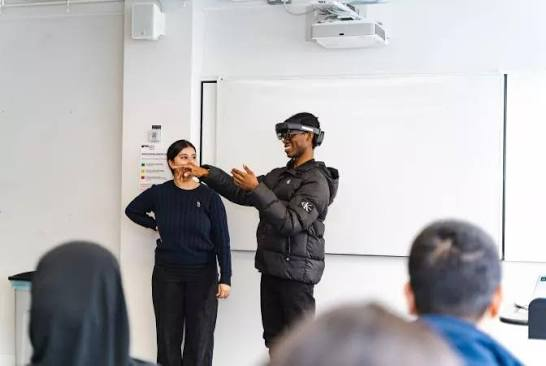
A strong computer science education needs more than lectures and textbooks. UCL provides specialist facilities intended to support computational work, research, practical learning and experimentation.
The department’s high-specification laboratories include more than 50 powerful PCs designed for demanding activities such as machine learning, data processing and advanced programming. The Bloomberg Lab provides financial computing tools and professional-grade software, while two Virtual Reality labs support teaching and research involving immersive technologies.
Students can also access wider UCL facilities, including specialist libraries, study spaces, the Student Centre and UCL East, which adds research laboratories, teaching studios, a lecture theatre and the Innovation Lab, where students and staff can access tools and resources to design, build and test ideas.
These facilities contribute to an academic environment where students can move from learning concepts to experimenting with technology.
Find a Strong Student Community Beyond the Classroom
A respected university experience is about more than academic results. Students can access opportunities to meet people, develop confidence, explore interests and build communities around their subject.
UCL Computer Science provides an active student environment through societies, hackathons, events and professional activities.
The Computer Science Society (CSS) supports community building as well as academic and career development. The Data Science Society (DSS) provides opportunities to participate in workshops and career-focused activities.
TechSoc offers workshops, career talks, CV-building sessions and social events, giving students opportunities to develop professional skills while meeting other students interested in technology.
The AI Society adds another specialist community, with socials, speaker events, company events, tutorials, journal clubs and hackathons.
For students who want to make university life more than a purely academic experience, these societies provide ways to explore technology from different perspectives while building friendships and professional connections.
Prepare for Careers Across Technology and Beyond
Computer science is one of the most flexible academic disciplines because computing skills are increasingly relevant across industries.
UCL Computer Science graduates can move into areas such as technology, finance, consultancy, data science, cybersecurity, telecommunications, banking, investment and research and development.
Potential career directions include software development, data analysis, systems design, systems architecture, cybersecurity and technology consulting. Postgraduate study can also lead toward more specialised technical, research and leadership positions.
UCL strengthens this academic foundation with dedicated careers support. Students can access one-to-one appointments for CVs, applications and interviews, careers workshops, employer insight events, masterclasses and regular information about career opportunities.
This combination of technical education and professional preparation is important for international students who want their university experience to contribute directly to their future career.
The department also provides a valuable research pathway. Students interested in academic careers can develop research skills through projects and work with research groups, while the MEng and MSc programmes can provide preparation for further postgraduate and doctoral study.
Study in a Department That Values Inclusion, Innovation and Impact
The academic reputation of a university matters, but so does the culture in which students study.
UCL Computer Science was the first computer science department in the UK to receive the prestigious Athena Swan Gold Award, reflecting its stated commitment to creating a fairer environment for work and study.
The department also places strong emphasis on using computer science to support society. Its research and applied projects address real-world challenges, while its history of internet research demonstrates a long-standing involvement in technologies that have influenced modern computing.
This combination of research ambition and social impact makes UCL Computer Science particularly interesting for students who want to understand the wider consequences of technology rather than viewing computing only as a route into software development.
The department’s emphasis on collaboration also creates an interdisciplinary environment. Computer science increasingly intersects with healthcare, finance, engineering, sustainability, government and social challenges, and UCL’s programme portfolio reflects those connections.
UCL Computer Science Entry Requirements
Undergraduate Entry Requirements
For the undergraduate Computer Science courses, the A-level requirement is A*A*A, with an A* required in either Mathematics or Further Mathematics.
Applicants must also sit the TARA (Test of Academic Reasoning for Admissions) alongside their UCAS application. TARA is a non-subject-specific assessment designed to assess essential skills required for undergraduate study, and an entry fee applies.
For English language proficiency, applicants need an IELTS overall score of 6.5, with a minimum of 6.0 in each component.
Applicants should review the requirements applicable to their particular qualification and intended programme before submitting an application.
Postgraduate Entry Requirements
For postgraduate courses, the academic requirement is a minimum upper second-class UK Bachelor’s degree, or an international qualification of equivalent standard, in a relevant subject.
Applicants also need to demonstrate suitable mathematical knowledge to at least Mathematics A-level standard, together with appropriate analytical skills.
For English language proficiency, applicants need an IELTS overall score of 7.0, with a minimum of 6.5 in each component.
The precise academic background required can differ between postgraduate programmes. For example, the Computer Science MSc is designed as a conversion programme for graduates from subjects other than computer science or information technology, while the Software Systems Engineering MSc expects a background in computer science, computing or software engineering.
Conclusion
Choosing where to study computer science is about finding a place where your curiosity can grow into ideas, skills and opportunities. UCL Computer Science offers an environment for students who want to challenge themselves, explore what technology can achieve and prepare for a field that continues to evolve rapidly.
If you are ready to learn beyond the classroom, engage with new ideas and build the confidence to turn your interest in technology into meaningful work, UCL could be the place to begin that journey. Your next breakthrough may start with the decision to study Computer Science at UCL.
Ready to Start Your UCL Computer Science Journey?
Turn your plans into action with ScholarshipKart’s expert support for UCL admissions, scholarships, applications, education counselling and visa guidance. Book a Free Consultation with ScholarshipKart today and move one step closer to beginning your Computer Science journey at UCL.
FAQs
Why should international students study Computer Science at UCL?
International students can benefit from UCL Computer Science’s combination of academic learning, practical experience, research opportunities and industry exposure in one of the world’s most dynamic technology hubs. With opportunities to explore emerging areas of computing while developing skills for an international career, UCL can be an exciting choice for students looking to build their future in technology.
What are the entry requirements for UCL Computer Science?
For undergraduate Computer Science, applicants need A*A*A, including an A* in Mathematics or Further Mathematics, and must sit the TARA admissions test. Postgraduate applicants generally need at least an upper second-class UK Bachelor’s degree or equivalent in a relevant subject, along with the required mathematical and analytical skills.
What IELTS score is required for UCL Computer Science?
For undergraduate study, the IELTS requirement is 6.5 overall, with at least 6.0 in each component. For postgraduate programmes, applicants need 7.0 overall, with a minimum of 6.5 in each component.
What Computer Science courses can international students study at UCL?
UCL offers a wide range of undergraduate and postgraduate options covering areas such as Artificial Intelligence, Machine Learning, Data Science, Robotics, Cybersecurity, Software Engineering, Computer Graphics and Financial Technology. This allows students to choose a programme aligned with their academic interests and career goals.
Is UCL Computer Science suitable for international students?
Yes, UCL provides an international study environment where students can learn alongside peers from diverse backgrounds and engage with a globally connected academic community. Its central London location also gives students access to a vibrant city with extensive cultural, professional and networking opportunities.
What career opportunities are available after studying Computer Science at UCL?
Graduates can pursue opportunities across technology, finance, consultancy, data science, cybersecurity, research and telecommunications, among other sectors. Depending on their specialisation, they can move into roles such as software developer, data analyst, systems designer, technology consultant or cybersecurity professional.
Can UCL Computer Science students gain industry experience?
Yes, students can gain practical exposure through opportunities such as industry projects, internships and placements, including experiences supported through UCL’s Industry Exchange Network. These opportunities allow students to apply their academic knowledge to real-world problems and develop professional skills.
What is student life like for Computer Science students at UCL?
Computer Science students can take part in hackathons, academic and career-focused societies, speaker events, tutorials, networking activities and social events. Societies such as the Computer Science Society, Data Science Society, TechSoc and AI Society provide additional opportunities to connect with fellow students and explore areas of interest.