
For students aspiring to become doctors in the UK, choosing a medical school is about much more than rankings. It is about finding an environment where medical science, clinical experience, research, patient care and professional development work together from the very beginning.
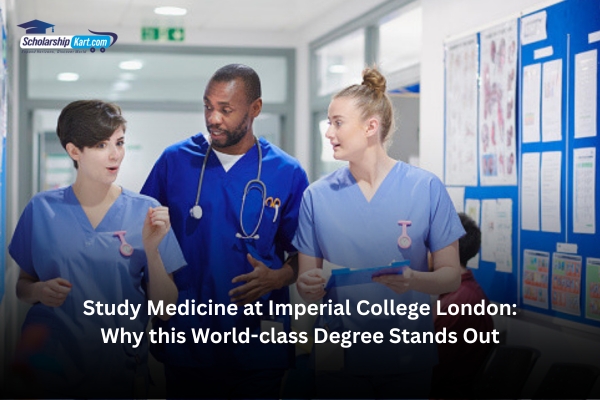
Imperial College London offers exactly this kind of integrated medical education through its six-year MBBS/BSc Medicine degree. Delivered by the Imperial College School of Medicine, the programme combines scientific learning with early clinical exposure, research training, community-based experience and preparation for life as a doctor.
Imperial’s medical programme is particularly distinctive for students who want to understand not only how medicine is practised, but also how scientific discovery, technology and research can shape the future of healthcare.
The course leads to both an MBBS and BSc qualification, while students also receive the Associateship of the Imperial College School of Medicine (AICSM). The medical degree is accredited by the General Medical Council (GMC), providing a recognised foundation for a career in medicine.
Turning your ambition of studying Medicine in the UK into an offer takes careful planning, from university and course selection to admissions guidance and UCAT preparation. ScholarshipKart can help you navigate each stage with personalised counselling and practical guidance, so you can approach your Imperial application with greater clarity and confidence.
Key Advantages of Studying Medicine at Imperial College London
Imperial stands out as a destination for studying medicine in the UK. Its approach brings together academic medicine, clinical education and research within one highly connected learning environment.
Study Medicine at a Globally Recognised Institution
Imperial College London has an established international reputation for excellence in science, technology and medicine.
For Medicine specifically:
- Imperial is ranked 1st in the UK for Medicine in The Guardian University Guide 2027.
- It is ranked 7th in the world for Medicine in the QS World University Rankings by Subject 2026.
- Imperial is ranked 2nd in the world overall in the QS World University Rankings 2026.
Imperial’s Medicine and healthcare subject area is also supported by a strong research profile, with Imperial highlighting its position at the forefront of biomedical discovery and clinical translation.
These rankings provide useful external indicators of Imperial’s academic standing, but the experience of studying medicine goes beyond league tables. The course is designed around the relationship between scientific knowledge, clinical practice and research.
Learn in a Research-Led Medical School
One of the defining features of Medicine at Imperial is its research-led approach to medical education.
The Faculty of Medicine has an international reputation for excellence and brings together teaching, learning and biomedical research. Students can learn from academics and researchers working at the forefront of medicine while developing an understanding of how discoveries can be translated into clinical practice.
This creates an environment where medical students can explore questions such as:
- How can biomedical discoveries improve patient care?
- How can research inform clinical decision-making?
- How can new technologies influence healthcare?
- How can doctors contribute to advancing medical knowledge?
Imperial also collaborates across disciplines, including with its Faculties of Engineering and Natural Sciences and Imperial Business School. This multidisciplinary environment allows medicine to be understood within the wider context of science, technology, innovation and healthcare.
Join One of Europe’s Largest Medicine Departments
Students joining Imperial College School of Medicine become part of one of the largest medicine departments in Europe.
The School trains more than 2,000 undergraduate students in Medicine and Medical Biosciences, creating a substantial academic and clinical community.
Students also benefit from Imperial’s medical campuses across north and west London and its partnerships with NHS Trusts, hospitals and clinics.
This means that medical education is connected to a broad healthcare environment rather than being restricted to classroom-based learning.
Distinctive Features of the Imperial Medicine MBBS/BSc Course at Imperial
The six-year MBBS/BSc Medicine programme at Imperial College London, beginning each October, is structured around a clear progression: understand the science, explore the evidence, and apply it to patient care.
Rather than separating scientific learning from clinical training, the programme gradually builds students’ knowledge, practical skills and professional confidence as they progress towards becoming doctors.
The course is organised into three progressive phases, each with a distinct purpose.
Phase 1: Build the Foundations of Medicine | Years 1–3
The first three years establish the scientific, clinical and professional foundations needed for a career in medicine. Learning is centred on the major systems of the human body, with students encouraged to connect what they learn in the classroom with how disease presents and is managed in real patients.
A key feature is case-based learning, which places scientific concepts in clinical contexts rather than treating subjects as isolated areas of knowledge. As students progress, they revisit core concepts with increasing depth and complexity, strengthening their ability to think critically, solve problems and apply medical knowledge.
Alongside scientific learning, students begin developing essential skills and attributes for clinical practice, including:
- Practical clinical skills and early exposure to patient care
- Critical thinking and clinical problem-solving
- Communication and teamwork
- Personal and professional development
- Understanding health, disease prevention and health promotion
- Understanding behaviour change and its relationship with health
This early integration of science and clinical learning helps students see from the outset how medical knowledge translates into patient care.
Phase 2: Earn a BSc and Develop Research Expertise | Year 4
One of the most distinctive features of Imperial’s Medicine programme is the mandatory BSc in Year 4. Rather than being an optional addition, the intercalated BSc forms an integral part of the six-year medical degree and gives students dedicated time to explore medicine through the lens of scientific research and evidence-based practice.
During this year, students undertake:
Specialist modules in their chosen area
A supervised research project
Structured research-skills training
In-depth study of a scientific or medical field of interest
Experience of interpreting and contributing to the evidence that informs clinical practice
The purpose extends beyond gaining an additional qualification. This undergraduate degree, BSc encourages students to ask why clinical decisions are made, how reliable evidence is generated, and how research can improve patient care.
Students’ preferences are considered when allocating their BSc specialism, allowing them to explore an area aligned with their academic interests. For those considering careers as clinician-scientists, medical researchers or academically engaged doctors, this dedicated research experience can provide an important foundation.
For exceptional students, Imperial also provides the possibility of incorporating a PhD into their studies, creating a further pathway towards combining medical training with advanced research.
Phase 3: Transition from Medical Student to Future Doctor | Years 5–6
The final two years shift the emphasis firmly towards clinical practice and professional readiness. Students build on the scientific knowledge and research experience gained in the earlier phases and apply them in increasingly complex clinical environments.
The focus is on understanding not only what medicine is, but how doctors use medical knowledge to care for patients as part of multidisciplinary healthcare teams.
Across Years 5 and 6, students further develop:
- Clinical knowledge and practical skills
- Professional values and behaviours
- Teamworking and communication
- Patient-centred care
- Confidence in applying knowledge to clinical situations
- An understanding of how healthcare teams work together across different stages of a patient’s journey
By the end of the programme, the three phases come together: scientific foundations from Years 1–3, research expertise through the BSc in Year 4, and advanced clinical experience in Years 5–6. This integrated structure gives the Imperial Medicine MBBS/BSc its distinctive character, combining medical science, research and patient care within a single progressive degree.
5. Community-Based Clinical Experience in London
Clinical learning at Imperial is introduced progressively, beginning with community-based experience in Year 3 and continuing into the later clinical years. In Year 3, students undertake placements in General Practices across London, giving them first-hand insight into how healthcare is delivered within the community and how doctors support patients outside the traditional hospital setting.
This experience helps students develop a broader understanding of patient care, primary healthcare and the different settings in which medical professionals work. As they progress into Years 5 and 6, their clinical exposure expands further, allowing them to apply their medical knowledge and practical skills in more advanced clinical environments and work alongside healthcare teams.
Students are expected to travel to their clinical placements by public transport, unless specific health or welfare circumstances apply.
This progressive approach means clinical exposure is not confined to a single stage of the degree; instead, it develops alongside students’ knowledge and skills, helping them move from observing healthcare in the community to taking on greater responsibility in clinical practice.
Pre-Foundation Assistantship in the Final Year
In the final year, students undertake a Pre-Foundation Assistantship (PFA). The purpose is to help prepare students for their future Foundation posts.
This creates an important transition between undergraduate medical education and the responsibilities students will encounter when beginning their professional careers.
Learn Through Active and Collaborative Teaching Methods
Imperial’s teaching approach encourages students to engage actively with their learning. Rather than relying exclusively on conventional lectures, students experience methods including:
- Flipped classrooms
- Team-Based Learning
- Case-based learning
- Practical clinical skills teaching
- Supervised research
- Clinical and community placements
These approaches encourage students to practise applying knowledge rather than simply memorising information.
Team-Based Learning also reflects the collaborative nature of modern healthcare, where doctors work alongside nurses, allied health professionals, scientists and other healthcare specialists.
Gain Clinical Experience Across London
Studying Medicine at Imperial also means learning within London’s extensive healthcare environment. Students can expect attachments at teaching hospitals and NHS healthcare settings, including examples such as Chelsea and Westminster Hospital, Ealing Hospital, Hillingdon Hospital, and more.
The programme’s location and partnerships provide exposure to different healthcare settings and patient populations. The Charing Cross campus is based around Charing Cross Hospital in Hammersmith, while teaching is also delivered at South Kensington and other campuses.
This network contributes to the clinical dimension of the Imperial medical education experience.
Medical Career Support at Imperial College London
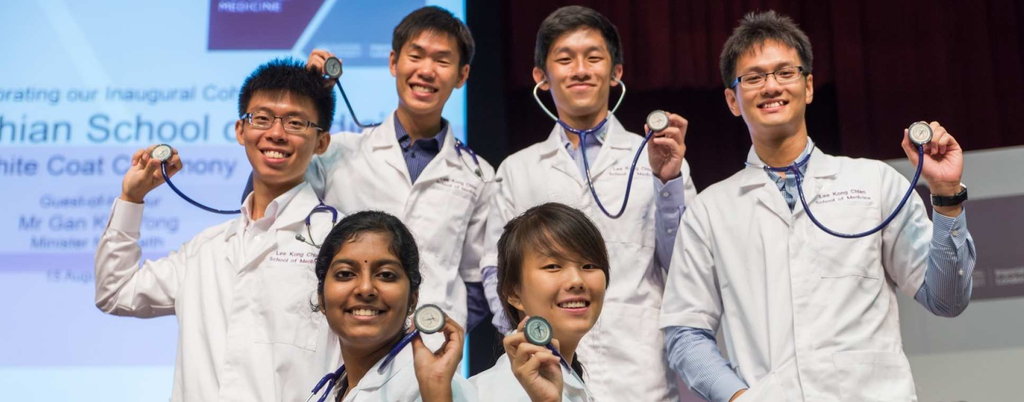
Studying medicine is the beginning of a professional journey, so career guidance is an important part of the student experience.
Imperial’s Careers Service provides dedicated careers support from the beginning of the course.
Students can access:
- One-to-one careers appointments.
- Talks from doctors working across different specialties.
- Skills sessions.
- Networking opportunities.
- Career events.
- Dedicated careers resources.
- Support with applications for Foundation Year 1 posts.
In the final year, students receive support when applying for a Foundation Year 1 post through the UK Foundation Programme selection scheme.
The MBBS also provides skills that can support career pathways beyond conventional clinical practice.
Graduates can pursue careers in areas including:
- Clinical medical practice.
- Biomedical research.
- Pharmaceutical industry.
- Scientific journalism.
- Healthcare management.
Entry Requirements and Tuition Fees for Medicine at Imperial
Admission to Imperial’s Medicine MBBS/BSc is competitive, and applicants need to meet the specified academic and admissions requirements.
For the Medicine course:
- A-level: AAA, including Chemistry and Biology, with A in one of these subjects.
- International Baccalaureate: 38 points.
- English Language Requirements: 7.0 overall (minimum 6.5 in all elements)
- Applicants must take the University Clinical Aptitude Test (UCAT).
- Shortlisted applicants are invited to participate in Multiple Mini Interviews (MMIs).
- The 2025 applications-to-places is 6:1.
- International Tuition fee: £61,550 per year
Is Imperial College London a Strong Choice for Aspiring Doctors? Facts at a Glance
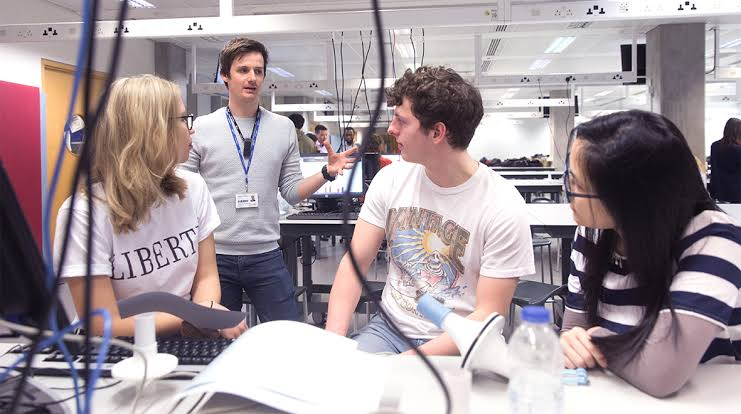
For students looking for an integrated medicine degree in the UK, Imperial offers an education built around the connection between scientific discovery, clinical medicine and research.
The six-year structure gives students time to develop progressively, from foundational medical sciences and early patient exposure, through a dedicated research-focused BSc, and finally into advanced clinical education and preparation for Foundation training.
What Makes Imperial’s Medical Education Different?
Imperial College London’s approach to medical education brings together scientific knowledge, clinical practice, research, technology and professional development. Key features include:
1. Science and Clinical Medicine Are Closely Connected
Case-based learning helps students connect scientific concepts with real clinical situations.
Teaching progressively builds knowledge so that students can understand how medical science is applied to patient care.
2. Early Clinical Exposure Builds Practical Understanding
Students encounter patient care and clinical skills early in the course.
This allows them to begin developing practical skills alongside their academic medical knowledge.
3. A Mandatory BSc Makes Research Part of Medical Training
The Year 4 BSc is an integrated and compulsory part of the MBBS/BSc programme.
Students undertake modules and a supervised research project in an area of scientific or medical interest.
The experience develops a foundation in research skills that can support future clinical research.
4. The Curriculum Looks Towards the Future of Healthcare
Imperial’s curriculum considers technological developments in education and healthcare.
Students also explore the changing expectations of medical practice within the future NHS.
This helps connect medical education with developments shaping modern healthcare.
5. Learning Extends Beyond the Hospital
Students undertake community-based experiences in General Practices in London during Year 3.
Exposure to different healthcare settings helps students understand patient care within community environments as well as hospitals.
6. Multidisciplinary Learning Enriches Medical Education
Medical students benefit from Imperial’s connections with Engineering, Natural Sciences and Imperial Business School.
These collaborations bring medicine into a wider environment of science, technology, innovation and healthcare.
7. Active Learning Encourages Critical Thinking
Imperial uses approaches such as flipped classrooms and Team-Based Learning.
These methods encourage students to actively engage with information, apply their knowledge and develop critical-thinking skills.
8. Professional Development Begins From the Early Years
Phase 1 focuses on critical thinking, personal and professional development and teamwork.
Students progressively develop professional knowledge, clinical skills, values and behaviours throughout the programme.
9. Clinical Training Is Connected to NHS Healthcare
Students can undertake clinical attachments at teaching hospitals and NHS healthcare settings.
Examples include Chelsea and Westminster Hospital, Ealing Hospital and Hillingdon Hospital.
This provides opportunities to experience how multidisciplinary clinical teams work together to deliver patient care.
10. The Course Prepares Students for Life Beyond Medical School
The final stage includes a Pre-Foundation Assistantship (PFA) designed to prepare students for their Foundation posts.
Dedicated careers support includes one-to-one guidance, specialty talks, skills sessions, networking opportunities and careers events.
Graduates can pursue pathways including clinical medicine, biomedical research, the pharmaceutical industry, scientific journalism and healthcare management.
Conclusion
Choosing a medical school ultimately comes down to finding an environment that matches your academic interests, learning style and long-term professional ambitions. Imperial College London is particularly suited to students who want their medical education to extend beyond textbooks and examinations, with opportunities to engage deeply with science, evidence, clinical practice and the evolving needs of healthcare.
For prospective applicants, it is worth looking beyond rankings and considering whether the course structure, teaching methods, clinical exposure, research opportunities and career support align with what you expect from your medical degree. Reviewing these factors carefully can help you decide whether Imperial’s learning environment is the right fit for your aspirations.
If your goal is to develop as a thoughtful, research-aware and clinically prepared medical professional, Imperial provides a compelling environment in which to begin that journey.
Ready to Take the Next Step Towards Medicine at Imperial?
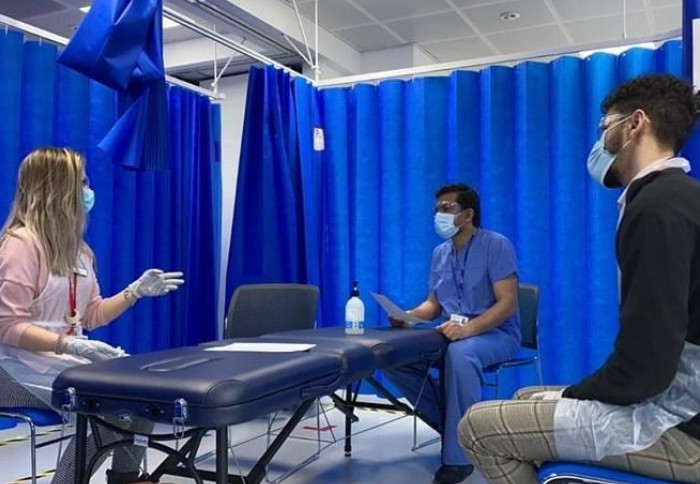
Your journey does not end with choosing the right medical school. From admission and application support to scholarship guidance, counselling and UK student visa assistance, having the right guidance can make the process more manageable.
Book a Free Consultation with ScholarshipKart today for personalised support and take the next step towards studying Medicine at Imperial College London, UK.
FAQs
1. How long is the Medicine course at Imperial College London?
The MBBS/BSc Medicine programme at Imperial College London takes six years to complete and starts in October. Students graduate with both an MBBS and BSc qualification.
2. What are the entry requirements for Medicine at Imperial College London?
Applicants need AAA at A-level, including Chemistry and Biology, with an A in one of these subjects, or 38 points in the International Baccalaureate. Applicants must also take the UCAT and, if shortlisted, attend Multiple Mini Interviews (MMIs).
3. Do international students need to take the UCAT for Medicine at Imperial?
Yes, applicants to the Medicine course need to take the University Clinical Aptitude Test (UCAT). Shortlisted applicants are then invited to participate in Multiple Mini Interviews as part of the admissions process.
4. What qualification will I receive after studying Medicine at Imperial?
Successful students receive both an MBBS and BSc qualification through the integrated six-year programme. Students also receive the Associateship of the Imperial College School of Medicine (AICSM).
5. Does Imperial offer clinical experience during the Medicine degree?
Yes, students receive early exposure to clinical skills and patient experience and later undertake clinical placements in different healthcare settings. The programme includes community-based experiences in London as well as attachments at teaching hospitals and NHS healthcare settings.
6. Can international students study Medicine at Imperial College London?
International students can apply to Imperial’s Medicine programme, subject to meeting the university’s academic and admissions requirements for their applicant category. Prospective international applicants should also check the applicable tuition fees and visa requirements for their year of entry.
7. How much does it cost to study Medicine at Imperial College London?
The tuition fee is £61,550 per year for 2026. As fees can vary according to entry year and fee status, international students should confirm the applicable fee directly with Imperial before planning their finances.
8. What career support does Imperial offer Medicine students?
Imperial provides careers support from the beginning of the course, including one-to-one appointments, specialty talks, skills sessions, networking and careers events. In the final year, students also receive support with applications for Foundation Year 1 posts through the UK Foundation Programme selection scheme.