
Animation and visual effects have moved far beyond traditional cartoons and cinema. Today, they influence films, television, advertising, video games, augmented reality, virtual production, architectural visualisation and digital media.
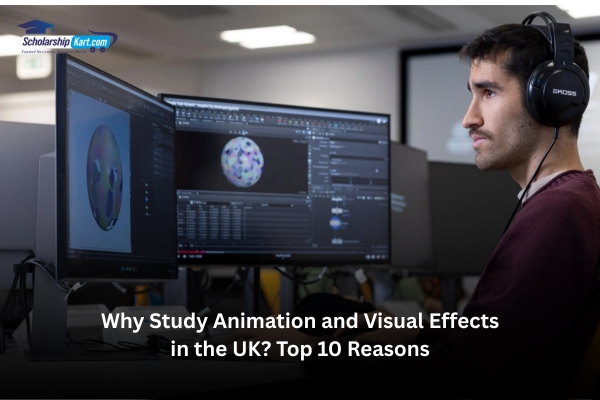
For students who want to combine creativity, storytelling, technology and digital production, the UK offers an exciting environment to develop these skills.
The UK is home to a thriving creative sector, advanced production facilities and university courses designed around contemporary animation and visual effects practices. The UK’s visual effects and animation industry contributes more than £71 billion to the UK economy, while demand for skilled graduates continues to grow.
So, why study Animation and Visual Effects in the UK? From industry-focused training and professional networking to specialist technologies and portfolio development, there are several reasons students consider the UK for an education in this field.
Planning to Study Animation and Visual Effects in the UK? Explore UK universities, Animation and VFX courses, scholarships and study options with ScholarshipKart. Get personalised guidance on choosing a course that matches your creative interests and career goals, and take the next step towards studying in the UK.
Why Study Animation and VFX in the UK? Benefits, Courses and Careers
1. Study Animation in a Thriving UK Creative Industry
The UK has a well-established creative industry spanning film, television, animation, gaming and visual effects. Studying in this environment can give students greater exposure to the practices, workflows and creative disciplines that shape contemporary screen and digital media.
Animation is also a diverse field. Students can explore drawing, filmmaking, storytelling, digital design and experimentation while developing an understanding of how different creative roles contribute to a finished project.
The close connection between education and the wider creative sector can help students understand how their academic learning relates to professional production environments.
2. Build Practical 2D and 3D Animation Skills
Animation courses in the UK can provide opportunities to explore both traditional and digital approaches to animation. Depending on the programme, students may work across 2D and 3D animation, character animation, visual development, stop motion and other forms of moving-image production.
Students can also explore different stages of the creative process, from developing an initial idea and creating visual concepts to producing, editing and refining a finished project.
This variety allows students to experiment with different techniques while gradually identifying the areas of animation that align with their interests and career goals.
3. Gain Industry-Relevant Animation and VFX Training
UK Animation and Visual Effects courses are designed to combine creative development with practical, industry-relevant training. Students may gain experience in areas such as modelling, rigging, compositing, motion capture and digital effects.
Courses can also incorporate professional software, equipment and production techniques, helping students become familiar with workflows used across animation, film, television, visual effects and games.
Depending on the course, students may work on industry briefs, practical projects and collaborative productions. This approach can help them understand how creative ideas move from development to production while building skills that are relevant to professional environments.
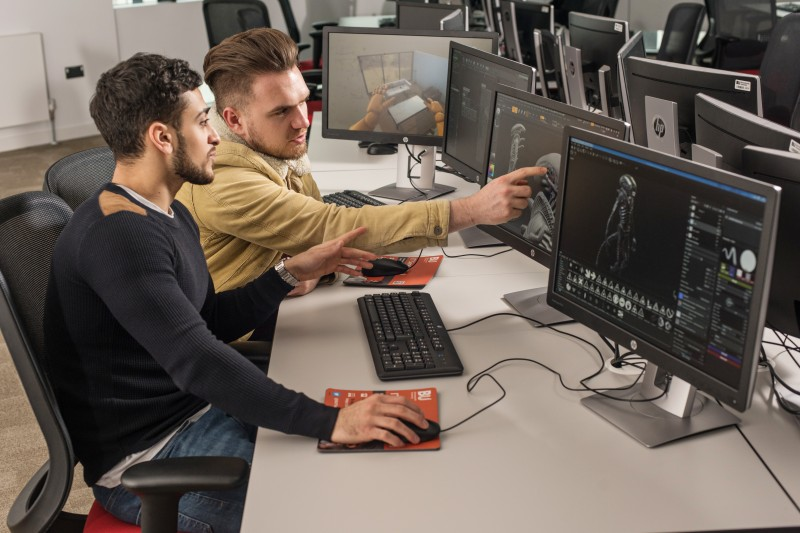
4. Learn with Advanced Animation Technology and Facilities
Access to specialist facilities can be an important advantage when studying Animation and Visual Effects in the UK.
Depending on the university, students may have access to:
- High-end GPU computing and production systems
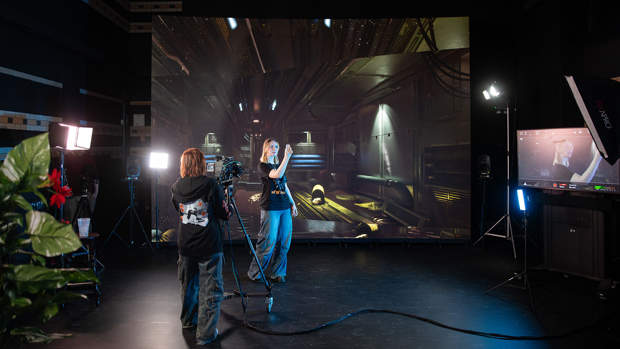
- Film and television studios
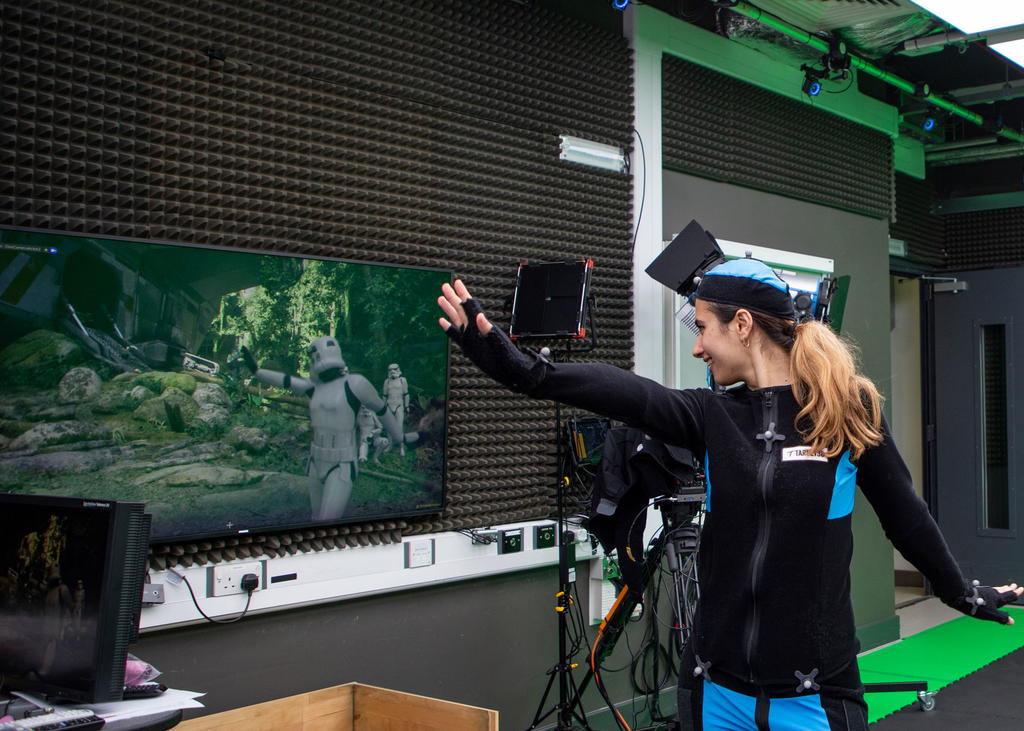
- Motion and performance capture facilities
- 4K and 12K cameras and specialist lenses
- Professional lighting, sound and grip equipment
- Photogrammetry facilities
- Film and sound editing software
- Professional animation and production software
- High-speed storage and connected production environments
- VR, AR, MR and XR headsets
Working with professional-standard equipment can give students practical experience of the tools and technical processes used to create digital content.
5. Develop a Professional Animation Portfolio and Showreel
A strong portfolio or showreel is an important part of studying Animation and Visual Effects in the UK, whether you are pursuing an undergraduate or postgraduate degree.
A portfolio can demonstrate creative ability, technical skills, visual development and experience of completing projects. Throughout a degree, students can build work that reflects their academic level, interests and intended area of specialisation.
Undergraduate students may develop a broad portfolio across areas such as 2D and 3D animation, character animation, visual effects, compositing and editing. Postgraduate students can use their studies to create more specialised, experimental or research-led work.
This helps students graduate with a body of work that reflects their individual strengths and creative direction, which can be useful when exploring opportunities across animation, VFX and the wider creative industries.
6. Learn from Academics and Animation Industry Professionals

Another reason to study Animation and Visual Effects in the UK is the opportunity to learn from academics and professionals with experience across the creative industries.
Depending on the course, teaching staff may include filmmakers, digital animators, 3D artists, game developers and screen-production specialists. Their professional experience can provide students with practical insights into creative development, production workflows and the expectations of the industry.
Guest lectures, industry briefs, professional-style projects and practical workshops can further connect academic learning with professional practice. These experiences can introduce students to real production processes and help them understand how creative ideas are developed, refined and delivered for different screen and digital media projects.
7. Build Professional Connections Through Collaboration
Animation and VFX are highly collaborative fields, making professional connections an important part of the student experience.
UK universities can provide opportunities to work with fellow students from different creative disciplines and collaborate on productions. Some courses also work with media production companies, animation studios, VFX houses, film studios and other industry partners.
Industry briefs, placements, collaborative productions and external projects can expose students to different working environments while helping them develop communication, teamwork and project-management skills.
These experiences can also help students build an understanding of how different creative and technical roles work together within a larger production.
8. Explore Emerging Technologies Such as Virtual Production and AI

Animation and visual effects continue to evolve as new technologies influence the way visual content is created. UK courses and research environments can provide opportunities to explore areas such as:
- Virtual production
- Performance and motion capture
- In-camera visual effects
- Parameterised character creation
- Real-time animation and production
- Immersive media
- AI-assisted audiovisual production
- Digital actor creation
- Photogrammetry
- 3D environment development
- VR, AR, MR and XR technologies
Research in areas such as virtual production, performance capture, digital actor creation, in-camera VFX and AI-assisted audiovisual production also demonstrates how animation and visual effects are expanding beyond traditional workflows.
For students, exposure to emerging technologies can encourage experimentation and help them understand how new tools are influencing animation, filmmaking, games and immersive experiences.
9. Study in a Strong Creative and Research Culture
The UK’s creative culture provides students with numerous sources of inspiration beyond the classroom. Museums, galleries, exhibitions and festivals can expose students to different artistic styles, cultural perspectives and approaches to visual storytelling.
The country’s film and television culture, contemporary art and design communities, digital media and diverse storytelling traditions can also encourage students to experiment and develop their own creative perspectives.
UK universities also have an international reputation for research that integrates theory with practical creative practice. This allows students to understand both the concepts behind animation and visual effects and their application in real-world production.
This approach can encourage critical thinking, experimentation and innovation while helping students develop a deeper understanding of contemporary animation, VFX and digital media.
10. Access Diverse Career Opportunities in Animation and VFX
A degree in Animation and Visual Effects can lead to a range of creative and technical roles. Depending on their skills and specialisation, graduates may pursue careers such as:
- Animator
- 3D artist
- VFX artist
- Compositor
- 3D modeller
- Lighting artist
- Technical artist
- Animation supervisor
- Art or creative director
- Technical director
- VFX supervisor
- Producer or studio head
Career progression can take several forms. A graduate may begin as a junior animator or junior 3D artist before progressing to roles such as animator, 3D artist, senior animator or animation supervisor. With further experience, professionals may move into positions such as art or creative director, technical director, VFX supervisor, studio head or producer.
The field also offers opportunities for students with different interests. Some may focus on character animation and storytelling, while others may develop careers in visual effects, games, technical art, compositing, motion graphics or digital production.
Animation Courses in the UK: Undergraduate and Postgraduate Options
Students can choose from a variety of Animation and Visual Effects-related degrees in the UK.
Undergraduate Courses
Common undergraduate study options include:
- Animation BA or BDes
- Illustration with Animation BA
- Graphic Design and Animation BA
- Game Animation BA
Some universities also offer foundation years, industry experience opportunities or study-abroad options as part of their undergraduate programmes.
Postgraduate Courses
Students looking to specialise further can consider master’s programmes such as:
- Animation MA
- Animation and VFX MSc
- Game Art and Animation MSc by Research, MPhil or PhD
- Illustration and Animation MA
- 2D Animation and Stop Motion MA
Course structures vary, but typical modules may cover narrative and structure, visual language, contextual studies, animation strategies, character animation, production processes, 2D and 3D techniques, cameras and CGI.
What Skills Can You Develop Through Animation Studies?
Animation education can help students develop both specialist creative abilities and transferable skills.
Depending on the course, students may work with:
- Handmade and digital animation
- Drawing and illustration
- Model making
- 2D and 3D production
- Film and filmmaking
- Stop motion
- Kinetic technologies
- Compositing and digital effects
Students can also develop transferable abilities such as time management, attention to detail, project management, communication, problem-solving, teamwork and presentation.
These skills can be useful because animation projects often require students to manage creative ideas, technical processes, deadlines and collaboration at the same time.
Where Can Animation and VFX Graduates Work?
Animation and VFX graduates can find opportunities across a wide range of industries and production environments, including:
- Feature films
- Film and television production
- Children’s television
- Adult comedy and drama
- Video games and game development
- Music videos
- Advertising and branded content
- Motion graphics
- Title sequences and idents
- Architectural visualisation
- Education and e-learning
- Corporate training and presentations
- Healthcare and medical visualisation
- Augmented and virtual reality
- Immersive and interactive media
- Digital platforms and online content
- 3D visualisation and digital environments
- Independent filmmaking
The growing use of digital visual content across entertainment, marketing, education, healthcare, architecture and other sectors means that animation and visual effects skills can be applied beyond traditional film and television.
Animation and VFX Salary and Career Progression
Salary can be an important consideration when choosing a career in Animation and Visual Effects. Earnings can vary depending on experience, specialisation, role and the type of organisation or project.
Entry-level Animation and VFX roles can offer around £20,000 to £24,000 per year, while professionals with experience may earn an average of approximately £25,000 to £32,000. Roles in areas such as game animation can be positioned towards the higher end of the range.
With more than 10 years of experience, professionals who progress into senior or highly specialised positions may potentially earn around £60,000 or more.
These figures should be viewed as indicative rather than guaranteed salaries, as actual earnings can differ according to experience, location, specialisation, employer and career progression.
Top 10 UK Universities for Animation and Game Design
The Guardian University Guide 2027 highlights leading universities where creative practice, technical skills and industry exposure come together. Explore the options below to find an environment that aligns with your interests and future ambitions.
- University of Hertfordshire
- University of Dundee
- Teesside University
- University of Chichester
- University for the Creative Arts
- De Montfort University
- University of South Wales
- University of the Arts London
- University of Wales Trinity Saint David
- Heriot-Watt University
Conclusion
Choosing Animation and Visual Effects as a field of study can be a strong fit for students who enjoy creative problem-solving, visual storytelling, technology and making ideas tangible. It is particularly suited to those who want a degree where artistic expression can be combined with digital tools, filmmaking, design and technical production.
A UK degree in this field can also suit students who prefer learning by doing. If you enjoy developing ideas through projects, experimenting with different techniques, working collaboratively and gradually refining your creative style, Animation and VFX offers plenty of scope to discover where your strengths lie.
The field can be especially appealing if you are curious about how films, games, advertisements, digital experiences and visual worlds are created. At the same time, it requires patience, attention to detail, teamwork and a willingness to keep learning as creative practices evolve.
Ultimately, the right choice depends on your interests, strengths and career goals. If you want to combine imagination with technology and see your ideas develop from an initial concept into a finished visual experience, studying Animation and Visual Effects in the UK can provide a rewarding direction for your creative and professional journey.
Ready to Explore Animation and VFX Courses in the UK?
Your journey can start with finding the right course, university and funding options. Book a Free Consultation with ScholarshipKart for guidance on UK university applications, scholarships, study opportunities, visa and move closer to turning your interest in Animation and Visual Effects into a career.
FAQs
1. Why should international students study Animation and Visual Effects in the UK?
The UK offers internationally recognised universities, a strong creative industry and access to modern animation and VFX facilities. Students can combine creative learning with practical training and exposure to professional production practices.
2. What Animation and VFX courses can international students study in the UK?
International students can choose from undergraduate programmes such as Animation BA/BDes, Illustration with Animation and Game Animation, as well as postgraduate courses such as Animation MA and Animation & VFX MSc. Course content and specialisations vary between universities.
3. What are the entry requirements for an Animation degree in the UK?
Entry requirements vary by university and course, but may include academic qualifications, English-language proficiency and, for some programmes, a portfolio or evidence of creative work. Students should check the specific requirements of their chosen university before applying.
4. Do I need a portfolio to study Animation and VFX in the UK?
Some UK Animation and VFX courses may require a portfolio, while others may assess creative work as part of the application process. A portfolio can showcase your drawing, animation, visual development, storytelling, technical ability and creative ideas.
5. What skills can international students develop through an Animation and VFX degree?
Students can develop skills in areas such as 2D and 3D animation, modelling, compositing, character animation, visual effects and digital production. They can also develop transferable skills including teamwork, communication, project management, problem-solving and attention to detail.
6. What career opportunities are available after studying Animation and VFX in the UK?
Graduates can explore roles such as animator, VFX artist, compositor, 3D artist, modeller, lighting artist, technical artist and animation supervisor. Career opportunities can span film and television, gaming, advertising, digital media, architectural visualisation and immersive technologies.
7. How much can Animation and VFX graduates earn in the UK?
Entry-level salaries can be around £20,000–£24,000 per year, while average earnings may be approximately £25,000–£32,000 depending on experience and role. Experienced professionals in senior or specialised positions may potentially earn £60,000 or more, although actual salaries vary.
8. Can international students get scholarships to study Animation and VFX in the UK?
International students may be eligible for scholarships, university funding and other financial support, depending on their nationality, academic profile and chosen institution. Students should research funding options early and check the eligibility criteria and application deadlines for each scholarship.