
Choosing where to study architecture is an important decision, particularly if you want a degree that combines creative design with engineering, technology and professional development.
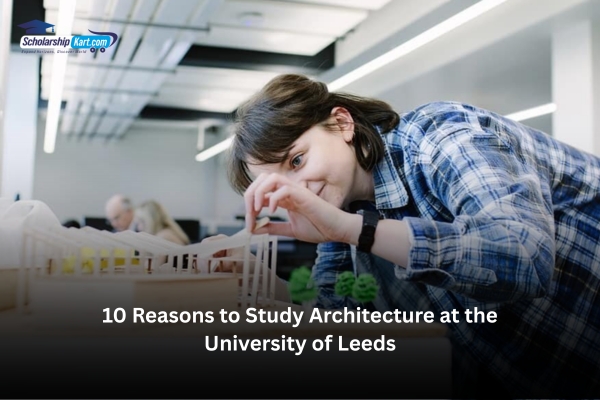
Recognised among respected UK universities for its architecture and engineering education, the University of Leeds offers a distinctive portfolio of architecture and architectural engineering degrees, with courses designed around interconnected learning, studio-based projects and practical experience.
From professionally recognised qualifications and industry-standard software to specialist laboratories and research into sustainable buildings, the architecture degrees at Leeds are designed to develop both creative and technical capabilities. The programmes also offer different study lengths and progression routes, allowing students to choose a qualification that aligns with their future career ambitions.
Turn your ambition into a clear study-abroad plan with ScholarshipKart. From choosing the right university and architecture course to admission guidance, scholarship opportunities, counselling and visa support, our expert counsellors can help you navigate every step of your journey to study in the UK.
Discover What Makes Architecture at the University of Leeds Stand Out
Let’s explore what makes Architecture at the University of Leeds a distinctive choice for aspiring architects. From interdisciplinary learning and industry-focused facilities to sustainable design and professional opportunities, discover what you can gain by studying architecture at Leeds.
1. Study Architecture Through an Interdisciplinary Engineering Approach
One of the defining features of studying architecture at Leeds is the integration of architecture, structural engineering and building services engineering.
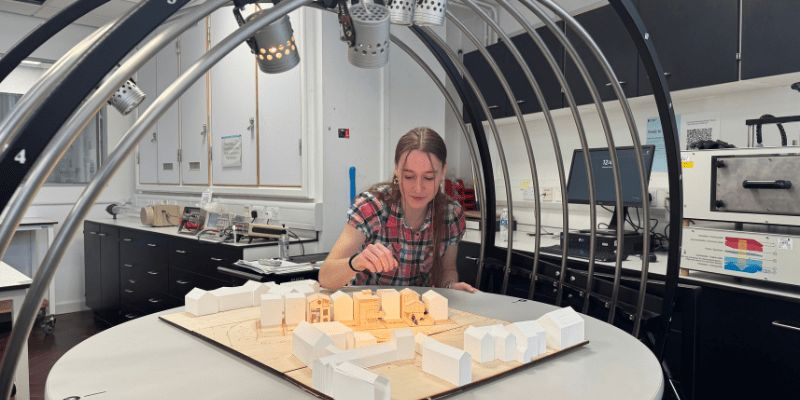
While the undergraduate degrees combine creative and technical knowledge, helping students understand buildings not only as designed spaces but also as complex structures and environments, master’s degrees at the University of Leeds offer opportunities to deepen your expertise in architecture, sustainable design and future urban environments.
Because the programmes are housed within the School of Civil Engineering, architecture students learn alongside engineering disciplines. Their education can include structures, construction, materials and building physics alongside architectural history, theory and urban design. This interdisciplinary approach supports a broader understanding of how buildings are designed, constructed and operated.
Students can therefore develop knowledge across areas such as:
- Architectural design
- Structural engineering
- Building services engineering
- Construction and materials
- Building physics
- Urban design
- Architectural history and theory
- Sustainable building design
This combination is particularly relevant to students interested in the relationship between creative design, science and technology.
2. Choose from a Wide Range of Architecture Degrees at Leeds
The University of Leeds has a strong position in national and global university rankings, placing #77 worldwide in the QS World University Rankings. Its reputation for architecture is further reflected in subject-specific rankings, with Leeds ranked 3rd in the UK for Architecture in The Guardian University Guide 2027 and 5th in the UK for Architecture in The Times and The Sunday Times Good University Guide 2027.
The University of Leeds offers a full portfolio of architecture and architectural engineering courses, giving students several routes depending on their academic and professional goals. Most of these programmes are professionally accredited, although the university advises students to check the accreditation details of individual courses.
The available programmes include options ranging from a three-year BEng to five-year integrated master’s study. This variety means students can select a pathway according to their intended career direction and desired level of professional qualification.
The architecture-related programmes include:
- MArch, MEng Architecture – 5 years
- MEng, BEng Architecture – 4 years
- MEng, BEng Architectural Engineering – 4 years
- BEng Architectural Engineering – 3 years
- MArch Architecture – 2 years
- MSc Architecture Design – 1 year
The programmes share a core foundation of learning and experience, while offering different qualifications and exit points. Their modules are largely interconnected across the five-year architecture programmes, creating continuity in the learning experience.
3. Gain Professionally Recognised Architecture and Engineering Qualifications
Professional recognition is another significant reason to consider architecture at Leeds. The university states that its programmes include professional accreditation or validation from recognised professional organisations, depending on the individual course.
Relevant professional bodies include the Architects Registration Board (ARB), Royal Institute of British Architects (RIBA), Joint Board of Moderators (JBM) and Chartered Institution of Building Services Engineers (CIBSE).
For example, the five-year MArch, MEng Architecture programme provides professionally accredited qualifications to master’s level in architecture, structural engineering and building services engineering. Graduates complete the academic requirements for these disciplines and can pursue membership of related professional bodies, subject to the required work experience and professional gateways.
The four-year MEng, BEng Architecture is validated to Part 1 by RIBA and is also accredited to master’s level for civil and structural engineering and building services engineering. Meanwhile, the two-year MArch Architecture is accredited by ARB to master’s level.
This professional focus can help students understand how their academic learning connects with established professional pathways.
4. Develop Creative Skills Through Architecture Design Projects
Design projects are at the heart of the architecture and architectural engineering programmes at Leeds. They provide opportunities to bring together technical knowledge and creative thinking while working on practical architectural challenges.
Students apply knowledge from different modules to investigate design problems and develop creative responses. The projects also help students build visual communication abilities through drawings, models and computer modelling.
Rather than studying design only as an abstract concept, students work with briefs situated in real-world settings. These projects explore current building types and can involve individual design responses as well as group work.
The Architecture Design Studio provides a dedicated environment where students can develop their projects with support from academic staff and external tutors who are practising architects or engineers. This creates a connection between university learning and professional architectural practice.
5. Learn With Industry-Standard Architecture Software
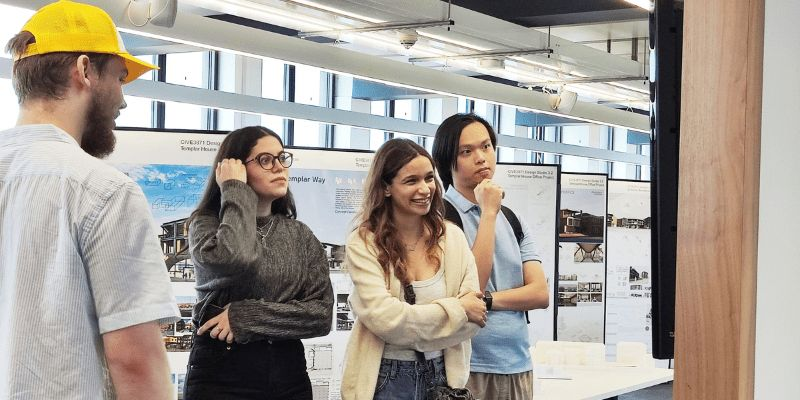
Modern architecture requires much more than hand-drawn plans and physical models. Digital modelling, building performance analysis and structural analysis are important parts of contemporary architectural education and practice.
At Leeds, architecture and architectural engineering students have access to industry-standard software within the architecture design studio. This includes:
- Revit for Building Information Modelling (BIM)
- IES for dynamic thermal modelling
- Robot for structural analysis
- Adobe Creative Suite for creative and visual communication
Learning with these tools can help students understand how digital technologies contribute to architectural design, environmental performance and structural decision-making.
The use of BIM, thermal modelling and structural analysis also reinforces the interdisciplinary character of the courses. Students can connect their creative design decisions with technical considerations, building performance and engineering principles.
6. Gain Hands-On Experience in Specialist Facilities
Architecture at Leeds is supported by facilities within the School of Civil Engineering, giving students opportunities to gain practical experience alongside theoretical learning.
The school’s facilities include structures and materials laboratories equipped with rigs for studying the full-scale performance of structures. Undergraduate students use these spaces for team projects, including the timber truss project in the first year.
Students can also access a specialist geotechnics laboratory to investigate how soil behaves in different environments. Other facilities support research and learning related to water and wastewater, microbiology, aerobiology and building performance.
The facilities include:
- Structures and materials laboratories
- Geotechnics laboratory
- Building physics laboratory
- Water and wastewater facilities
- Class II microbiology laboratory
- Clean laboratory for molecular biology
- Class II Aerobiology chamber
- Specialist civil engineering flow equipment
This practical environment allows students to connect classroom concepts with real materials, structures, environmental systems and building performance.
7. Explore Sustainable Architecture and Future Cities
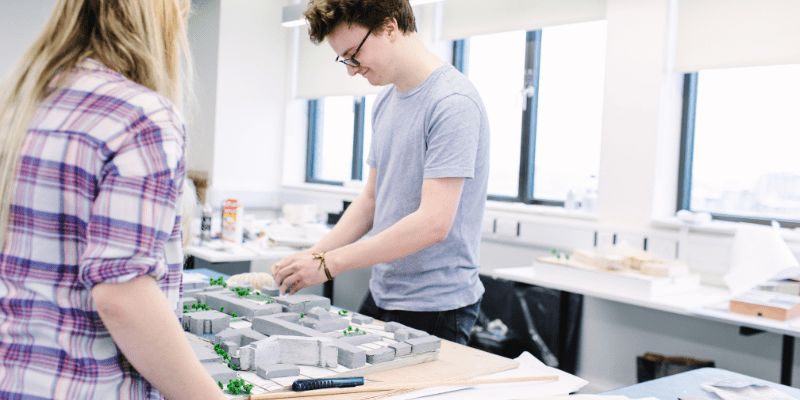
Sustainability is an important part of architecture and architectural engineering research at Leeds. The university’s research addresses challenges associated with the built environment, including sustainable buildings, low-carbon design, low-impact materials and waste minimisation.
Research also examines relationships between occupant behaviour, health, wellbeing and building performance. This provides students with an academic environment where architecture is considered in relation to environmental and social challenges.
The university’s research explores technical innovations such as low-carbon construction systems, efficiency, resilience, design for deconstruction and reuse, and advanced or robotic manufacturing.
The MSc Architecture Design is particularly focused on this direction. The one-year master’s course trains students as sustainable designers of future cities and urban environments. It uses an interdisciplinary approach and encourages critical debate and experimental practice.
For students interested in sustainable architecture, urban design, low-carbon buildings and future cities, this research environment can provide valuable academic context.
8. Learn From a Research-Intensive Russell Group University
The University of Leeds is a Russell Group university with a research-intensive environment. Its research community covers engineering, mathematics and physical sciences and brings together different disciplines to investigate significant technical and societal challenges.
97% of university’s research is “world-leading” or “internationally excellent”. Within architecture and architectural engineering, research addresses subjects including sustainable buildings, building performance, low-carbon construction, architecture and urbanism.
The research environment also extends into areas such as:
- Urban and digital heritage
- Participatory Action Research
- Socio-spatial studies
- Memory and culture
- Preservation and regeneration
- Digital mapping
- Living labs
- Co-production processes
This breadth creates an academic setting where architecture can be examined through technical, environmental, cultural and social perspectives.
9. Build Employability Through Work Experience and Professional Skills
Studying architecture at university is not only about developing design knowledge. Building professional confidence, commercial awareness and workplace experience can also be important when preparing for a career.
The University of Leeds provides students with opportunities to gain work experience while studying. The university highlights benefits including developing professional networks, increasing confidence, improving commercial awareness and understanding potential career directions.
Students can also apply for roles advertised exclusively to University of Leeds students. The university reports that Leeds students are the 9th most targeted by top employers in the UK, according to the High Fliers: The Graduate Market in 2026 report.
Students have secured placements with organisations including Goldman Sachs, L’Oréal, Airbus and Warner Bros, alongside opportunities with small and medium-sized enterprises and not-for-profit organisations. While these examples cover the wider University of Leeds student community rather than architecture specifically, they demonstrate the broader employability environment available to students.
For architecture students, practical projects and professional interaction can complement academic learning and help develop transferable workplace skills.
10. Develop a Broad Skill Set for Architecture and Construction Careers
A further reason to study architecture at Leeds is the breadth of knowledge developed across the programmes. The university’s undergraduate architecture degrees integrate creative design, applied science and technology, allowing students to develop capabilities that extend beyond conventional architectural design.
Students can explore architectural principles through drawings, physical models and computer modelling while also learning about structures, construction, materials and building physics. This combination can support an understanding of how design ideas translate into technically informed building solutions.
The five-year MArch, MEng Architecture programme provides an especially broad academic pathway. Graduates complete academic requirements across architecture, structural engineering and building services engineering, subject to the programme’s professional requirements and subsequent professional gateways.
This breadth can also provide flexibility as students’ interests develop. The university explains that its programmes offer different qualifications and exit points, while some pathways allow students to continue their architectural education elsewhere or progress along engineering routes.
What Makes Leeds Architecture Courses Distinctive?
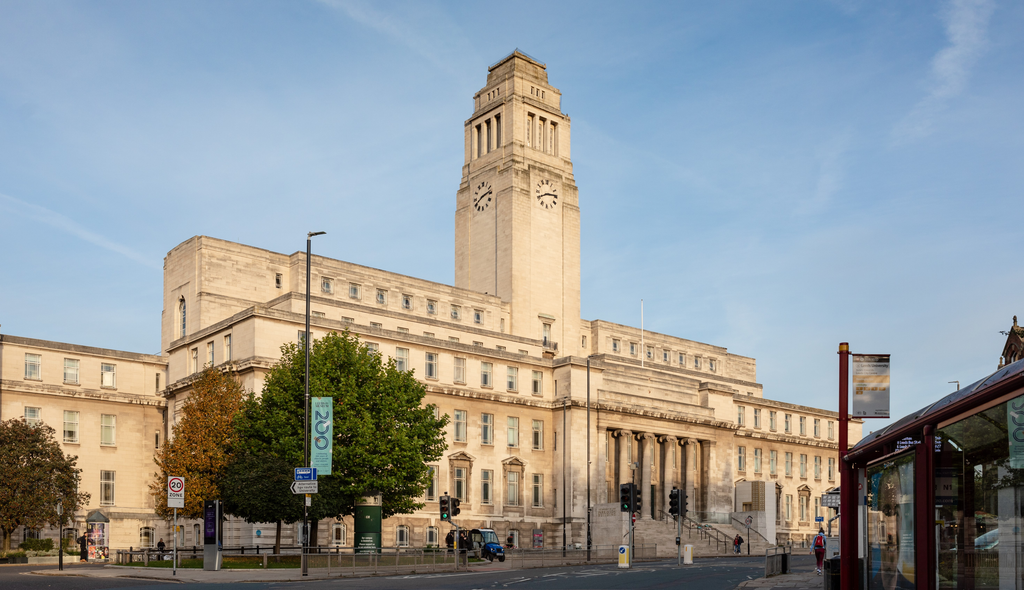
The key features include:
- Interdisciplinary learning combining architecture and engineering.
- Professional accreditation and validation across relevant programmes.
- Studio-based design projects centred on practical architectural challenges.
- Industry-standard software including Revit, IES, Robot and Adobe Creative Suite.
- Specialist engineering facilities supporting practical learning.
- Research into sustainable buildings and low-carbon design.
- Opportunities for work experience and professional networking.
- Multiple architecture and architectural engineering degree pathways.
- Research-led learning within a Russell Group university.
- A broad technical and creative skill set relevant to the built environment.
Conclusion
Studying architecture at the University of Leeds can provide an education that connects architectural creativity with engineering knowledge, digital technology, sustainability and practical experience.
Its portfolio of architecture and architectural engineering degrees gives students different routes into higher-level study and professional development, while the shared learning structure creates opportunities to understand architecture from multiple perspectives.
The emphasis on design projects, industry-standard software and specialist facilities supports practical learning, while the university’s research environment introduces students to contemporary issues such as sustainable buildings, low-carbon construction, urbanism and building performance.
For aspiring architects who want to study in the UK and explore both the creative and technical sides of the built environment, Leeds offers a broad academic environment in which design, science, engineering and society intersect.
With professional pathways, research opportunities, practical facilities and work-experience opportunities available across the university, students can develop a foundation for further study and careers across architecture, architectural engineering and the wider construction sector.
Ready to Begin Your Architecture Journey in the UK?
Take the next step with ScholarshipKart. Get personalised support with course and university selection, applications, admissions, scholarships, counselling and student visa guidance, so you can move forward with greater clarity and confidence. Book a Free Consultation with ScholarshipKart today and start planning your UK study journey.
The University of Leeds offers an interdisciplinary approach that combines architecture with structural engineering, building services engineering, technology, sustainability and practical design experience.
Architecture-related options include MArch, MEng Architecture, MEng/BEng Architecture, MEng/BEng Architectural Engineering, BEng Architectural Engineering, MArch Architecture and MSc Architecture Design.
Course duration varies from one to five years depending on the programme. Options include a 1-year MSc, 2-year MArch, 3-year BEng, 4-year BEng/MEng and 5-year integrated MArch/MEng pathway. Pasted markdown
Many of the programmes have professional accreditation or validation, depending on the individual course. Relevant professional bodies include ARB, RIBA, JBM and CIBSE. Students should check the accreditation status of their chosen programme. Pasted markdown
Students have access to industry-standard software including Revit for BIM, IES for thermal modelling, Robot for structural analysis and Adobe Creative Suite for visual communication.
Yes. Students work on design projects and can use specialist facilities such as structures and materials laboratories, geotechnics laboratories and building physics facilities. Pasted markdown