
Choosing the right university is an important decision for students planning to study in the UK. Beyond academic reputation, students increasingly look for high-quality teaching, research opportunities, career support, an engaging student community, and a location that offers a fulfilling experience outside the classroom. The University of St Andrews brings these elements together in a distinctive setting on Scotland’s east coast.
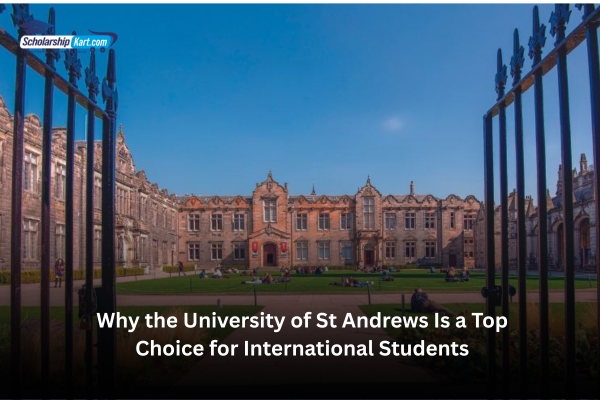
Founded in 1413, the University of St Andrews is Scotland’s oldest university and the third oldest university in the English-speaking world. More than six centuries later, it combines its historic identity with modern teaching, research and student facilities. Its compact university environment, flexible degree structure, strong academic reputation and international community make St Andrews a distinctive destination for students from around the world.
The University is the top university in the UK and Scottish University of the Year in The Sunday Times Good University Guide 2027. Its academic strengths also extend across numerous subject areas, with all subjects ranked within the top six in the UK.
For students considering higher education in Scotland, here are the major reasons to consider studying at the University of St Andrews.
Make your St Andrews study journey easier with ScholarshipKart. Get personalised counselling to understand your course and university options, support with your application, guidance on scholarship opportunities and assistance throughout the UK visa process. Connect with ScholarshipKart today and take the first step towards studying at the University of St Andrews.
University of St Andrews: Why Study at One of the UK’s Oldest Universities?
Let’s explore what makes the University of St Andrews a distinctive choice for students seeking academic excellence, a vibrant student experience and a globally respected UK education. From its centuries-old heritage and flexible degree structure to its research strengths and supportive community, discover the key reasons to study at one of the UK’s oldest universities.
1. Study at Scotland’s Oldest University
The University of St Andrews has a history stretching back to 1413, giving students the opportunity to become part of an institution with more than 600 years of academic tradition.
Its long history is not simply about ancient buildings or historic ceremonies. The University has developed alongside generations of scholars and students while continuing to adapt to changing approaches to education and research.
This combination of heritage and innovation is one of the defining characteristics of the St Andrews experience. Historic university buildings stand alongside modern facilities, creating an environment where centuries-old traditions coexist with contemporary academic life.
For students, studying at St Andrews therefore means experiencing:
- A university founded in 1413.
- Scotland’s oldest university.
- The third oldest university in the English-speaking world.
- A long-standing international academic community.
- Historic traditions combined with modern education and research.
- A compact university environment where students can develop close connections.
The University is both ancient and innovative, and has an exceptional ability to preserve its identity while continuing to develop as a modern research-intensive institution.
2. Experience Highly Regarded Teaching and Student Satisfaction
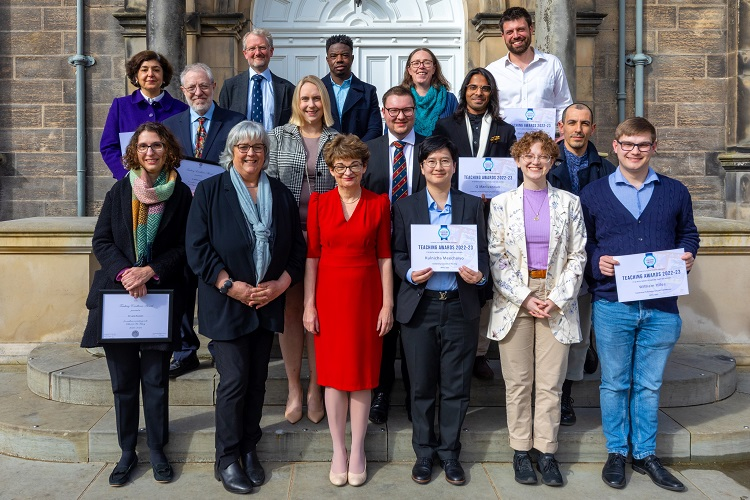
Academic quality is one of the strongest reasons to consider the University of St Andrews.
According to the National Student Survey 2026, St Andrews was the highest-ranked university in the UK for student academic experience, with 89.6% of final-year students giving the University top marks for the quality of their learning and teaching experience.
The University also ranked sixth overall in the UK and was the highest-ranked Scottish institution for student satisfaction in the NSS 2026.
These figures highlight an important feature of the St Andrews model: education is designed around interaction between students and academics rather than simply large-scale classroom teaching.
The University’s teaching environment emphasises:
- Small-group learning.
- Dialogue between students and teachers.
- Research-led teaching.
- Independent study.
- Tutorials and seminars.
- Flexible assessment approaches.
- Opportunities to question and explore ideas.
This environment can be particularly valuable for students who want to participate actively in their education and develop their ability to think critically.
The University’s teaching approach combines world-class teaching, flexible assessment methods, modern facilities and a distinctive student experience.
3. Benefit from a Flexible Scottish Degree Structure
One of the most distinctive academic advantages of studying at St Andrews is its flexible degree structure.
Most undergraduate programmes follow a four-year structure. Rather than requiring students to specialise immediately, the system allows them to explore different academic areas before concentrating on their chosen subject.
Typically, students study:
- Three subjects in their first year.
- Two or three subjects in their second year, depending on the programme.
- Greater specialisation during the third and fourth years.
This approach can be useful for students who have several academic interests or who want additional time to understand which subject they want to pursue in greater depth.
The flexible structure also encourages students to develop knowledge beyond a single discipline. A student can explore additional subjects while progressively building expertise in a chosen field.
For students who are still refining their academic interests, this flexibility can make the transition into university study more exploratory and personalised.
4. Choose from a Wide Range of Courses and Academic Disciplines

The University of St Andrews offers more than 900 undergraduate courses alongside a substantial range of postgraduate opportunities. It has just over 8,000 undergraduate students, creating a relatively compact academic community compared with many larger universities.
Academic provision is organised across four Faculties:
Faculty of Arts: The Faculty of Arts offers modular programmes leading to qualifications including the Master of Arts.
Students can explore a broad selection of disciplines while benefiting from the University’s flexible approach to undergraduate study.
Faculty of Divinity: The Faculty of Divinity offers programmes leading to qualifications such as the Bachelor of Divinity, Master of Arts and Master of Theology.
Faculty of Medicine: The Faculty of Medicine offers two routes to study medicine:
A BSc Honours in Medicine leading to an MBChB/MBBS at partner medical schools.
An MBChB graduate-entry programme operated jointly with the University of Dundee.
Faculty of Science: The Faculty of Science offers a range of Honours degrees, including BSc, MBiochem, MChem, MGeol, MMath, MPhys and MSci.
This breadth allows students to explore different academic pathways while benefiting from the University’s established teaching and research environment.
5. Study Subjects That Perform Strongly in UK Rankings
St Andrews has demonstrated strong performance across a broad range of academic disciplines.
According to the Sunday Times Good University Guide 2027, five St Andrews subjects ranked top in the UK were English, Modern Languages, History, Art History and Physics. All St Andrews subjects were ranked within the top six in the UK.
The Complete University Guide 2027 ranks St Andrews fourth overall in the UK and identifies the School of Mathematics and Statistics as top in the UK. A further 10 subjects were placed in the top three, while 24 subjects ranked within the UK top 10.
These subject-level results are particularly relevant to students who are choosing a university according to their intended field rather than institutional reputation alone.
The University’s performance in the Times and Sunday Times Good University Guide 2026 and Guardian University Guide 2026 also reflects strong results across teaching, student satisfaction and individual subjects.
6. Learn in a Research-Intensive University
Research is another major reason students may choose St Andrews.
The latest Research Excellence Framework (REF 2021) found that more than 88% of research carried out by the University of St Andrews was classified as world-leading or internationally excellent. Research strengths identified in REF 2021 included Physics, Earth Sciences, Modern Languages, Art History, Anthropology and Chemistry.
The University’s research strengths also extend to areas including Medicine, Psychology and Neuroscience, History, and Mathematics and Statistics.
For students, a research-intensive environment can provide exposure to current academic thinking and researchers working on complex questions.
Postgraduate students in particular can become closely connected with active research communities. The Graduate School works with academic Schools and professional units to support postgraduate students across their programmes and research.
7. Learn from Leading Academics Through Research-Led Teaching

At St Andrews, teaching and research are closely connected.
Students have the opportunity to learn from academics who are actively involved in their fields. This creates an environment where classroom discussions can extend beyond established textbook knowledge towards current research, debates and questions.
The University’s approach encourages students to think independently rather than simply reproduce information. Its academic experience combines lectures with tutorials, seminars and independent study.
This can help students develop transferable academic abilities such as critical thinking, independent research, academic writing, analytical reasoning, communication, problem-solving and subject-specific expertise.
8. Enjoy a Distinctive and Close-Knit Student Experience
St Andrews offers something different from studying at a large metropolitan university. The University is a small university where students have opportunities to interact with staff, build relationships with other students and develop a strong sense of belonging.
The compact nature of the University can make academic and social communities feel closely connected. Students can participate in student societies, sports clubs, volunteering, charity fundraising, student representation, university governance, cultural events, and academic events.
The University has a particularly active extracurricular environment. More than 190 societies and clubs, over 50 student sports clubs, and 10 performance sport programmes provide opportunities for students to explore interests beyond their degree.
This means students can develop interests beyond their degree and meet people with different academic, cultural and personal backgrounds.
9. Join an International University Community
St Andrews has an international outlook, with staff and students representing more than 140 nationalities. For international students, this creates opportunities to study alongside people from different countries and cultural backgrounds.
An international university community can make everyday student life more diverse. Students can encounter different perspectives through classroom discussions, societies, events and informal social interactions.
The University also supports international students academically and personally, with dedicated advisers and Student Services available throughout their studies.
For students moving to the UK from overseas, this combination of an international community and a relatively intimate town environment can provide a distinctive university experience.
10. Explore a Historic University Town by the North Sea
The location of St Andrews is another significant attraction. The University is situated in the small Scottish town of St Andrews on a rocky headland overlooking the North Sea.
The town is known for three beaches, historic buildings, independent cafés, restaurants, boutique shops, galleries, cultural venues, famous golf courses, and a close-knit community atmosphere.
The town has a population of around 16,000, comprising local residents, students, University staff and visitors. Because the town and University are relatively compact, many facilities, academic buildings and student residences are within close proximity.
For students who prefer a university environment that feels integrated with its surrounding community, St Andrews provides an alternative to studying in a large and busy city.
11. Experience the Home of Golf
St Andrews is internationally associated with golf and is widely known as the Home of Golf. For students interested in the sport, the town provides an unusual opportunity to study in a place with such a strong golfing identity.
Students can access membership opportunities at local golf courses, including the Old Course.
However, golf is only one aspect of the town. Students who are not interested in golf can explore its beaches, restaurants, cultural venues, festivals, independent shops and student events. This mixture helps make St Andrews more than simply a historic university campus.
12. Explore Vibrant Student Life Through Societies, Sports and Activities
From academic societies and sports clubs to cultural activities and student-led events, St Andrews offers plenty of opportunities to pursue your interests, build friendships and make the most of university life.
University life extends well beyond lectures and assignments. The Students’ Association supports students through four core areas, such as events, student representation, wellbeing, and extracurricular activities,
The Association is home to more than 190 societies and clubs, covering a wide variety of interests. Students can also join more than 50 sports clubs. In addition, 10 performance sport programmes receive additional support and investment.
Most students have Wednesday afternoons free, creating an opportunity to participate in sporting and extracurricular activities. From music and theatre to sports and academic societies, these activities can help students develop friendships, leadership abilities, teamwork and interests outside their academic programmes.
13. Experience Unique St Andrews Student Traditions
A university that dates back more than six centuries naturally has a strong tradition of student customs. Two of the best-known traditions are May Dip and Raisin Weekend. These traditions form part of the cultural identity of St Andrews and contribute to the sense that students are becoming part of a university community with a history extending across generations.
At the same time, modern student life remains active through contemporary festivals, performances, sports and social events. The result is a university experience where historic customs and present-day student culture exist alongside each other.
14. Enjoy a Vibrant Programme of Events and Cultural Activities
There is a wide range of events throughout the academic year. Students can attend academic talks, conferences, music performances, university ceremonies, theatre productions, arts festivals, choirs and orchestral performances, student-run events, and cultural and community activities.
On The Rocks, Scotland’s largest student-run arts festival, provides opportunities for students interested in theatre and the arts. The Byre Theatre also hosts University performances, exhibitions, conferences, social activities and professional touring productions.
This gives students opportunities to engage with arts and culture both as participants and audiences.
15. Access Extensive Library and IT Resources
Strong academic facilities are essential for successful university study. The University Library provides access to extensive collections, including more than 210,000 rare printed books from University Collections.
Students can use the Main University Library as well as smaller libraries located around the town. Library resources are also reflected in student feedback. St Andrews received a 94.4% positivity rating for library resources and services in the NSS 2026 metrics.
IT provision further supports learning. These resources provide students with infrastructure for research, assignments, independent study and everyday university work.
16. Receive Comprehensive Student Support
Moving to university can involve academic, personal, financial and wellbeing challenges. St Andrews provides a network of professional services designed to support students throughout their studies.
Support is available through academic Schools, halls of residence and Student Services.
Student Services can provide assistance relating to disability support, mental health, academic matters, finances, and general wellbeing.
First-year undergraduate students are guaranteed a place in University accommodation during their first year. Halls also have a wardennial system involving staff and postgraduate students who can offer guidance and support.
The International Education and Lifelong Learning Institute offers study-skills and academic support, including assistance for non-native speakers of English. This layered support network can help students settle into university life and access appropriate assistance when challenges arise.
17. Build Career Opportunities and Professional Skills

A university degree is also an investment in a student’s future. St Andrews provides careers support designed to help students and graduates progress towards their chosen professional pathways.
The University’s Careers Centre offers lifelong support, while students can receive guidance on work experience and applications. More than 95% of undergraduate first-degree graduates were in full-time employment or further study according to the 2022–23 Graduate Outcomes survey.
An impressive 96% of St Andrews graduates are in work or further study within 15 months, highlighting the strong career and further-study outcomes achieved after graduation. Students can also develop entrepreneurial skills. The University encourages students to develop creative ideas, build an enterprising mindset and explore the possibility of starting something new.
18. Become Part of a Global Alumni Network
The St Andrews experience does not end when students graduate. Graduates become part of an international alumni network, with opportunities to stay connected through alumni clubs, societies and events.
This creates a continuing connection with the University after graduation and provides a way for former students to maintain relationships with the wider St Andrews community.
For international students, an alumni network spread across different countries can also help maintain a connection with the University after returning home or moving elsewhere for work or further study.
19. Choose a University Where Academic and Social Life Connect
One of the defining features of St Andrews is the close relationship between academic and everyday life. A student might spend the morning in a seminar, work in the library during the afternoon, attend a society event in the evening and walk along the beach afterwards.
The University and town are closely integrated, making the environment feel different from a university campus situated within a major city. Historic buildings, modern facilities, beaches, golf courses, cafés, theatres, student societies and academic spaces all exist within the wider St Andrews environment.
This combination creates a university experience that extends beyond the classroom.
20. Study at a University with a Strong Global Academic Reputation
St Andrews has developed an international reputation for teaching, research and student experience.
The University was ranked 115th in the QS World University Rankings 2026, alongside strong performance in subject and sustainability measures. The University is also reported as 162nd in the Times Higher Education World University Rankings 2026.
Rather than relying on one ranking alone, these indicators can be considered alongside research results, student experience data, teaching quality and graduate outcomes when evaluating the University.
Its strong performance across different measures reflects the broad range of factors that contribute to the St Andrews academic experience.
Conclusion
The University of St Andrews continues to offer a distinctive form of higher education in the UK, where a historic academic tradition is complemented by an evolving approach to teaching, research and student development. Its character comes not from one particular feature, but from the way learning, community and everyday university life come together in one setting.
For students, this creates an environment where university life can extend beyond lectures and examinations. There is space to pursue academic interests, engage with different perspectives, contribute to the wider community and make the most of opportunities that arise both on campus and across the town.
Its enduring reputation also reflects the experience of generations of students who have studied, researched and built lasting connections at St Andrews. Today, the university continues that legacy while preparing students for an increasingly international and changing world.
For aspiring students considering their UK university options, St Andrews represents a university experience shaped by tradition, ambition and a strong sense of community, making it a distinctive place to study, grow and prepare for life beyond graduation.
Ready to Take the Next Step Towards St Andrews?
Your journey to the University of St Andrews starts with the right guidance. From choosing the right course and preparing your university application to exploring scholarship opportunities and navigating the UK visa process, ScholarshipKart can support you at every stage. Book a Free Consultation with ScholarshipKart and start planning your St Andrews journey today.
The University of St Andrews offers a combination of academic excellence, research opportunities, flexible degree structures, student support, and a close-knit international community.
The University of St Andrews was founded in 1413 and is Scotland’s oldest university and the third oldest university in the English-speaking world.
St Andrews is known for its historic academic heritage, research-intensive environment, highly regarded teaching, flexible degree structure, strong subject rankings, and distinctive student experience.
Yes. Most undergraduate programmes follow a four-year structure, allowing students to explore different subjects before specialising in their chosen field
The University offers more than 900 undergraduate courses, along with a wide range of postgraduate study opportunities.
Yes. Research is a major part of the University’s academic environment. According to REF 2021, more than 88% of its research was classified as world-leading or internationally excellent.