
What if your dentistry degree could take you beyond textbooks and lectures into real clinical environments, advanced simulation, community outreach and research from the very beginning? That is what makes the University of Glasgow a top destination for Dentistry in the UK.
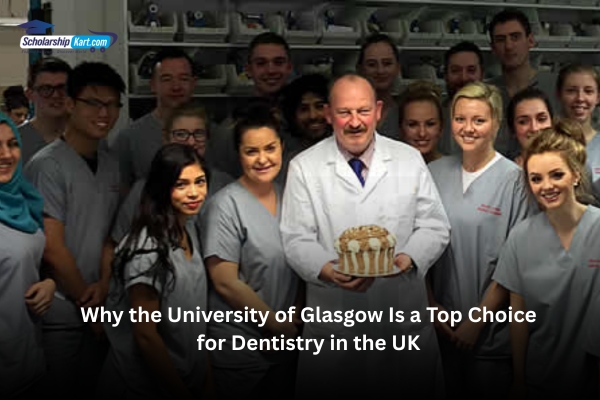
Established in 1879, Glasgow Dental School combines more than a century of dental education with modern clinical training, technology-enhanced teaching and research-led learning. Its Dentistry programme is ranked 1st in the UK by the Complete University Guide and 1st in the UK by The Times and Sunday Times Good University Guide for Dentistry.
For ambitious students, the attraction is not simply the ranking. It is what the University puts behind it: opportunities to learn with patients, practise in realistic environments, explore dental research, experience community dentistry and develop the professional skills expected of a modern dentist.
UK Dentistry. One goal. Expert support at every step. Get end-to-end guidance from ScholarshipKart for university selection, applications, scholarships, documentation, and visa support, all under one roof. Take the first step and start your UK Dentistry journey today!
Why Study Dentistry at the University of Glasgow?
Choosing a dental school is about much more than finding a highly ranked university. Students need to know what their five years of education will actually look like, where they will practise, how early they will meet patients, what technologies they will use, what research they can experience and how the degree prepares them for professional life.
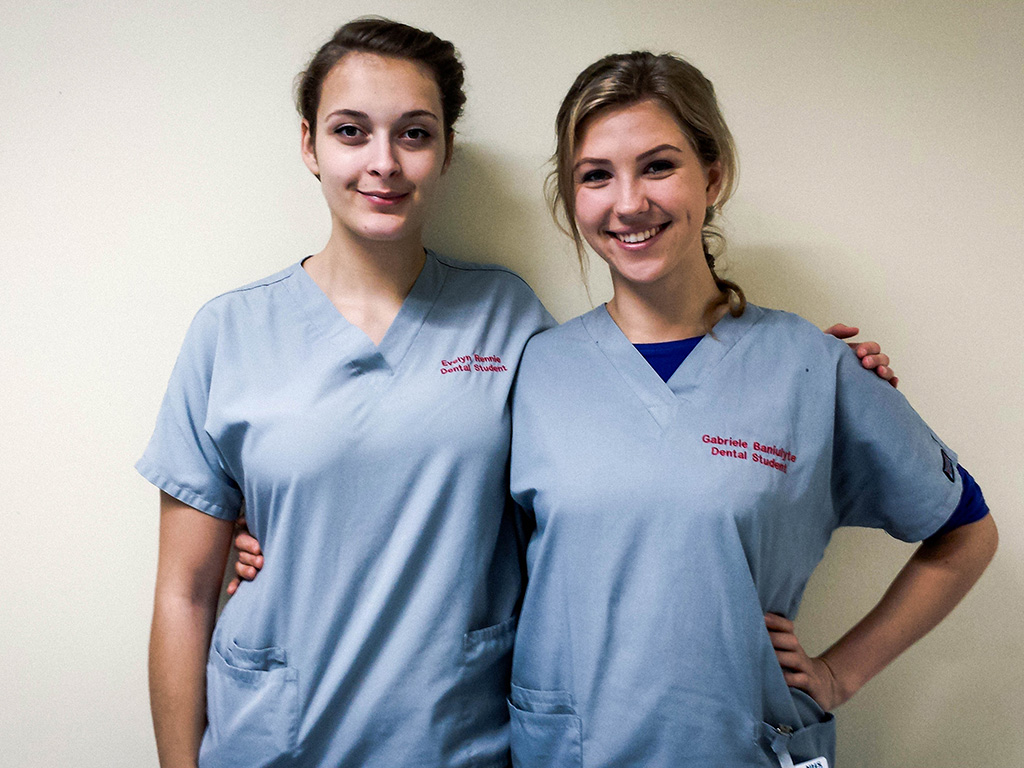
Glasgow answers these questions through an integrated approach to dental education.
A Dentistry Degree With a Long Heritage and a Modern Direction
Glasgow Dental School was established in 1879, giving students the opportunity to study within one of the UK’s long-established centres for dental education.
Yet its history does not mean that learning is based on traditional approaches alone. The School has developed a modern, student-centred approach that incorporates active learning, technology-enhanced education, simulation and patient-based learning.
This matters because dentistry itself continues to evolve. A future dentist needs scientific knowledge, technical ability, digital confidence, communication skills and professional judgement.
Glasgow’s approach is designed around this wider definition of dental competence.
The School is also the second largest dental school in the UK, with an undergraduate population of approximately 400 students. This creates a substantial dental learning community where students are surrounded by peers, academic staff, clinicians and researchers working across different areas of dentistry.
What Dentistry Programmes Does the University of Glasgow Offer?
The University of Glasgow offers dentistry education across undergraduate and postgraduate levels, giving students opportunities to build foundational clinical skills, specialise in advanced areas and develop research expertise.
This breadth strengthens Glasgow’s position as a leading destination for Dentistry in the UK, with learning that extends from first clinical experiences to advanced specialist training and research.
Undergraduate Dentistry Programme: Bachelor of Dental Surgery (BDS)
The five-year Bachelor of Dental Surgery (BDS) is the University’s flagship undergraduate dentistry programme. It follows an integrated progression, allowing students to develop scientific knowledge alongside clinical and patient-care skills.
In Year 1, students establish their foundations through anatomy, physiology, microbiology, clinical dentistry, clinical medicine, patient management and health promotion. Year 2 introduces core clinical disciplines including operative dentistry, prosthodontics and periodontics.
The undergraduate programme becomes increasingly hands-on in Year 3, when students develop restorative dentistry skills and undertake their first extraction and radiographs. They also gain experience through paediatric dentistry outreach placements and complete a period of elective study.
In Year 4, students continue working in the Dental School and community, gaining exposure to patients across dental disciplines. By Year 5, clinical learning extends further into the community, with students spending half their time in the Dental School and half at outreach centres based in Public Dental Service locations.
This progression means students can move from scientific foundations to simulation, supervised patient care and community-based clinical experience, building confidence and professional competence throughout the degree.
Postgraduate Dentistry Programmes: Specialise, Research and Advance
Glasgow also provides a broad postgraduate pathway for dental graduates seeking advanced clinical or research expertise. Its postgraduate options include MSc Clinical Trials, MSc Endodontology, MSc Oral & Maxillofacial Surgery, MSc Oral Sciences, MSc Precision Medicine, and the DClinDent in Endodontology.
The MSc Clinical Trials combines academic learning with practical exposure to clinical research, including opportunities involving NHS research facilities, academic groups and commercial research environments.
The three-year DClinDent in Endodontology offers structured advanced training for dentists managing complex endodontic cases. It combines clinical experience, interdisciplinary teaching, research, specialist supervision and digital workflows.
The postgraduate Master’s programmes provide opportunities to strengthen diagnostic, treatment and research capabilities. Depending on the programme, students can gain supervised patient exposure and undertake clinical or surgical procedures while developing research methodology skills.
Together, these programmes allow Glasgow students to continue progressing beyond undergraduate dentistry into specialist clinical practice, research and advanced professional development.
Integrated Dentistry Education at the University of Glasgow
Across its dentistry programmes, the University of Glasgow integrates biomedical science, clinical practice, patient management, professional development and practical training. Students learn to connect scientific knowledge with clinical decisions and patient needs rather than studying each area separately.
Learning extends beyond the classroom through clinical facilities, simulation, patient exposure, outreach and research-led education, helping students build practical skills, clinical judgement and professional confidence.
This integrated approach prepares graduates to practise dentistry as a patient-centred healthcare profession, combining scientific knowledge, clinical expertise, communication, ethics and evidence-based decision-making.
Clinical Exposure That Goes Beyond Simulation
One of the strongest reasons to study Dentistry at Glasgow is the opportunity to combine simulated learning with experience involving real patients.
The Glasgow Dental Hospital & School provides facilities for patient care, student clinical practice and training. Supervised undergraduate and postgraduate students can treat real patients within specialised clinics.
This means clinical education is not limited to practising procedures in isolation. Students can develop their understanding of patient needs while learning to communicate, assess situations and make appropriate clinical decisions.
The Dental School’s clinical environment also brings together education, patient care and research. Students therefore learn within an environment where dentistry is actively practised, taught and investigated.
Simulation Helps You Develop Confidence Before Complex Clinical Work
Dentistry requires precision, and students need opportunities to develop technical skills before performing procedures in increasingly complex clinical situations.
Glasgow supports this through dedicated pre-clinical skills facilities and phantom head laboratories, where students practise using mannequins with artificial teeth.
Simulation has developed further through the use of haptics and 3D modelling. These technologies provide additional ways to develop clinical skills and complement more traditional phantom-head simulation.
The advantage for students is clear: they can repeatedly practise techniques, build familiarity and strengthen their confidence as they progress towards patient-based clinical work.
This creates a learning pathway where students can move from theory, to simulation, to supervised patient care, and then towards broader clinical responsibility.
Learn Through Technology, Not Just Traditional Lectures
Glasgow Dental School has been an early adopter of technology-enhanced learning and teaching.
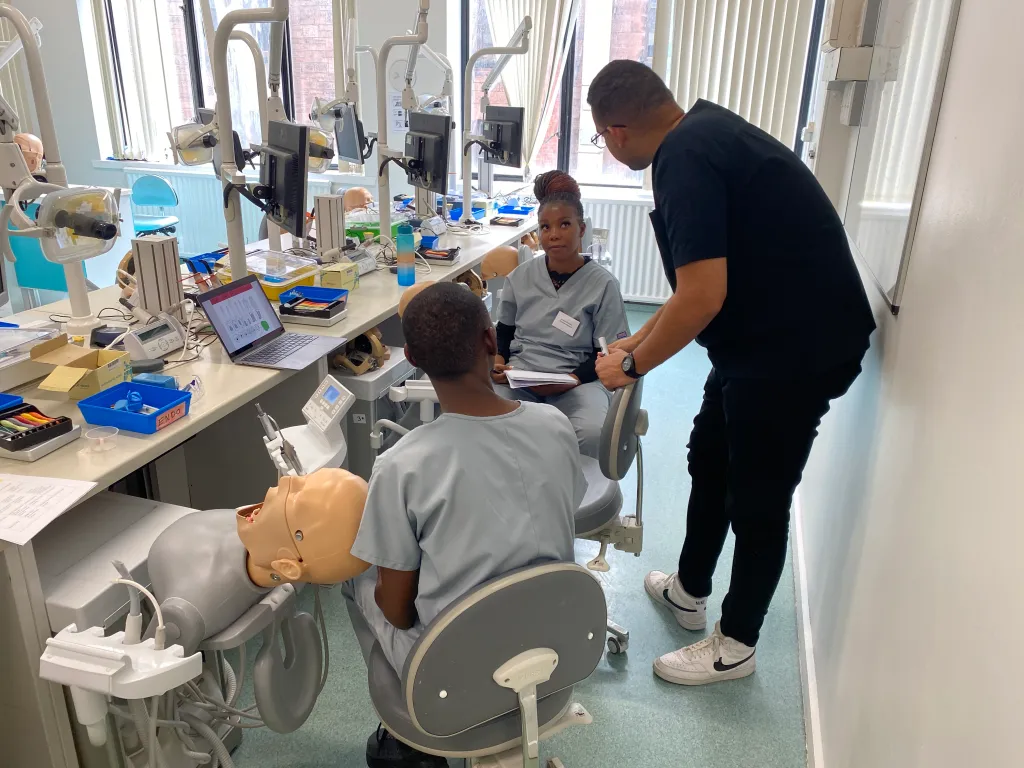
Students have access to podcasts, videos, massive open online courses and quizzes that support self-directed learning. These resources allow students to reinforce classroom learning and engage with material independently.
Virtual microscopy provides another technology-supported learning method. Instead of relying solely on conventional microscopy teaching, students can use an interactive digital slide viewer as part of their learning.
This approach gives students greater flexibility in how they revise and explore concepts.
More importantly, it reflects the digital nature of modern healthcare. Students develop familiarity with digital learning and technologies while also building the professional confidence required to use clinical technologies, digital systems and patient records.
Develop the Skills That Actually Matter in Dental Practice
Being a successful dentist requires much more than knowing how to perform clinical procedures.
At Glasgow, students develop communication, professionalism, management and leadership alongside their dental knowledge.
They learn to communicate with patients, colleagues and the public with clarity, empathy and professionalism. This is essential because dental care depends heavily on trust and effective communication.
Students also develop ethical and professional judgement, with an emphasis on safeguarding patient wellbeing and maintaining high standards of care.
Clinical decision-making is another important part of development. Students learn to assess evidence, consider different options and plan safe treatment.
The result is a broader form of professional preparation. Graduates are being developed not only as clinicians but as healthcare professionals capable of communicating, collaborating and making responsible decisions.
Learn to Work as Part of a Wider Healthcare Team
Modern dentistry does not operate in isolation.
Glasgow’s curriculum recognises the importance of collaboration by developing students’ ability to contribute to dental and wider healthcare teams.
Students learn how to coordinate care and support shared decision-making. This helps them understand the importance of collaboration when patient care involves multiple professionals or wider health considerations.
For students, this means their education develops a more realistic understanding of professional dentistry: the dentist is both an independent clinical decision-maker and a member of a wider healthcare team.
Research Opportunities That Take Dentistry Beyond the Clinic
Glasgow is also an attractive destination for students who want to understand how dental knowledge is created, tested and improved.
The Dental School supports education and research in dental and oral diseases and disorders, while the wider research environment includes dedicated activity in oral health, oral sciences and clinical research.
The Oral Health Research Hub focuses on major oral and dental clinical and public health challenges. Its multidisciplinary approach brings together the NHS, policymakers, patients and the public, industry and international groups and networks.
This gives students an insight into research as a collaborative activity rather than something confined to a laboratory.
The research focus is also strongly connected to real-world health challenges. The aim is to develop impactful research that can contribute to better dental care, oral health and associated multimorbidity.
Explore Community Oral Health and Health Inequalities
Students interested in public health and the wider impact of dentistry can find particularly relevant research within Community Oral Health.
This area focuses on health inequalities across the life course, with research concentrating on oral health among children, older people and adults with head and neck cancer.
This perspective helps demonstrate that dentistry is not only about treating individual clinical conditions. Oral health can also be influenced by age, circumstances, access to care and wider health inequalities.
For aspiring dentists, exposure to these themes can encourage a broader understanding of the profession and its responsibility to different communities.
Discover How Oral Diseases Develop Through Oral Sciences Research
The Oral Sciences research group studies how cells and pathogens interact in oral diseases.
The purpose is to support the development of new prevention and treatment strategies while also exploring links between oral health and overall health.
This is an important opportunity for students interested in the scientific side of dentistry. Research into disease mechanisms provides a deeper perspective on why oral diseases develop and how future approaches to prevention and treatment might evolve.
The MSc in Oral Sciences takes this research orientation even further, giving postgraduate students theoretical and practical knowledge while allowing them to undertake their own research project in laboratories under the direction of members of the Oral Sciences Research Group.
Access a Clinical Research Environment
The Glasgow Dental School Clinical Research Facility aims to improve oral and general health by advancing new and better approaches to preventing and treating disease.
For students interested in clinical research, this provides an environment where research questions are closely connected with patient and healthcare outcomes.
The University’s broader research strengths also include areas such as 3D imaging, bone bioengineering and orthognathic surgery.
This combination of clinical and scientific research helps create an environment where dentistry is explored from multiple perspectives, from patient treatment to biological mechanisms and emerging technologies.
Learn in Facilities Designed for Dentistry
The quality of a dental education depends partly on the environment in which practical and academic learning takes place.
Glasgow Dental Hospital & School provides dedicated facilities across patient care, simulation, clinical training, teaching and research.
Students have access to specialised patient care clinics, pre-clinical skills facilities, phantom head laboratories and teaching laboratories for areas such as prosthodontics and orthodontics.
Academic resources include lecture theatres, seminar rooms and the James Ireland Dental Branch Library, which includes computer clusters.
The Dental Hospital also houses an NHS Emergency Dental Treatment Centre, creating a clinical environment closely connected with active dental services.
Together, these resources allow students to move between academic learning, practical training, simulation and patient care within a dedicated dental setting.
Study in a Major City While Remaining Part of a Campus Environment
Glasgow gives Dentistry students an advantage that goes beyond the Dental School itself: the experience of studying and training in one of the UK’s major cities.
The main Gilmorehill campus sits in Glasgow’s West End, offering a compact university environment, while Glasgow Dental Hospital & School is located in the city centre. This places students close to a wider network of academic, healthcare and professional activity while maintaining a dedicated environment for dental education.
For students, this city setting can broaden their understanding of dentistry beyond the university curriculum. Glasgow’s large and diverse urban environment provides a valuable context for understanding different patient needs, healthcare settings and the wider role of dentistry within society.
Community-based learning further complements this experience by taking students beyond the Dental School into Public Dental Service settings. The University’s connections also extend into NHS, research and commercial environments.
Glasgow’s increasingly multicultural university community adds a further international dimension. Students learn within an environment reflecting the growing diversity of modern society, helping them develop the communication, cultural awareness and professionalism needed to work with patients from different backgrounds.
A Diverse Dental Community That Reflects Modern Society
Glasgow Dental School has become more multicultural and diverse, reflecting wider changes in society and the increasing internationalisation of the University. This matters in a profession where communication with people from different backgrounds is an everyday reality.
The School recognises that dentistry should represent growing cultural diversification and that lack of academic or social privilege should not become a barrier to entering the profession. Its widening participation approach aims to make admissions as equitable as possible and provide different groups with an equal chance of becoming dental students.
For students, studying within a diverse community can broaden perspectives and support the development of communication and cultural awareness that can be valuable in professional patient care.
Student Support That Helps You Become an Independent Professional
The transition into dentistry can be demanding, particularly because students are preparing for a professionally regulated healthcare career. Glasgow Dental School has established support mechanisms to help students navigate this transition.
Academic staff provide a student support advisory system that acts as an accessible point of contact for pastoral support and helps students identify appropriate services. The School also operates a structured mentorship programme. Students are assigned to staff mentors in small groups, and the group remains with its mentor throughout their time at the Dental School.
Peer mentoring is incorporated into the programme as well, with senior students working alongside staff mentors to support Year 1 activities.
The objective goes beyond helping students settle into university. The programme is designed to help students develop as reflective, self-directed lifelong learners who can continue developing throughout their professional lives.
Career Preparation Starts During Your Degree
A strong dentistry degree should prepare students for what comes after graduation, and Glasgow places emphasis on employability alongside academic and clinical education.
The Careers, Employability & Opportunity team supports students throughout their career journey with resources and activities designed to help them explore opportunities, connect with employers and develop skills valued by employers.
Students can access masterclasses, one-to-one career coaching, a dedicated jobs board and employer events.
The Graduate Outcomes data supplied for the programme also presents encouraging employment results. 97.1% of students are in work or further study within 15 months of graduating, while 100% of those in work are in graduate-level employment. The average professional salary after 15 months is £45,000.
The data relates to graduates who completed their programme in 2022–23 and were surveyed 15 months after graduation.
For prospective students, these figures provide useful evidence that the education and professional qualification can translate into strong early graduate outcomes.
What Makes Glasgow Dentistry Different From a Typical Dental Degree?
The real strength of Glasgow is the way its different opportunities connect.

A student can begin with biomedical sciences, develop an understanding of patient management, progress into clinical disciplines, practise in simulation, work with patients, experience community outreach, explore research and develop professional skills.
These experiences are not isolated. They build on one another.
The student therefore develops in several directions at once: academically, clinically, professionally and personally.
The School’s use of technology-enhanced learning adds another layer, while its research environment provides opportunities to understand dentistry from scientific and public-health perspectives.
This is why Glasgow’s position at the top of UK dentistry rankings is better understood through the student experience behind the ranking.
Conclusion
The University of Glasgow offers a distinctive dentistry education that combines academic excellence, clinical experience, modern facilities, research and professional development.
With opportunities to learn through simulation, patient care, outreach and research, students gain the knowledge and confidence needed to progress in a competitive dental profession.
For aspiring dentists seeking a top UK university for Dentistry, Glasgow provides a strong foundation for a rewarding professional future.
Dreaming of studying Dentistry in the UK? Book a Free Consultation with ScholarshipKart and get personalised guidance from our expert counsellors today! Let ScholarshipKart make your journey easier with end-to-end support, from university selection and applications to scholarships, documentation, IELTS coaching and visa guidance. Let’s turn your UK Dentistry aspirations into your next big achievement.
The University of Glasgow offers an integrated Dentistry education combining scientific learning, simulation, supervised patient care, community outreach, research and professional development. Its Glasgow Dental School also has a long history of dental education dating back to 1879.
The Bachelor of Dental Surgery (BDS) is a five-year undergraduate Dentistry programme. Students progressively move from scientific foundations to clinical training, patient care and community-based experience.
Yes. Students receive opportunities to work with real patients under supervision at the Glasgow Dental Hospital & School. Clinical education is combined with simulation and practical training to help students gradually develop their clinical skills
Students can practise clinical techniques in pre-clinical skills facilities and phantom head laboratories before progressing to more complex patient-based clinical work. Glasgow also uses technologies such as haptics and 3D modelling as part of its simulation-based learning.
Yes. As students progress through the BDS programme, they gain experience in community settings. In Year 5, students spend half their time at the Dental School and half at outreach centres based in Public Dental Service locations.
Glasgow offers several postgraduate Dentistry-related programmes, including MSc Clinical Trials, MSc Endodontology, MSc Oral & Maxillofacial Surgery, MSc Oral Sciences, MSc Precision Medicine and the DClinDent in Endodontology.