
Loughborough University has built a powerful reputation in robotics engineering education by aligning academic excellence with real-world industrial relevance. Its strength lies not only in teaching robotics as a theoretical discipline, but also in embedding it within mechanical, electrical, manufacturing, and control engineering, exactly as robotics exists in industry today.
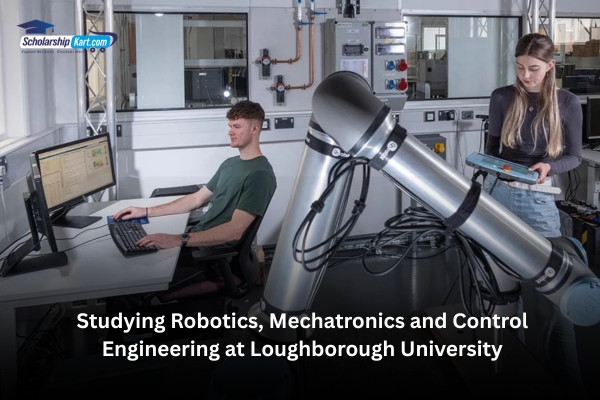
Autonomous and robotic systems are no longer niche technologies. They surround us in everyday life through industrial robotic arms, autonomous vehicles, drones, robotic vacuum cleaners, lawn mowers and even space robotics.
Loughborough’s approach reflects this reality by preparing students to understand, design and apply such systems in practical, impactful ways.
The global industry is investing heavily in automation, supported by national and international strategy documents and networks. Companies across sectors are actively developing robotic and autonomous solutions and now require graduate engineers who can define, develop and integrate these technologies.
A key reason Loughborough University is widely recognised for robotics education is its strategic positioning within global developments in Robotics and Automated Systems (RAS).
Loughborough University directly addresses this demand through its Robotics, Mechatronics and Control Engineering degrees, which are informed by world-leading research and extensive industry collaboration.
Dreaming of studying a Robotics, Mechatronics and Control Engineering degree at Loughborough University? Let ScholarshipKart guide you from start to finish! Receive personalised advice on choosing the right course, mastering your application and visa procedures, and finding the best scholarships. Strengthen your profile with IELTS training, SOP guidance, and essential UK study and settlement insights for an outstanding learning experience abroad.
Why Loughborough University Stands Out in Robotics Education
Let’s delve deeper into what truly sets Loughborough University apart and why it stands out as a global leader in robotics education.
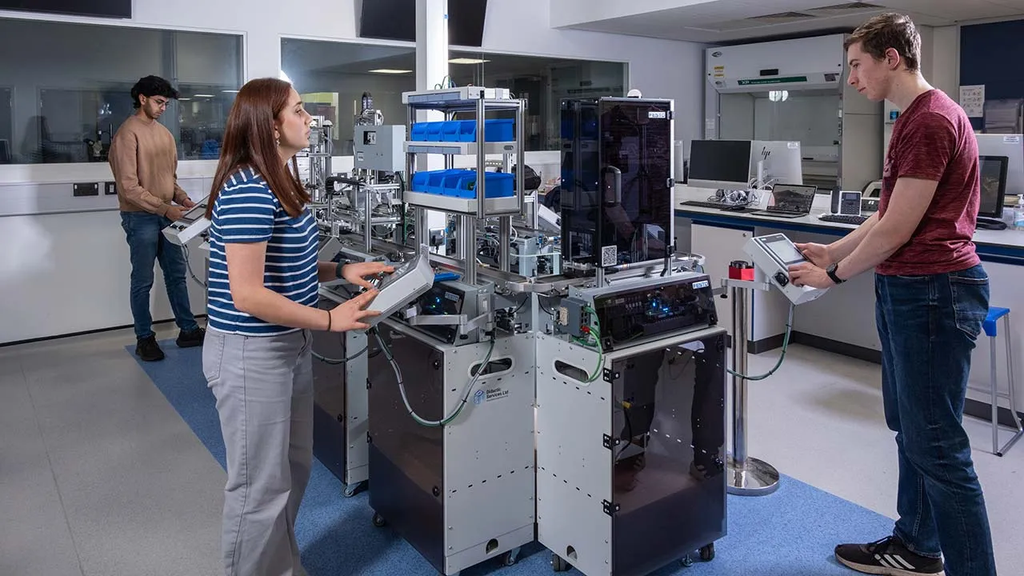
Robotics at the Heart of Engineering Innovation
Robotics, mechatronics and control engineering sit at the intersection of multiple engineering disciplines. At Loughborough University, this interdisciplinary nature is a defining strength.
The undergraduate degrees are delivered through the Wolfson School of Mechanical, Electrical and Manufacturing Engineering, a school committed to developing and nurturing top global engineering talent. Every course is industry-focused, research-driven and designed to remain at the forefront of engineering practice from day one.
Students learn how autonomous and robotic systems function as complete, integrated products rather than isolated components. The curriculum blends electronics, control systems, mechanics, manufacturing principles, digital systems, programming and sensor technologies.
This holistic structure mirrors the way robotics operates in industrial and commercial environments, ensuring graduates are ready to contribute immediately in professional roles.
Degrees Designed for a Rapidly Expanding Global Industry
Loughborough University offers both BEng (Hons) and MEng (Hons) degrees in Robotics, Mechatronics and Control Engineering. Students can choose a three-year BEng or a four-year BEng with an optional placement year, as well as a four-year MEng or five-year MEng with placement.
This flexibility allows students to tailor their academic journey based on career ambitions and learning preferences.
The core aim of these degrees is to develop strong foundational skills in robotics, mechatronics and control while enabling students to understand autonomous systems from both theoretical and applied perspectives.
The courses are structured to ensure students gain confidence in solving real industrial problems using engineering and electrical science principles.
A Common Foundation, Then Advanced Specialisation
One of the defining features of the programme is the shared structure between the BEng and MEng in the first two years.
During this phase, all students develop core engineering competencies, including engineering mathematics, control system design, electrical science and mechanical engineering tailored for robotics applications.
This common foundation ensures consistency in academic standards and allows students time to discover their strengths and interests.
The distinction between the BEng and MEng pathways becomes clear in the later years. MEng students benefit from enhanced opportunities to study specialist subjects in greater depth during the third and fourth academic years.
They also undertake additional modules in business management and the application of management theory, which is particularly valuable for students aiming for leadership roles in engineering organisations.
High-performing BEng students may also have the opportunity to transfer to the MEng route after the second year, offering academic flexibility based on achievement.
Learning Through Industry-Relevant Application
A strong theme throughout the Robotics, Mechatronics and Control Engineering degrees is the application of knowledge to real-world industrial challenges.
Teaching combines theoretical understanding with hands-on learning, ensuring students can translate concepts into working systems. This approach is particularly beneficial in robotics, where design decisions directly affect system performance, safety and reliability.
The courses prepare students to understand the behaviour of robotic and autonomous technologies in depth. Graduates develop the ability to design, analyse and improve robotic systems used in production lines, autonomous vehicles and domestic service robots.
These skills are highly transferable and relevant across a wide range of industries, making the degree valuable far beyond traditional engineering roles.
World-Class Facilities Supporting Practical Excellence
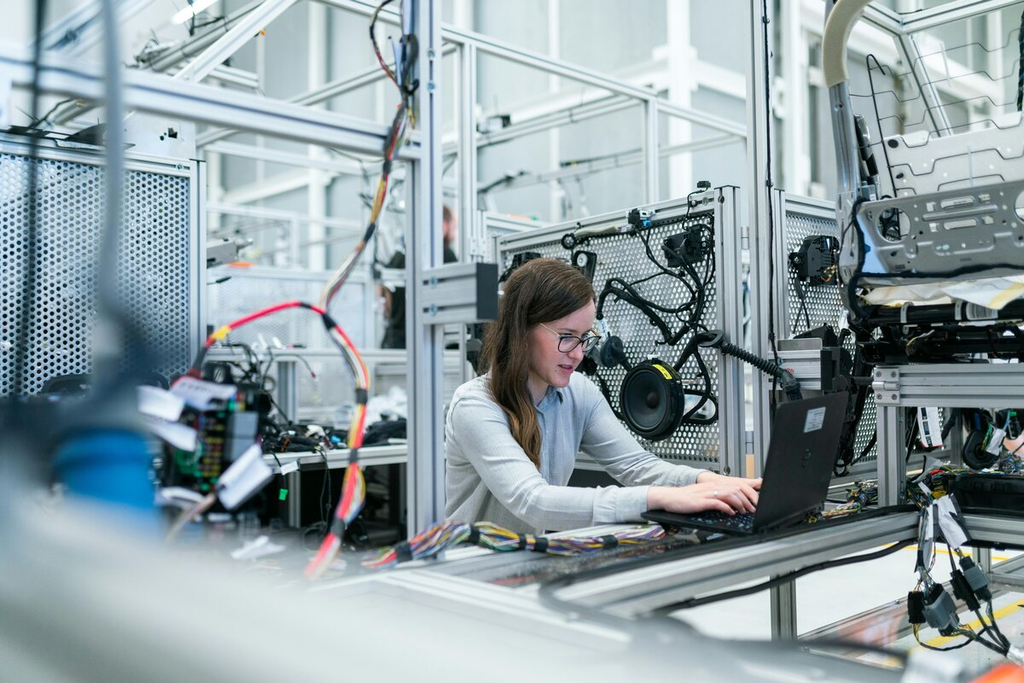
Loughborough University has invested over £70 million in developing the west side of its campus, where the Wolfson School of Mechanical, Electrical and Manufacturing Engineering is based.
This investment has transformed teaching spaces, laboratories and workshops, creating a high-tech learning environment that supports both taught modules and project-based work.
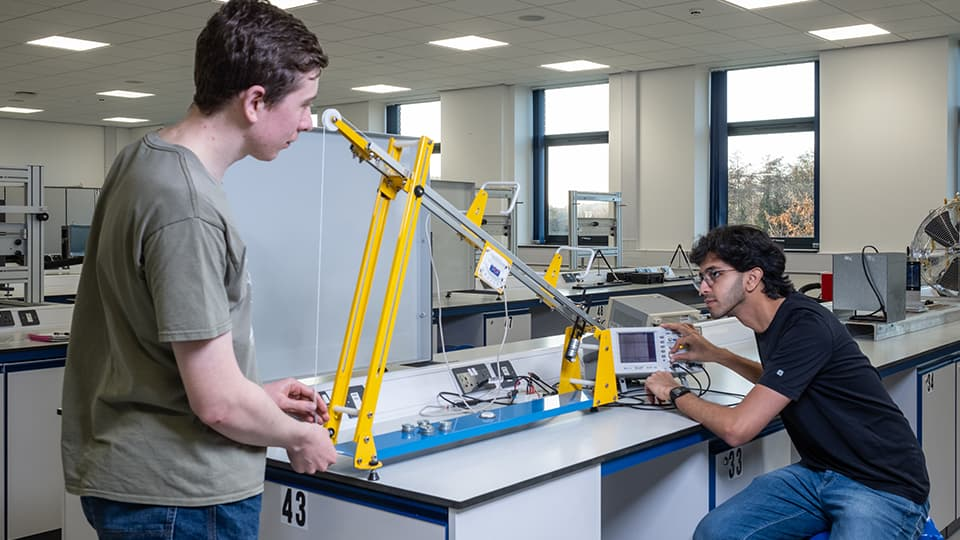
Facilities such as the STEMLab significantly enhance the student experience. The STEMLab offers drop-in engineering workshops, teaching laboratories, rapid prototyping facilities, computer-aided design spaces, a design studio and informal learning areas. These resources allow students to experiment, prototype and refine ideas in a professional engineering setting.
The DigiLabs initiative further strengthens robotics education at Loughborough. DigiLabs: Robotics provides students with access to industry-relevant robotic hardware, enabling hands-on engagement with the latest generation of equipment.
Through Special Interest Groups, students and staff collaborate to share best practices, explore innovative uses of technology and enhance learning across the University.
Research-Led Teaching in Robotics and Automation
Loughborough’s teaching is directly shaped by its research excellence. The Intelligent Automation Centre, based within the School of Mechanical, Electrical and Manufacturing Engineering, plays a crucial role in advancing robotics and automation research.
The centre works closely with industry partners, other universities and the Catapult Network to deliver transformative innovation.
The centre’s membership in the UK-RAS Network further reinforces Loughborough’s position at the heart of national robotics strategy. Its purpose-built laboratories and state-of-the-art research facilities enable academics and researchers to develop multidisciplinary solutions that directly influence teaching content.
For students, this means learning from experts who are actively shaping the future of robotics and automation.
Driving the Future of Smart Manufacturing
Loughborough University also leads the Made Smarter Innovation Research Centre for Smart, Collaborative Industrial Robotics.
This centre focuses on advancing smart manufacturing by accelerating the adoption of collaborative robotics technologies. Its work addresses productivity, quality and adaptability challenges faced by modern industry.
By focusing on both fundamental research and industry-led feasibility projects, the centre bridges the gap between academic innovation and real-world implementation.
Undergraduate students benefit from being part of an institution that sets the national research agenda in collaborative robotics and automated factories, reinforcing the relevance and credibility of their degree.
Industry Links That Open Global Career Pathways
Industry engagement is a cornerstone of robotics education at Loughborough University.
The University maintains strong links with global companies such as Adidas, Bentley, BMW, Bosch, BP, Coca Cola, Dyson, Ford, Mercedes-Benz, Rolls-Royce, Siemens and Unilever. These relationships inform curriculum design, placement opportunities and graduate recruitment.
Most undergraduate programmes offer a salaried placement year, typically undertaken between the second and third years of study. During this assessed industrial training year, students gain full-time workplace experience, applying academic knowledge in professional environments.
More than 1,400 Loughborough students complete a 12-month placement each year, delivering tangible benefits to employers while developing valuable workplace skills.
A dedicated Placements Team supports students throughout the process, from vacancy notifications to application guidance.
The annual Engineering and STEM Placement and Graduate Careers Fair, attended by over 70 external companies, provides direct networking opportunities with industry experts.
Strong Career Outcomes and Global Employability
Graduates of Robotics, Mechatronics and Control Engineering at Loughborough University are well positioned for successful careers across multiple sectors, including aerospace, automotive, healthcare, defence, energy, manufacturing and technology.
The degree equips students with skills applicable to robotic systems integration, autonomous systems development and advanced engineering roles.
Graduate outcomes highlight the value of the programme. On average, graduates earn £32,500, 15 months after graduation, with typical earnings rising to £42,500 per year after five years. These figures reflect the strong demand for robotics and automation expertise globally.
The BEng (Hons) degree is accredited by the Institution of Engineering and Technology (IET), licensed by the UK Engineering Council. This accreditation enhances international recognition and professional mobility, which is particularly beneficial for international students seeking global career opportunities.
Dedicated Career Support for Long-Term Success
Loughborough University’s award-winning Careers Network provides comprehensive career support throughout a student’s academic journey. Services include CV workshops, mock interviews, one-to-one career guidance and high-profile employer events.
This structured support ensures students are not only academically prepared but also professionally confident.
For international students, this career-focused environment offers significant advantages. Exposure to UK and multinational employers, combined with industry-aligned education and placement opportunities, helps students build global networks and enhance employability across borders.
Conclusion
Studying Robotics, Mechatronics and Control Engineering at Loughborough University means becoming part of an institution that genuinely understands the future of engineering.
With its strong research foundation, industry-driven curriculum, world-class facilities and exceptional career support, Loughborough offers an immersive and future-focused educational experience.
The degrees are designed to produce engineers who can define, design and deliver autonomous and robotic systems in a rapidly evolving global industry.
For students, especially international students seeking a rigorous, practical and globally respected robotics education, Loughborough University stands as a compelling and rewarding choice.
Planning to study a Robotics, Mechatronics and Control Engineering degree at Loughborough University? Book a Free Consultation with ScholarshipKart for expert guidance on course selection, application and visa processes, and scholarship opportunities. Get professional IELTS coaching, SOP assistance, and practical study and settlement tips to ensure a smooth and successful academic journey in the UK.
Loughborough University offers BEng (Hons) and MEng (Hons) degrees in Robotics, Mechatronics and Control Engineering, with options including placement years.
The BEng and MEng share a common foundation in the first two years. The MEng provides greater depth in specialist subjects in later years and includes additional business management and management theory modules.
Yes. High-performing BEng students may have the opportunity to transfer to the MEng route after their second year, subject to academic achievement.
Yes. Most undergraduate programmes offer a salaried 12-month industrial placement, typically between the second and third years. A dedicated Placements Team also supports students with vacancies and applications.
Students have access to facilities including engineering workshops, teaching laboratories, rapid prototyping facilities, CAD spaces, design studios and robotics hardware through initiatives such as STEMLab and DigiLabs: Robotics.
Yes. The programme is supported by research in robotics and automation, including work carried out through the Intelligent Automation Centre and research focused on smart and collaborative industrial robotics.