
The education landscape is changing at an unprecedented pace as industries continue to evolve through technological innovation, digital transformation, and changing global priorities. Entering 2026, students are no longer choosing a course based solely on personal interest.

Instead, they are looking for programs that offer practical knowledge, long-term career stability, and opportunities in industries that continue to grow. As competition in the global job market increases, selecting the right course has become one of the most important decisions for students planning their future.
The United States continues to be one of the world’s leading destinations for higher education because of its innovative teaching methods, industry-focused curriculum, and globally recognized universities. Students from around the world choose to study in the USA because universities regularly introduce programs that match current industry demands while preparing graduates for future challenges. This combination of academic excellence and career-focused education makes the USA an attractive choice for students seeking long-term professional growth.
The courses gaining popularity in 2026 reflect the direction in which industries are moving. Businesses are increasingly relying on artificial intelligence, advanced data analytics, digital security, sustainable energy solutions, healthcare technology, and digital innovation to remain competitive. As a result, employers are actively searching for graduates who possess specialized technical knowledge alongside problem-solving and analytical skills. Choosing a course that aligns with these developments allows students to build expertise in fields that continue to expand across multiple industries.
Why Choosing the Right Course in 2026 Matters
Selecting a university course is more than deciding what to study for the next few years. It is an investment in future career opportunities and long-term professional development. As industries continue embracing automation, digital transformation, and sustainability, employers increasingly value graduates who possess specialized knowledge and practical skills.
The courses that stand out in 2026 are those that combine innovation with real-world applications. Rather than preparing students for only one profession, many modern degree programs develop transferable skills that are valuable across multiple sectors. Analytical thinking, technological proficiency, problem-solving, collaboration, and adaptability have become essential qualities in today’s workforce.
Studying an in-demand course also provides greater flexibility when exploring career options after graduation. Many of the fastest-growing industries require professionals who can continuously learn and adapt as technology evolves. Choosing one of these trending courses enables students to remain competitive while building careers that can evolve alongside changing market demands.
Data Science and Artificial Intelligence: Building the Future Through Data and Intelligent Technologies
Data has become one of the most valuable resources in today’s digital economy. Every day, organizations generate enormous amounts of information that help improve products, services, customer experiences, and business operations. However, raw data alone has little value unless professionals can analyze it effectively and transform it into meaningful insights. This growing reliance on data has made Data Science and Artificial Intelligence one of the most popular courses to study in the USA in 2026.

Artificial Intelligence, commonly known as AI, has expanded far beyond experimental research. It is now integrated into everyday technologies, helping businesses automate processes, improve decision-making, and develop intelligent systems capable of learning from data. From personalized online recommendations to advanced healthcare solutions, AI continues to reshape how organizations operate across industries.
Why Data Science and Artificial Intelligence Are Trending in 2026
The rapid advancement of artificial intelligence and machine learning has transformed numerous sectors, including healthcare, finance, retail, and business analytics. Organizations increasingly depend on intelligent systems to improve operational efficiency, enhance customer experiences, and identify new business opportunities.
Data science complements artificial intelligence by helping organizations interpret complex datasets and make evidence-based decisions. Instead of relying solely on assumptions, businesses now use data-driven insights to improve productivity, forecast trends, and maximize profitability. This growing dependence on analytics continues to drive demand for highly skilled professionals.
As industries become more data-focused, graduates with expertise in AI and data science are expected to remain valuable contributors across both private and public sectors.
Career Opportunities After Studying Data Science and Artificial Intelligence
Graduates specializing in this field can pursue careers such as Data Scientist, Artificial Intelligence Engineer, and Machine Learning Specialist. These professionals develop intelligent systems, analyze large datasets, create predictive models, and design solutions that support business growth and innovation.
Because artificial intelligence supports multiple industries rather than a single sector, graduates benefit from diverse career opportunities and long-term professional flexibility.
Cybersecurity: Protecting the Digital World
As businesses, governments, educational institutions, and individuals continue adopting digital technologies, protecting sensitive information has become more important than ever before. Every online transaction, digital communication, and cloud-based service relies on secure systems that defend against cyber threats. This growing need for digital protection has made Cybersecurity one of the fastest-growing academic fields in the USA in 2026.
Cybersecurity focuses on safeguarding computer systems, networks, applications, and digital information from unauthorized access, cyberattacks, and data breaches. Professionals working in this field help organizations strengthen digital infrastructure while ensuring the confidentiality, integrity, and availability of critical information.
Why Cybersecurity Is One of the Most In-Demand Courses in 2026
The increasing reliance on digital platforms has significantly expanded the need for cybersecurity professionals. Organizations now store large volumes of valuable information online, making digital security an essential business priority rather than a technical option.
At the same time, the growing number of cyberattacks and data breaches has highlighted the importance of trained specialists capable of identifying vulnerabilities before they become major security risks. As digital transformation continues across industries, cybersecurity remains central to protecting organizational operations and maintaining public trust.
Students choosing cybersecurity gain expertise in an area that continues to evolve alongside technological advancement, making continuous learning an exciting part of the profession.
Career Opportunities in Cybersecurity
Cybersecurity graduates may pursue careers as Cybersecurity Analysts, Ethical Hackers, or Network Security Engineers. These professionals monitor systems, detect security threats, strengthen network defenses, and develop strategies that protect organizations from cyber risks.
Since virtually every industry relies on digital infrastructure, cybersecurity professionals can contribute to organizations across finance, healthcare, retail, education, technology, and many other sectors.
Renewable Energy and Environmental Science: Driving Sustainable Development
Environmental sustainability has become one of the defining global priorities of the modern era. As countries seek cleaner sources of energy and develop strategies to reduce environmental impact, professionals with expertise in renewable energy and environmental science continue to play an increasingly important role. This growing emphasis on sustainability has positioned Renewable Energy and Environmental Science among the top trending courses to study in the USA in 2026.

This multidisciplinary field focuses on developing environmentally responsible energy solutions while promoting sustainable development. Students explore approaches that support cleaner energy production and encourage responsible management of natural resources.
Why Renewable Energy and Environmental Science Are Trending in 2026
The global transition toward cleaner and renewable energy sources continues to create opportunities for professionals capable of designing, implementing, and managing sustainable solutions. Governments, businesses, and organizations increasingly recognize that long-term environmental responsibility requires innovation, research, and skilled professionals.
At the same time, environmental sustainability has become a major global concern, encouraging the development of new technologies, policies, and business models that promote responsible resource management.
As industries adapt to these priorities, graduates with specialized knowledge in renewable energy and environmental science are expected to contribute significantly to future development initiatives.
Students entering this field become part of an industry focused on balancing technological progress with environmental responsibility.
Career Opportunities in Renewable Energy and Environmental Science
Graduates can explore careers as Environmental Consultants, Renewable Energy Engineers, and Sustainability Coordinators. These professionals support organizations in developing environmentally responsible practices while contributing to projects that encourage sustainable growth and cleaner energy solutions.
Because sustainability now influences industries ranging from manufacturing to public policy, graduates may find opportunities across multiple sectors committed to environmental improvement.
Health Informatics: Transforming Healthcare Through Technology
Healthcare has undergone remarkable technological changes over the past few years, creating new opportunities for professionals who can bridge the gap between medicine and information technology.
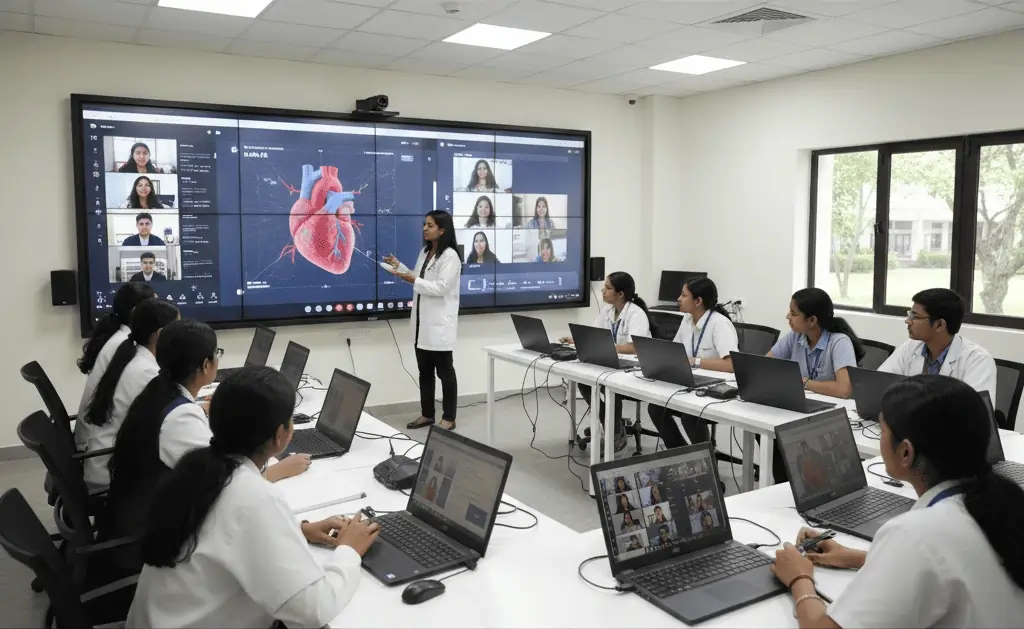
As healthcare systems continue adopting digital solutions, Health Informatics has emerged as one of the most promising courses to study in the USA in 2026. This interdisciplinary field combines healthcare knowledge with information technology to improve patient care, streamline healthcare operations, and support better clinical decision-making.
Health informatics focuses on collecting, organizing, managing, and analyzing healthcare information using advanced digital systems. Rather than replacing healthcare professionals, technology supports them by improving access to patient information, reducing administrative challenges, and enhancing communication across healthcare services.
As hospitals and medical organizations continue embracing digital transformation, professionals with expertise in health informatics are becoming increasingly valuable.
Why Health Informatics Is One of the Best Courses to Study in the USA in 2026
The healthcare industry continues to rely more heavily on technology to improve efficiency and patient outcomes. One of the biggest developments has been the widespread adoption of electronic health records, which allow healthcare providers to access accurate patient information more efficiently. These digital systems improve coordination among medical professionals while reducing the reliance on paper-based records.
Another major factor driving the popularity of health informatics is the rapid growth of telemedicine. Digital healthcare services have expanded significantly, allowing patients and healthcare providers to communicate through technology while improving access to medical care. The increasing use of virtual healthcare services has created strong demand for professionals who understand both healthcare systems and digital technologies.
The COVID-19 pandemic also accelerated the adoption of digital healthcare solutions, demonstrating how technology can support healthcare delivery during challenging circumstances. As healthcare organizations continue investing in digital innovation, graduates with expertise in health informatics are expected to remain in high demand.
Career Opportunities After Studying Health Informatics
Health informatics graduates can pursue rewarding careers that combine healthcare knowledge with technological expertise. Some of the leading career opportunities include Health Data Analyst, Medical Informatics Specialist, and Telemedicine Consultant.
These professionals work to improve healthcare systems by managing medical data, supporting healthcare technology implementation, and helping organizations use digital tools to enhance patient care. Their work contributes to better healthcare efficiency while supporting informed decision-making across medical institutions.
Financial Technology (FinTech): Redefining the Future of Financial Services
Technology has transformed nearly every aspect of modern life, and the financial industry is no exception. Financial Technology, commonly known as FinTech, has become one of the fastest-growing fields by combining financial services with innovative digital technologies. From online banking and digital payments to blockchain-powered transactions, FinTech continues to reshape how individuals and businesses manage money. As financial institutions increasingly adopt digital solutions, FinTech has become one of the top trending courses to study in the USA in 2026.

FinTech focuses on improving financial services through technology-driven innovation. Instead of relying solely on traditional banking methods, businesses now use advanced digital platforms to simplify payments, investments, lending, and financial management. This transformation has created significant opportunities for graduates with expertise in finance and technology.
Why FinTech Is a High-Demand Course in 2026
One of the primary reasons FinTech continues gaining popularity is its ability to transform traditional financial systems through innovation. Technologies such as cryptocurrency, digital wallets, and robo-advisors are changing how financial transactions are conducted, making services faster, more convenient, and increasingly digital.
The financial sector is also embracing digital transformation at an accelerated pace. Financial institutions continue investing in technology that improves customer experiences, strengthens operational efficiency, and supports innovative financial products. This growing digital transformation has significantly increased the demand for professionals who understand both finance and technology.
Students choosing FinTech gain exposure to a rapidly evolving industry where innovation plays a central role in shaping future financial services.
Career Opportunities in Financial Technology
Graduates specializing in Financial Technology can pursue careers as FinTech Analysts, Blockchain Developers, and Financial Software Engineers.
These professionals contribute to developing digital financial solutions, improving financial technologies, and supporting organizations as they modernize financial operations. Their work combines analytical thinking, technological expertise, and financial knowledge to create innovative solutions for today’s evolving financial landscape.
Digital Marketing and Social Media Strategy: Powering Business Growth in the Digital Age
As businesses continue expanding their presence across digital platforms, digital marketing has become an essential component of modern business success. Organizations now compete not only through products and services but also through their ability to engage customers online, build brand awareness, and create meaningful digital experiences. This growing dependence on online communication has made Digital Marketing and Social Media Strategy one of the most popular courses to study in the USA in 2026.

Digital marketing covers a wide range of strategies designed to help businesses connect with their audiences through online channels. The field includes search engine optimization (SEO), content creation, email marketing, and social media management. Together, these areas help organizations increase online visibility while building stronger relationships with customers.
Social media strategy has become equally important as businesses increasingly use digital platforms to communicate with consumers. Organizations now rely on carefully planned social media campaigns to strengthen brand identity, engage audiences, and support long-term business growth.
Why Digital Marketing and Social Media Strategy Are Trending in 2026
The continued shift toward online business operations has made digital marketing an essential business function. As more organizations focus on improving their digital presence, professionals with expertise in online marketing are becoming increasingly valuable across industries.
Another important factor contributing to the popularity of this course is the rapid growth of social media and influencer marketing. Businesses have transformed the way they communicate with consumers by using social platforms to build trust, share valuable content, and strengthen customer engagement. These developments continue creating new opportunities for professionals who understand digital communication strategies.
Because digital marketing continues evolving alongside technology, students entering this field gain skills that remain relevant across various industries and business environments.
Career Opportunities in Digital Marketing and Social Media Strategy
Graduates can explore exciting career opportunities as Digital Marketing Managers, Social Media Strategists, and Content Marketing Specialists.
These professionals help organizations improve their online presence by developing marketing campaigns, creating engaging content, optimizing digital visibility, and managing brand communication across digital platforms. Their work directly supports customer engagement and business growth in an increasingly competitive online environment.
Blockchain Technology: Powering Secure and Transparent Digital Transactions
As digital transformation continues to reshape industries, the demand for technologies that offer security, transparency, and efficiency has grown significantly. One innovation that has gained widespread attention is Blockchain Technology.

Although blockchain first became widely recognized through cryptocurrency, its applications now extend far beyond digital currencies. Today, organizations across multiple sectors are exploring blockchain to improve the way transactions and information are recorded and managed. This growing adoption has made Blockchain Technology one of the top trending courses to study in the USA in 2026.
Blockchain is a decentralized system that records transactions securely across multiple networks. Unlike traditional systems that rely on a single central authority, blockchain stores information in a way that promotes transparency while reducing the risk of unauthorized modifications. This capability makes blockchain valuable for industries that require secure data management and reliable transaction records.
As businesses continue searching for innovative ways to improve operational efficiency and strengthen trust in digital transactions, professionals with blockchain expertise are becoming increasingly important.
Why Blockchain Technology Is a Trending Course in 2026
One of the primary reasons blockchain continues gaining popularity is its ability to provide secure and transparent methods for recording transactions. Organizations are increasingly recognizing its potential to improve accountability while enhancing data security across various operations.
Blockchain is expected to transform industries such as banking, supply chain management, and healthcare by offering a secure and decentralized way to manage transactions. These capabilities make blockchain an attractive solution for organizations seeking greater transparency and efficiency.
Another factor driving demand is the growing popularity of cryptocurrencies. As interest in digital currencies continues to expand, so does the need for professionals who understand blockchain development and implementation. This combination of technological innovation and increasing industry adoption positions blockchain as one of the most promising areas of study for students planning future-focused careers.
Career Opportunities After Studying Blockchain Technology
Students specializing in Blockchain Technology can pursue a variety of specialized career paths. The career opportunities provided include Blockchain Developer, Blockchain Consultant, and Blockchain Architect.
These professionals contribute to designing blockchain-based systems, developing secure digital solutions, and helping organizations implement blockchain technologies across different business functions. Their expertise supports innovation while improving the security and transparency of digital operations.
Robotics and Automation: Shaping the Future of Smart Industries
Technology has transformed the way industries operate, with automation becoming a key driver of productivity and efficiency. From manufacturing facilities to healthcare environments and home automation systems, robotics is changing how complex tasks are performed. As industries continue embracing smart technologies, Robotics and Automation has become one of the best courses to study in the USA in 2026.

Robotics combines engineering, programming, and systems control to design machines capable of performing tasks that were traditionally completed by humans. Automation further enhances these systems by improving operational efficiency, consistency, and precision. Together, robotics and automation represent an important area of innovation that continues to influence industrial development worldwide.
Students entering this field gain knowledge that supports technological advancement while contributing to the future of intelligent manufacturing and automated systems.
Why Robotics and Automation Are Among the Top Courses in 2026
Automation continues replacing repetitive manual processes across numerous industries, increasing the demand for professionals capable of designing, operating, and improving robotic systems. As organizations seek greater efficiency and productivity, robotics professionals play an increasingly important role in supporting technological progress.
Another significant factor contributing to the popularity of this course is the growth of Industry 4.0 and smart manufacturing. Modern manufacturing environments increasingly rely on interconnected technologies, intelligent machines, and automated production systems to improve quality and operational performance. This transition has created strong demand for graduates who understand robotics and automation technologies.
Because automation affects industries ranging from manufacturing to healthcare, students benefit from career opportunities that continue expanding alongside technological development.
Career Opportunities in Robotics and Automation
Graduates can pursue careers as Robotics Engineers, Automation Specialists, and Industrial Robot Programmers.
These professionals design robotic systems, develop automation solutions, and improve industrial processes through advanced engineering and programming techniques. Their work contributes to increased efficiency while supporting innovation across modern industries.
Artificial Intelligence Ethics: Ensuring Responsible Innovation
Artificial Intelligence continues transforming industries by improving decision-making, automating processes, and supporting technological innovation. However, as AI becomes increasingly integrated into everyday life, important ethical questions have emerged regarding how these technologies should be developed and used. Addressing these challenges has given rise to Artificial Intelligence Ethics, making it one of the most relevant and emerging courses to study in the USA in 2026.

AI Ethics examines the moral, social, and ethical implications associated with artificial intelligence technologies. Rather than focusing solely on technical development, this field explores how AI affects privacy, fairness, accountability, and decision-making. It encourages responsible innovation while helping organizations understand the broader impact of intelligent systems on society.
As AI continues expanding into critical sectors, ethical considerations are becoming an essential component of technological progress.
Why AI Ethics Is Becoming Increasingly Important in 2026
Artificial intelligence is being integrated into important sectors such as healthcare, criminal justice, and finance. While these advancements create valuable opportunities, they also raise significant ethical concerns regarding privacy, transparency, and responsible decision-making.
As organizations continue adopting AI-powered solutions, there is growing recognition that technology should be developed and implemented responsibly. Professionals with expertise in AI Ethics help organizations evaluate ethical considerations while supporting policies and practices that encourage responsible use of artificial intelligence.
This growing focus on ethical innovation has increased demand for graduates who understand both AI technologies and the societal responsibilities that accompany them.
Career Opportunities in Artificial Intelligence Ethics
Students specializing in AI Ethics can pursue careers such as AI Ethics Consultant, AI Policy Analyst, and AI Researcher.
These professionals help organizations develop responsible AI practices, evaluate ethical challenges, contribute to policy development, and support research that encourages trustworthy artificial intelligence systems.
As ethical governance becomes increasingly important, professionals in this field are expected to play an essential role in shaping the future of AI.
User Experience (UX) and User Interface (UI) Design: Creating Better Digital Experiences
Digital products have become an essential part of everyday life, making user experience more important than ever before. Whether using websites, mobile applications, or online services, people expect digital platforms to be intuitive, visually appealing, and easy to navigate. As businesses continue investing in customer satisfaction and digital innovation, User Experience (UX) and User Interface (UI) Design has emerged as one of the top trending courses to study in the USA in 2026.

UX design focuses on improving the overall experience users have while interacting with digital products, ensuring that systems are practical, efficient, and user-friendly. UI design complements this by creating visually engaging interfaces that support smooth interaction. Together, these disciplines help organizations develop digital products that meet user expectations while enhancing customer satisfaction.
As digital competition continues increasing, businesses recognize that exceptional user experiences can become a significant competitive advantage.
Why UX/UI Design Is One of the Best Courses to Study in 2026
Every business is becoming increasingly digital, making user experience an important factor in business success. Organizations now understand that well-designed digital products encourage greater customer satisfaction, stronger engagement, and improved brand loyalty.
UX/UI designers play a central role in creating digital experiences that are both functional and visually attractive. By understanding user behavior and applying effective design principles, these professionals help businesses develop products that are easier to use while improving overall customer experiences.
As digital transformation continues across industries, demand for UX/UI professionals is expected to remain strong.
Career Opportunities in UX/UI Design
Graduates can pursue rewarding careers as UX/UI Designers, Product Designers, and Interaction Designers.
These professionals collaborate with development teams to create intuitive digital products, improve customer experiences, and design interfaces that combine functionality with visual appeal. Their work contributes directly to user satisfaction while supporting successful digital products.
Top Universities Featured Across These Trending Courses
The following universities repeatedly appear across the top courses:
- Stanford University
- Massachusetts Institute of Technology (MIT)
- University of California, Berkeley
- Harvard University
- Carnegie Mellon University
- Georgia Institute of Technology
- University of Michigan
- Johns Hopkins University
- Duke University
- University of Pennsylvania (Wharton)
- New York University
- University of Southern California
- Rhode Island School of Design
- Savannah College of Art and Design
- University of California, San Francisco
Conclusion
Choosing the right course to study in the USA in 2026 is an important decision that can shape your future career. As industries continue to evolve, it is essential to select a program that aligns with both your interests and the skills employers are seeking. Rather than following trends alone, focus on a course that matches your strengths and long-term career goals.
The highlighted courses reflect the changing demands of today’s job market. These fields continue to grow as technology and innovation transform industries worldwide.
Before making your final decision, evaluate your interests, understand future industry trends, and choose a course that will help you build relevant and adaptable skills. By investing in the right education, you can prepare yourself for exciting career opportunities and long-term professional success.
With its globally recognized universities and industry-focused programs, the USA remains an excellent destination for students looking to gain quality education and build a rewarding future.
Start Your Study Abroad Journey with ScholarshipKart
Ready to study in the USA in 2026? Book a Free Consultation with ScholarshipKart. Let our expert consultants help you choose the right course, find the best-fit university, and guide you through every step of your application journey. Connect with our experts today and take the first step toward a successful global career.
Some of the top trending courses in the USA in 2026 include Data Science and Artificial Intelligence, Cybersecurity, Renewable Energy and Environmental Science, Health Informatics, FinTech, Digital Marketing and Social Media Strategy, Blockchain Technology, Robotics and Automation, AI Ethics, and UX/UI Design.
Choosing an in-demand course can help students develop specialized and transferable skills that align with evolving industry requirements. These programs can also provide flexibility to explore different career opportunities across growing sectors.
Yes. Data Science and Artificial Intelligence are among the most popular fields highlighted for 2026 because organizations across healthcare, finance, retail, and business analytics increasingly rely on data and intelligent technologies.
Cybersecurity graduates can pursue careers such as Cybersecurity Analyst, Ethical Hacker, and Network Security Engineer. These professionals help organizations identify threats, strengthen security systems, and protect digital information.
Health Informatics is an emerging field that combines healthcare and information technology. Graduates can explore roles such as Health Data Analyst, Medical Informatics Specialist, and Telemedicine Consultant.
Students specializing in FinTech can explore careers such as FinTech Analyst, Blockchain Developer, and Financial Software Engineer. The field combines financial knowledge with technology-driven innovation.