
Quantum physics is no longer an abstract or purely theoretical subject confined to blackboards. It has become the foundation for revolutionary technologies such as quantum computers, ultra-secure communications systems, high-precision sensors, and even medical imaging tools. For students planning to study quantum physics in the UK, these advancements highlight the immense potential of this field in shaping the future.
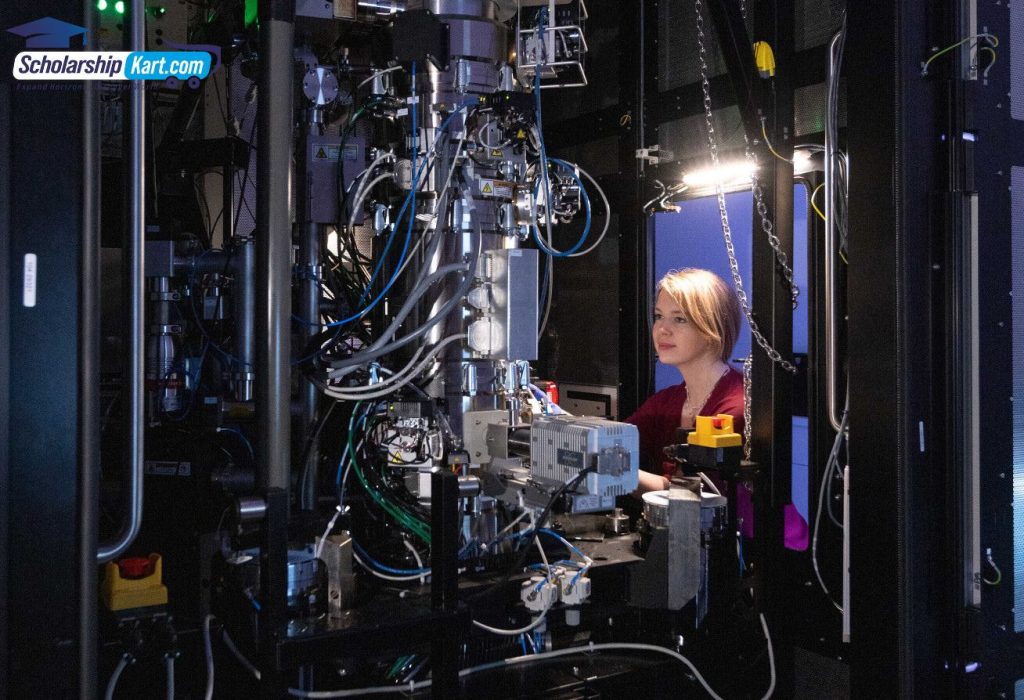
These technologies are reshaping industries from finance and healthcare to defence and telecommunications.
The UK’s Quantum Legacy and Global Leadership
The United Kingdom has always been a land of discovery. From Newton’s formulation of classical mechanics in the 17th century to the pioneering research of Paul Dirac in quantum mechanics during the 20th century, the UK has shaped how humanity understands the universe.
Today, this tradition of ground-breaking innovation continues, with the nation positioned as a global leader in quantum physics, a field that investigates how particles of matter and energy behave at the smallest possible scales.
For students, the UK represents one of the most promising destinations to study this fascinating discipline. With substantial government investment, world-class universities, cutting-edge laboratories, and a rapidly expanding quantum industry, the UK offers a unique blend of academic excellence and real-world application.
Whether you aim to become a researcher pushing the boundaries of science or an innovator applying quantum principles to modern challenges, the UK provides a launchpad for your ambitions.
Why Study Quantum Physics in the UK?
Choosing where to study is one of the most important decisions in a student’s academic journey. When it comes to quantum physics, the UK stands out for several compelling reasons:
1. Strong Government Investment and National Quantum Technology Programme
The UK government has recognised quantum technologies as a national priority. Through the National Quantum Technology Programme (NQTP), launched in 2014, billions of pounds have been invested in research, training, and commercialisation of quantum innovations.
The programme brings together universities, research institutions, and industry leaders to accelerate the development of real-world applications.
Students benefit directly from this initiative. Many degree programmes are linked to NQTP projects, meaning your coursework and research could contribute to solving real problems in quantum communication, computing, or sensing.
This strong government backing ensures the UK remains at the forefront of global quantum research.
2. Industry-University Partnerships
Quantum physics in the UK is not studied in isolation. UK Universities maintain close ties with industries that are building practical applications of quantum science. From start-ups designing quantum processors to multinational corporations investing in quantum software, the academic sector works hand in hand with industry.

For students, this means opportunities for internships, research placements, and exposure to commercial projects during their studies.
Universities like Oxford and UCL often collaborate with companies such as IBM, Google, and Microsoft, giving students unique insights into the world of applied quantum technologies.
3. Cutting-Edge Research Facilities
Access to state-of-the-art laboratories is one of the UK’s greatest strengths. Facilities like the James Watt Nanofabrication Centre in Glasgow, one of the most advanced cleanrooms in the world, provide students with the opportunity to work on device fabrication and quantum hardware.
From electron microscopy labs to laser spectroscopy equipment and superconducting device facilities, UK universities ensure that students gain hands-on training with tools that define the cutting edge of physics research. This combination of theory and practice prepares graduates to tackle the most complex scientific challenges.
4. Expanding Career Opportunities
The quantum sector is growing rapidly, and the UK is positioning itself as a global hub. Graduates with expertise in quantum mechanics and related technologies are in demand across diverse industries. Some examples include:
Quantum Computing – building new generations of processors capable of solving problems impossible for classical computers.
Secure Communication – applying quantum cryptography to protect sensitive data.
Advanced Sensors and Metrology – creating ultra-precise measurement devices for navigation, defence, and healthcare.
New Materials – developing materials at the atomic scale for applications in electronics, medicine, and renewable energy.
This breadth of opportunities makes a quantum physics degree from the UK one of the most future-proof qualifications.
5. Interdisciplinary and Skill-Focused Education
Quantum physics in the UK is taught with an interdisciplinary approach. Programmes often combine physics with engineering, computer science, mathematics, and even economics. This ensures that students gain not only deep scientific knowledge but also practical skills applicable across multiple fields.
In addition, UK universities emphasise transferable skills such as critical thinking, data analysis, communication, and problem-solving. These are invaluable in both research and industry contexts, equipping graduates to excel in any sector.
Dreaming of mastering Quantum Physics in the UK? Let ScholarshipKart be your compass—offering support in university and course selection, applications, visas, and scholarships. Our specialised IELTS training and personalised SOP assistance ensure your application shines. Get in touch today and take your first step toward pioneering discoveries in quantum science.
The Structure of Quantum Physics Courses in the UK
Studying quantum physics in the UK means immersing yourself in one of the most intellectually demanding yet rewarding disciplines. Let’s explore how the courses are structured:
Core Topics Covered
- Wave-Particle Duality – Understanding how particles like electrons exhibit both wave and particle behaviour.
- The Schrödinger Equation – The central mathematical framework for quantum predictions.
- Heisenberg’s Uncertainty Principle – Limits of measuring properties like position and momentum simultaneously.
- Quantum Entanglement – Studying correlations between particles separated by large distances.
- Quantum Field Theory – Explaining particle interactions at a fundamental level.
- Quantum Computing and Information – Building the next generation of computers and communication systems.
Laboratory Techniques
- Practical training is an essential part of UK quantum physics programmes. Students gain hands-on experience with:
- Laser Spectroscopy – probing the behaviour of atoms and molecules.
- Electron Microscopy – imaging structures at the atomic scale.
- Superconducting Devices – studying quantum states in condensed matter systems.
Assessment Methods
Assessment methods in Quantum Physics programs in the UK are designed to strike a balance between theoretical learning and practical application, ensuring that students graduate with both academic depth and hands-on expertise.
Evaluation typically combines coursework, such as lab reports, essays, and problem sets, which test a student’s ability to apply abstract concepts to real-world problems while honing their analytical and communication skills.
Alongside this, examinations, both written and oral, are employed to rigorously assess theoretical understanding, mathematical precision, and problem-solving abilities under time-constrained conditions.
Equally important are research projects, including final-year dissertations or MSc theses, where students engage in original research, contribute to ongoing scientific debates, and sometimes collaborate with leading physicists or research groups.
This multifaceted assessment framework not only equips students with a mastery of core quantum principles but also fosters independent research competence, critical thinking, and the adaptability required for careers in academia, industry, and beyond.
Types of Quantum Physics Degrees in the UK
1. BSc Quantum Physics
The Bachelor of Science (BSc) in quantum physics typically lasts three to four years. The undergraduate programs provide a solid foundation in mathematics, physics, and computational methods. Core modules include:
- Quantum Mechanics
- Electromagnetism
- Thermodynamics
- Solid-State Physics
- Relativity
- Laboratory Methods
- Optional modules allow students to explore cosmology, particle physics, or nanotechnology.
2. MSc Quantum Physics/Quantum Technologies
A Master of Science (MSc) degree lasts one to two years and builds on undergraduate knowledge. The postgraduate course focuses on specialised topics such as:
- Advanced Quantum Mechanics
- Quantum Field Theory
- Quantum Computation and Information
- Quantum Optics
- Computational Physics
Many MSc programmes also require an extended research project, often conducted in collaboration with industry. These degrees prepare students for doctoral research or advanced careers in technology sectors.
Entry Requirements and Tuition Fees to Study Quantum Physics in the UK
Entry Requirements
UK universities maintain high standards for admission to quantum physics programmes:
- A-levels (or equivalent): Strong grades in Physics and Mathematics (typically AAB or higher).
- Additional Exams: Some institutions require tests such as the Physics Aptitude Test (PAT) or Sixth Term Examination Paper (STEP).
- English Language Proficiency: International Students are required to provide proof of English language proficiency (IELTS/TOEFL).
Tuition Fees
For the academic year 2026-27, tuition fees for international students range between £20,000 and £35,000 per year for undergraduate courses and £25,000 to £40,000 per year for postgraduate courses.
While this represents a significant investment, the career opportunities and earning potential justify the cost.
Top Universities to Study Physics in the UK in 2026
According to The Times and Sunday Times Good University Guide, 2026, the top UK Universities for studying physics and astronomy are:
- University of St Andrews
- University of Cambridge
- University of Oxford
- University of Birmingham
- Durham University
- University of Dundee
- University of Manchester
- Lancaster University
- University of Warwick
- University of Bristol
Best Quantum Physics Programs in the UK
The UK is home to some of the best universities in the world for quantum research. Let’s explore them in detail:
University of Oxford
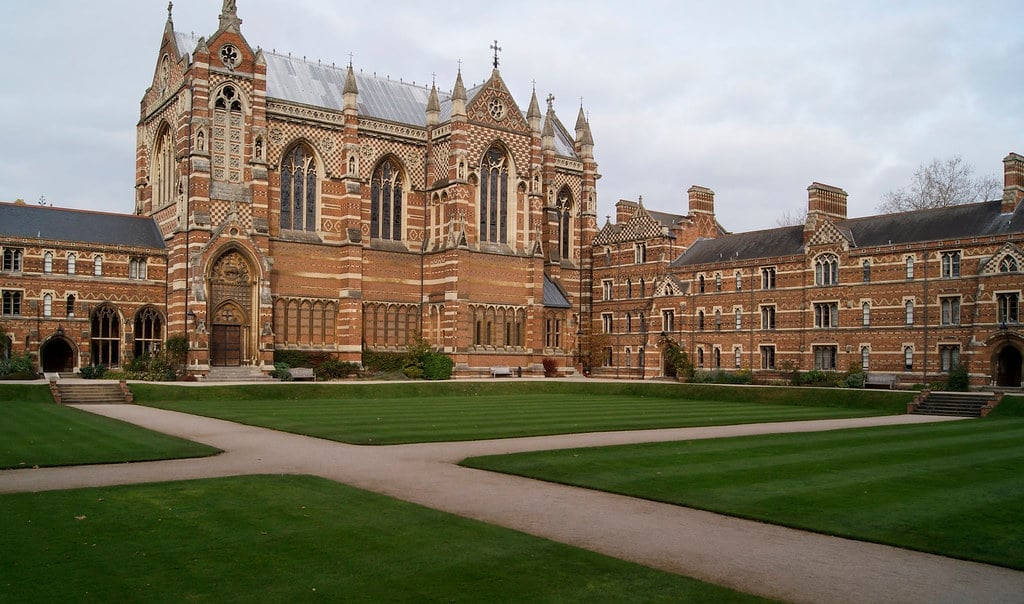
Suggested Course: MSc in Quantum Technologies
International tuition Fees: £43,730
The University of Oxford’s Department of Physics is one of the world’s most renowned centres for quantum research. It has played a central role in advancing our understanding of quantum computing, quantum cryptography, and quantum optics.
Within the department, Oxford’s Quantum Group focuses specifically on quantum computation and the foundations of quantum theory. This group has been instrumental in developing applied quantum technologies such as ion-trap quantum computers and quantum networks.
Oxford’s strength also lies in collaboration. Through its partnership with the UK Quantum Technology Hub in Computing and Simulation, the university brings together academia and industry to accelerate the progress of practical quantum systems.
About the MSc in Quantum Technologies
Oxford offers the MSc in Quantum Technologies, an interdisciplinary taught course that provides a comprehensive grounding in the principles and applications of modern quantum science.
The programme covers quantum computing, quantum sensing, and quantum communications, ensuring students gain both technical expertise and practical experience.
Key features of the course include:
Interdisciplinary teaching across multiple departments, including Engineering, Materials, Mathematics, Computer Science, and Chemistry.
Hands-on training through short modules and laboratory sessions.
A four-month extended research project, often undertaken with industry partners, bridges the gap between academic study and real-world application.
Learning Outcomes
Graduates of this programme are expected to:
Gain a strong technical overview of the principles underpinning quantum technologies.
Understand the working principles of quantum computing, sensing, and communications.
Explore state-of-the-art hardware developments in the field.
Apply detailed knowledge to specific areas of quantum technologies through option modules.
Gain practical experience in laboratory techniques, control systems, and even programming of quantum computers.
Demonstrate competence in presenting a research project both orally and in writing.
With its rich research environment and close links to industry, Oxford prepares students for both advanced research and leadership roles in the rapidly growing quantum sector.
Imperial College London

Suggested Course – MSc Physics (Quantum Dynamics Stream)
International tuition Fees: £37,000
Imperial College London is globally recognised for its strength in physics research, and its MSc in Physics offers a dedicated Quantum Dynamics stream for students who want to specialise in this field. The programme is designed to deepen knowledge of quantum systems and prepare graduates for careers in research and advanced study.
Course Structure and Focus
The course is open to physicists as well as graduates from mathematics, chemistry, and engineering. It covers three main areas:
- Quantum Optics
- Quantum Information
- Quantum Systems
A distinctive feature of the programme is its three-month full-time research project, typically carried out within one of Imperial’s academic research groups. This project immerses students in real research, providing them with experience in experimental, theoretical, or computational approaches.
Skills and Outcomes
Students will:
Move beyond undergraduate-level understanding to advanced topics in physics.
Gain training in research skills, methodology, and communication.
Produce a full scientific report and present their findings through oral and poster sessions.
Graduates are well-prepared for doctoral research in atomic physics, quantum photonics, quantum information, and related areas. The course combines deep theoretical learning with strong practical exposure, equipping students with a balanced skill set for academia and industry.
University College London (UCL)

Suggested Course– MSc Quantum Technologies
International Tuition Fees: £37,500
UCL is one of the world’s leading centres for quantum technologies, offering the MSc in Quantum Technologies that provides advanced training at the intersection of physics, engineering, and computer science.
The programme is backed by UCL’s internationally recognised research and its role as host of the EPSRC Centre for Doctoral Training in Delivering Quantum Technologies.
Course Highlights
Rigorous grounding in advanced quantum mechanics, quantum computation, and quantum information theory.
Modules include Advanced Quantum Theory, Quantum Computation and Communication, Quantum Field Theory, Molecular Physics, and Atom and Photon Physics.
Opportunities to work directly with UCL’s world-leading research groups through projects.
Access to the UCL Quantum Science and Technology Institute (UCLQ), which provides networking events, seminars, and collaboration opportunities with commercial and government partners.
Research and Community
The UCLQ serves as a hub for academics, students, and industry experts to share ideas and accelerate progress in quantum research. Students not only gain advanced technical knowledge but also develop vital professional networks.
UCL’s focus on equity, diversity, and inclusion (EDI) also ensures a supportive environment, aligning with broader initiatives from the Institute of Physics and Advance HE.
University of Strathclyde

Suggested Course– MSc Quantum Technologies
International Tuition fees: £28,700
The University of Strathclyde has established itself as a powerhouse in applied quantum research. Its Department of Physics is involved in all four UK Quantum Hubs and is supported by numerous UKRI and Innovate UK grants.
About the Programme
The MSc in Quantum Technologies at Strathclyde combines theoretical knowledge with practical applications, covering areas such as:
Cold atoms
Photonic devices
Semiconductor structures
Students can specialise further through research projects that may be experimental, theoretical, or computational in nature.
Unique Strengths
Strathclyde leads internationally in developing quantum algorithms for real-world applications.
The university partners with M Squared Lasers through an EPSRC Prosperity Partnership, advancing next-generation prototypes of neutral atom quantum computers and simulators.
Strong alignment with national and local high-performance computing clusters ensures students are trained at the cutting edge of quantum simulation.
The programme equips graduates with the knowledge and skills to participate in the so-called “second quantum revolution”, focusing on control and application of quantum phenomena in industrial and research contexts.
University of Exeter

Suggested Course– BSc Physics with Quantum Technology
International Tuition Fees: £31,200 per year
At the undergraduate level, the University of Exeter offers a BSc in Physics with Quantum Technology, designed to provide a foundation in modern physics alongside applications of quantum science.
Course Highlights
Focus on modern physics methods, quantum mechanics, thermodynamics, relativity, and solid-state physics.
A supportive teaching environment with small tutorial groups, typically made up of five students.
Access to advanced facilities such as research labs, an observatory, and computer labs.
A continuous skills development programme, designed with industry partners, helping students build a digital portfolio and CV.
Research and Career Preparation
From the first year, students are trained in professional and computational skills. In the final year, they undertake extended open-ended research projects, often in teams, to solve real-world problems. These projects strengthen research, teamwork, and communication skills, ensuring graduates are industry-ready.
Exeter’s programme blends strong scientific theory with employability-focused skills, making it a standout undergraduate option.
University of Glasgow
Suggested Course – MSc Quantum Technology
International tuition Fees: £29,700
The MSc in Quantum Technology equips students with an interdisciplinary perspective, combining physics and engineering skills essential for quantum technologies. Glasgow’s programme is closely aligned with one of the UK’s four Quantum Technology Hubs (QuantIC) and benefits from the James Watt Nanofabrication Centre, the UK’s premier academic cleanroom for micro- and nanofabrication.
Course Features
Students will engage with lectures, tutorials, seminars, laboratory practicals, small group supervisions, and private study. The School of Physics & Astronomy leads international research in quantum measurement devices, quantum algorithms, quantum machine learning, and particle-physics entanglement measurements.
The James Watt School of Engineering hosts the Centre for Quantum Technology, focusing on quantum computing, imaging, and communications. Opportunities exist to collaborate with over 50 companies globally, with some MSc projects co-supervised by industry experts.
Learning Outcomes
Graduates will be prepared for careers in academia or industry and will be well-qualified to pursue doctoral studies. The programme provides hands-on research experience, embedding students in cutting-edge quantum technology projects and connecting them with national labs and industry partners.
Careers in Quantum Physics
Graduates in quantum physics are entering a job market that is expanding faster than ever before. Career Pathways are:
- Academia: Pursuing PhDs and contributing to fundamental research.
- Quantum Computing: Developing hardware and algorithms.
- Finance and Cybersecurity: Applying quantum cryptography and risk analysis.
- Medicine: Advancing imaging and diagnostic technologies.
- Defence and Navigation: Creating ultra-precise quantum sensors.
Salary Prospects
Salaries for quantum roles vary a lot depending on experience, location, employer type and specialisation. Below are typical ranges and examples.
| Level | Expected salary | What You Might Be Doing |
| Entry Level / Graduate | £30,000 to £45,000 | Research assistants in university labs, junior quantum software engineers, and hardware technician roles. |
| Intermediate Level (3-5 years’ experience | £50,000 to £70,000 | Roles like quantum engineer, algorithm developer, and hardware engineer in companies. Also, postdoc or senior researcher roles in academia or government labs. |
| Senior / Advanced Roles | £80,000 to £120,000+ | Senior researchers, team leads, hardware project leads, and quantum architect positions. In regions with a high concentration of tech firms or for those with deep expertise (quantum error correction, specialised hardware), salaries can reach or exceed this band. |
| Leadership / Director / Specialist Top Roles | £120,000 to £200,000+ | Heads of department, leads of large quantum R&D groups, senior managers in quantum tech companies, or director-level roles. These are rarer and often come with additional compensation, bonuses, or equity. |
Why Choose the UK Over Other Countries?
While countries like the USA and Germany also excel in quantum research, the UK offers unique advantages:
Integrated National Strategy: Few nations match the UK’s coordinated investment through the NQTP.
Concentration of Expertise: World-class universities within a small geographical area.
Industry Pull: Strong start-up ecosystem and multinational collaborations.
Interdisciplinary Focus: UK programmes blend multiple disciplines, giving graduates versatile skill sets.
Conclusion: A Future Shaped by Quantum Minds
Quantum physics is not just about understanding the mysteries of the universe; it is about building the technologies that will define the future. The UK, with its rich scientific legacy, unparalleled investment, cutting-edge facilities, and world-leading universities, offers one of the best environments in the world for students to study this field.
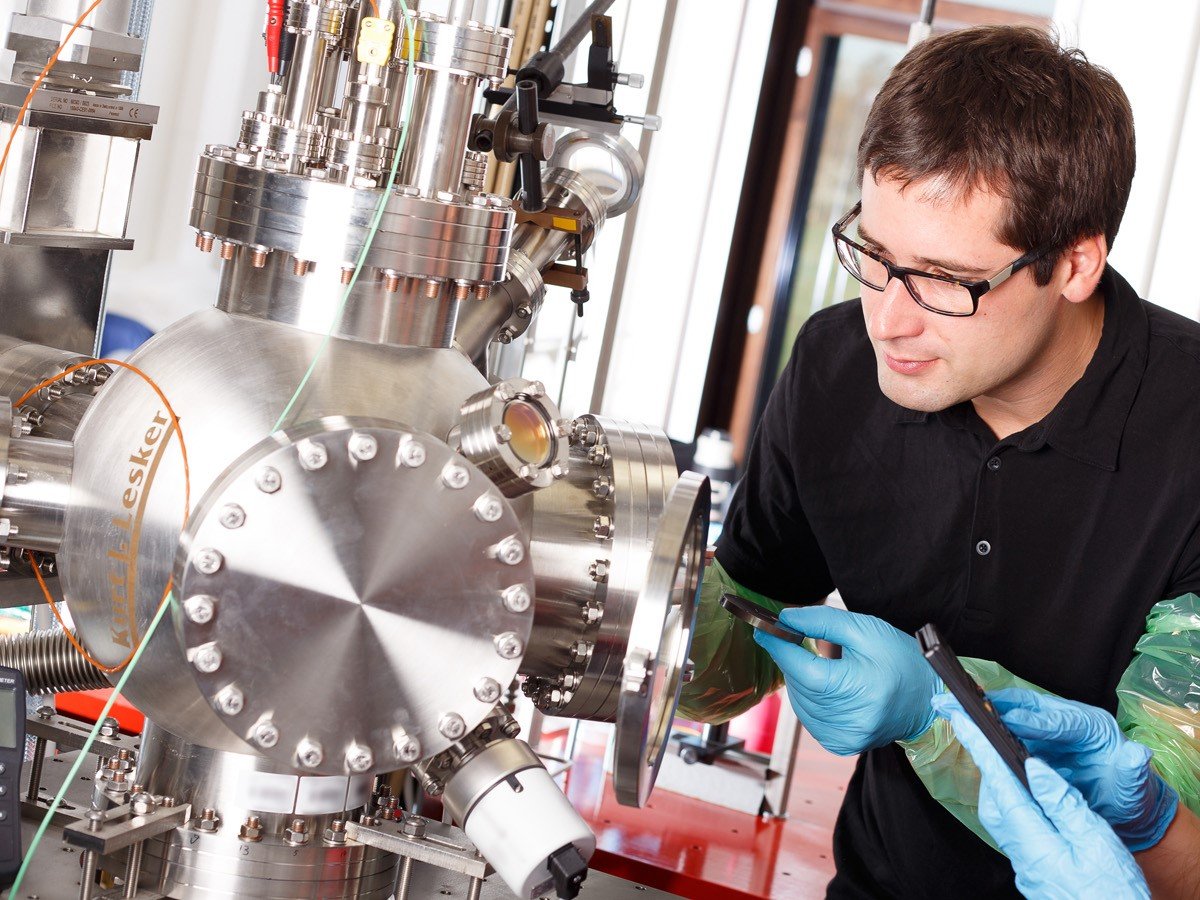
Whether your ambition is to join the pioneers of quantum computing, develop secure communication systems, create advanced sensors, or contribute to medical breakthroughs, a degree in quantum physics from the UK opens doors to limitless opportunities.
By choosing the UK, you are not only pursuing an education; you are joining a global movement to unlock the quantum future.
Ready to explore the frontiers of Quantum Physics in the UK? Book a Free Consultation with ScholarshipKart. Let our Expert Counsellors help you navigate the journey—selecting the ideal universities and courses, guiding you through applications, visa processes, and scholarships. With expert IELTS coaching and bespoke SOP guidance, we prepare you to step confidently into the world of quantum innovation. Connect now and launch your scientific career globally.
FAQs ( Frequently Asked Questions )
Yes, the UK is one of the best countries to study quantum physics due to its world-class universities, strong government investment, and advanced research facilities. Programs are closely linked with industry, offering excellent career opportunities.
Top universities include:
University of Oxford
University of Cambridge
Imperial College London
University College London (UCL)
University of Manchester
University of Glasgow
These institutions are globally recognized for quantum research and innovation.
Students can pursue:
BSc Physics with Quantum Technology
MSc Quantum Physics
MSc Quantum Technologies
Specialized courses in quantum computing, optics, and quantum information
Yes, the UK welcomes international students. Universities offer dedicated support, and students must meet academic and English language requirements.
Quantum physics is one of the fastest-growing fields, powering technologies like quantum computing, secure communication, and advanced sensors. It offers strong long-term career growth.