
The Royal Veterinary College University of London has stood at the forefront of veterinary education for more than two centuries, shaping not only generations of veterinarians but also the foundations of modern animal and biomedical science. Established in 1791, the Royal Veterinary College (RVC) is the UK’s largest and longest-established independent veterinary school and a distinguished Member Institution of the University of London.
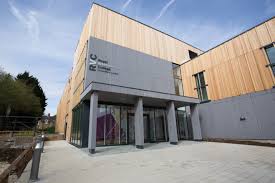
Established in 1791, the RVC is the UK’s largest and longest-established independent veterinary school and a distinguished Member Institution of the University of London.
Its global reputation has been built through an exceptional combination of academic rigour, clinical depth, pioneering research and an unwavering commitment to animal welfare and public health.
Why Choose the Royal Veterinary College University of London?
What makes the RVC especially renowned is how it integrates tradition with constant innovation.
Over 232 years of delivering veterinary education have allowed the institution to refine its teaching philosophies while remaining agile enough to respond to scientific, technological and societal change.
The College does not simply teach veterinary medicine as a profession; it frames it as a responsibility to animals, humans and ecosystems. This approach has positioned the RVC as a benchmark for veterinary education worldwide and a destination of choice for students from across the globe.
For international students, this legacy translates into confidence and recognition. Studying at an institution whose name is synonymous with veterinary excellence offers credibility across borders, easing professional mobility and opening doors to global career pathways.
Take the next step toward veterinary education at the Royal Veterinary College with confidence. Reach out to ScholarshipKart for complete assistance, from course selection and admission counselling to visa preparation, scholarship guidance, and premium IELTS training. Let our experts help you craft an impressive SOP and achieve your study-abroad goals seamlessly.
RVC: Training the Next Generation of Veterinarians
Let’s delve deeper into the learning experience that transforms passion into professional excellence:
Global Recognition and Rankings That Reflect Excellence
The Royal Veterinary College University of London holds a prestigious global standing that is reinforced by independent rankings and teaching excellence evaluations.
Global Rankings and Teaching Recognition
Ranked number one in the world for Veterinary Science in the QS World University Rankings by Subject 2025.
Awarded an Overall Silver rating in the Teaching Excellence Framework (TEF) 2023.
Achieved Gold for Student Outcomes in TEF 2023, highlighting graduate success and employability.
These recognitions matter deeply for prospective students, particularly those from overseas.
Rankings influence employer trust, academic partnerships, and research funding, while TEF outcomes reassure students that teaching quality and graduate progression are central institutional priorities.
A Research-Led Institution at the Cutting Edge of Veterinary Science

Research at the Royal Veterinary College University of London forms the backbone of its academic identity.
As a research-led institution, the College ensures that students learn within an environment where knowledge is actively being created, challenged and translated into real-world solutions.
In the Research Excellence Framework (REF) 2021, an impressive 88 per cent of the RVC’s research was rated as internationally excellent or world-class.
This research culture directly benefits students. Undergraduate and postgraduate learners are taught by academics who are leaders in their fields and who embed the latest discoveries into teaching.
Students are not merely consumers of established knowledge; they become contributors to advancing veterinary and biological science.
The RVC’s research strategy is structured around two core themes that reflect the One Health philosophy, recognising the interconnectedness of human, animal and environmental health.
Comparative Physiology and Clinical Sciences focuses on companion animals and translational medicine, while Integrated Research into Livestock and Food Systems addresses food-producing animals, sustainability and public health.
This dual focus ensures that students gain exposure to both clinical excellence and global challenges such as food security and disease control.
For international students, this research strength offers opportunities to participate in projects with global relevance, collaborate with multidisciplinary teams and develop profiles that are competitive in international academia, industry and policy-making.
Veterinary Medicine as a Profession-Shaping Education
The study of Veterinary Medicine at the RVC is defined by depth, structure and purpose.
The Bachelor of Veterinary Medicine (BVetMed) programme is described by the College as profession-shaping, career-making, and world-leading, a description supported by its curriculum design and clinical intensity.
Central to this programme are the key themes running throughout the entire curriculum. Rather than treating subjects as isolated units, the curriculum revisits key concepts throughout the course, each time at increasing levels of complexity and in varied contexts.
This method reflects how veterinary professionals think in real practice, integrating anatomy, physiology, pathology, diagnostics and clinical reasoning into a coherent whole.
Students begin with strong preclinical foundations, learning essential biological and anatomical concepts. These are later revisited in clinical contexts, where theoretical understanding is linked to disease processes, diagnostics and treatment strategies.
The learning experience is further enriched through hands-on work with animal patients during clinical rotations, extra-mural placements and training within the RVC’s first opinion and referral hospitals.
This structure is particularly valuable as it supports learners from diverse educational backgrounds by reinforcing concepts over time and ensuring that understanding is both deep and applied, rather than memorised and disintegrated.
Departments That Reflect the Future of Veterinary Science
The RVC’s academic departments are structured to address contemporary challenges in animal and human health.
Comparative Biomedical Sciences integrates foundational disciplines from molecular biology to physiology, ensuring strong scientific grounding.
Clinical Science and Services delivers applied veterinary medicine while supporting teaching hospitals, internships and professional development.
Pathobiology and Population Sciences bridges molecular research with population-level health, encompassing welfare, epidemiology and public health.
Professional Services ensure that students are supported academically, emotionally and professionally throughout their studies.
This integrated departmental structure ensures coherence between teaching, research and clinical practice, creating an educational environment that is both supportive and intellectually demanding.
Undergraduate Pathways Designed for Diverse Aspirations
The RVC offers a range of undergraduate veterinary pathways designed to accommodate different academic backgrounds, career goals and levels of preparedness, without compromising on academic excellence.
The standard Bachelor of Veterinary Medicine programme delivers comprehensive scientific and clinical training rooted in the College’s long history while embracing modern teaching methods and technological change. Students graduate equipped to meet contemporary veterinary challenges with confidence and competence.
The Bachelor of Veterinary Medicine with Intercalated Year allows students to seek a broader academic experience and complete an additional year of focused study and research. This intercalated year deepens scientific understanding, strengthens research skills and provides valuable experience for students considering careers in research, academia or specialised clinical practice.
Graduates with prior degrees in biological sciences can apply for the Graduate Accelerated BVetMed, an intensive four-year programme that builds upon existing scientific knowledge. This route recognises prior learning while maintaining the same rigorous clinical and professional outcomes as the standard programme.
The Veterinary Gateway programme reflects the RVC’s commitment to widening participation. By offering an additional preparatory year, it supports capable students who may not initially meet entry requirements, equipping them with the skills and confidence needed to succeed in veterinary medicine.
The joint Bachelor of Veterinary Science degree with Aberystwyth University offers a distinctive pathway combining the expertise of two leading institutions. It is particularly appealing to students interested in rural, mixed or regionally focused veterinary practice, especially within Wales.
These varied routes ensure that international students, regardless of educational system or prior study, can find a pathway that aligns with their academic journey while leading to the same globally recognised qualification.
Postgraduate Education for Global Health and Welfare
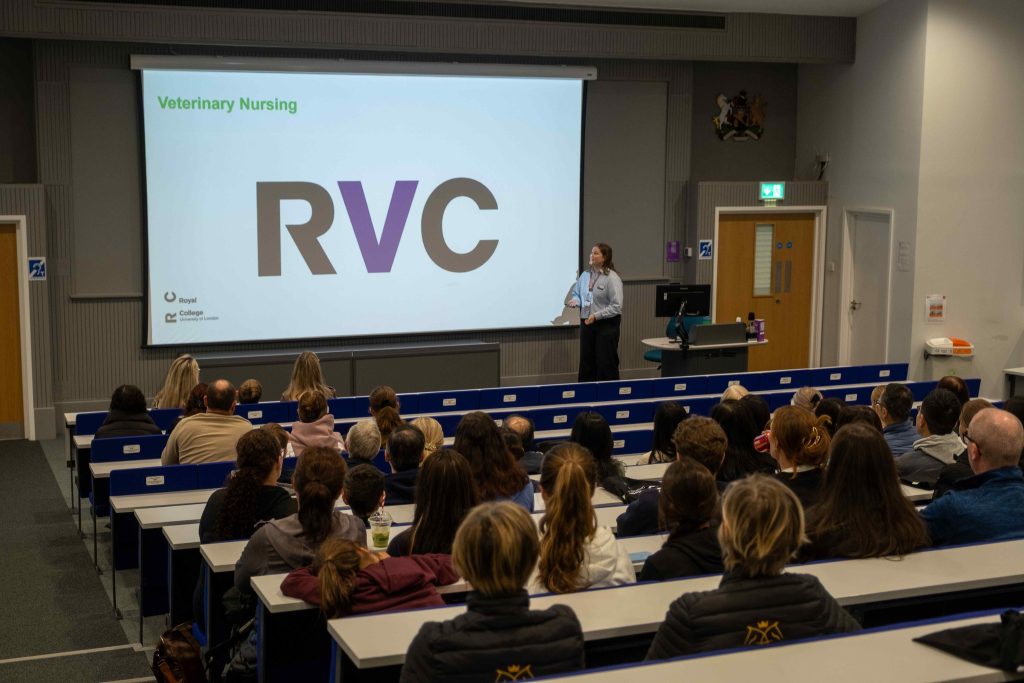
Postgraduate study at the RVC reflects the institution’s mission to advance global health and animal welfare through specialist education and research. Since its founding, the College has consistently pushed scientific boundaries, and this ethos is embedded within its postgraduate programmes.
The MSc in Veterinary Epidemiology, delivered jointly with the London School of Hygiene and Tropical Medicine, exemplifies this approach. By combining strengths in epidemiological principles, communicable disease analysis, animal health and production systems, the programme prepares graduates to address complex disease challenges at the population level.
Teaching across London and Hertfordshire campuses, alongside exposure to national health agencies, provides a uniquely comprehensive learning experience.
The MSc in Veterinary Education supports professionals involved in teaching and workplace training, developing reflective practitioners who excel in lifelong learning and educational leadership.
In addition, the RVC offers postgraduate certificates in advanced veterinary nursing and veterinary clinical studies, alongside a wide range of continuing professional development opportunities.
These programmes ensure that learning at the RVC extends beyond initial qualification and supports career-long professional growth.
Postgraduate students benefit from studying in a globally connected academic environment, where qualifications are recognised and research outputs influence policy and practice worldwide.
Learning Through Real-World Clinical Excellence
One of the defining strengths of veterinary education at the RVC is the scale and quality of its clinical training.
The College operates teaching hospitals and first opinion practices that provide animal owners and the veterinary profession with access to expert care while serving as immersive learning environments for students.
The Queen Mother Hospital for Animals, Europe’s largest small animal referral hospital, treats over 19,000 cases each year. Students gain extensive exposure to complex clinical cases under the supervision of senior specialists, developing diagnostic confidence and procedural competence in a real clinical setting.
Alongside this, the RVC’s equine hospital combines world-leading research with a long tradition of equine health management, offering 24-hour emergency and referral services and an equine-only ambulatory practice.
Collectively, the RVC’s three hospitals see more than 32,000 animals annually and employ a highly specialised workforce, including RCVS-recognised veterinary specialists and registered veterinary nurses.
This level of clinical activity ensures that students graduate with substantial hands-on experience, a critical advantage in a profession where practical competence is essential.
For students, training within such advanced facilities offers exposure to standards of care and clinical technologies that are recognised and respected worldwide.
Accreditation That Enables Global Flexibility
Accreditation is a cornerstone of the RVC’s global appeal.
The College is one of the few veterinary schools worldwide to hold accreditations from multiple leading regulatory bodies. These include the Royal College of Veterinary Surgeons in the UK, the European Association of Establishments for Veterinary Education, and the Council on Education of the American Veterinary Medical Association in the United States and Canada.
This extensive accreditation framework ensures that RVC graduates are eligible to practise across numerous regions, including Europe, Ireland, Australia, New Zealand, South Africa and, with additional licensing examinations, North America.
This global recognition significantly reduces barriers to international practice. It offers flexibility and security, allowing graduates to pursue careers across continents without the need for extensive requalification.
Research Groups and Centres Driving Innovation
The RVC’s research ecosystem is supported by specialised groups and centres that encourage collaboration across disciplines.
Research groups focus on areas such as animal welfare science and ethics, veterinary epidemiology, neuromuscular diseases, equine pregnancy, tuberculosis, immunology and quantitative biology.
Complementing these are advanced research centres, including the Centre for Emerging, Endemic and Exotic Diseases, the Centre for Vaccinology and Regenerative Medicine, and the Clinical Investigation Centre.
Facilities such as MicroCT imaging, translational research units, flow cytometry, and advanced imaging suites provide researchers and students with access to cutting-edge technologies.
This environment fosters innovation while ensuring that discoveries are translated into improved diagnostics, therapies, and preventive strategies. For students, involvement in such research builds analytical skills, scientific literacy, and global research networks.
The Hawkshead Campus in Hertfordshire hosts students in their advanced clinical years. It features extensive redevelopment, including a new Student Learning Centre opened in 2023, enhanced research facilities, and specialist clinical and teaching spaces.
Two Campuses, One Integrated Learning Experience
The RVC operates across two strategically located campuses that support different stages of the student journey.
The Camden Campus in central London provides an academically rich and culturally vibrant setting for early-stage veterinary and biological sciences students. Recent investment of approximately £14 million has transformed facilities, including the Hobday Building, into modern learning and social spaces equipped with advanced laboratories, lecture theatres and an anatomy museum.
Boltons Park Farm, located at Hawkshead, supports farm animal practical teaching, ensuring exposure to livestock systems and food production contexts.
For students, the dual-campus experience combines the global connectivity of London with the focused clinical environment of Hertfordshire, both easily accessible from major transport links and airports.
Conclusion
Veterinary Medicine at the Royal Veterinary College represents far more than a degree; it is an immersion into a globally respected ecosystem of learning, research and clinical excellence.
The RVC’s long history, world-leading rankings, robust accreditations and research-driven teaching collectively create an environment where students are prepared not only to enter the veterinary profession but to shape its future.
For prospective undergraduate, postgraduate and research students, particularly those from international backgrounds, the RVC offers assurance, opportunity, and global relevance.
Its graduates leave with recognised qualifications, extensive clinical experience, and the intellectual confidence to contribute meaningfully to animal health, human wellbeing, and scientific progress worldwide.
In a world where veterinary science plays an increasingly vital role in global health and sustainability, the Royal Veterinary College stands as a place where knowledge meets compassion and where future leaders of veterinary medicine are formed.
Ready to begin your academic journey in veterinary education at the Royal Veterinary College? Book a Free Consultation with ScholarshipKart today and get expert guidance on choosing the right course, preparing strong applications, securing scholarships, and navigating the UK student visa process. From IELTS coaching to personalised SOP support, we help you build a winning profile for your dream university.
- FAQs
The RVC is renowned for its long-standing history, world-leading research, clinical excellence, and global recognition, offering students an internationally respected veterinary education.
The RVC offers the Bachelor of Veterinary Medicine (BVetMed), intercalated degrees, Graduate Accelerated BVetMed, and various MSc and postgraduate certificates in veterinary science, epidemiology, education, and clinical studies.
International students benefit from globally recognized qualifications, comprehensive support services, visa assistance, and exposure to a multicultural learning environment, enhancing professional mobility worldwide.
The RVC is research-led, with students participating in cutting-edge projects in areas such as animal welfare, epidemiology, livestock systems, clinical sciences, and translational medicine, contributing to global veterinary and biomedical advancements.
Yes, the RVC holds accreditations from the Royal College of Veterinary Surgeons (UK), European Association of Establishments for Veterinary Education, and the American Veterinary Medical Association, allowing graduates to practice in Europe, North America, Australia, and beyond.